Convert MSG Files to CSV
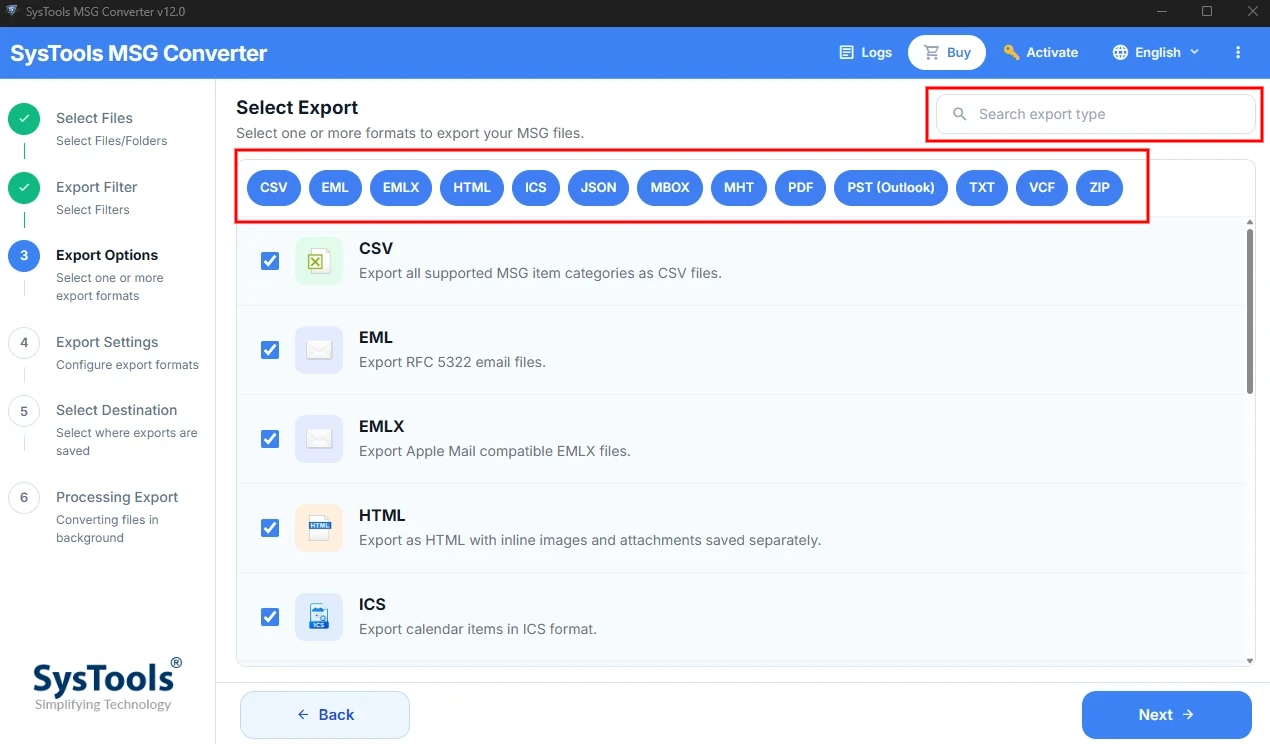
Select CSV as the Export Format
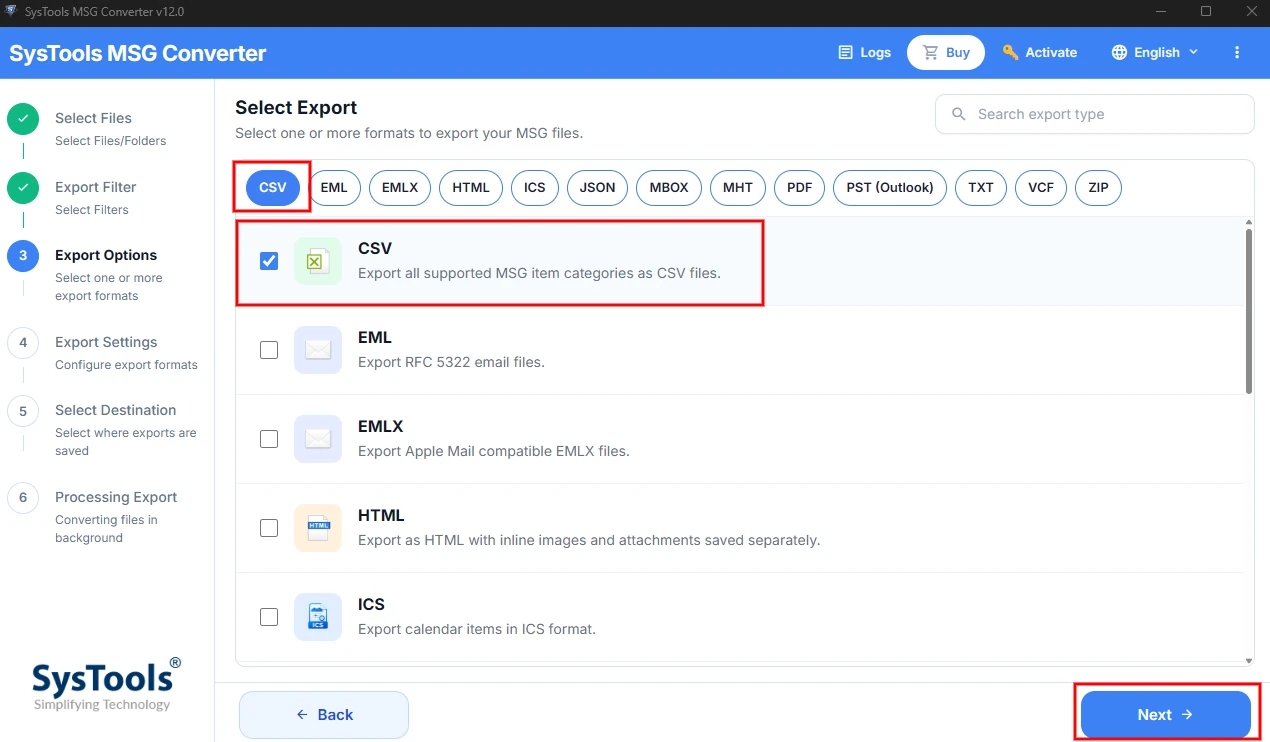
Select CSV in the Export Options list. It exports all supported MSG item categories as CSV files. Click Next.
Configure CSV Export Settings
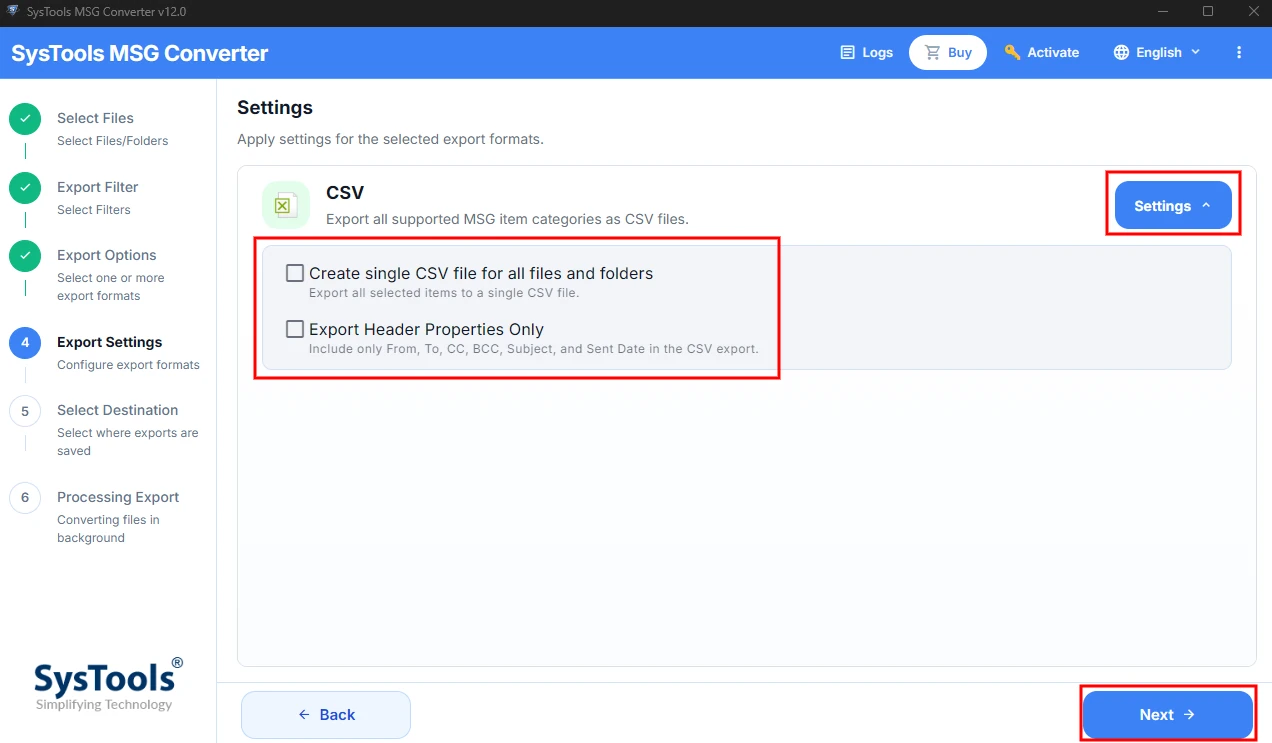
Click Settings to open the CSV options. Create single CSV file for all files and folders combines all selected items in one CSV. Export Header Properties Only keeps From, To, CC, BCC, Subject and Sent Date. Click Next.
Select the Destination
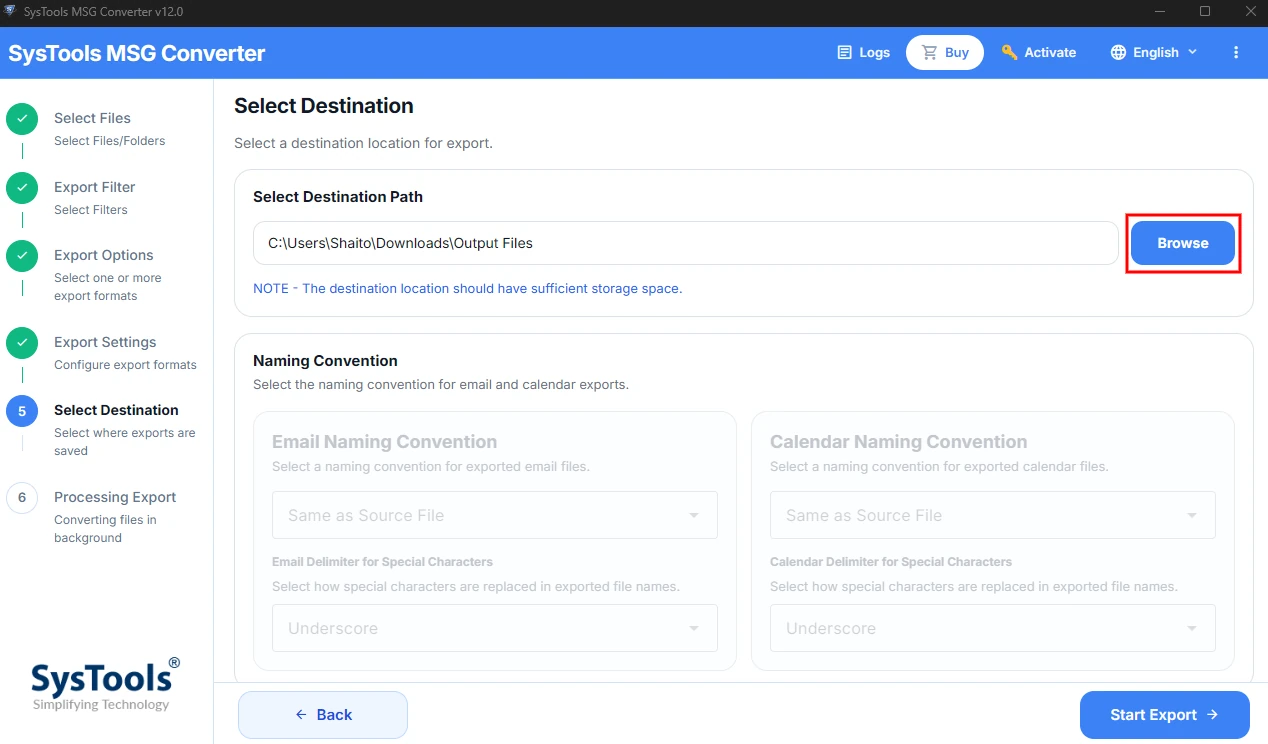
Click Browse next to Select Destination Path to choose where converted files are saved. Make sure the location has enough storage space.
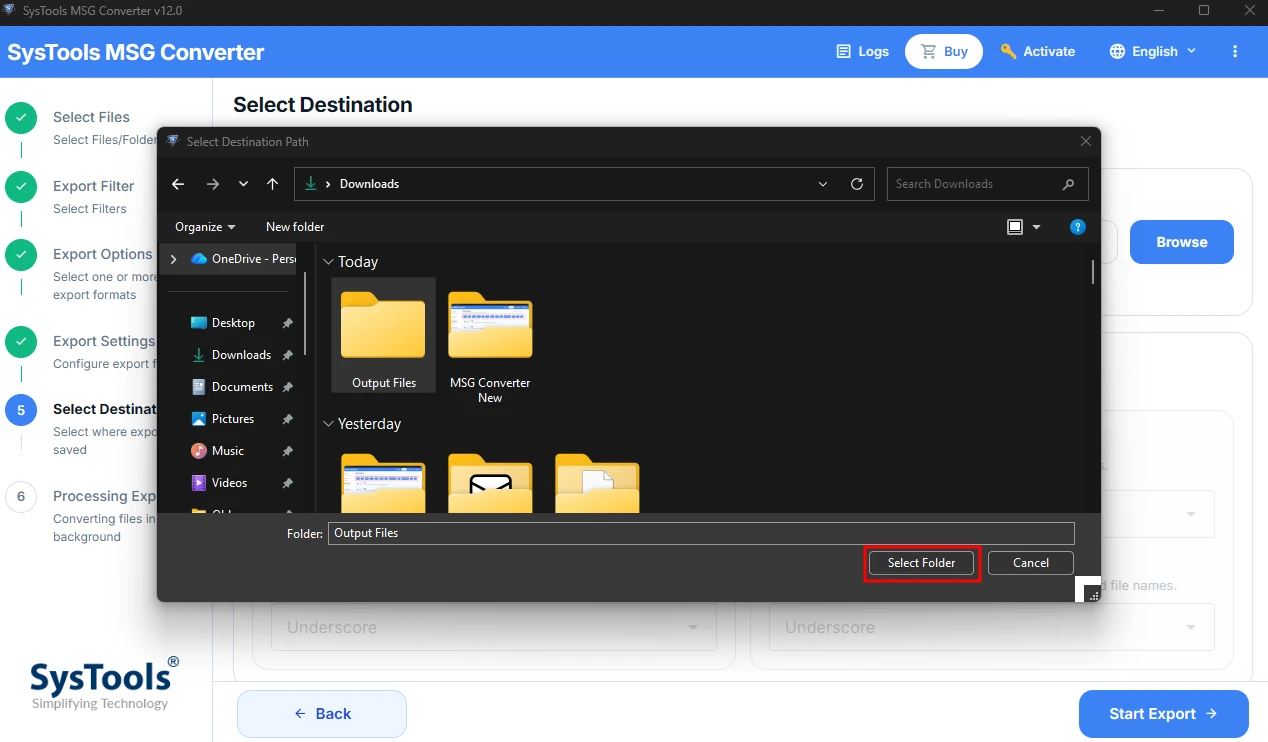
Select a folder in the dialog and click Select Folder. The naming options stay greyed out for CSV.
Start the Export and Track Progress
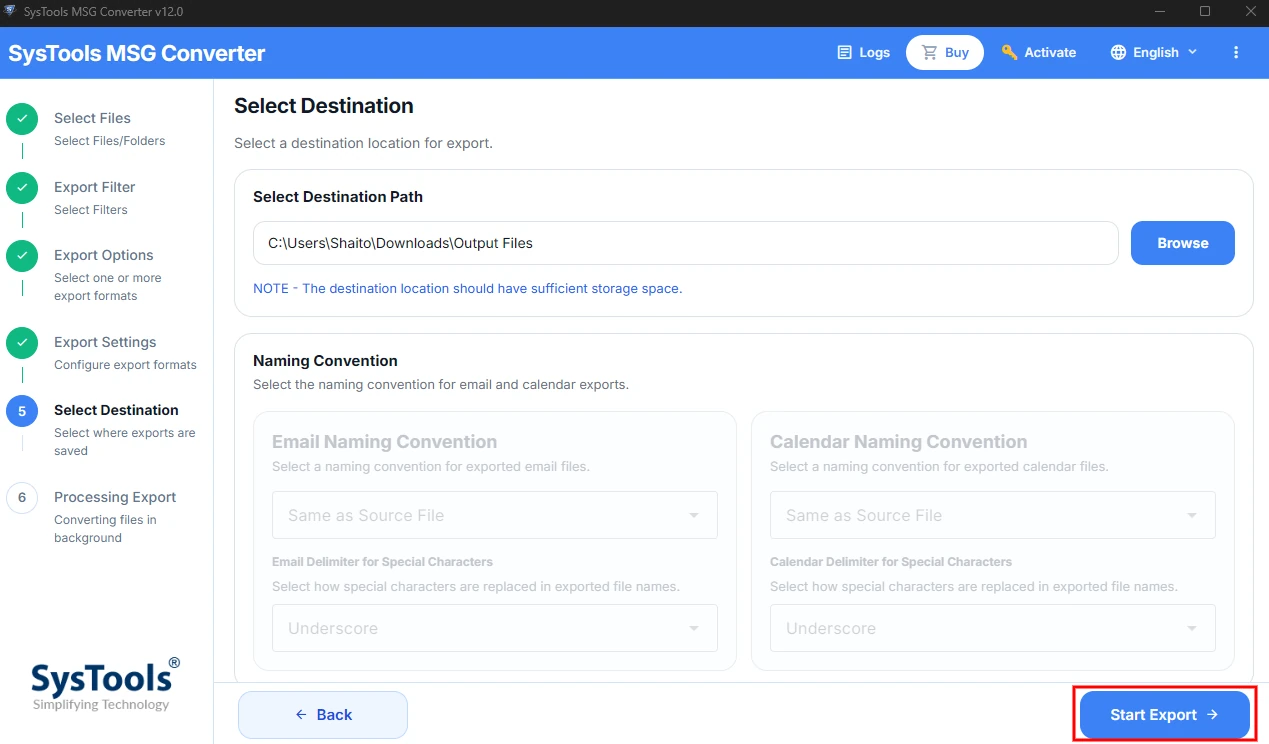
Click Start Export once the destination path is set.
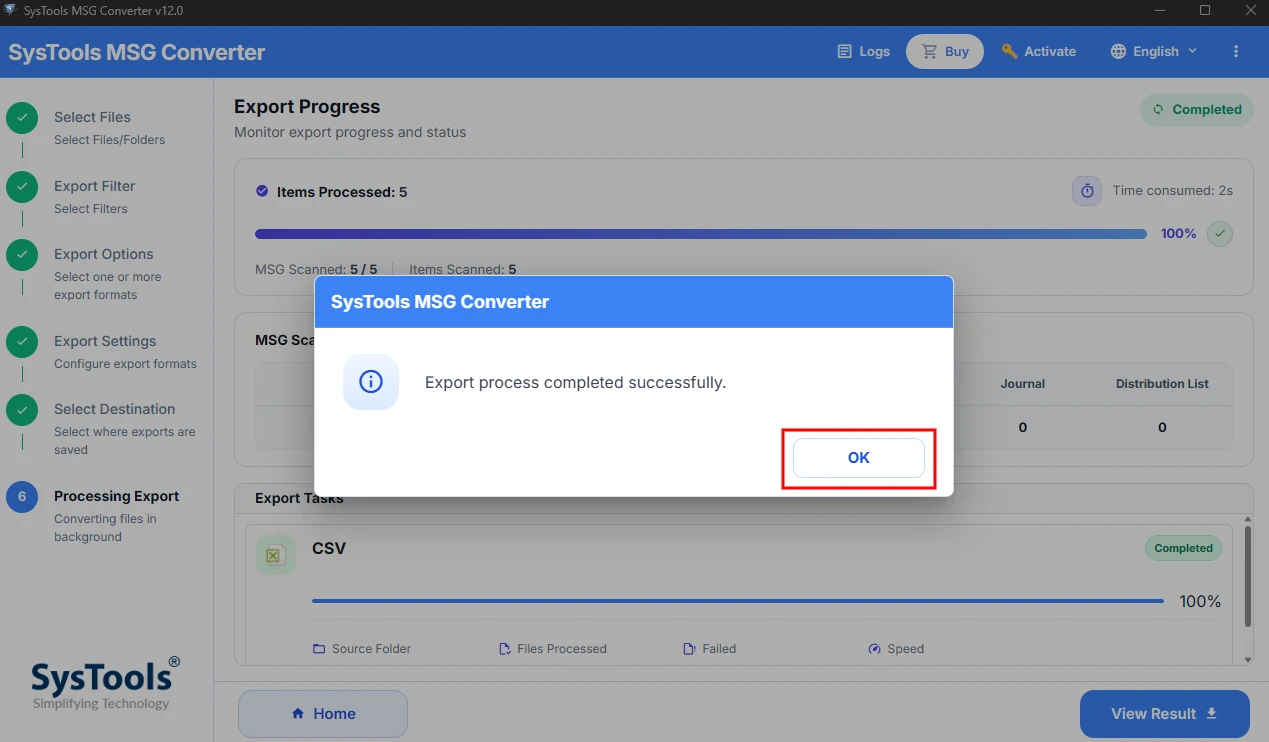
A message confirms Export process completed successfully. Click OK.
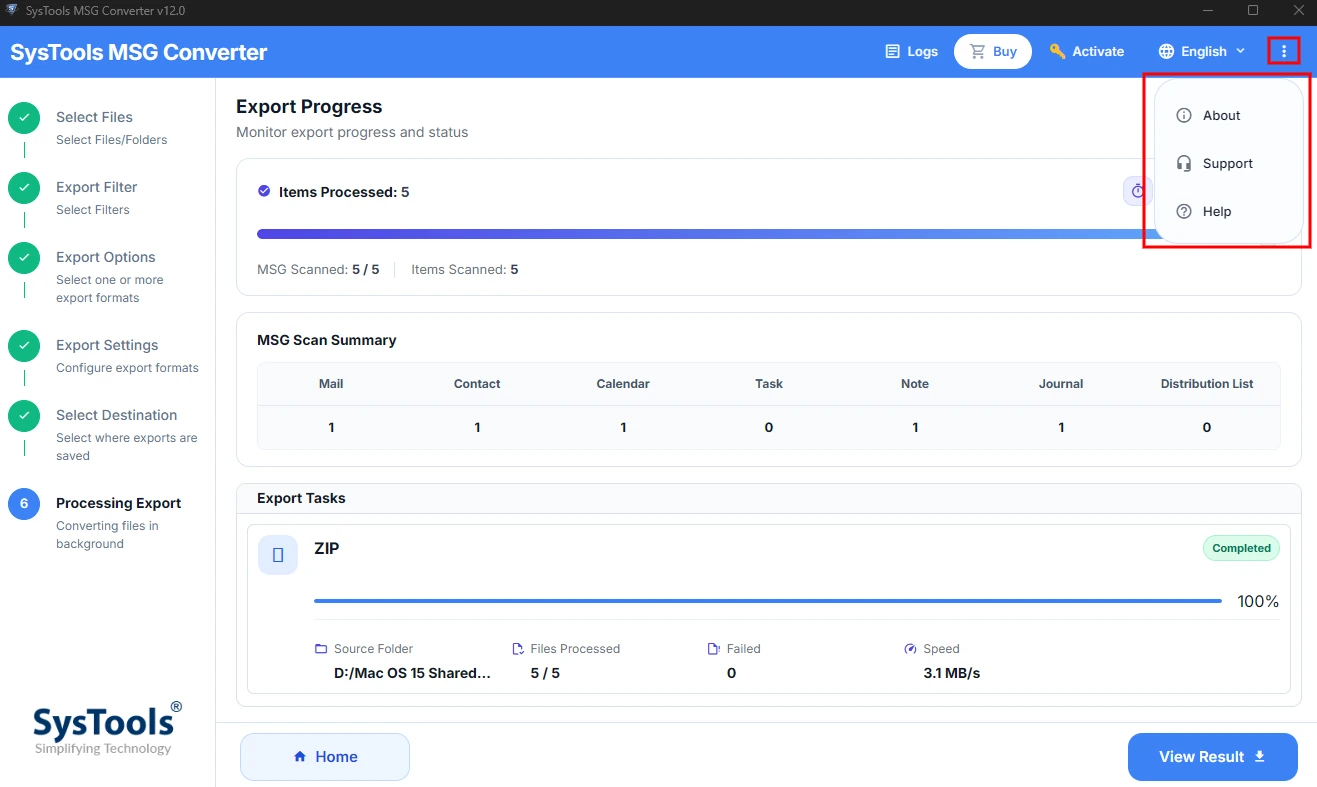
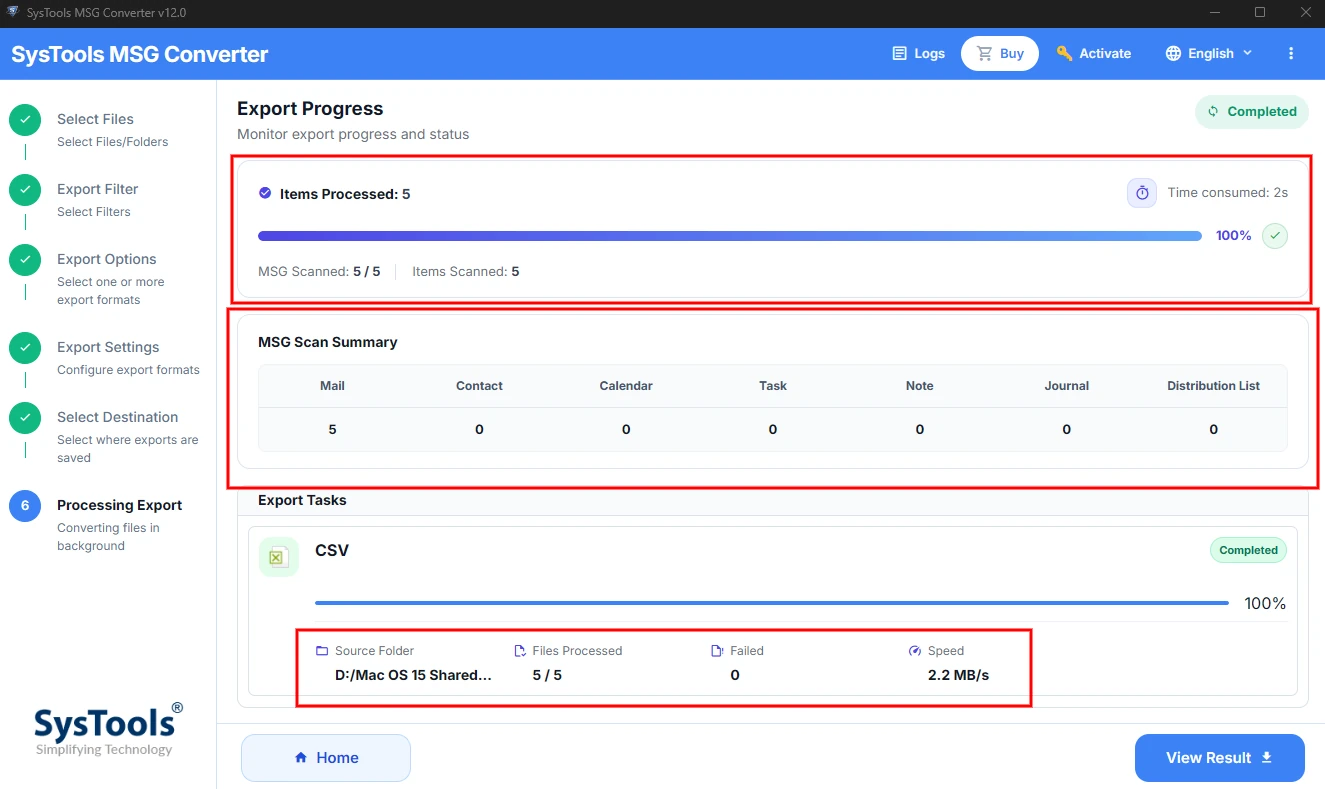
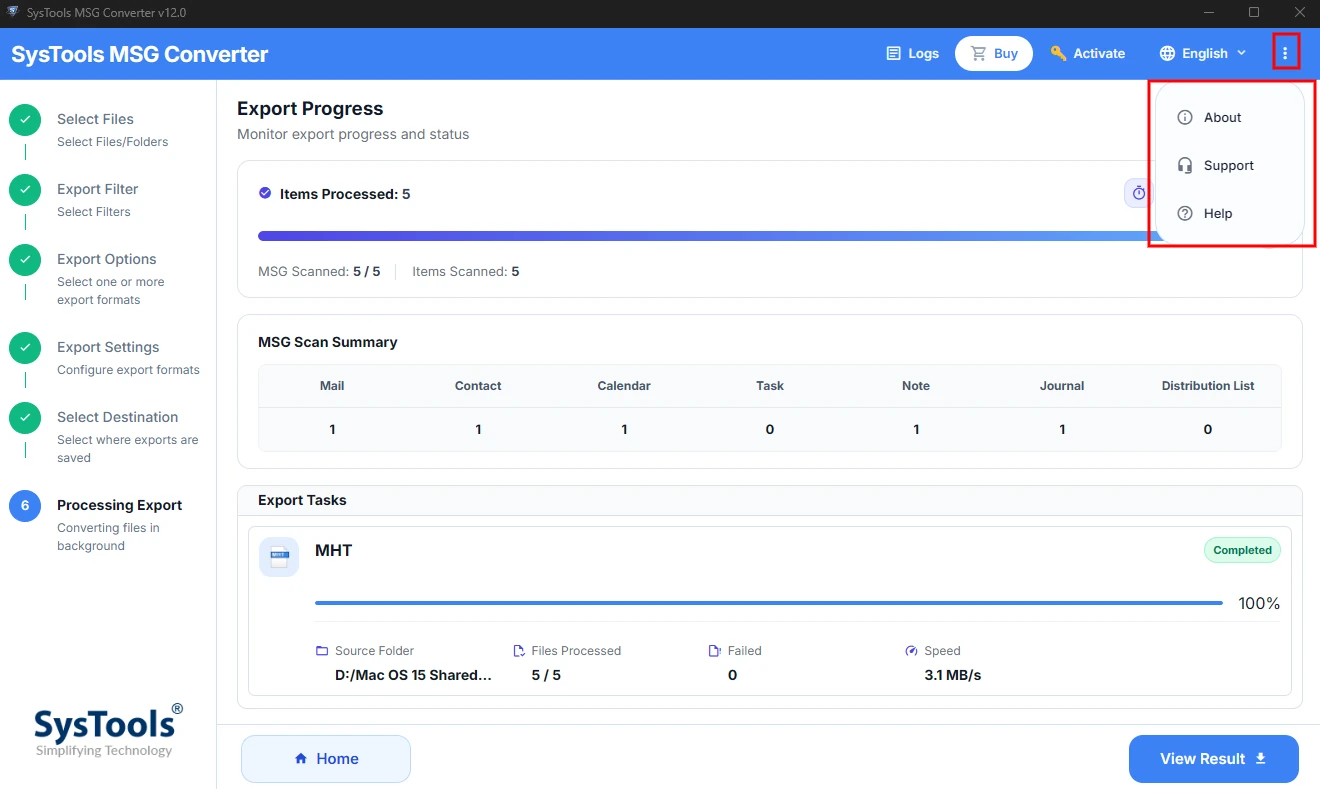
The Export Progress screen shows Items Processed and the MSG Scan Summary for Mail, Contact, Calendar, Task, Note, Journal and Distribution List. Under Export Tasks, check Files Processed, Failed and Speed for the CSV task. It shows Completed at 100%.
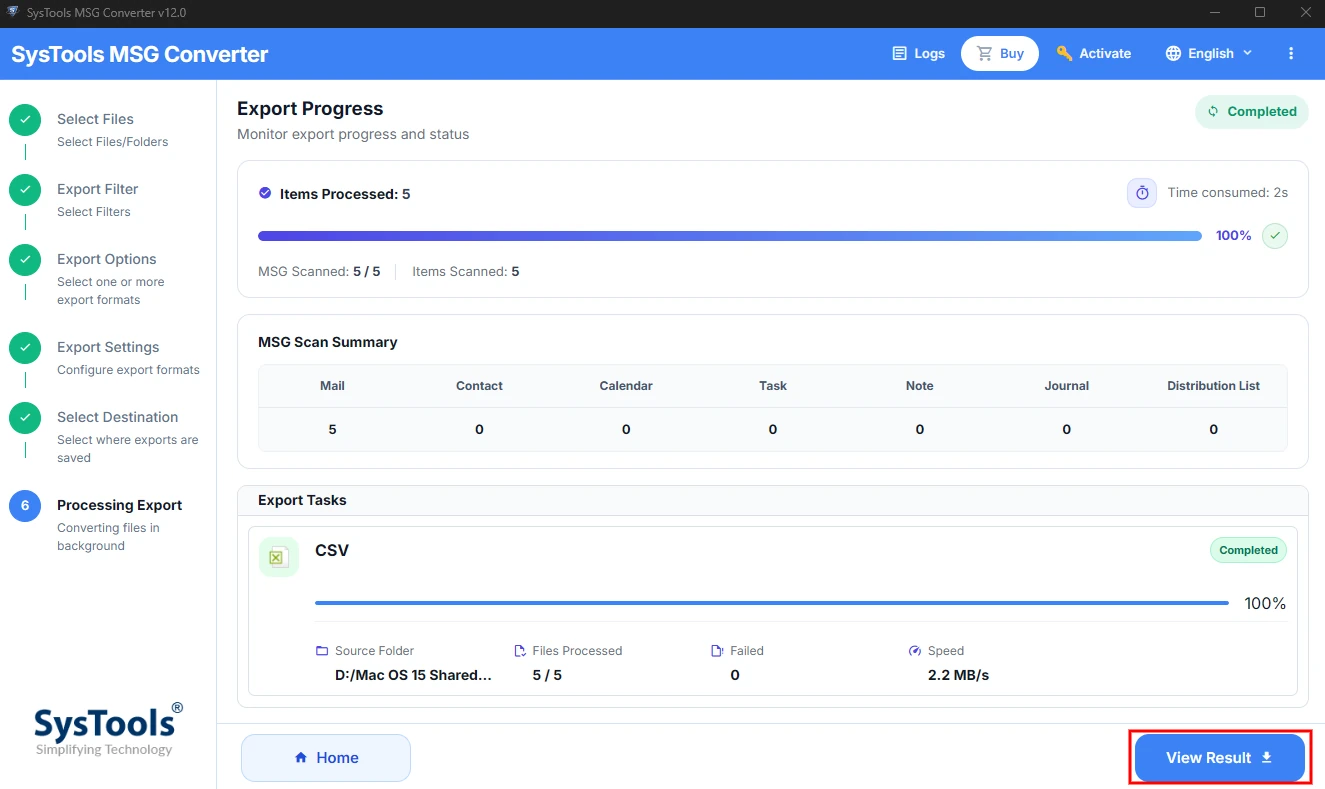
Click View Result to open the output folder.
View the Converted Files
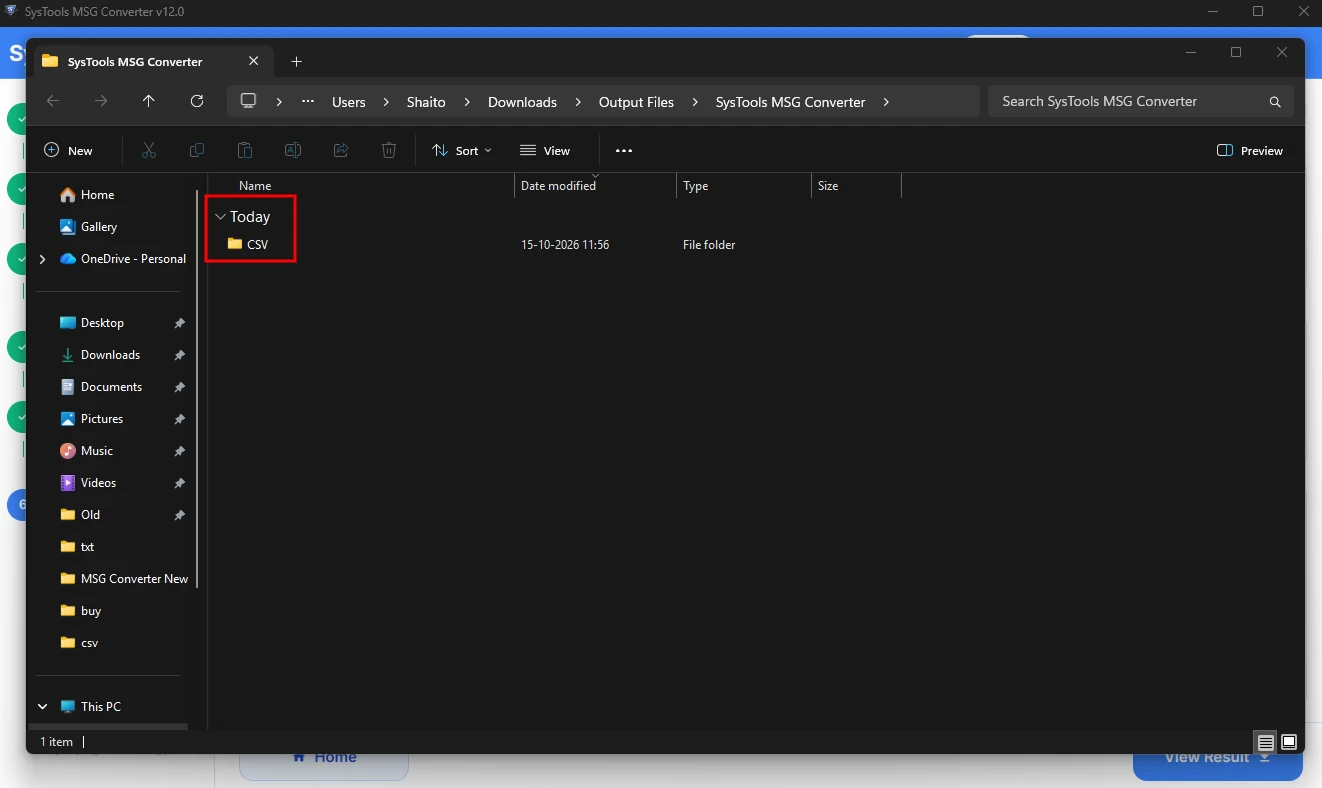
Windows Explorer opens the output folder named SysTools MSG Converter. Open the CSV folder inside it.
The CSV folder holds an MSG Files folder and ExportReport.csv.
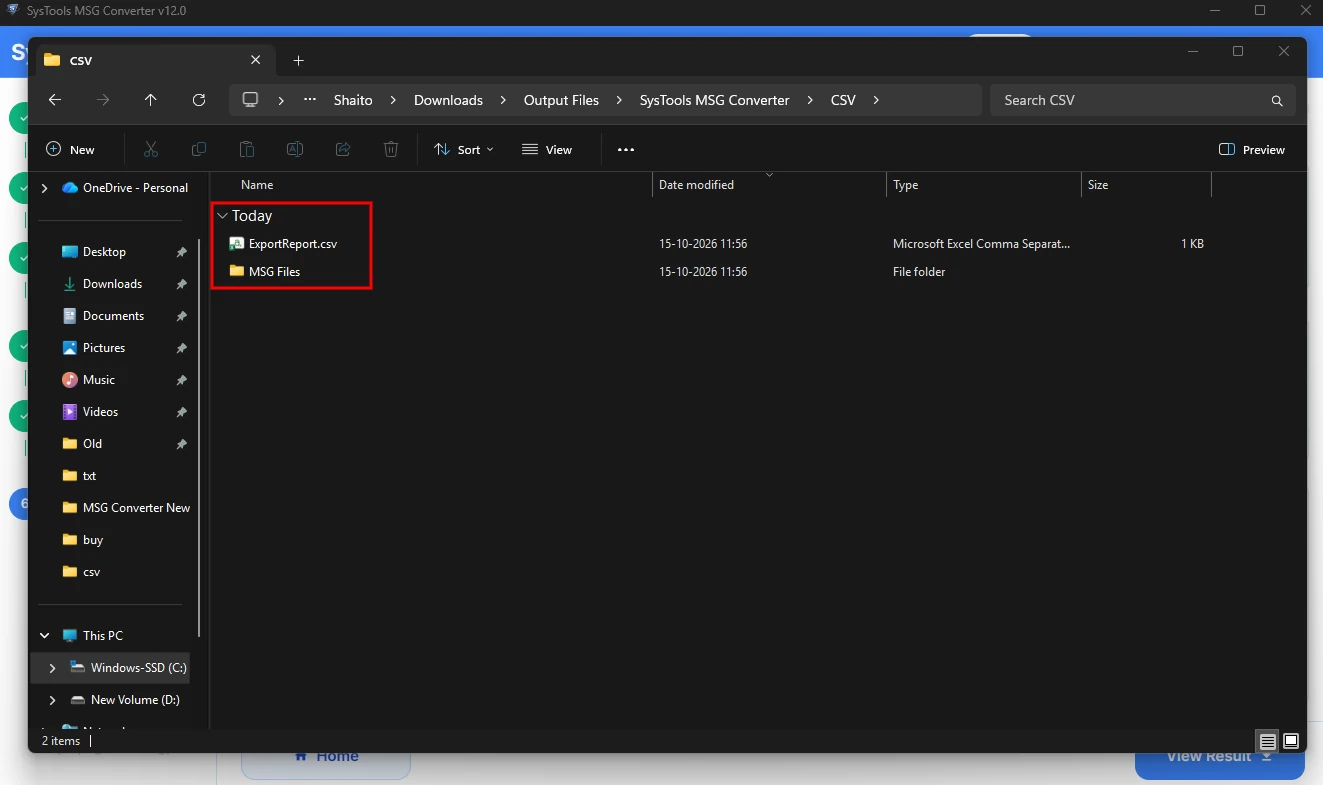
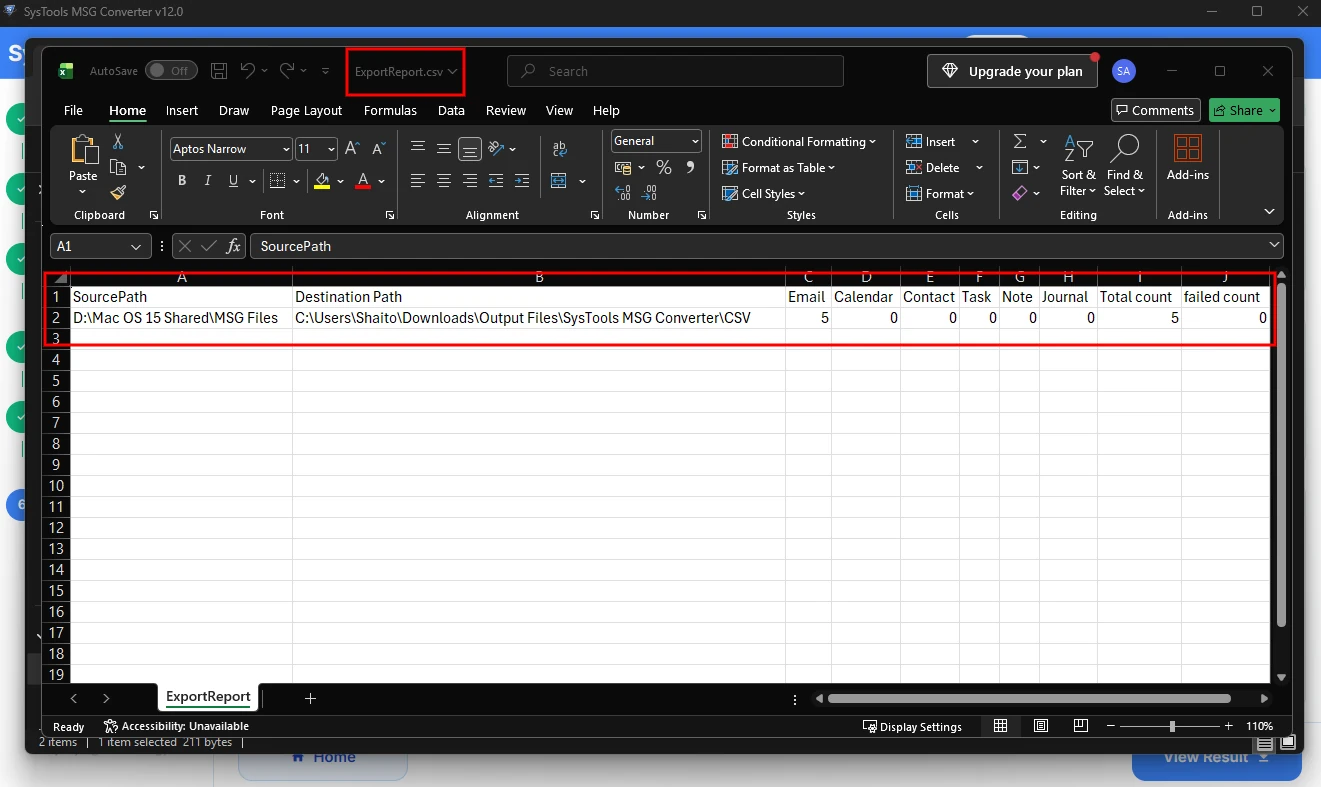
Open ExportReport.csv to see the SourcePath, Destination Path and the count for Email, Calendar, Contact, Task, Note and Journal, plus the Total count and failed count.
Check Logs and App Details
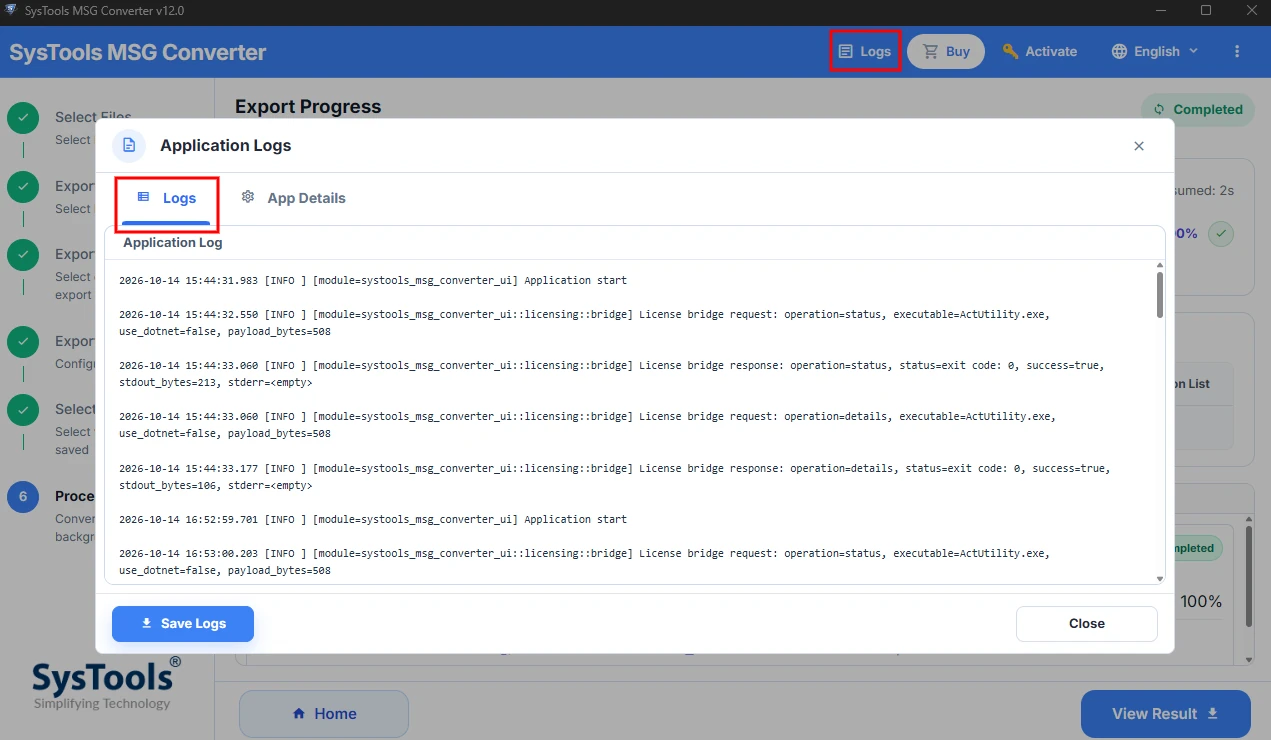
Click Logs in the top bar to open Application Logs. Click Save Logs to keep a copy.
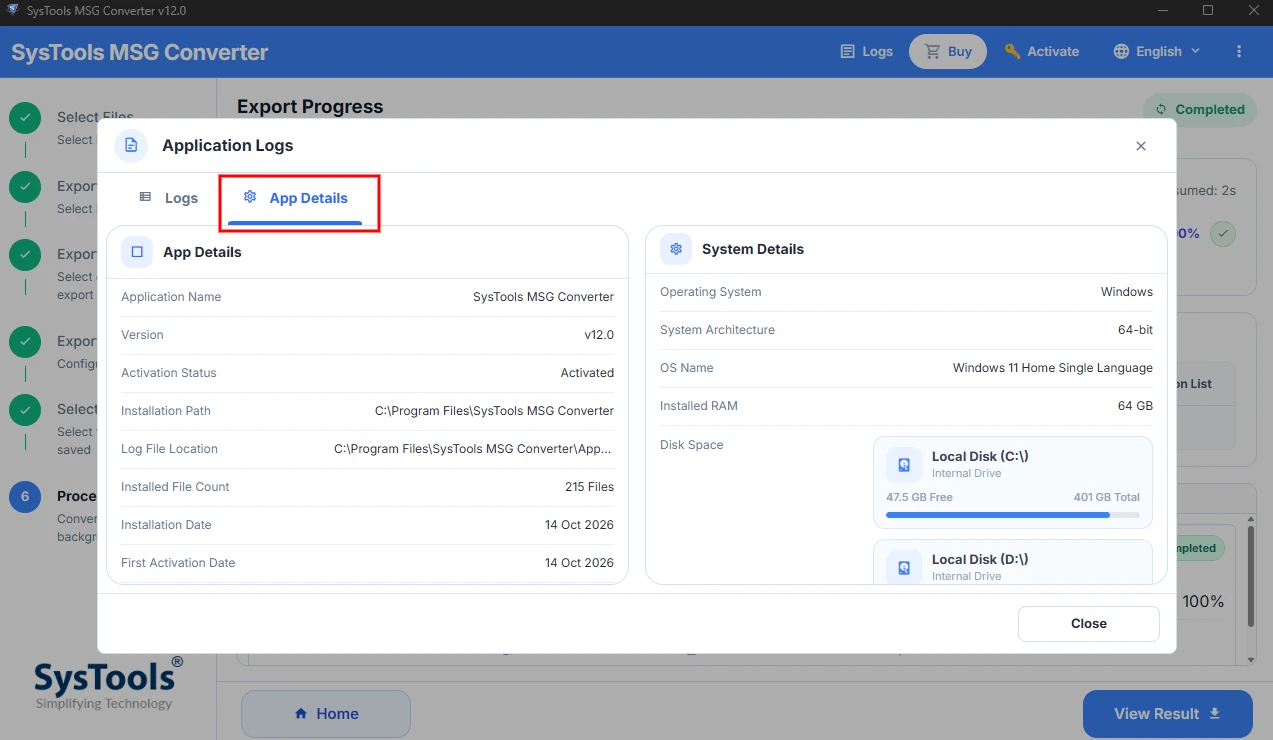
The App Details tab lists application and system details, including version, activation status and operating system.
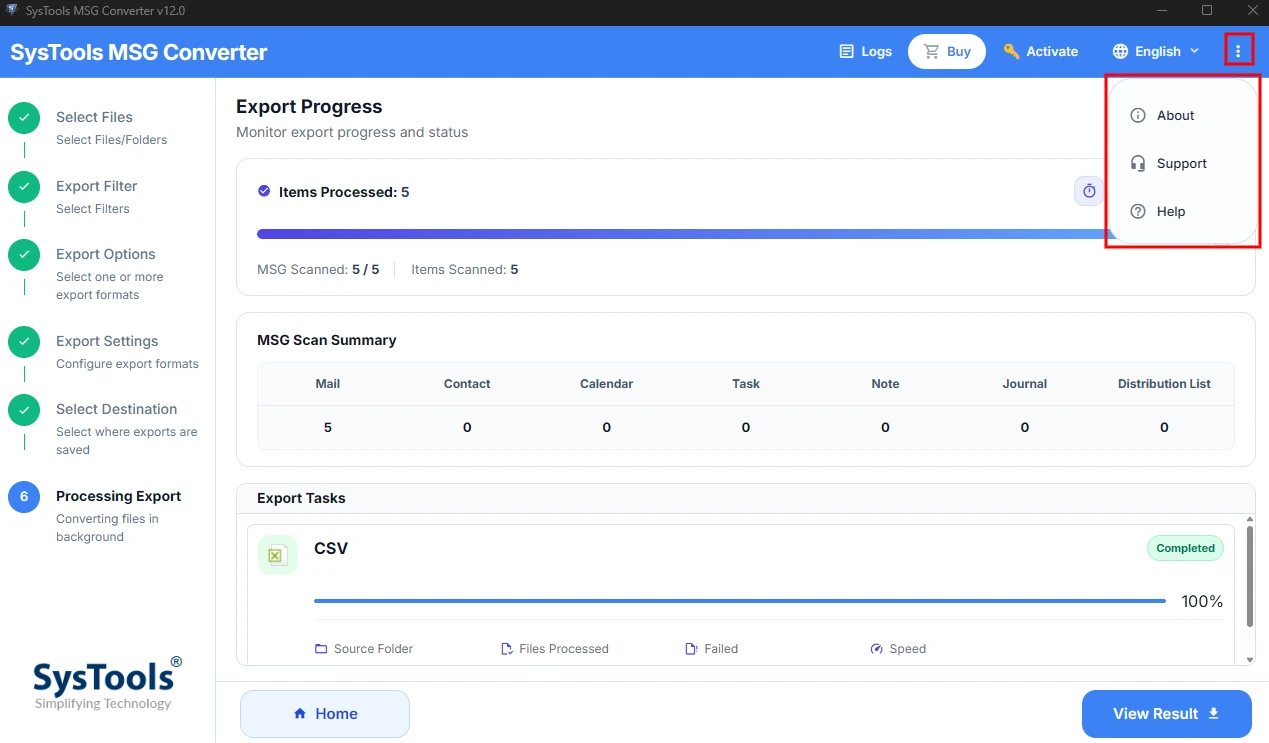
Select the three dot menu in the top bar to open About, Support and Help.
Convert MSG Files to EML
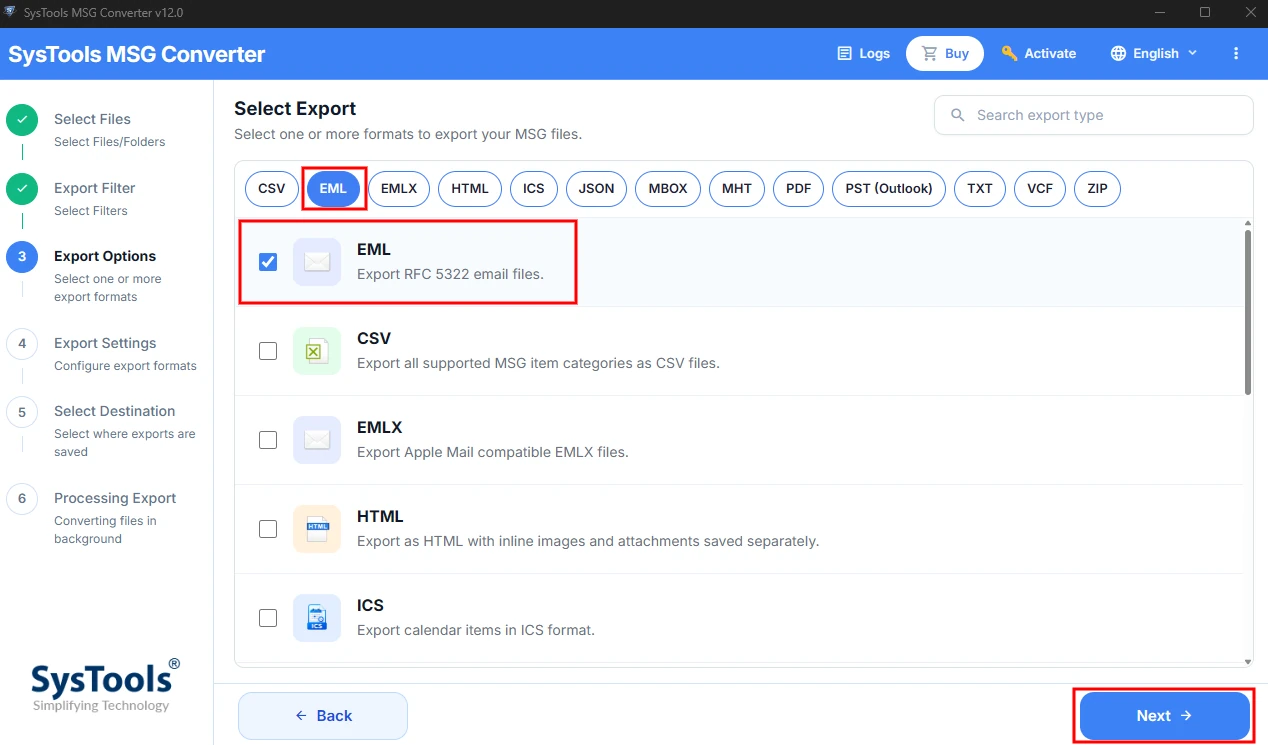
Select EML as the Export Format
Select EML in the Export Options list. It exports RFC 5322 email files. Click Next.
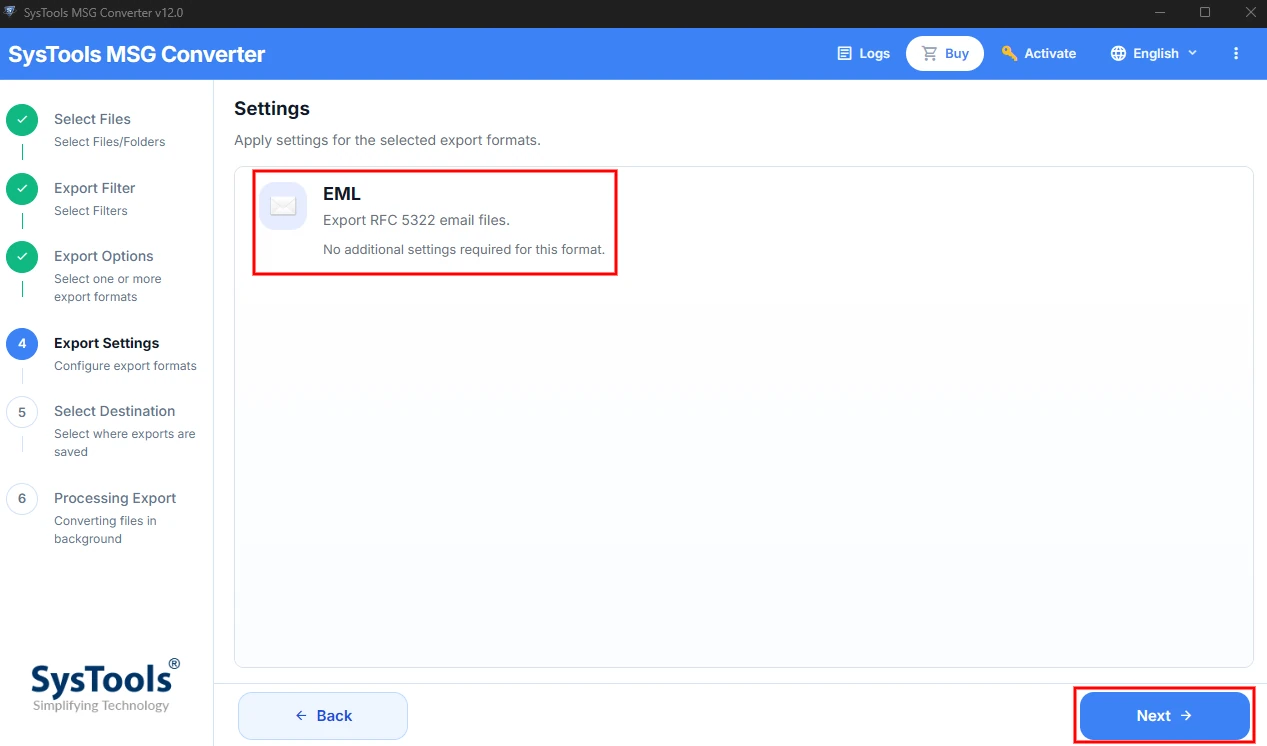
Configure EML Export Settings
EML needs no extra settings. The screen shows No additional settings required for this format. Click Next.
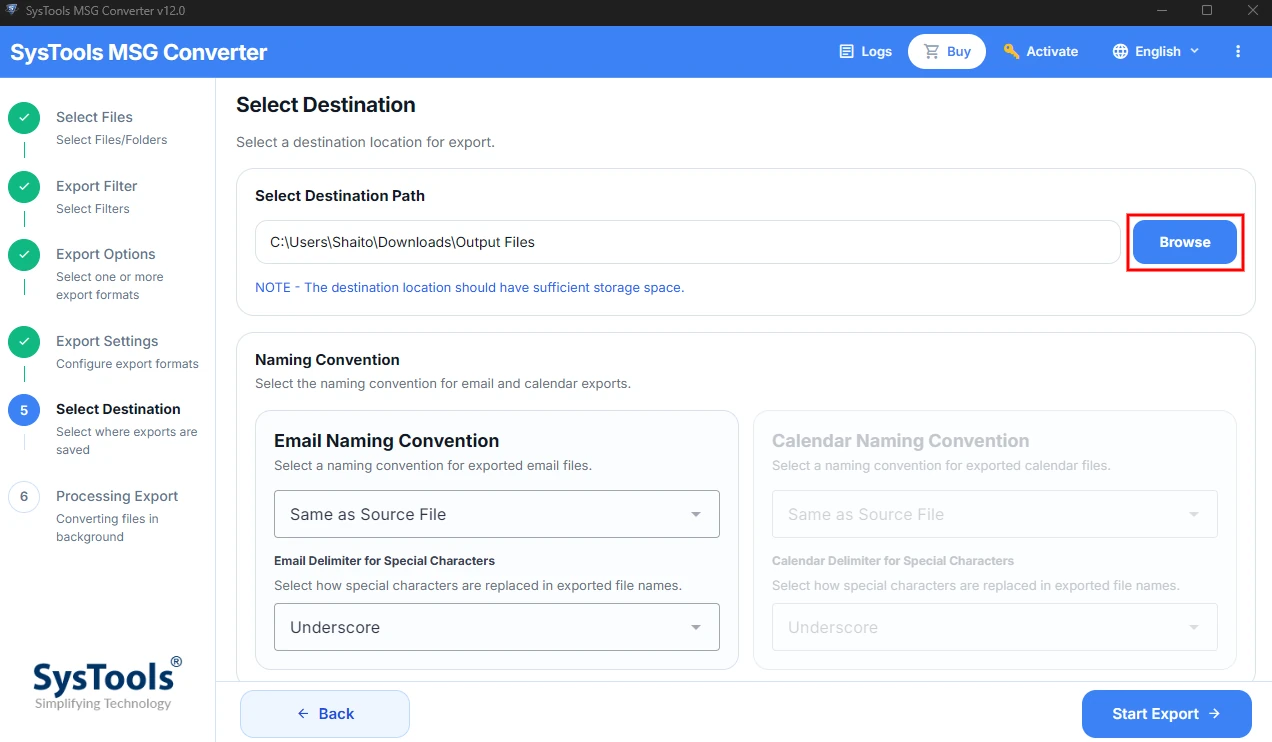
Select the Destination
Click Browse next to Select Destination Path to choose where converted files are saved. Make sure the location has enough storage space.
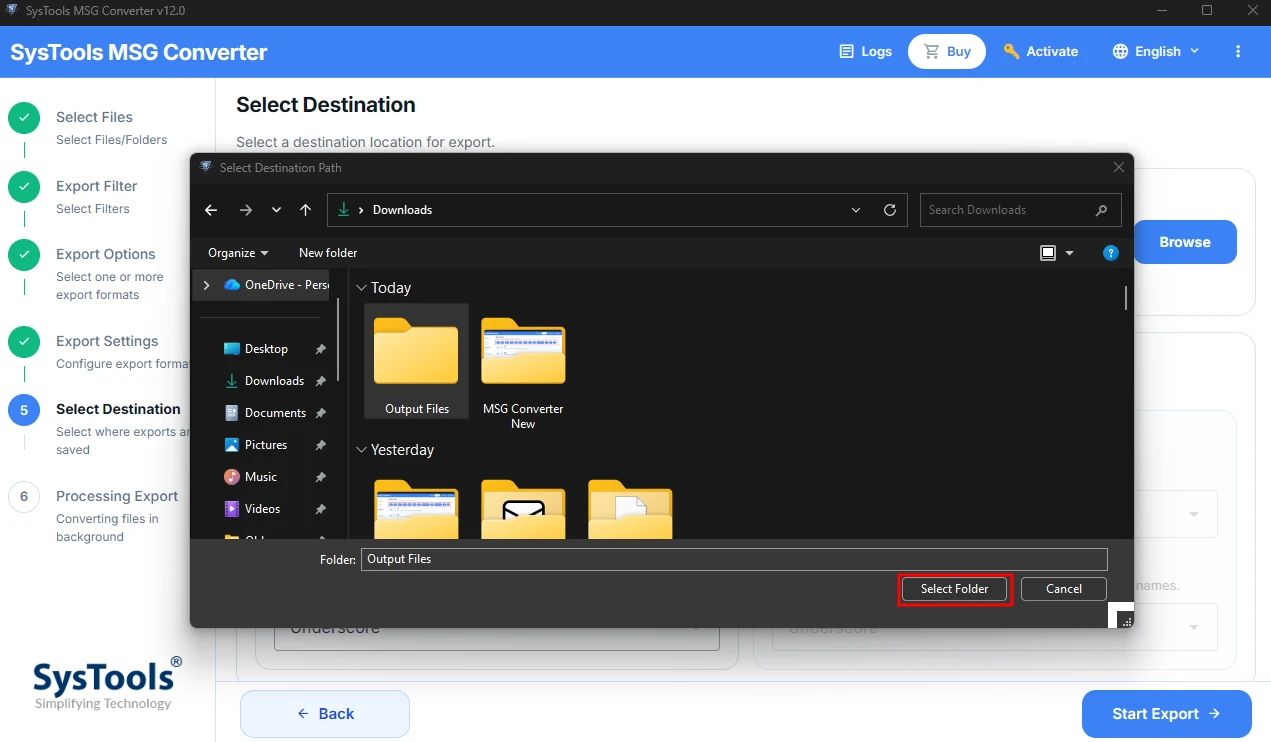
Select a folder in the dialog and click Select Folder.
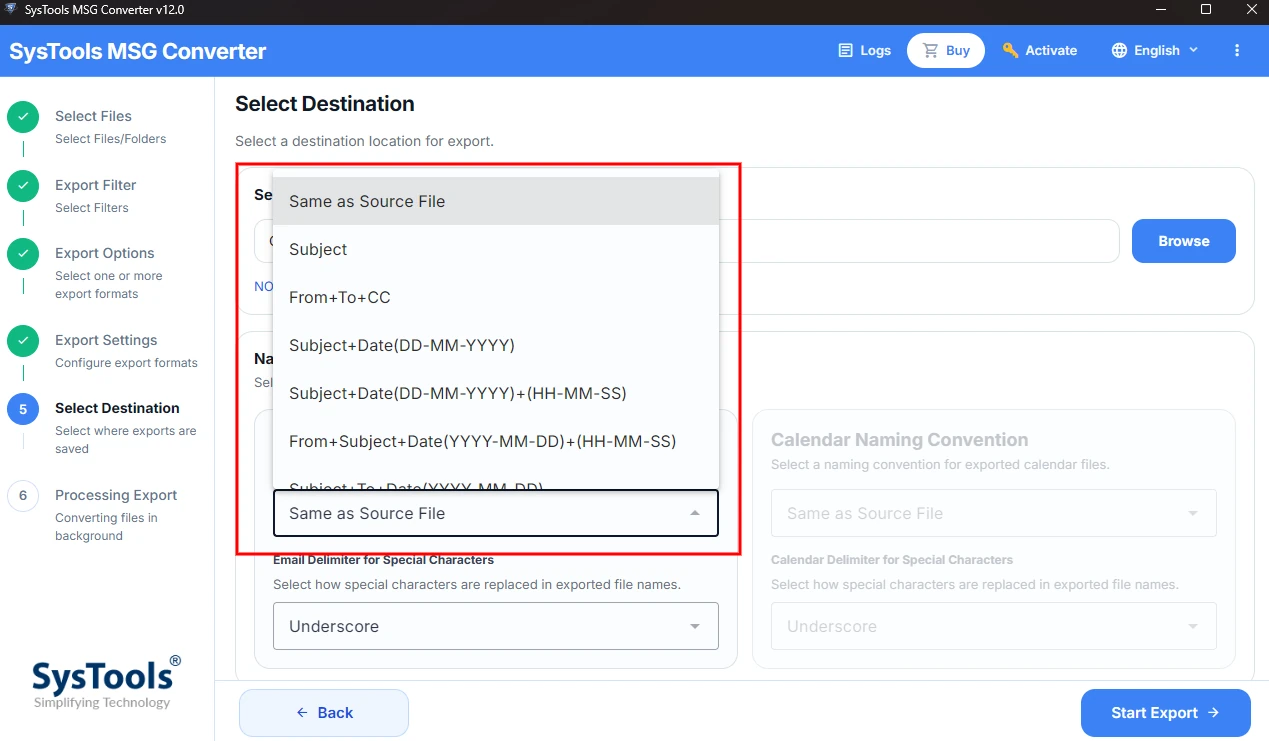
Open Email Naming Convention to name exported email files. Choose Same as Source File or a pattern built from Subject, From, To, CC and Date.
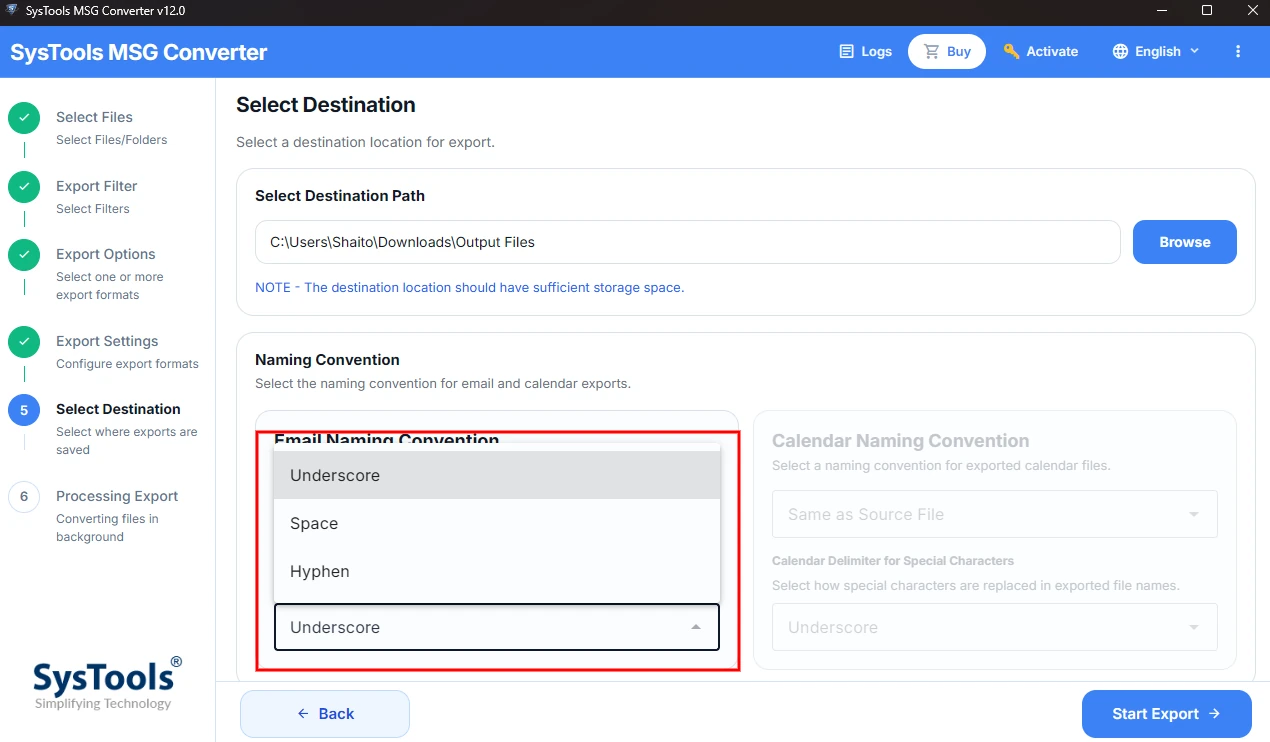
Open Email Delimiter for Special Characters to set what replaces special characters in file names. Select Underscore, Space or Hyphen.
Start the Export and Track Progress
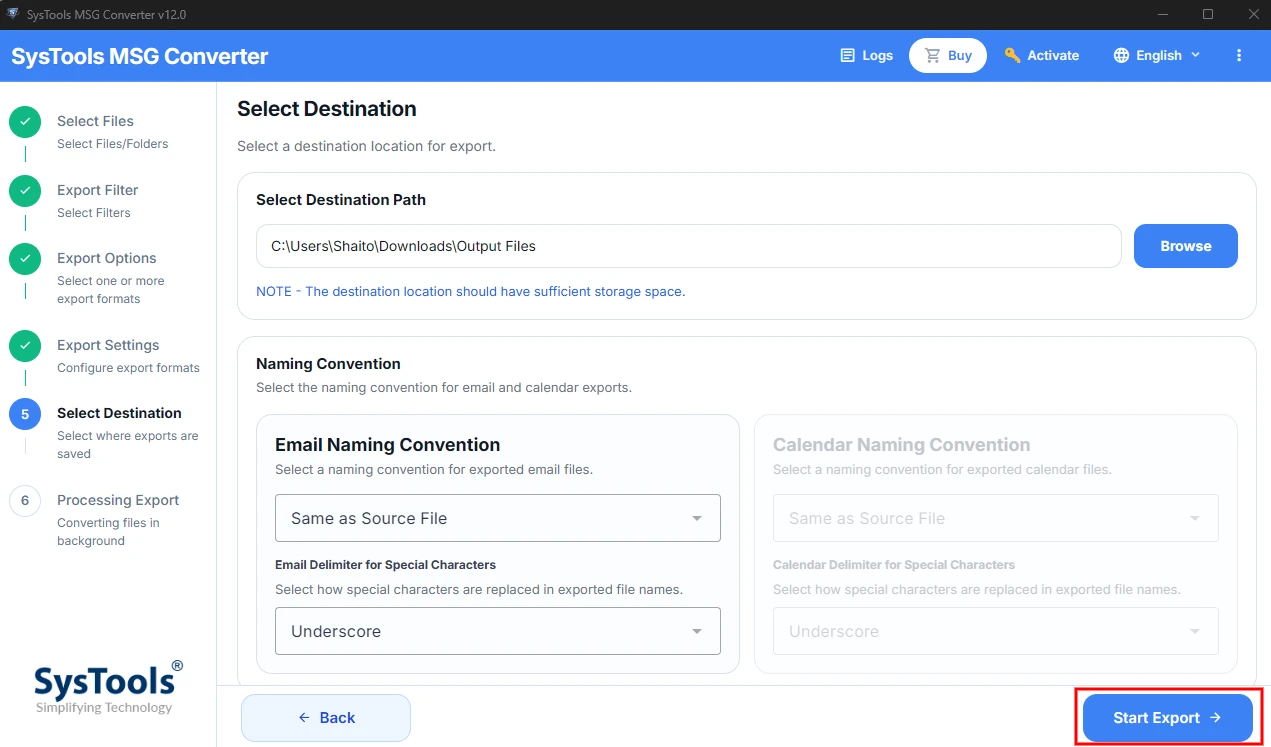
Click Start Export once the destination path is set.
A message confirms Export process completed successfully. Click OK.
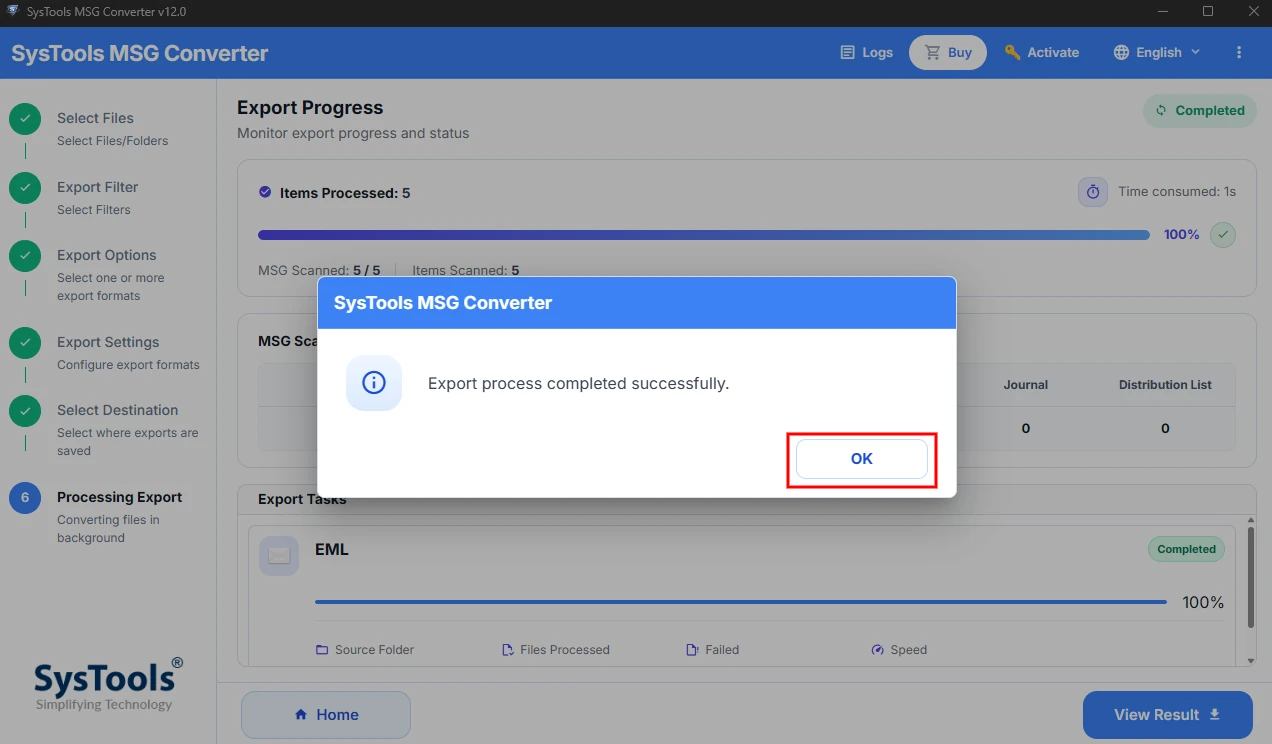
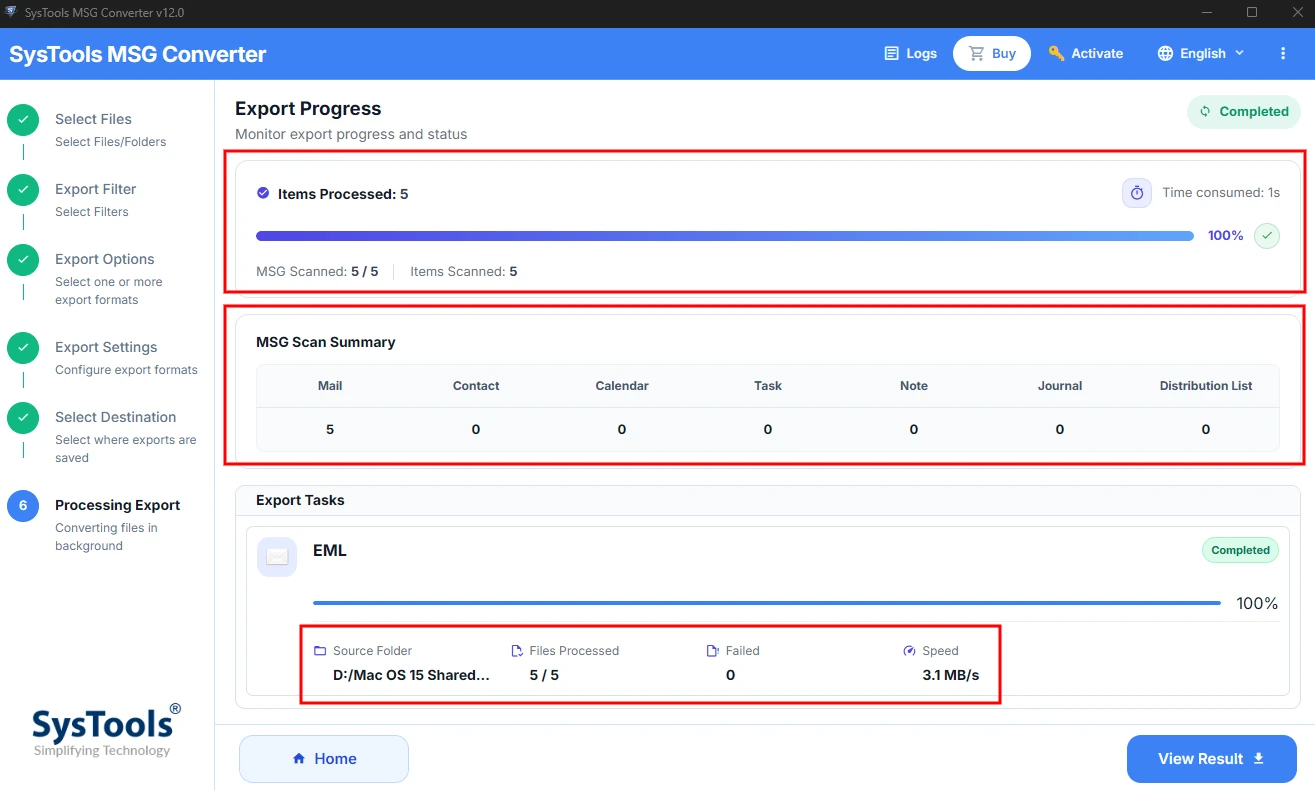
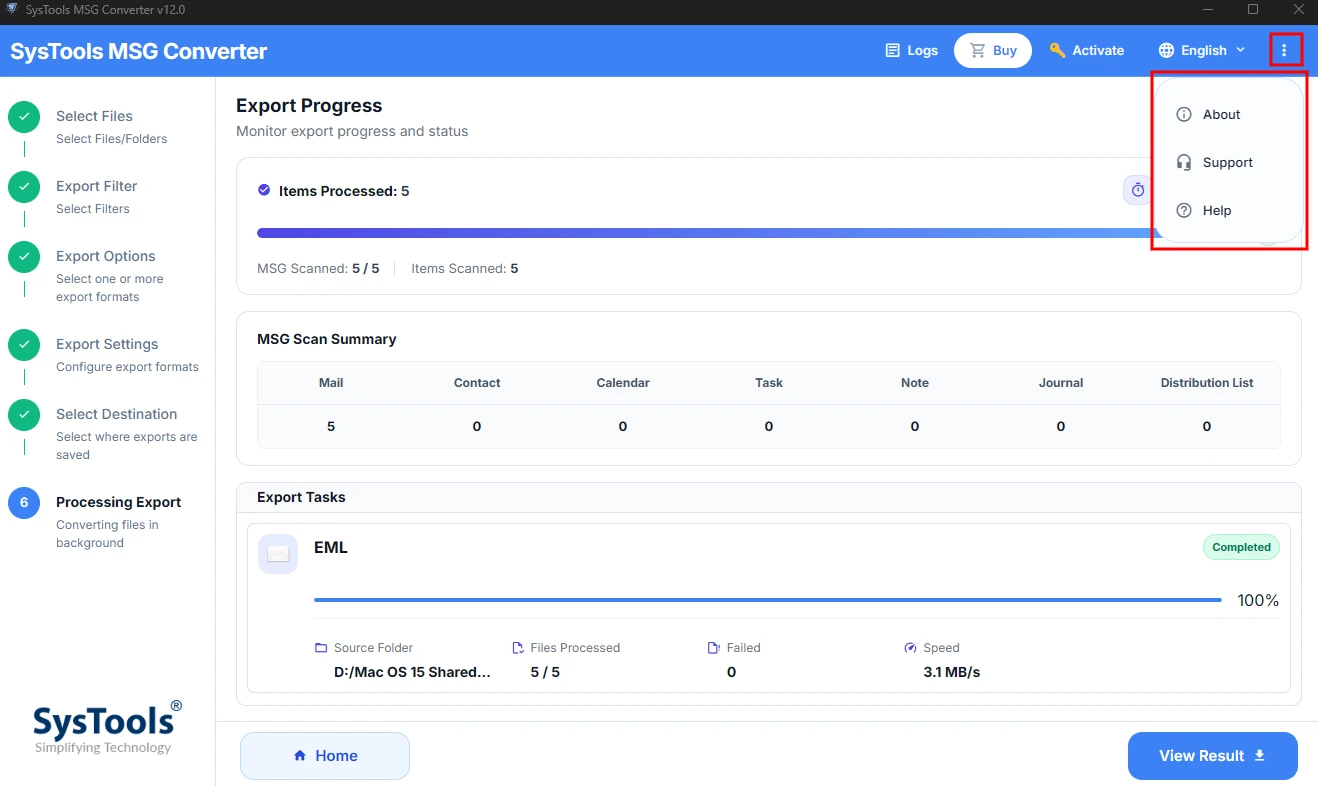
The Export Progress screen shows Items Processed and the MSG Scan Summary for Mail, Contact, Calendar, Task, Note, Journal and Distribution List. Under Export Tasks, check Files Processed, Failed and Speed for the EML task. It shows Completed at 100%.
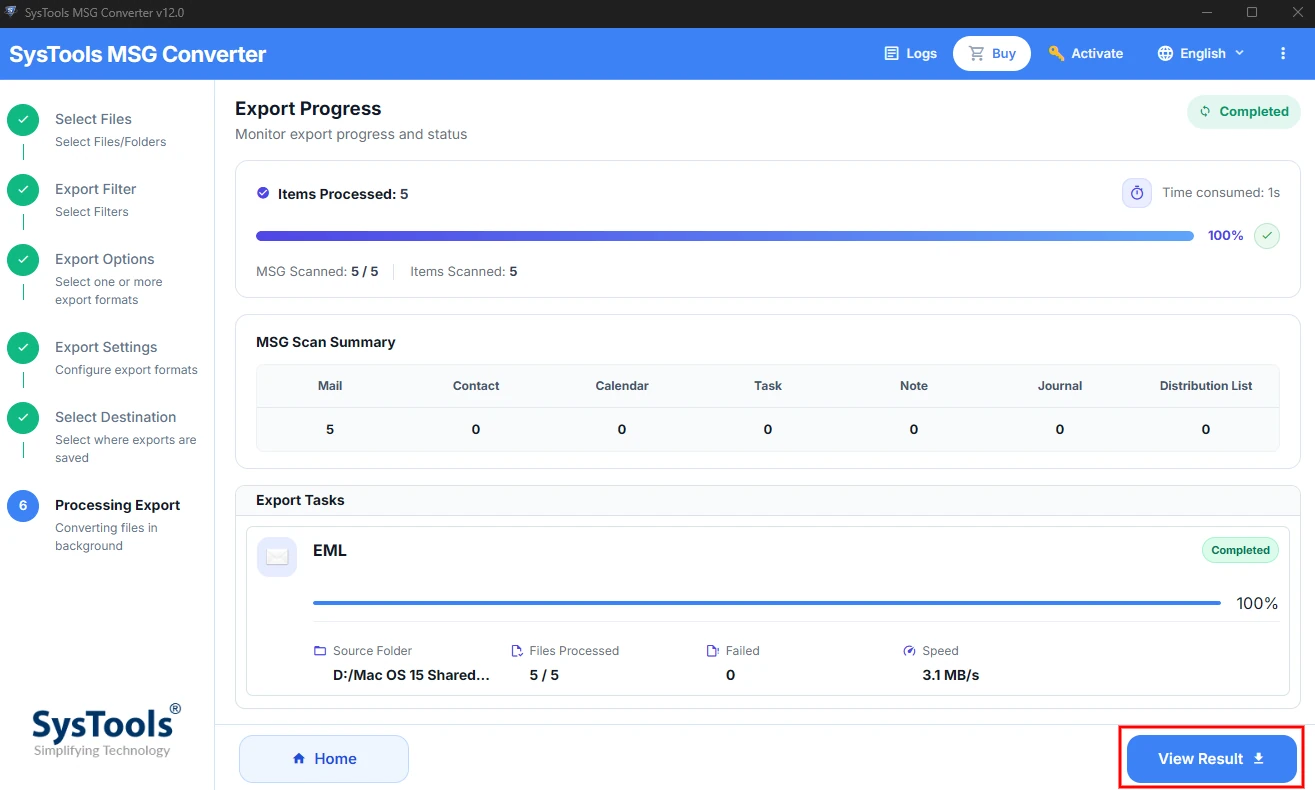
Click View Result to open the output folder.
View the Converted Files
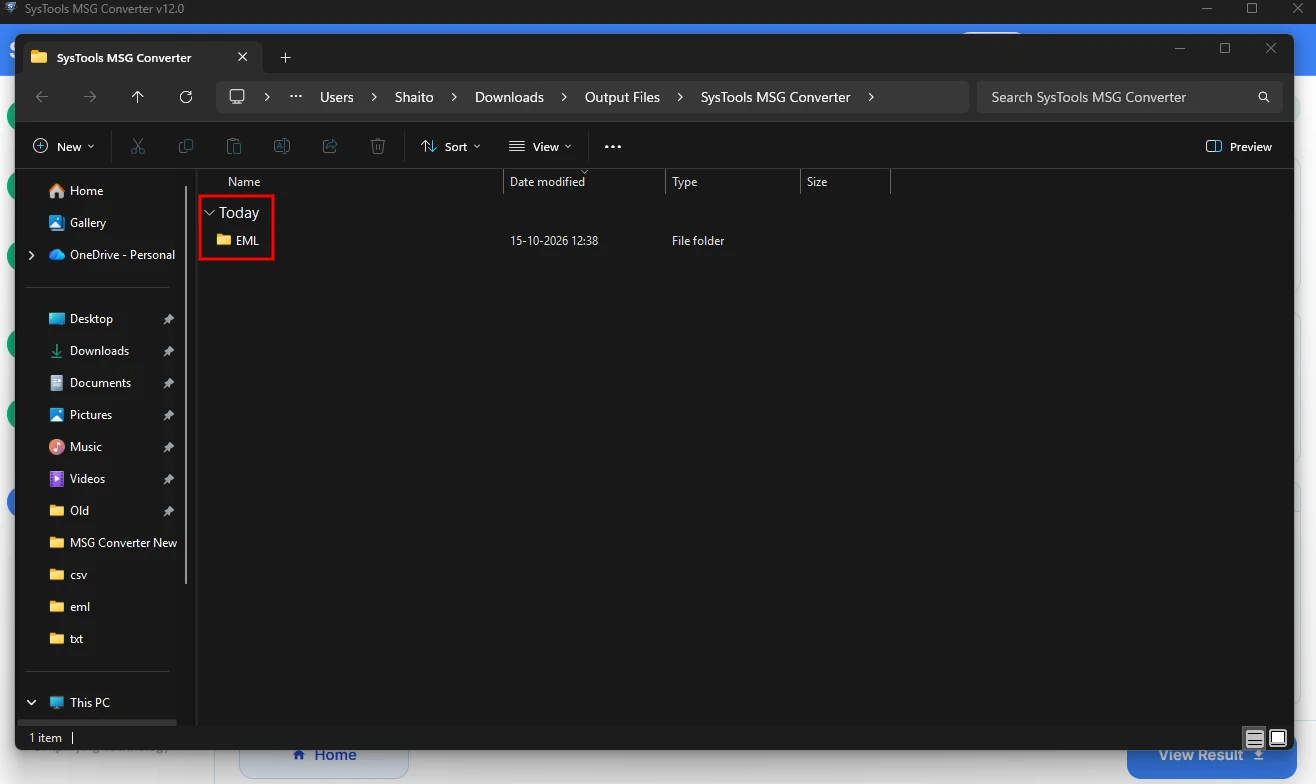
Windows Explorer opens the output folder named SysTools MSG Converter. Open the EML folder inside it.
The EML folder holds an MSG Files folder and ExportReport.csv.
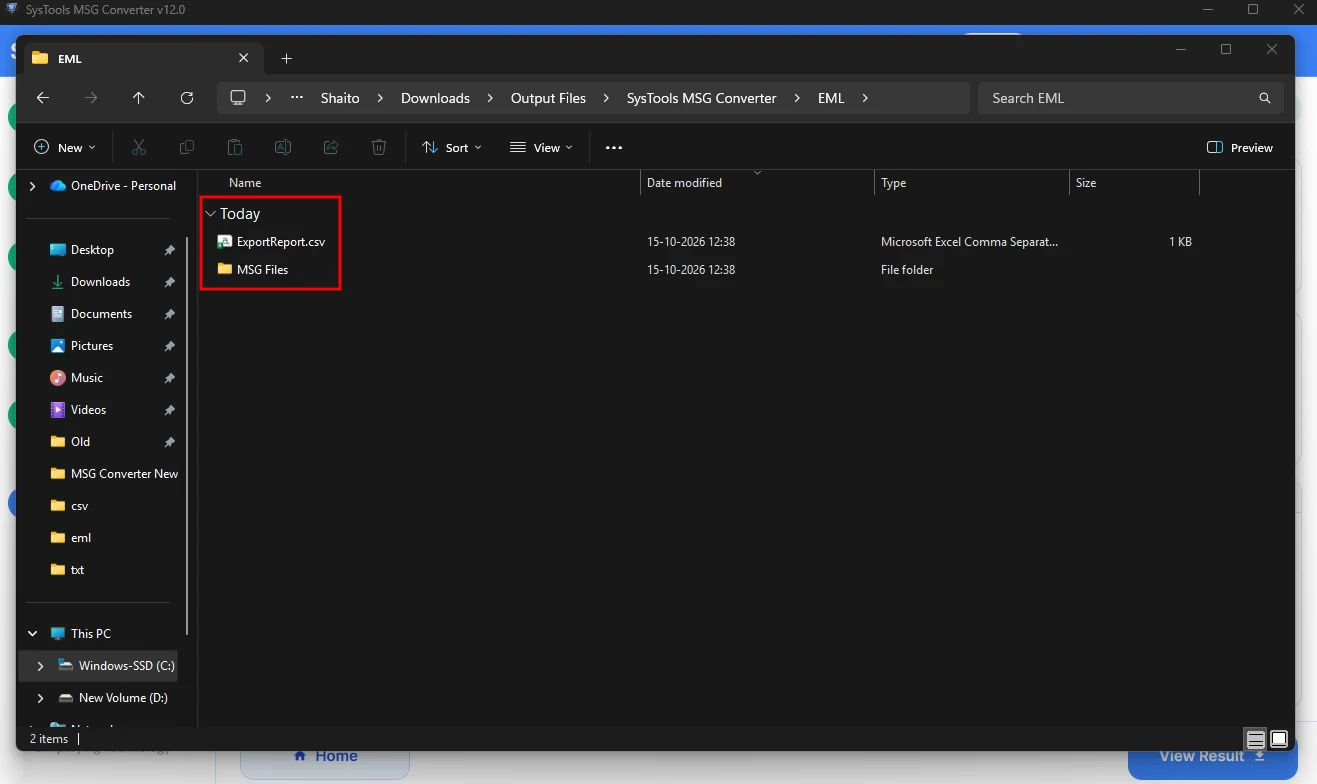
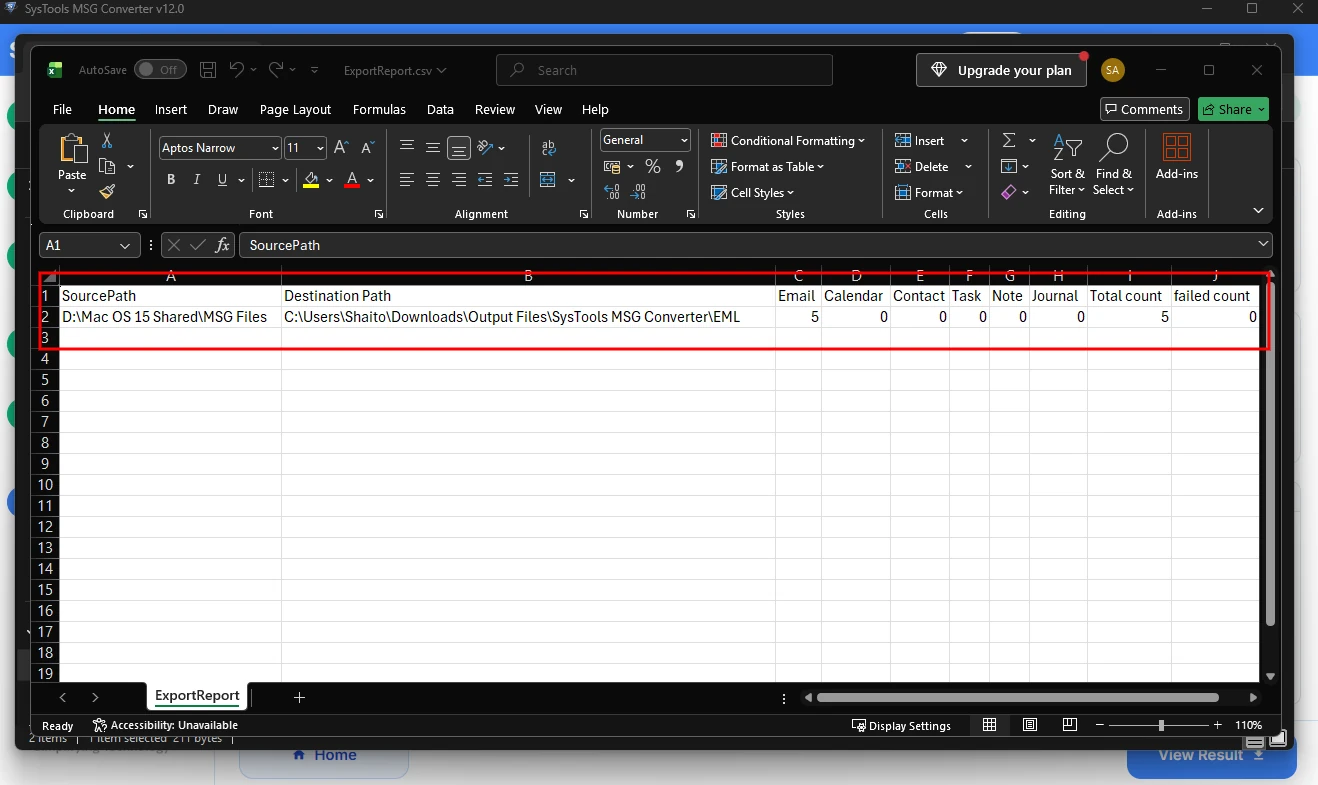
Open ExportReport.csv to see the SourcePath, Destination Path and the count for Email, Calendar, Contact, Task, Note and Journal, plus the Total count and failed count.
Check Logs and App Details
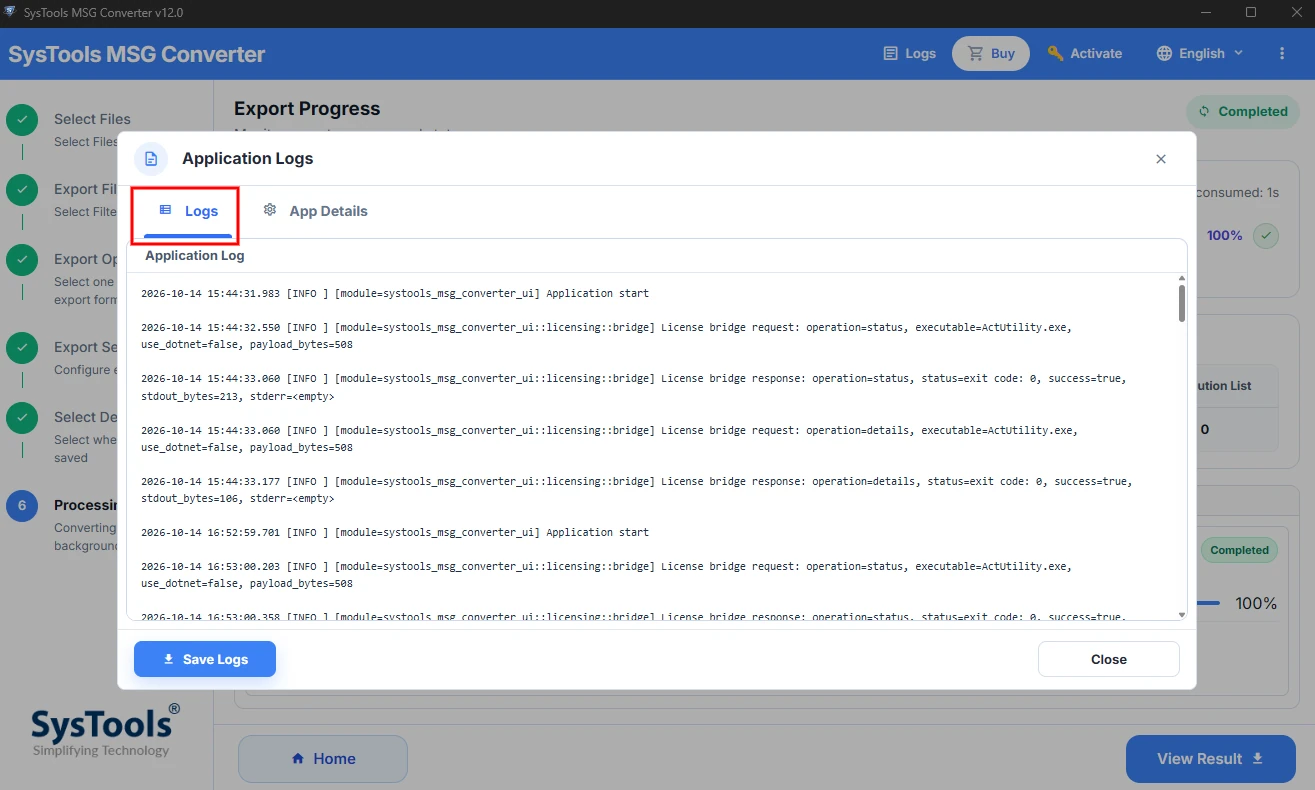
Click Logs in the top bar to open Application Logs. Click Save Logs to keep a copy.
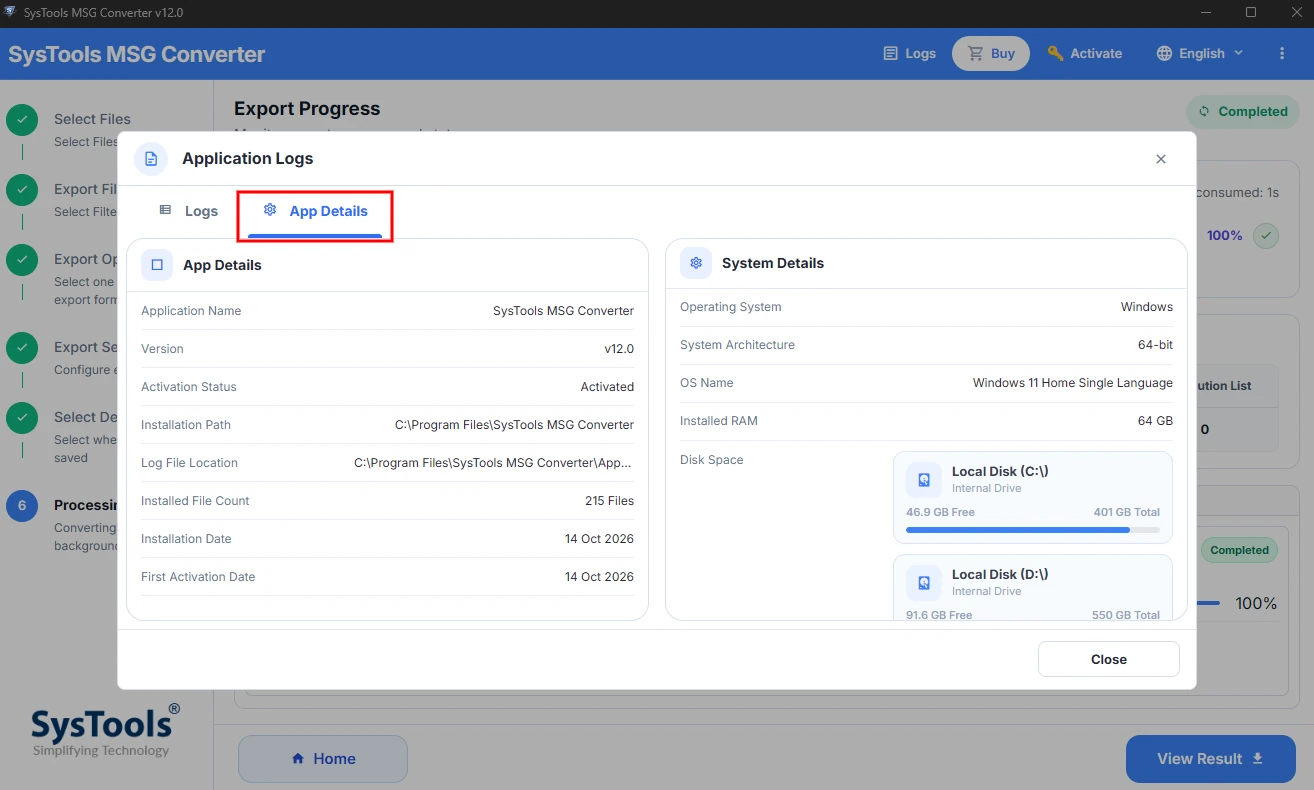
The App Details tab lists application and system details, including version, activation status and operating system.
Select the three dot menu in the top bar to open About, Support and Help.
Convert MSG Files to EMLX
Select EMLX as the Export Format
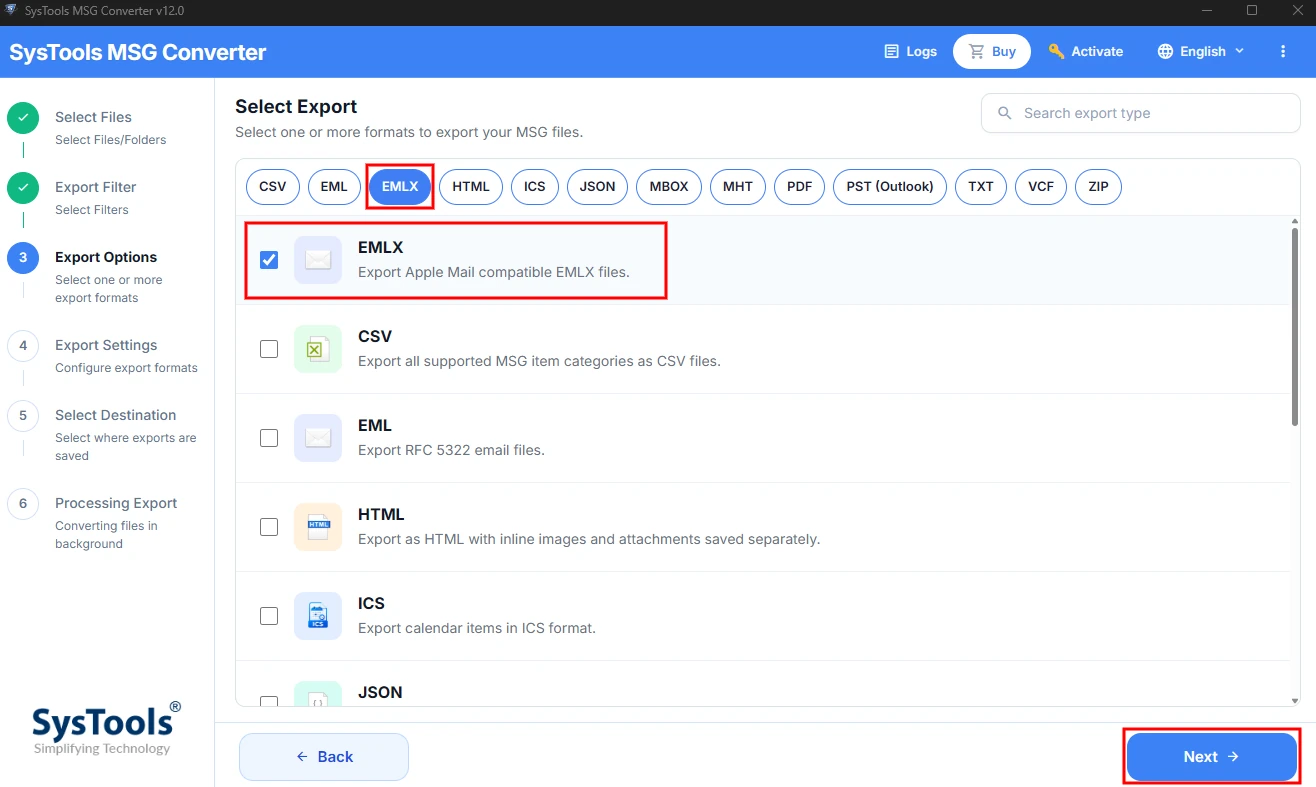
Select EMLX in the Export Options list. It exports EMLX files that Apple Mail can open. Click Next.
Configure EMLX Export Settings
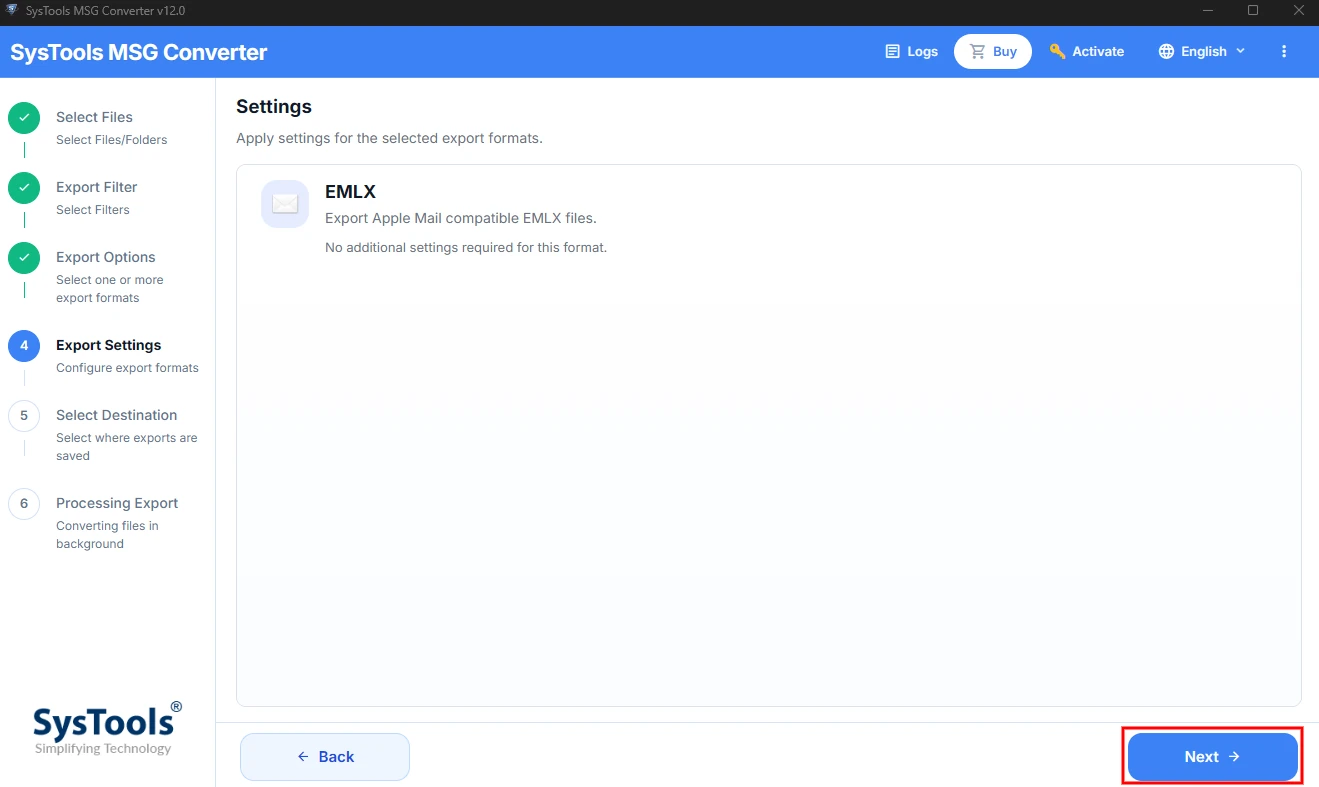
EMLX needs no extra settings. The screen shows No additional settings required for this format. Click Next.
Select the Destination
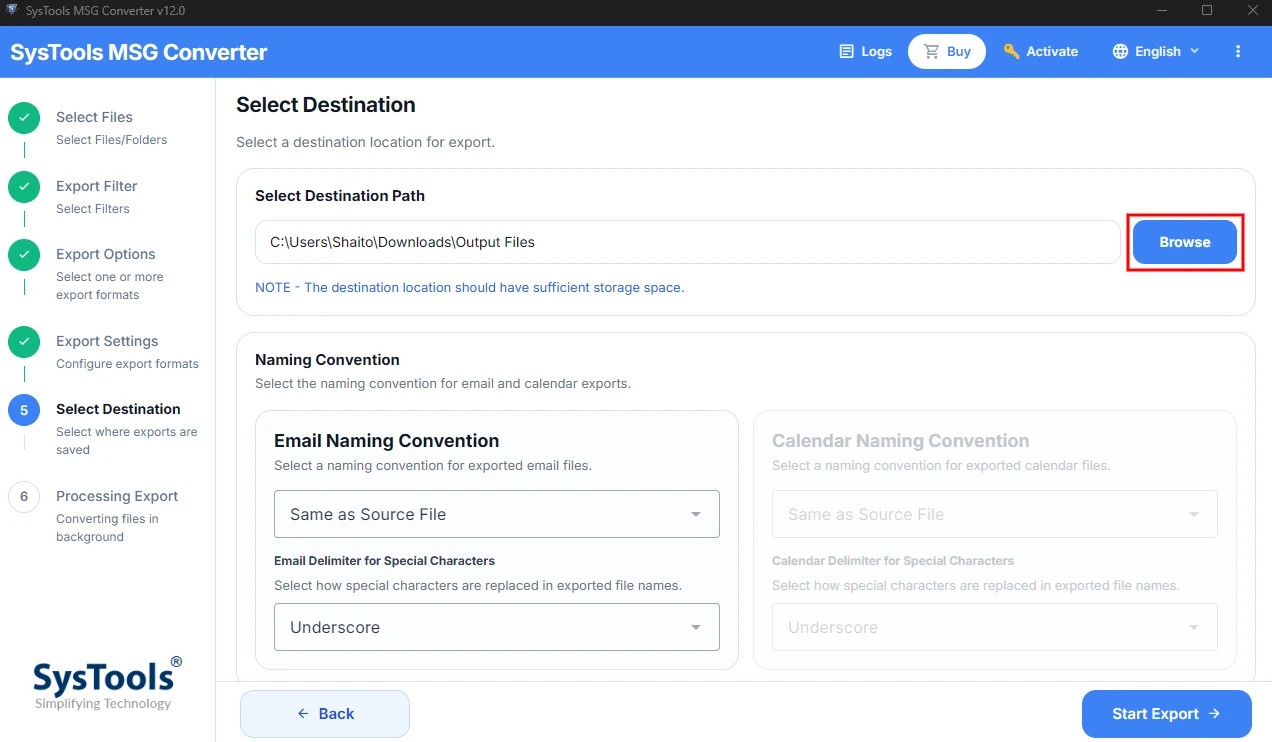
Click Browse next to Select Destination Path to choose where converted files are saved. Make sure the location has enough storage space.
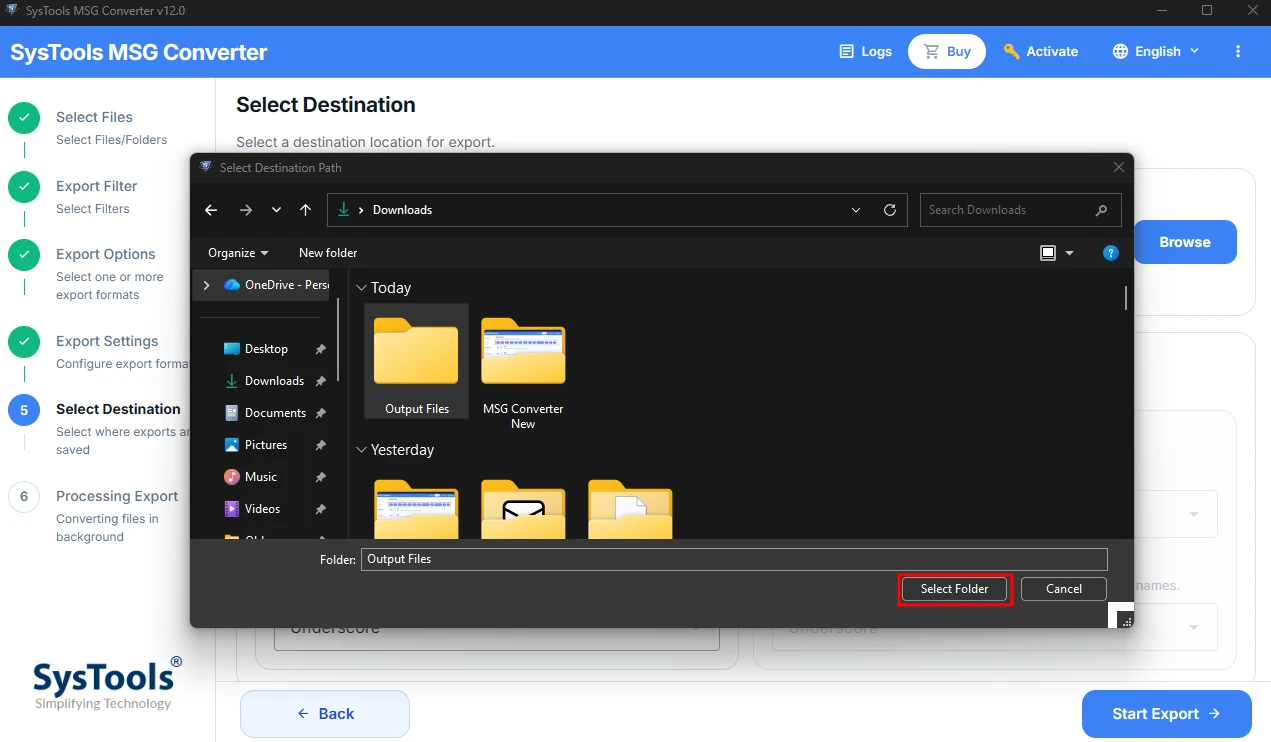
Select a folder in the dialog and click Select Folder.
Open Email Naming Convention to name exported email files. Choose Same as Source File or a pattern built from Subject, From, To, CC and Date.
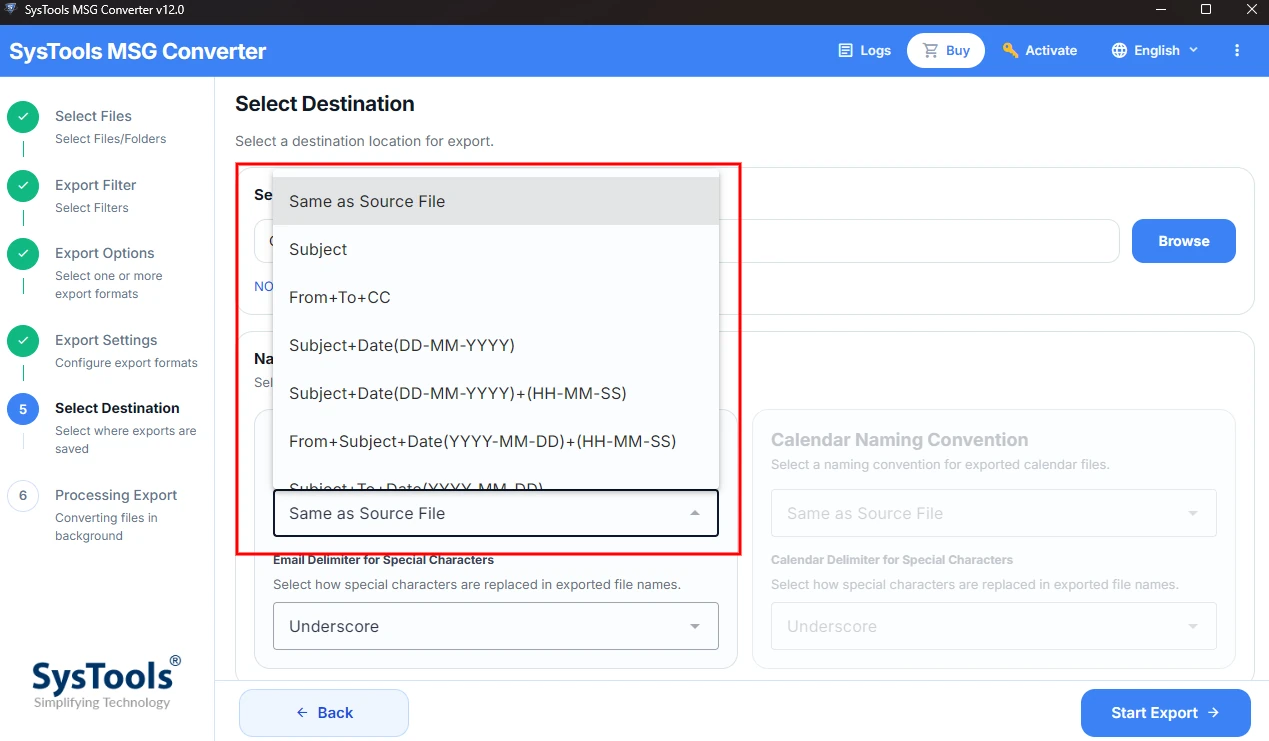
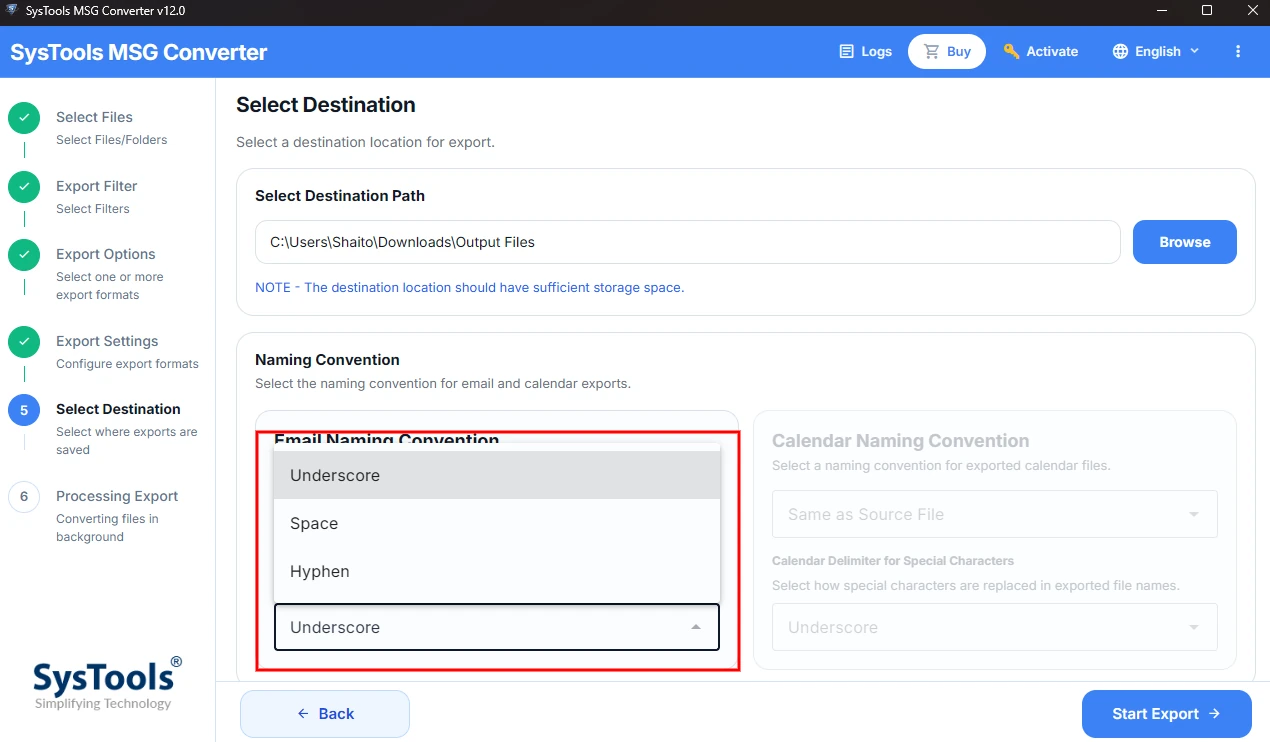
Open Email Delimiter for Special Characters to set what replaces special characters in file names. Select Underscore, Space or Hyphen.
Start the Export and Track Progress
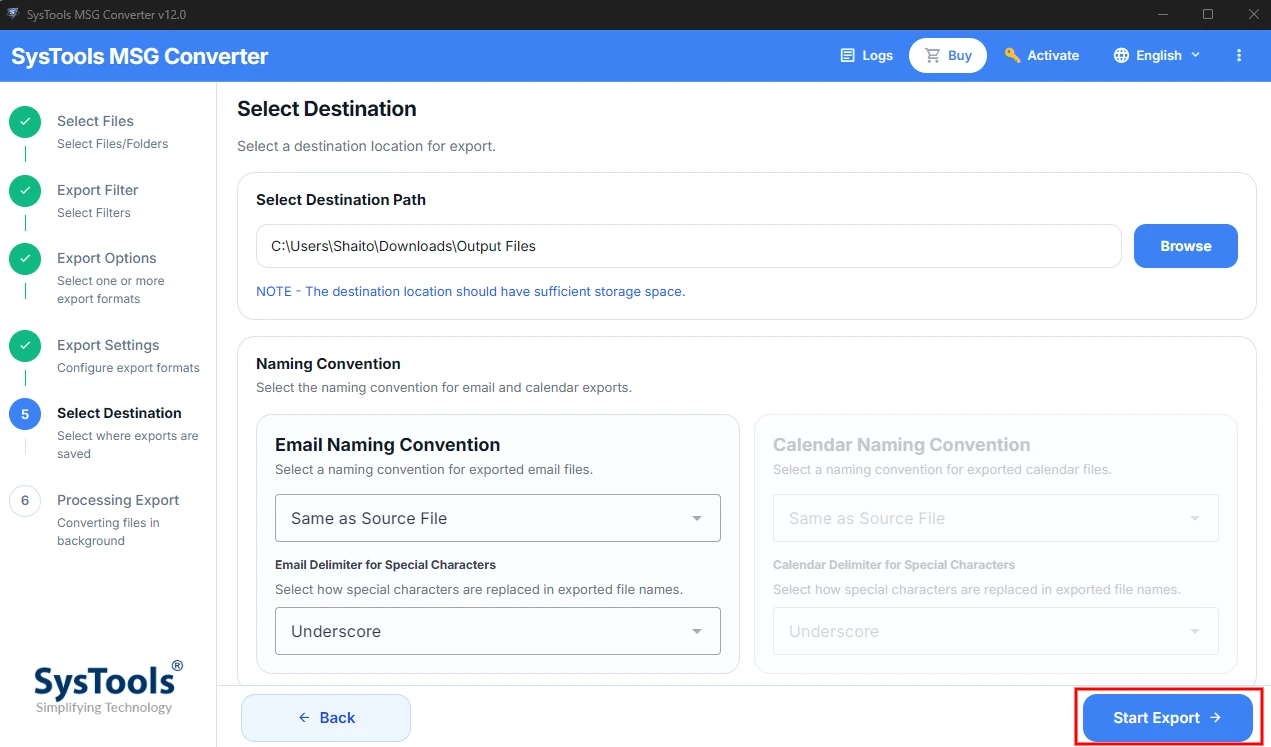
Click Start Export once the destination path is set.
A message confirms Export process completed successfully. Click OK.
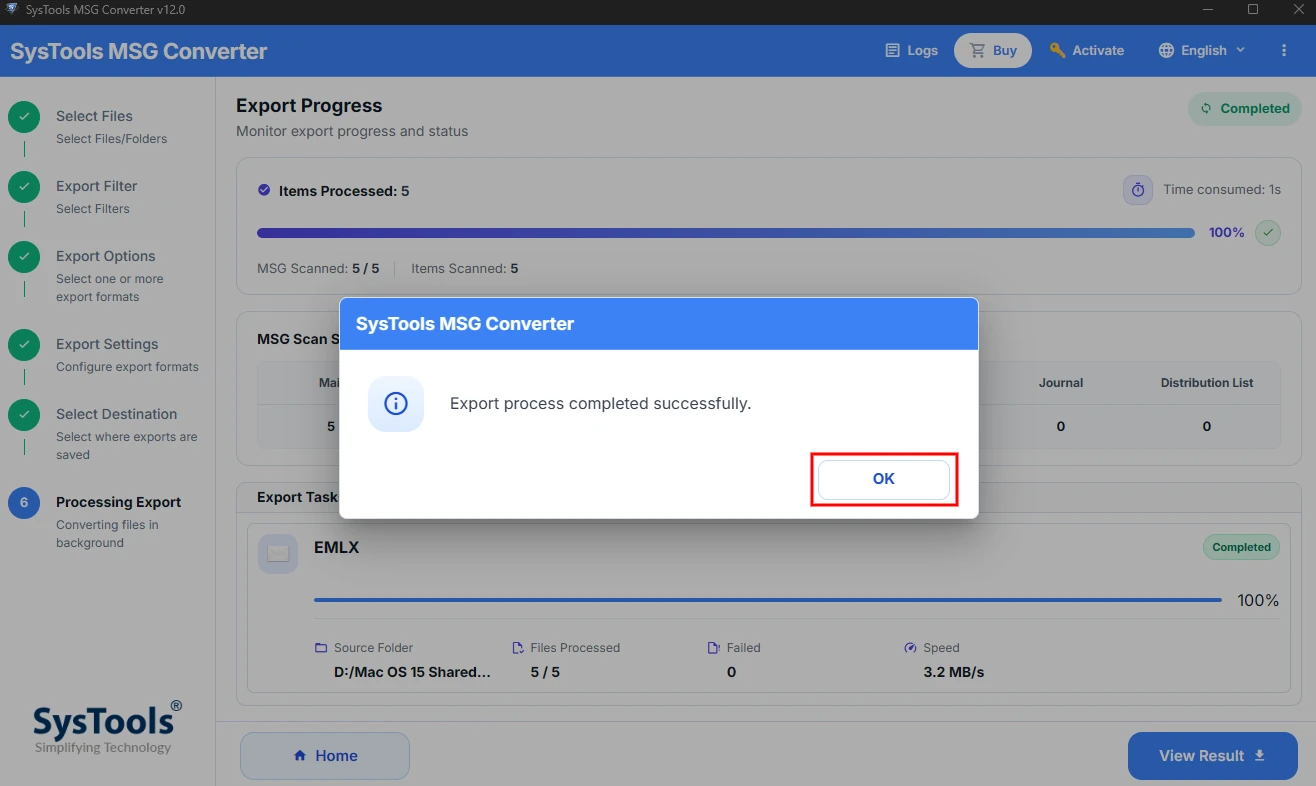
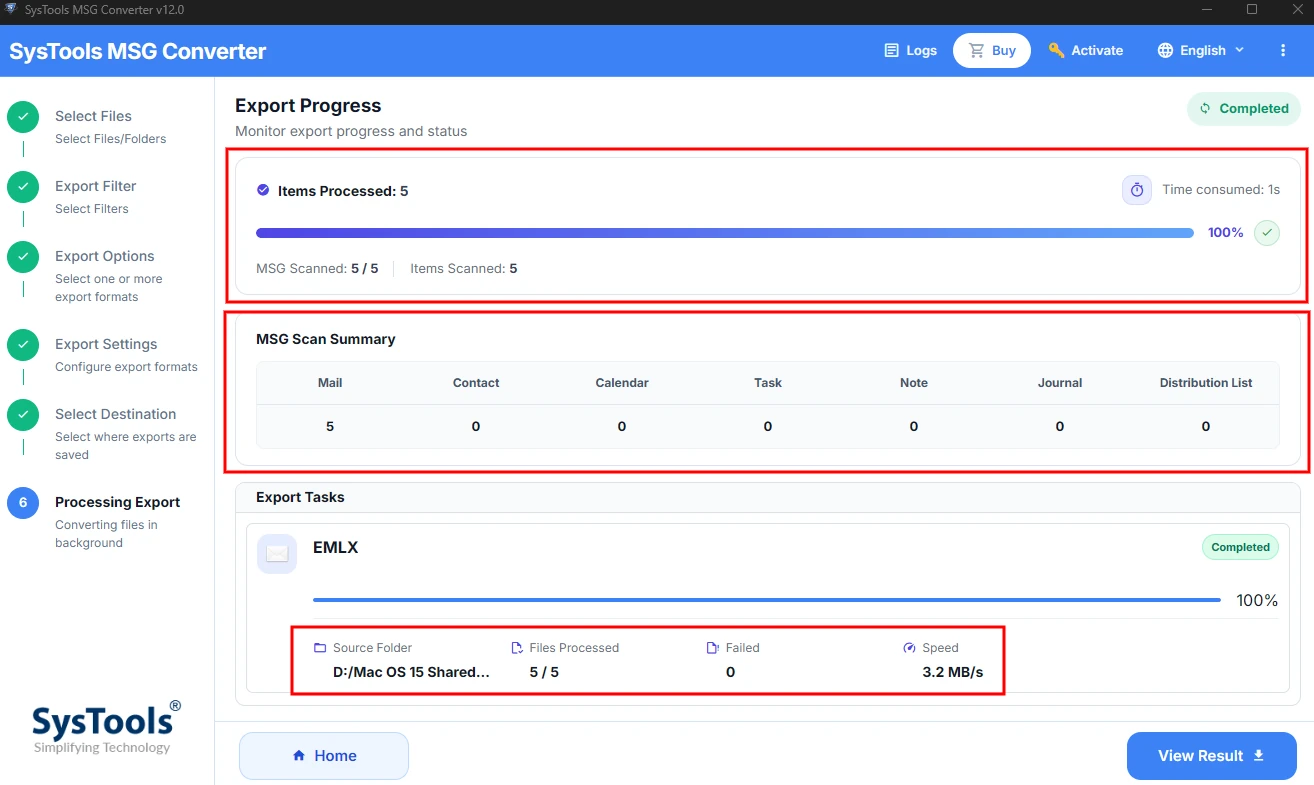
The Export Progress screen shows Items Processed and the MSG Scan Summary for Mail, Contact, Calendar, Task, Note, Journal and Distribution List. Under Export Tasks, check Files Processed, Failed and Speed for the EMLX task. It shows Completed at 100%.
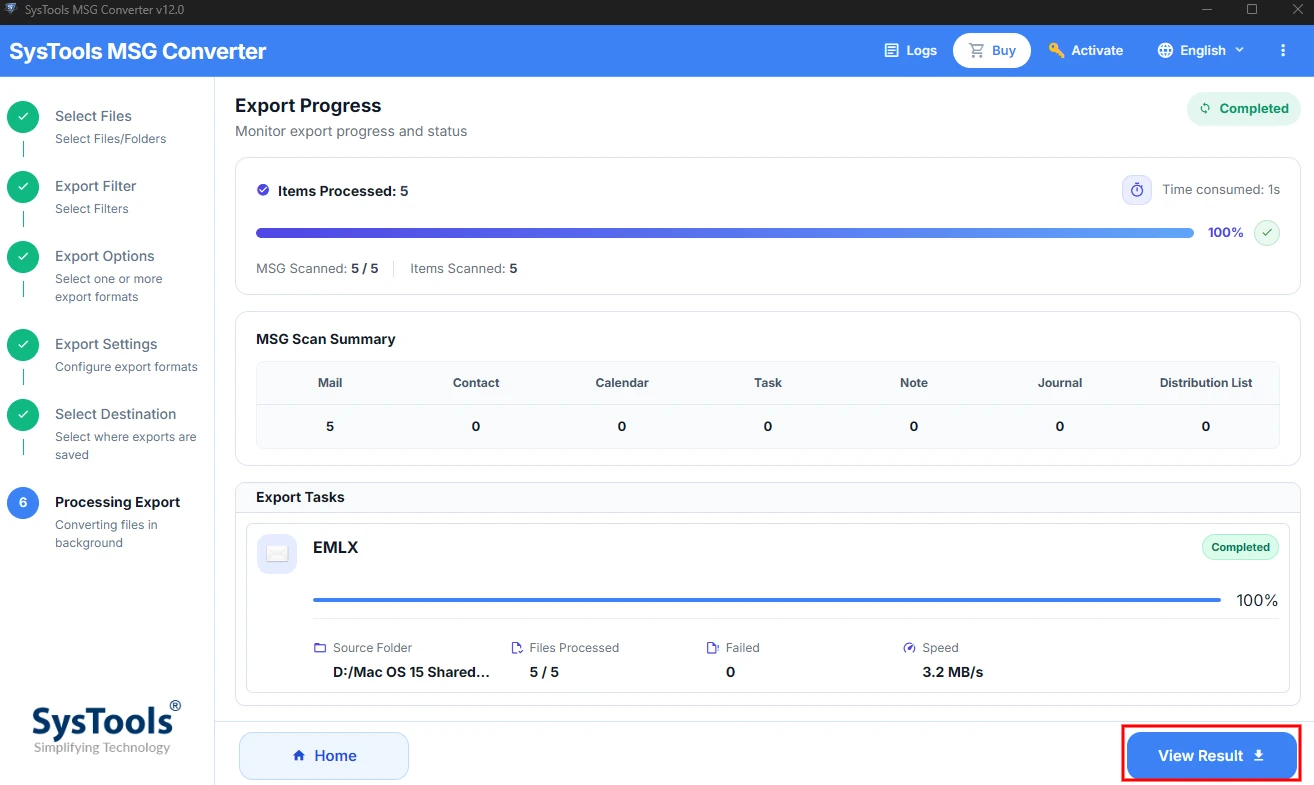
Click View Result to open the output folder.
View the Converted Files
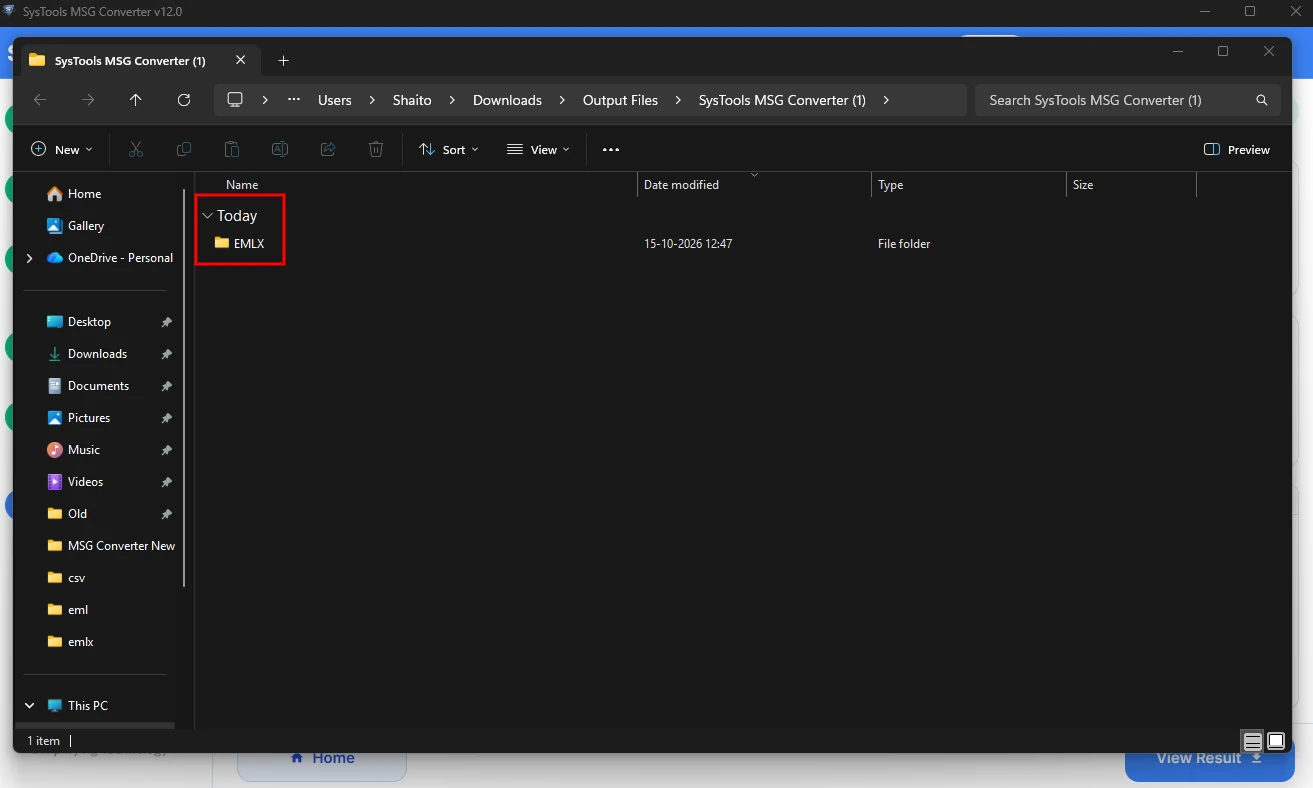
Windows Explorer opens the output folder named SysTools MSG Converter. Open the EMLX folder inside it.
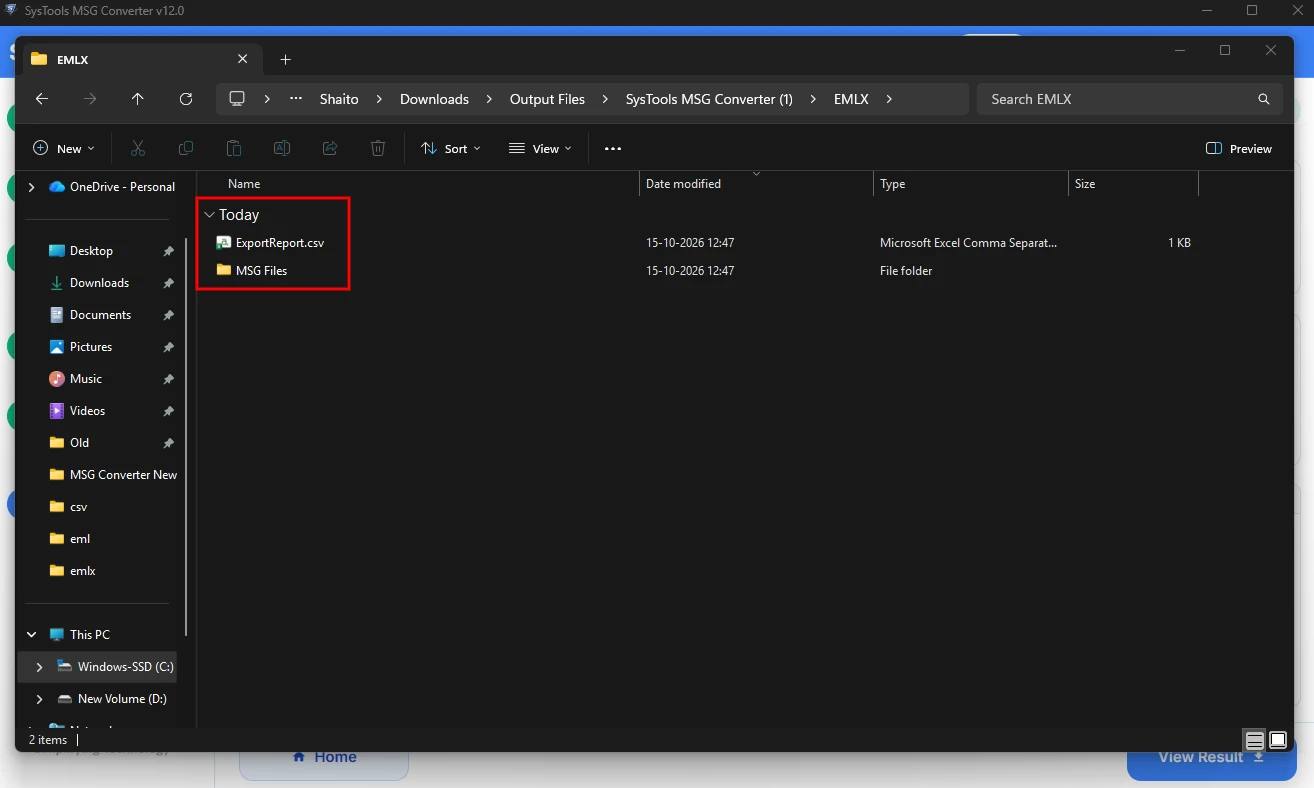
The EMLX folder holds an MSG Files folder and ExportReport.csv.
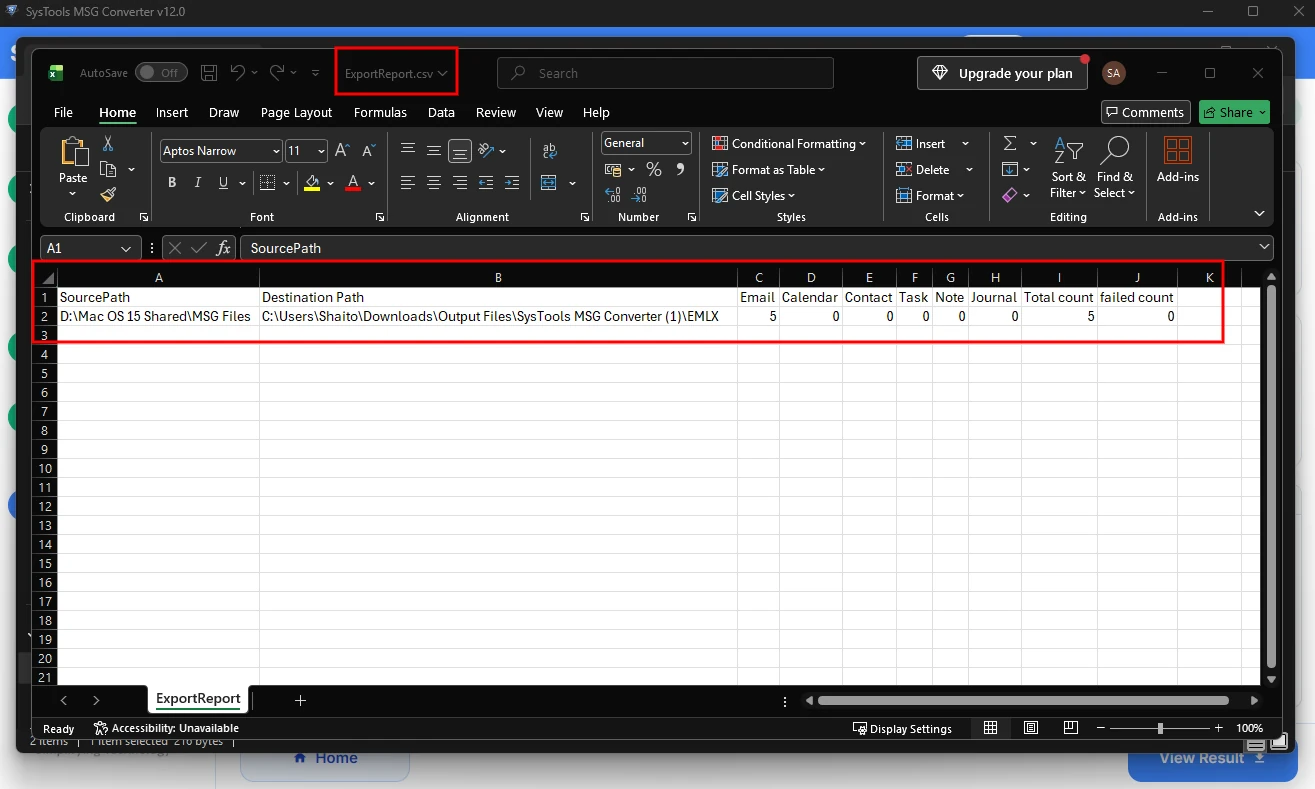
Open ExportReport.csv to see the SourcePath, Destination Path and the count for Email, Calendar, Contact, Task, Note and Journal, plus the Total count and failed count.
Check Logs and App Details
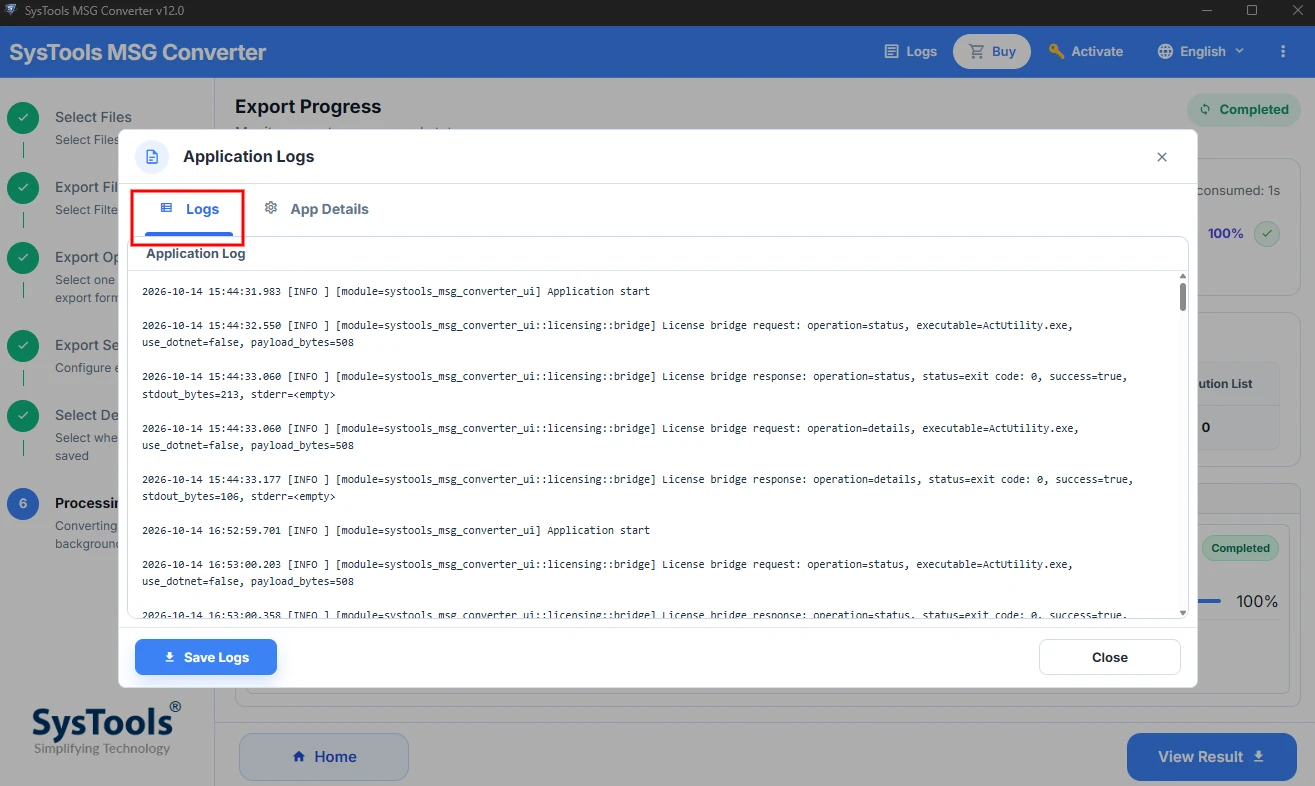
Click Logs in the top bar to open Application Logs. Click Save Logs to keep a copy.
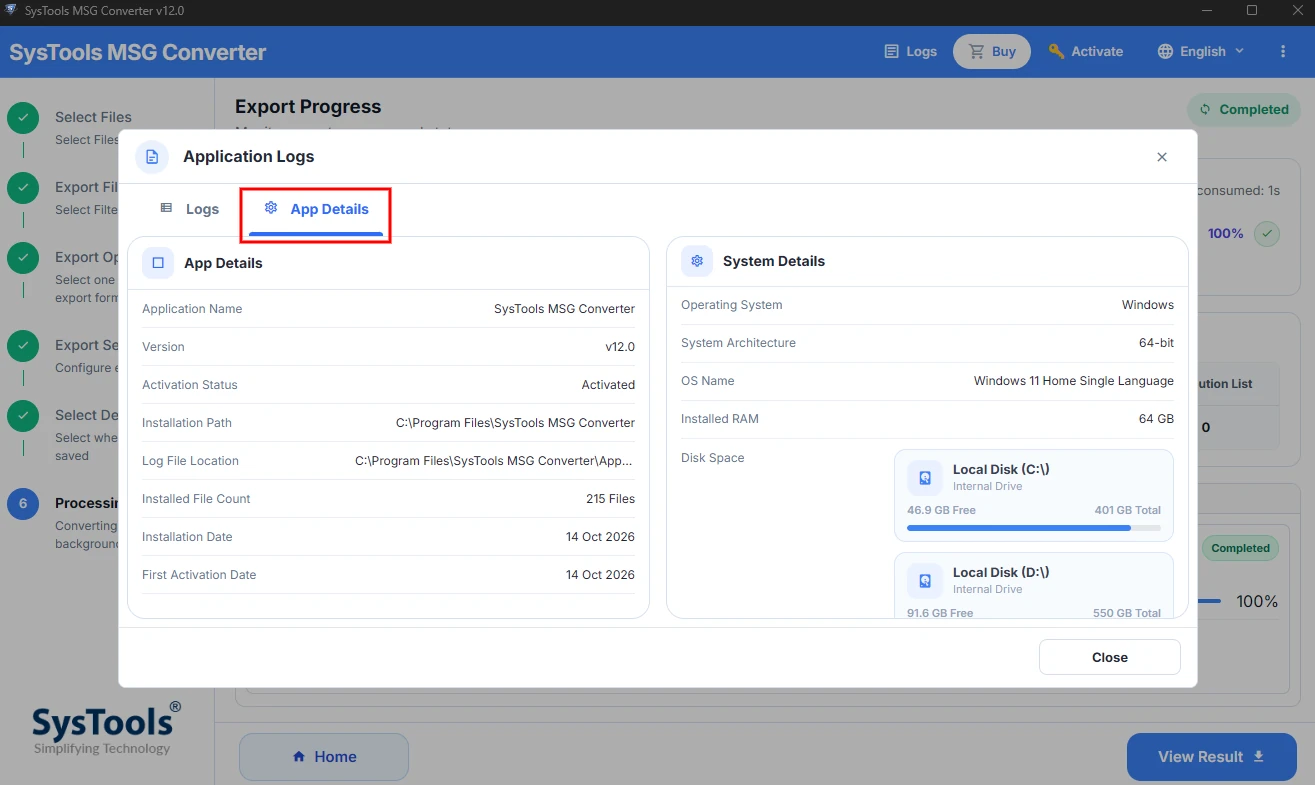
The App Details tab lists application and system details, including version, activation status and operating system.
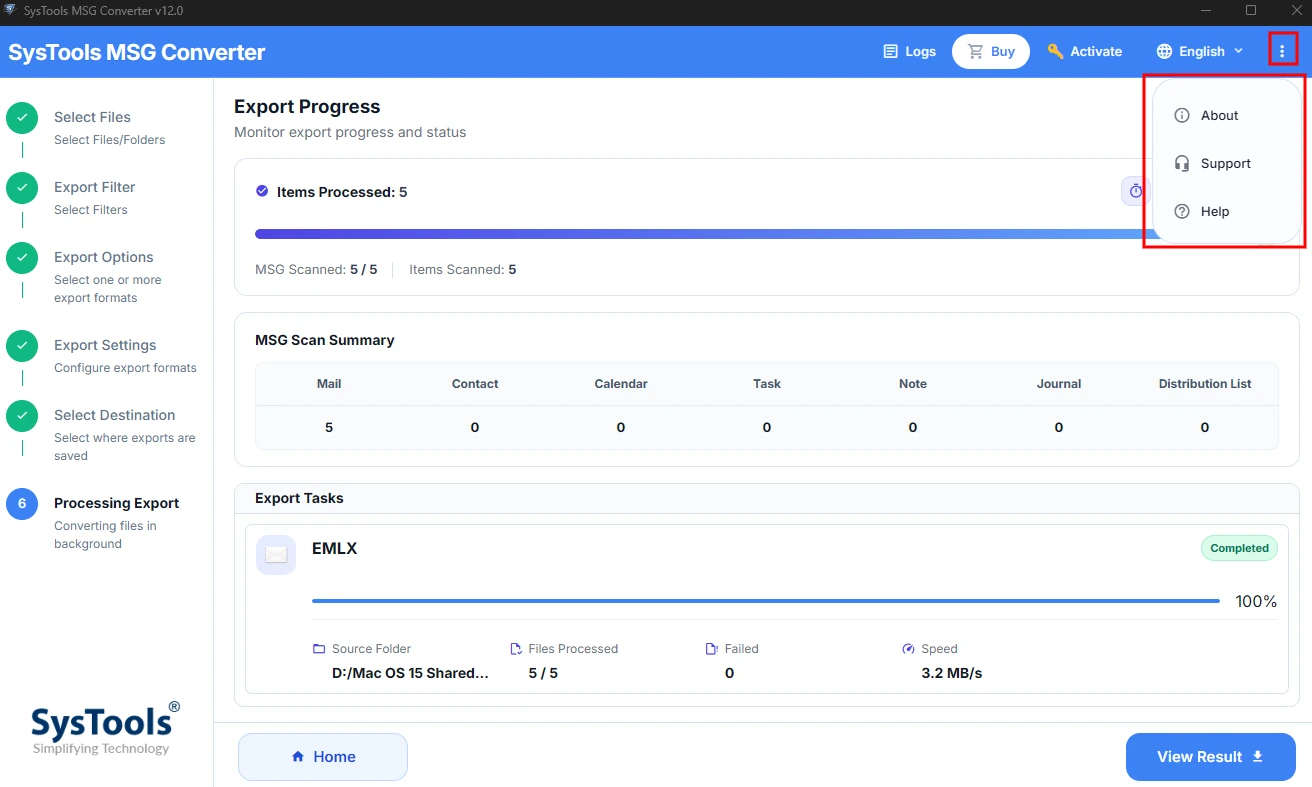
Select the three dot menu in the top bar to open About, Support and Help.
Convert MSG Files to HTML
Select HTML as the Export Format
Select HTML in the Export Options list. It exports HTML files with inline images, while attachments save separately. Click Next.
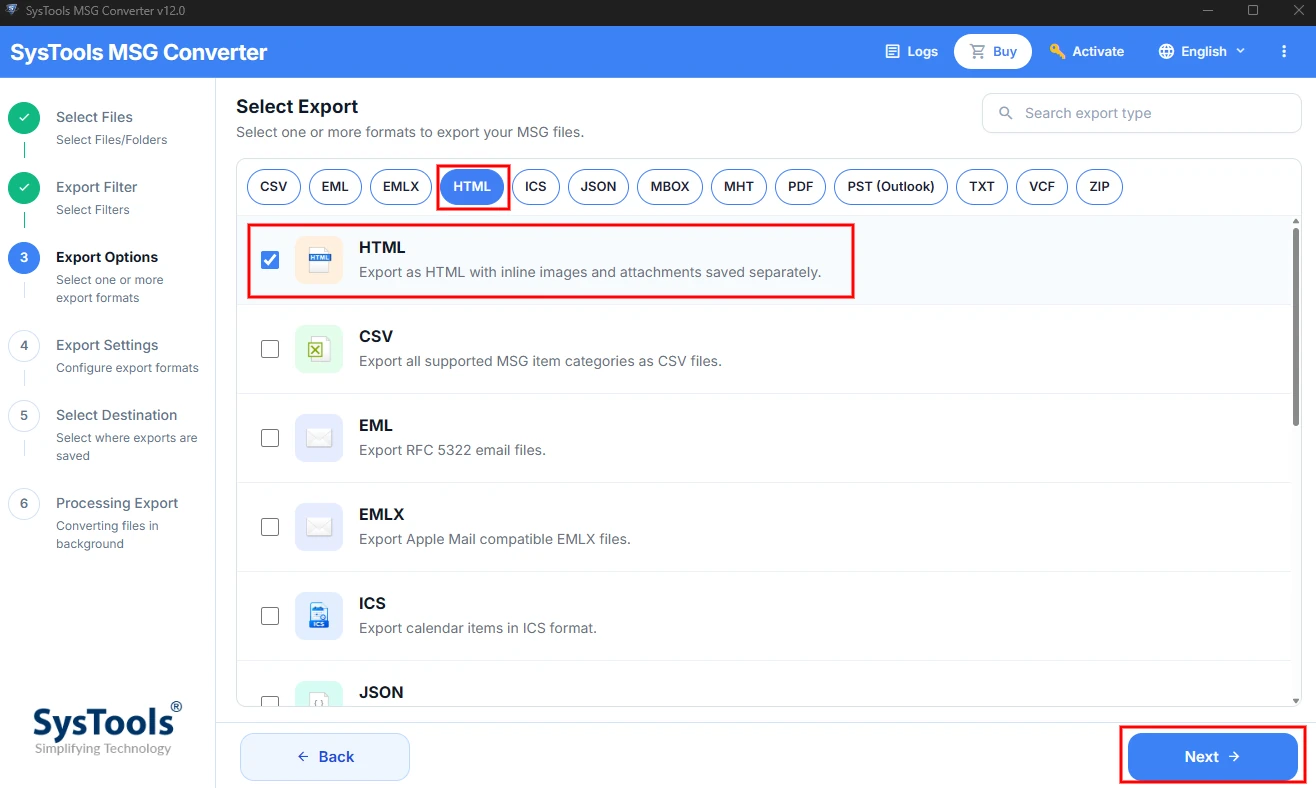
Configure HTML Export Settings
HTML needs no extra settings. The screen shows No additional settings required for this format. Click Next.
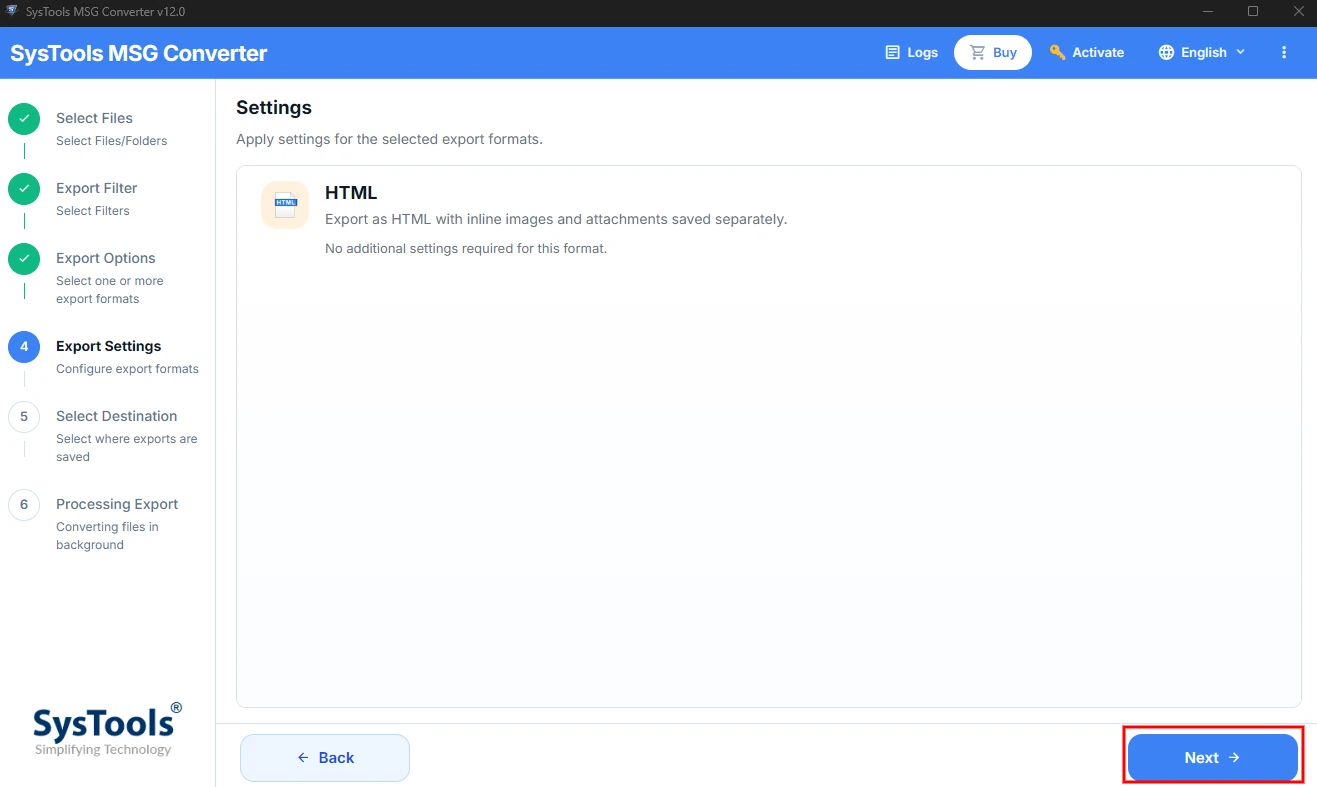
Select the Destination
Click Browse next to Select Destination Path to choose where converted files are saved. Make sure the location has enough storage space.
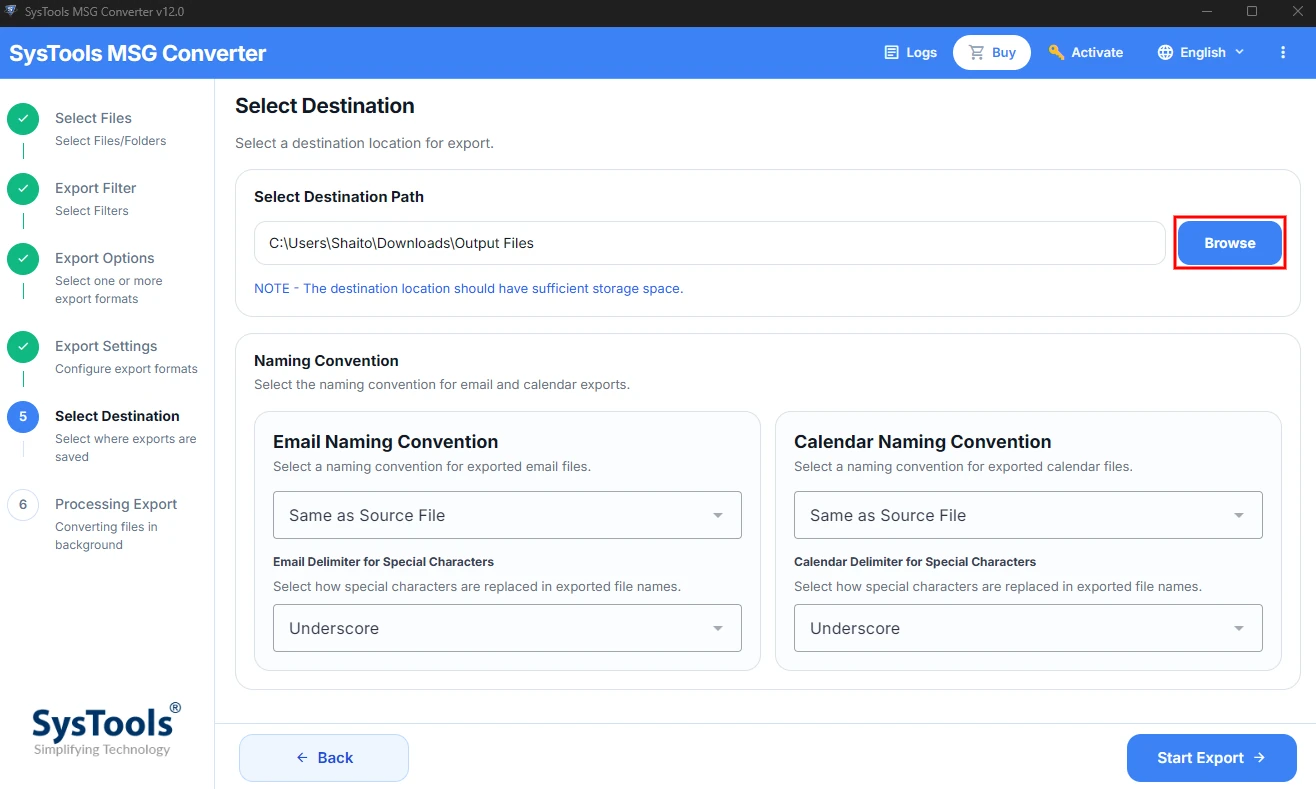
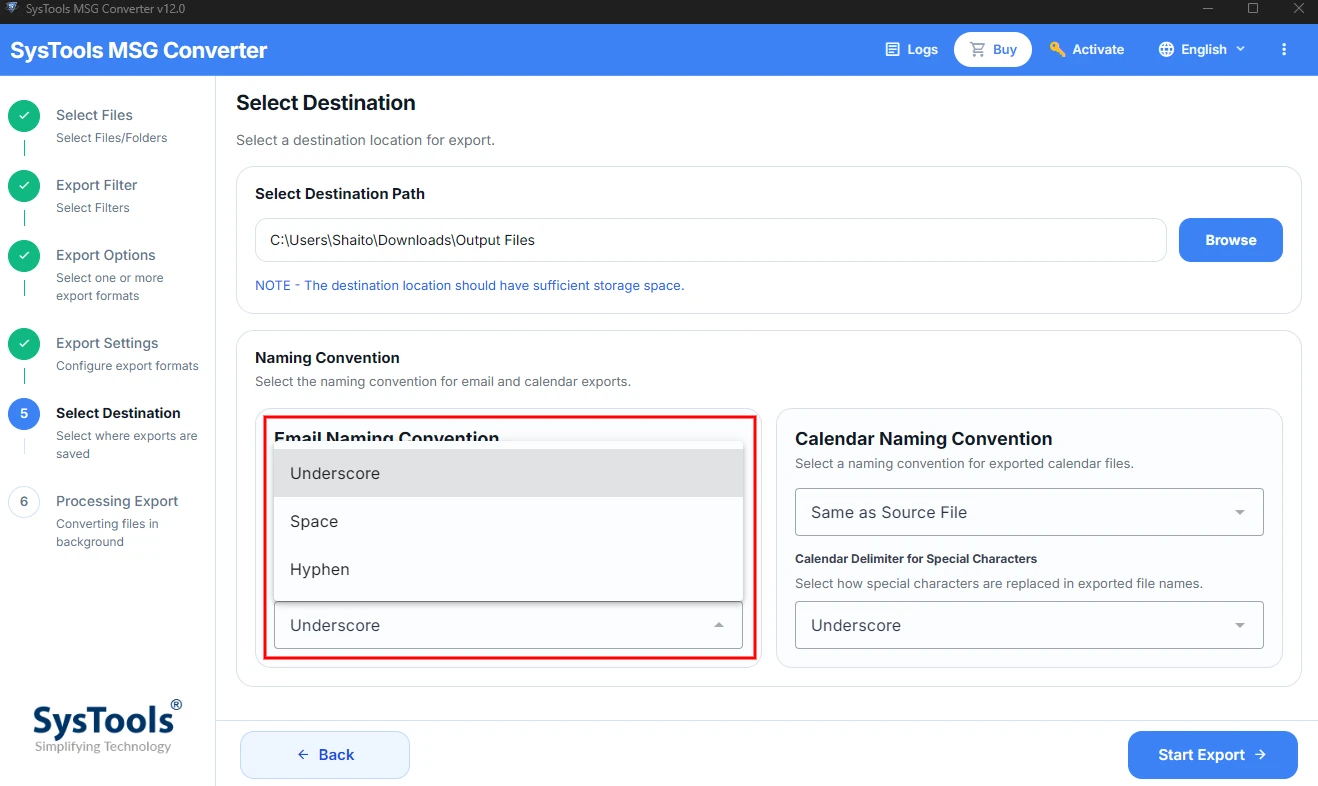
Open Email Naming Convention to name exported email files. Choose Same as Source File or a pattern built from Subject, From, To, CC and Date.
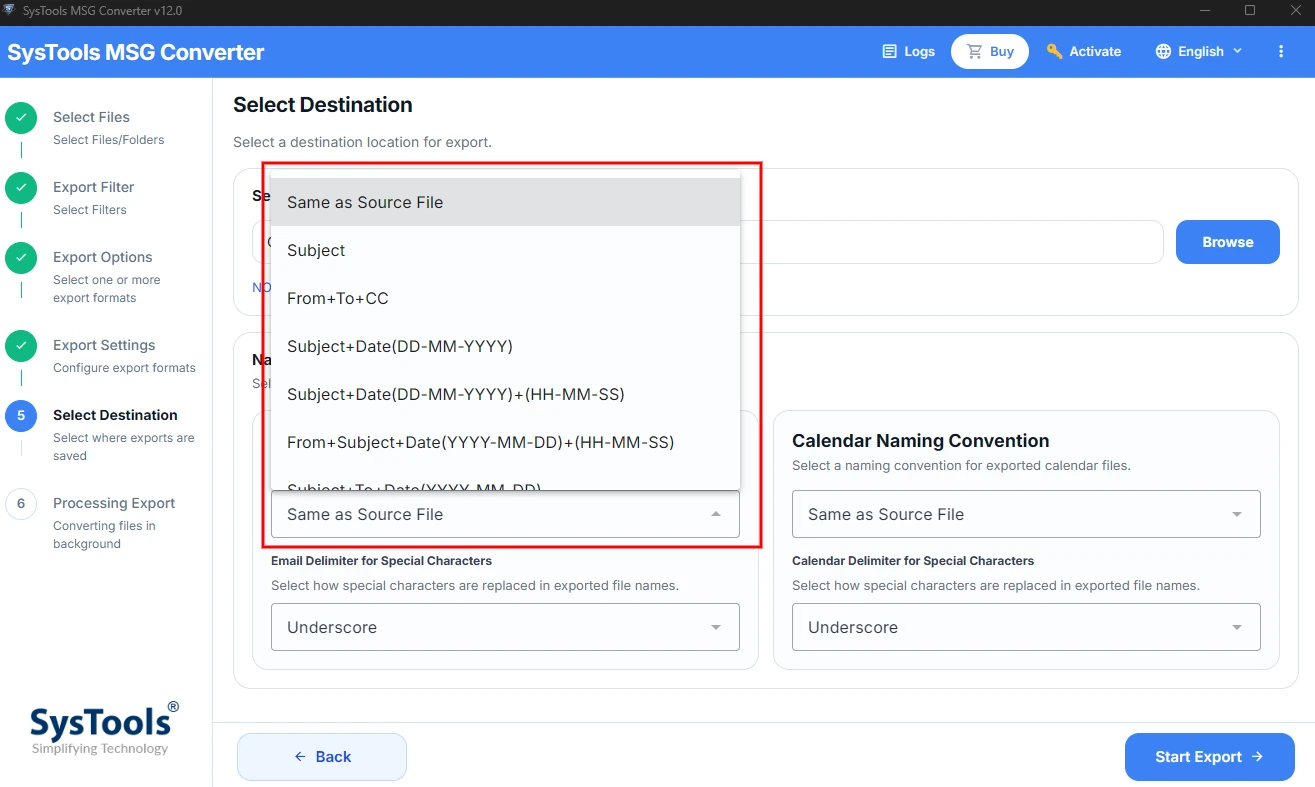
Open Email Delimiter for Special Characters to set what replaces special characters in file names. Select Underscore, Space or Hyphen.
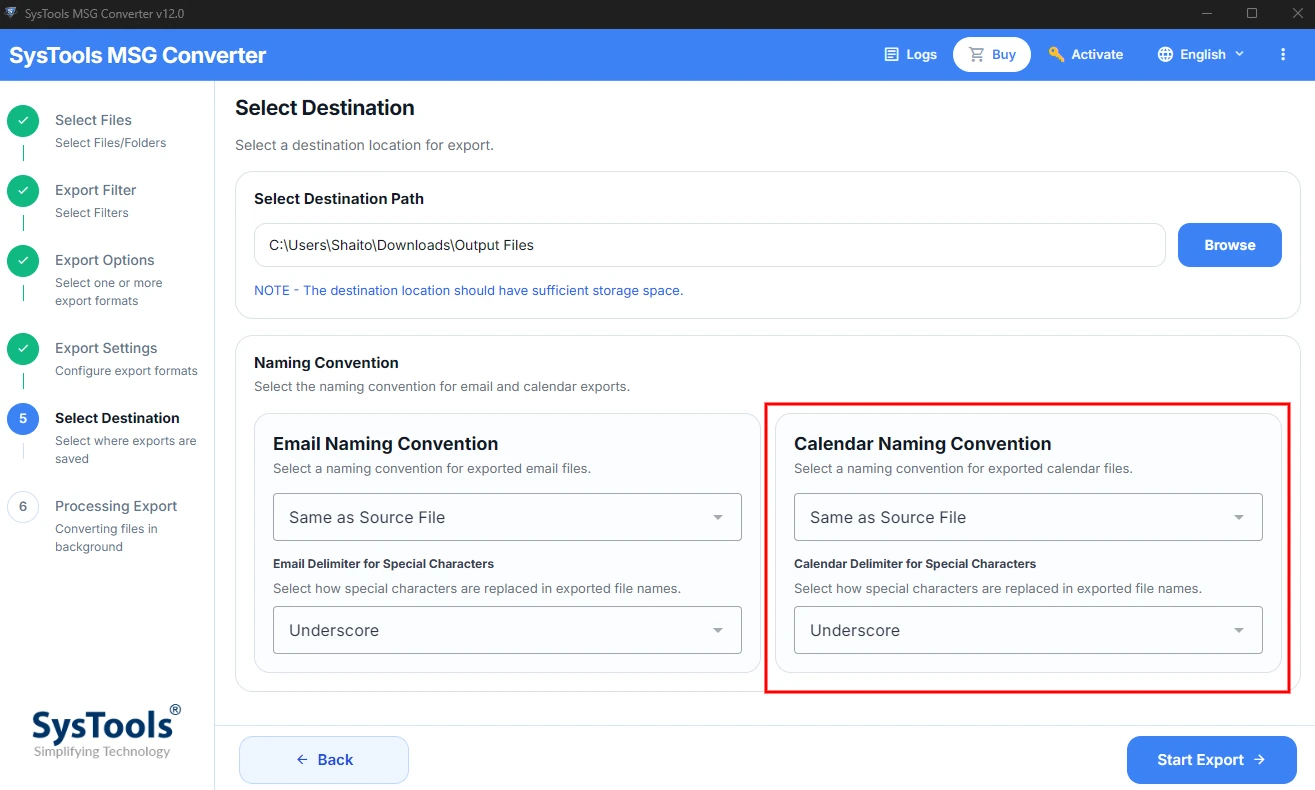
Calendar Naming Convention and Calendar Delimiter for Special Characters work the same way for calendar files.
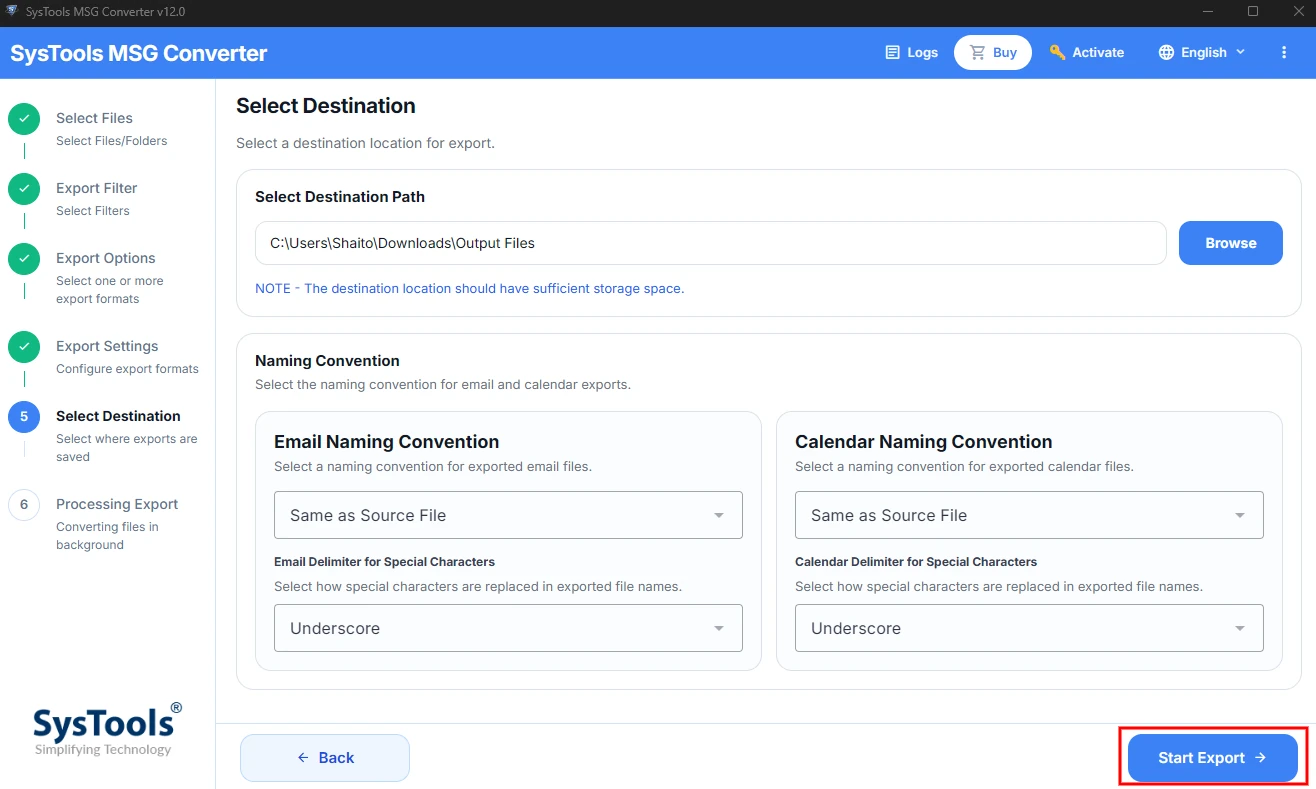
Start the Export and Track Progress
Click Start Export once the destination path is set.
A message confirms Export process completed successfully. Click OK.
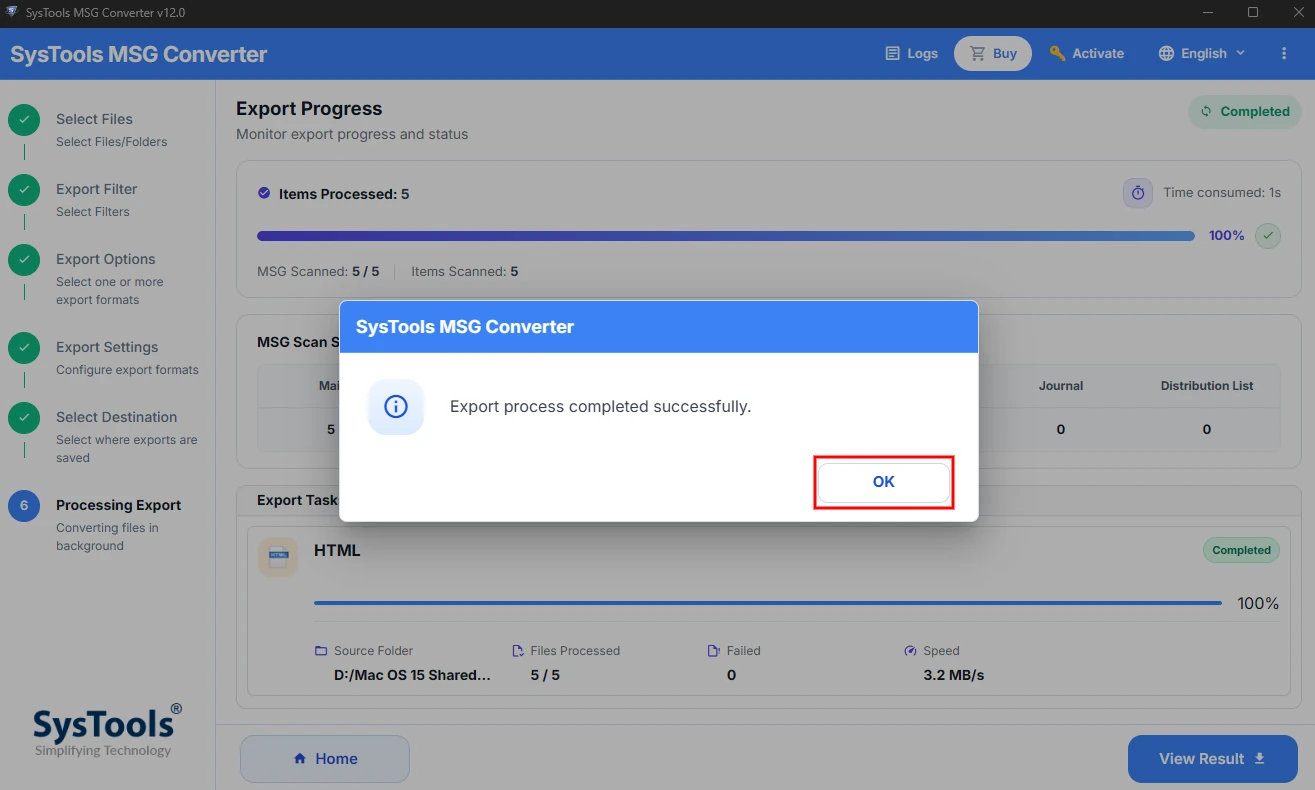
The Export Progress screen shows Items Processed and the MSG Scan Summary for Mail, Contact, Calendar, Task, Note, Journal and Distribution List. Under Export Tasks, check Files Processed, Failed and Speed for the HTML task. It shows Completed at 100%.
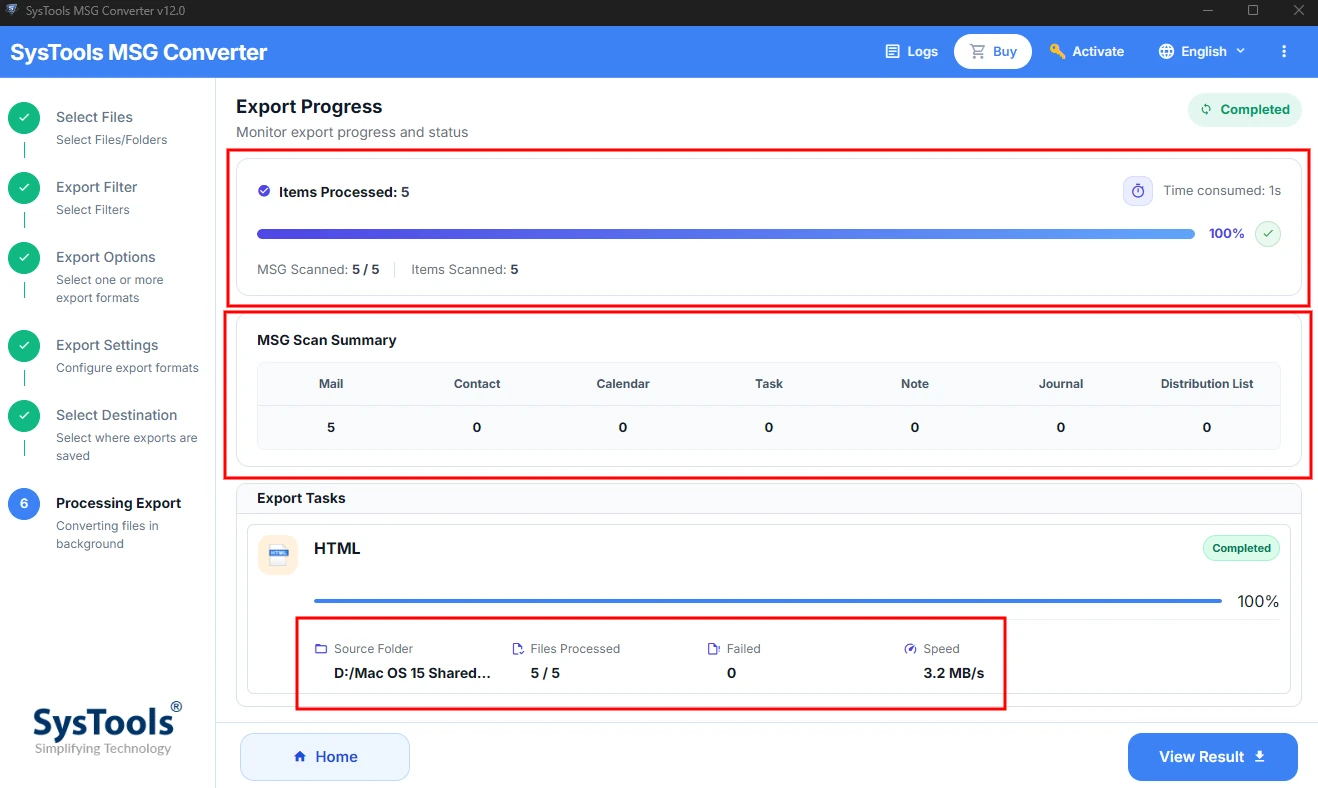
Click View Result to open the output folder.
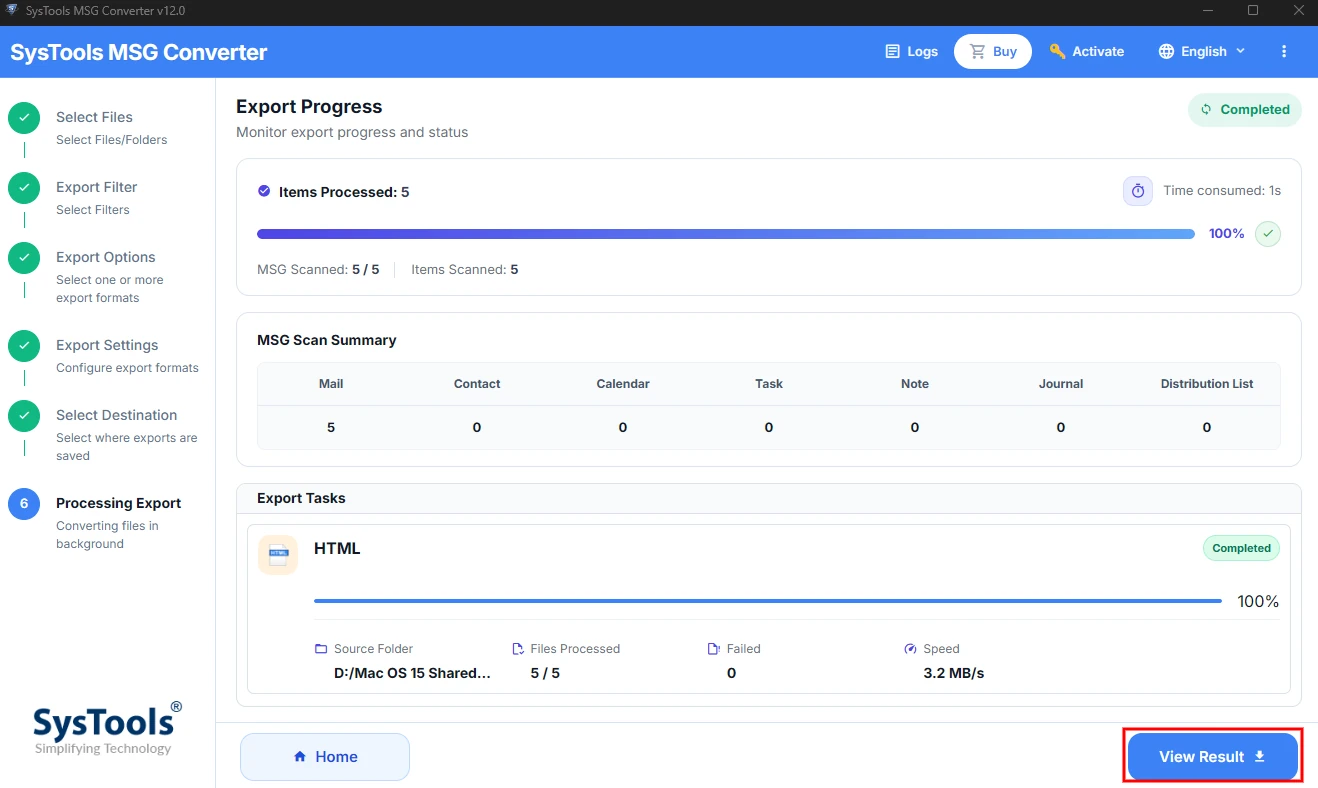
View the Converted Files
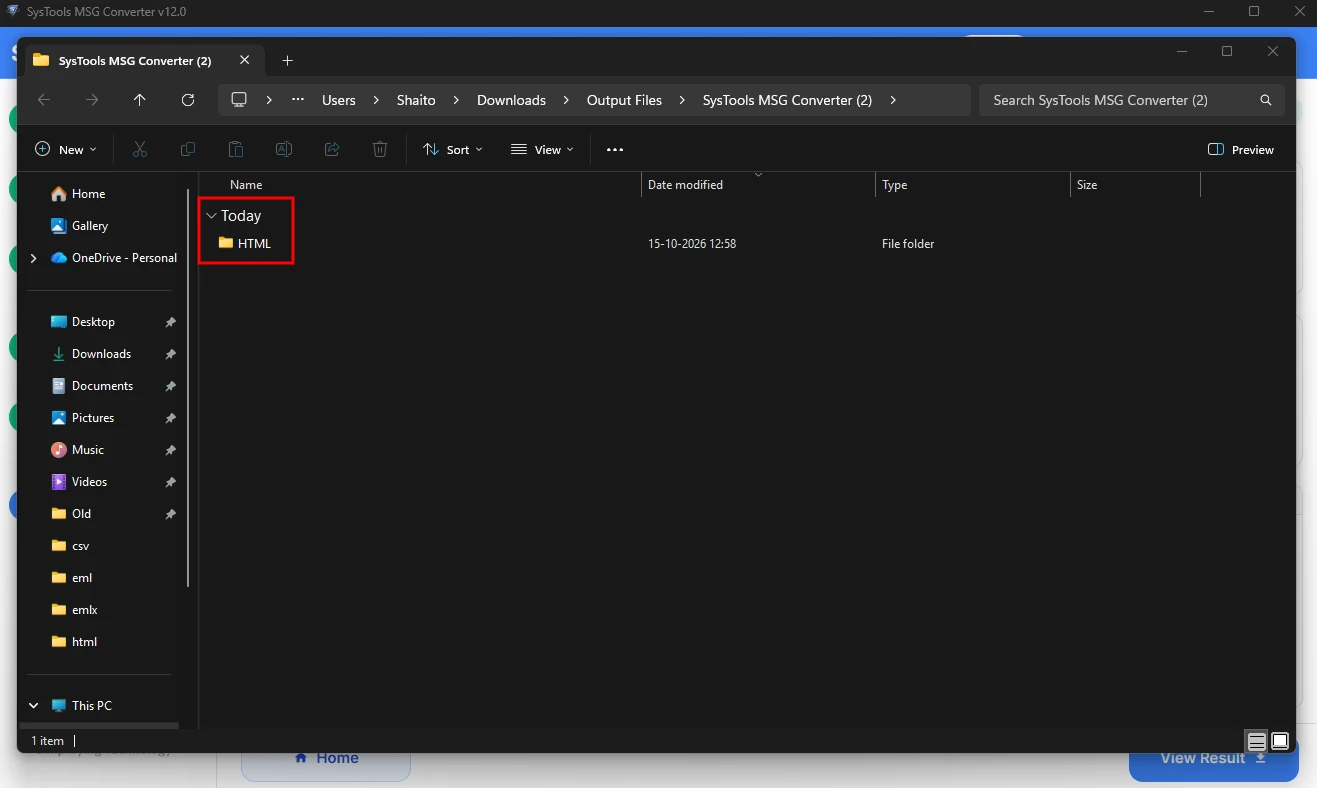
Windows Explorer opens the output folder named SysTools MSG Converter. Open the HTML folder inside it.
The HTML folder holds an MSG Files folder and ExportReport.csv.
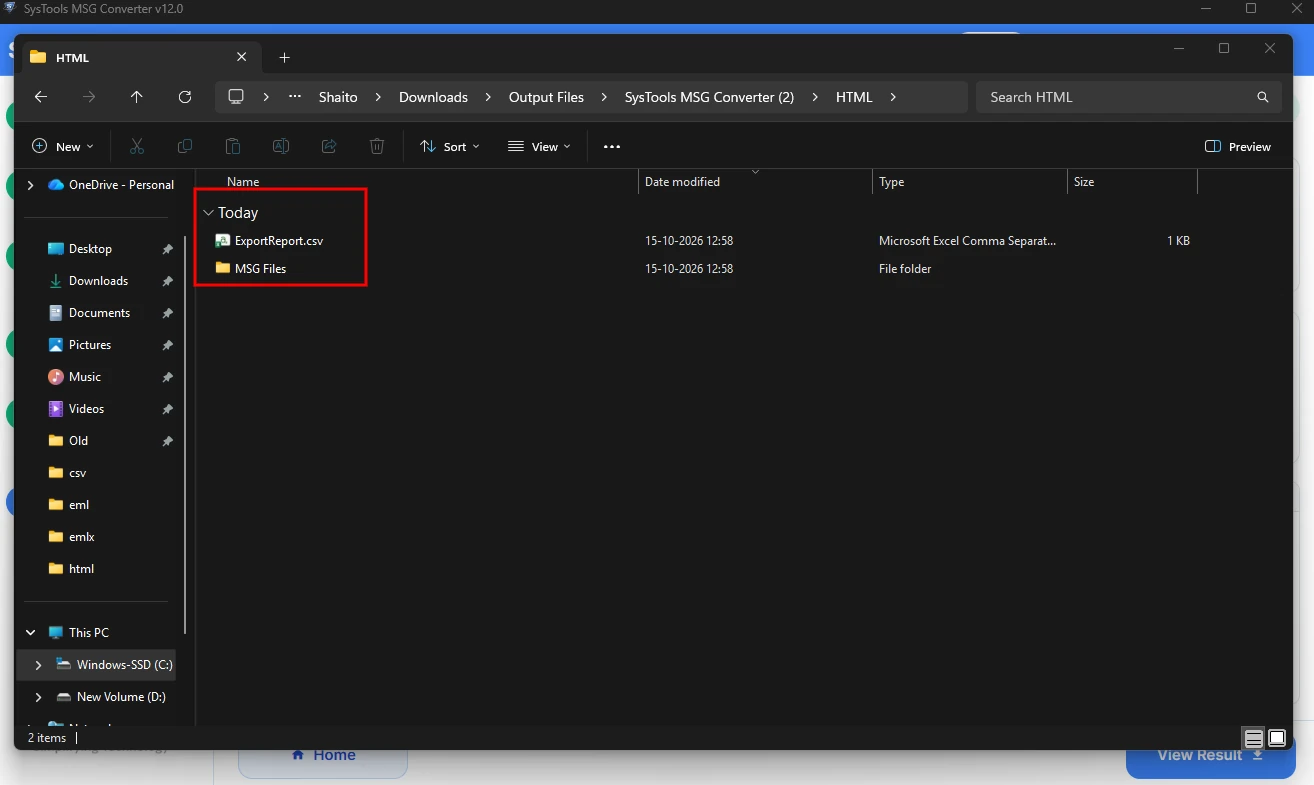
Open ExportReport.csv to see the SourcePath, Destination Path and the count for Email, Calendar, Contact, Task, Note and Journal, plus the Total count and failed count.
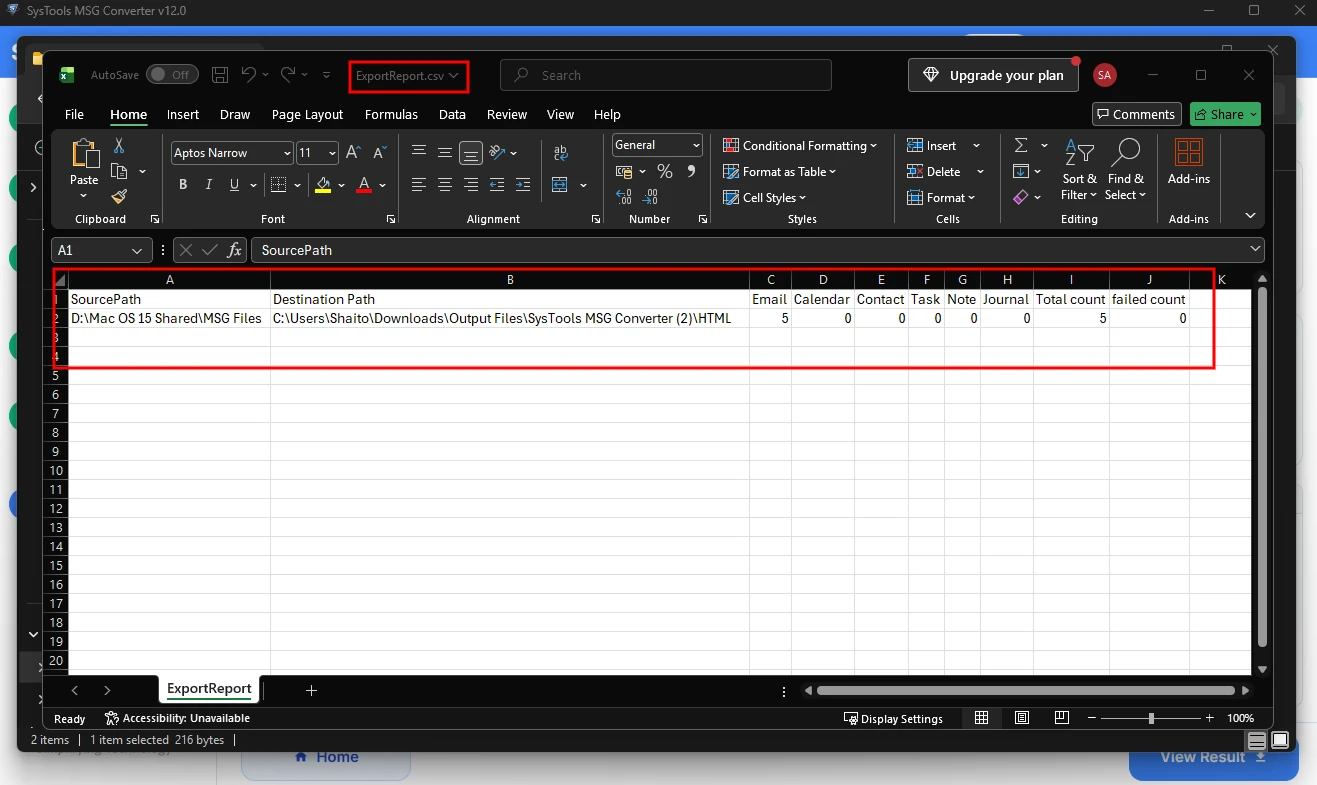
Check Logs and App Details
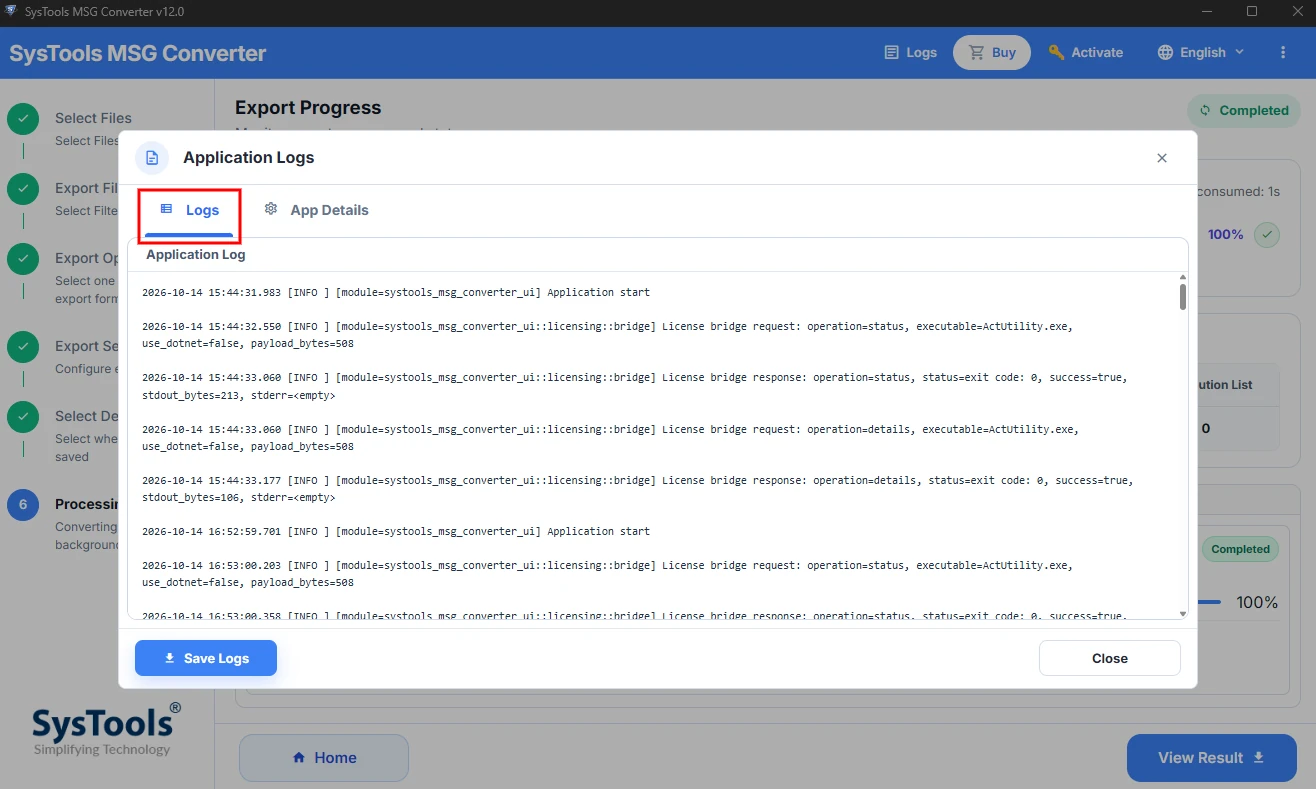
Click Logs in the top bar to open Application Logs. Click Save Logs to keep a copy.
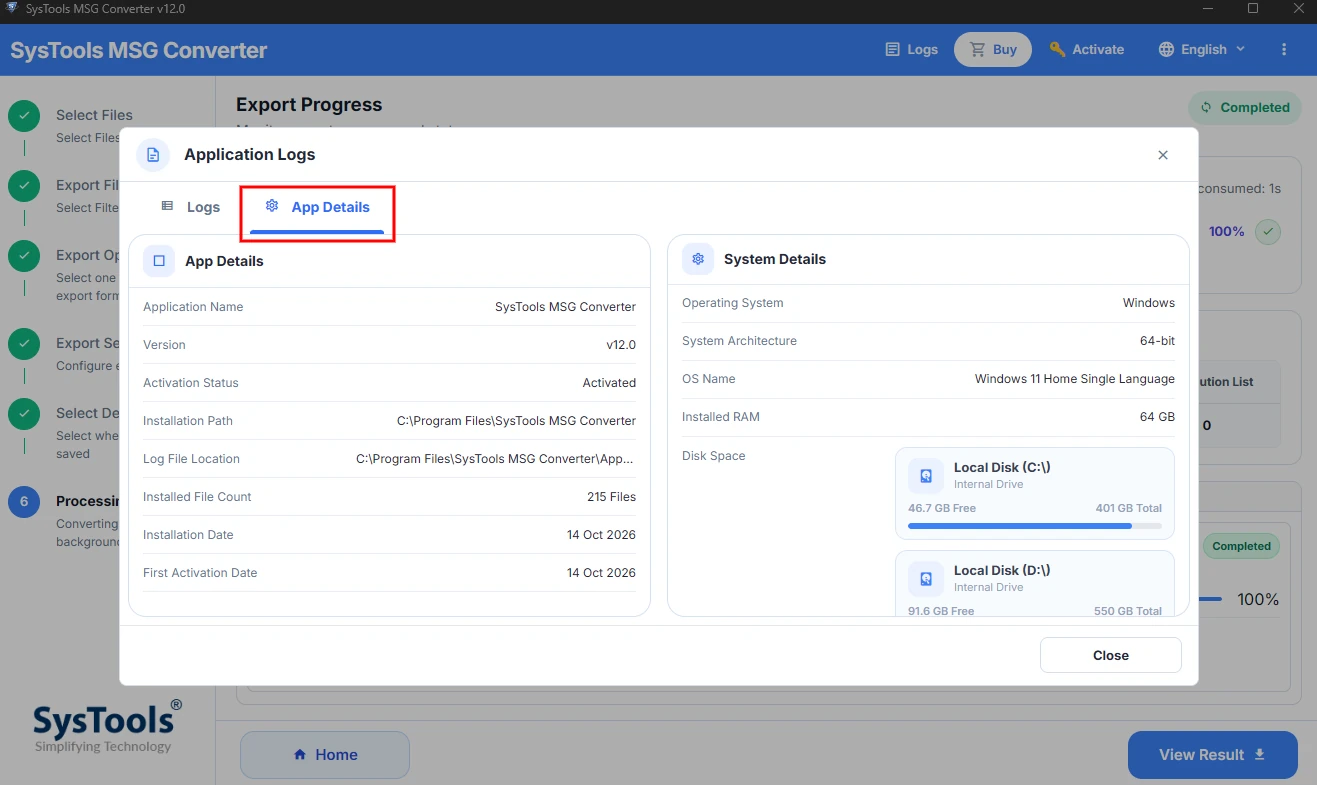
The App Details tab lists application and system details, including version, activation status and operating system.
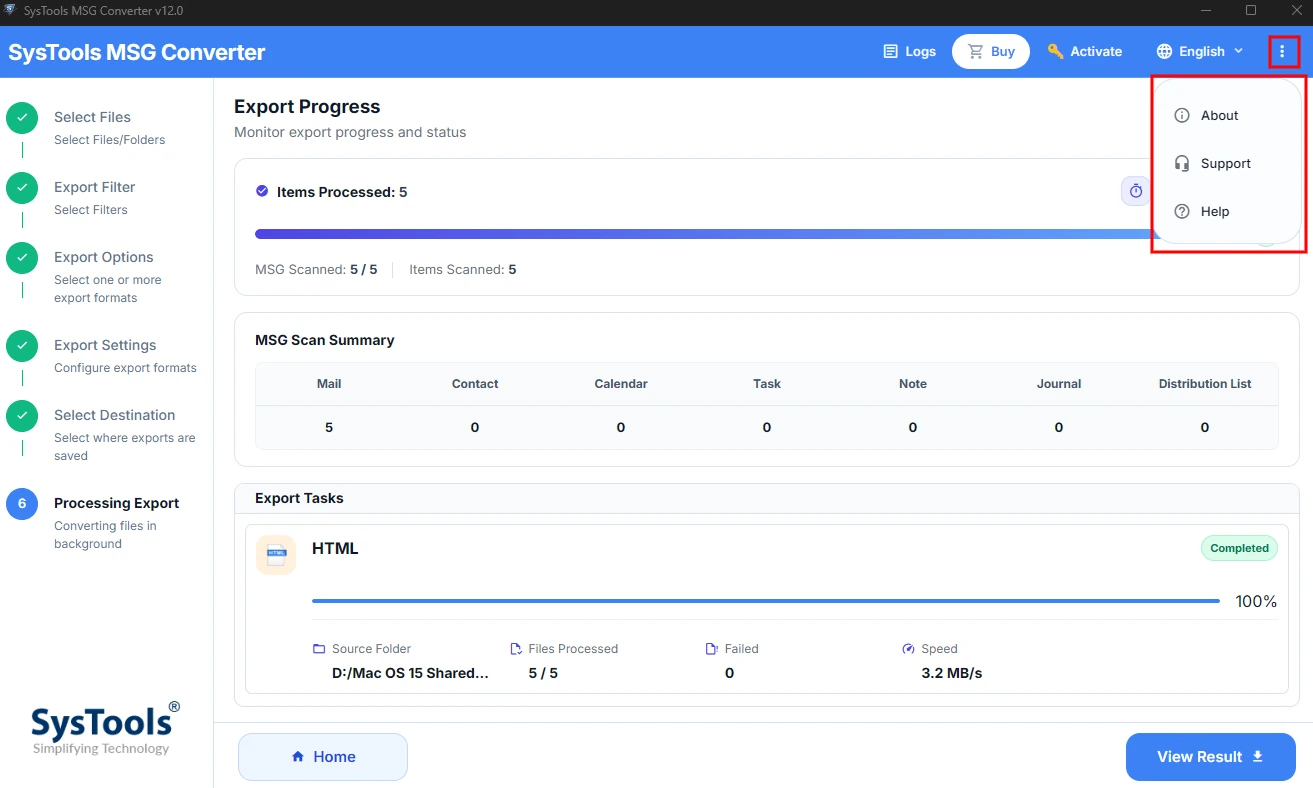
Select the three dot menu in the top bar to open About, Support and Help.
Convert MSG Files to ICS
Select ICS as the Export Format
Select ICS in the Export Options list. It exports calendar items in ICS format. Click Next.
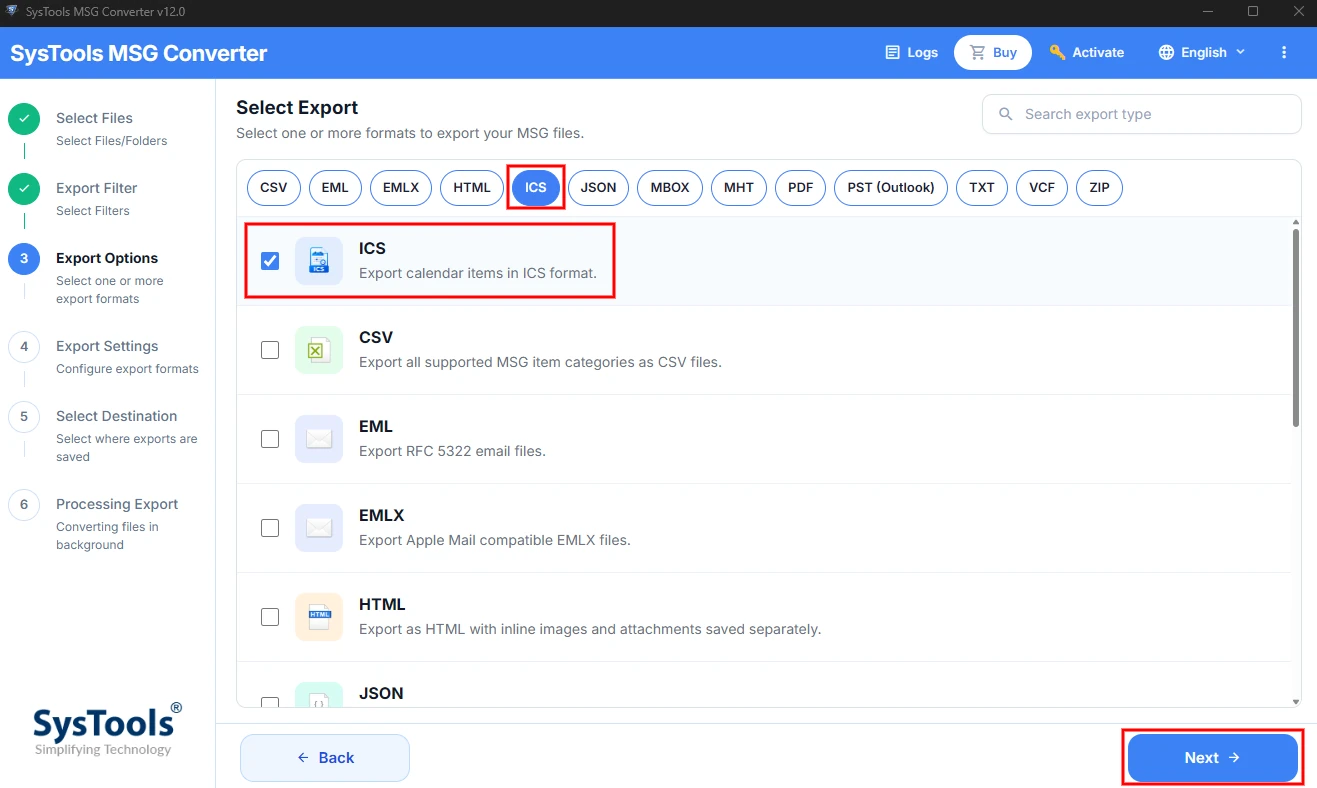
Configure ICS Export Settings
Click Settings to open the ICS options. Create single ICS file for all events combines all calendar items into one ICS file. When it is selected, you can set a split size in MB. Click Next.
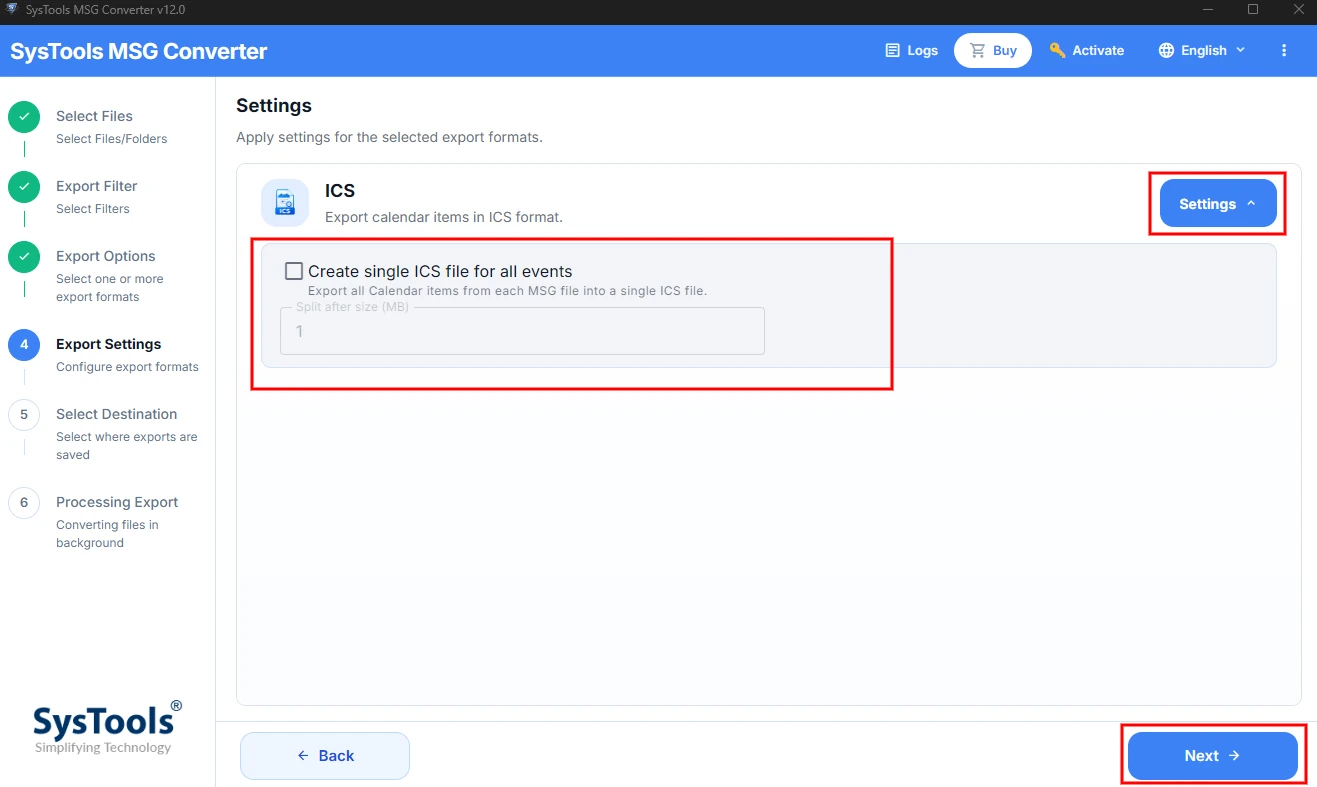
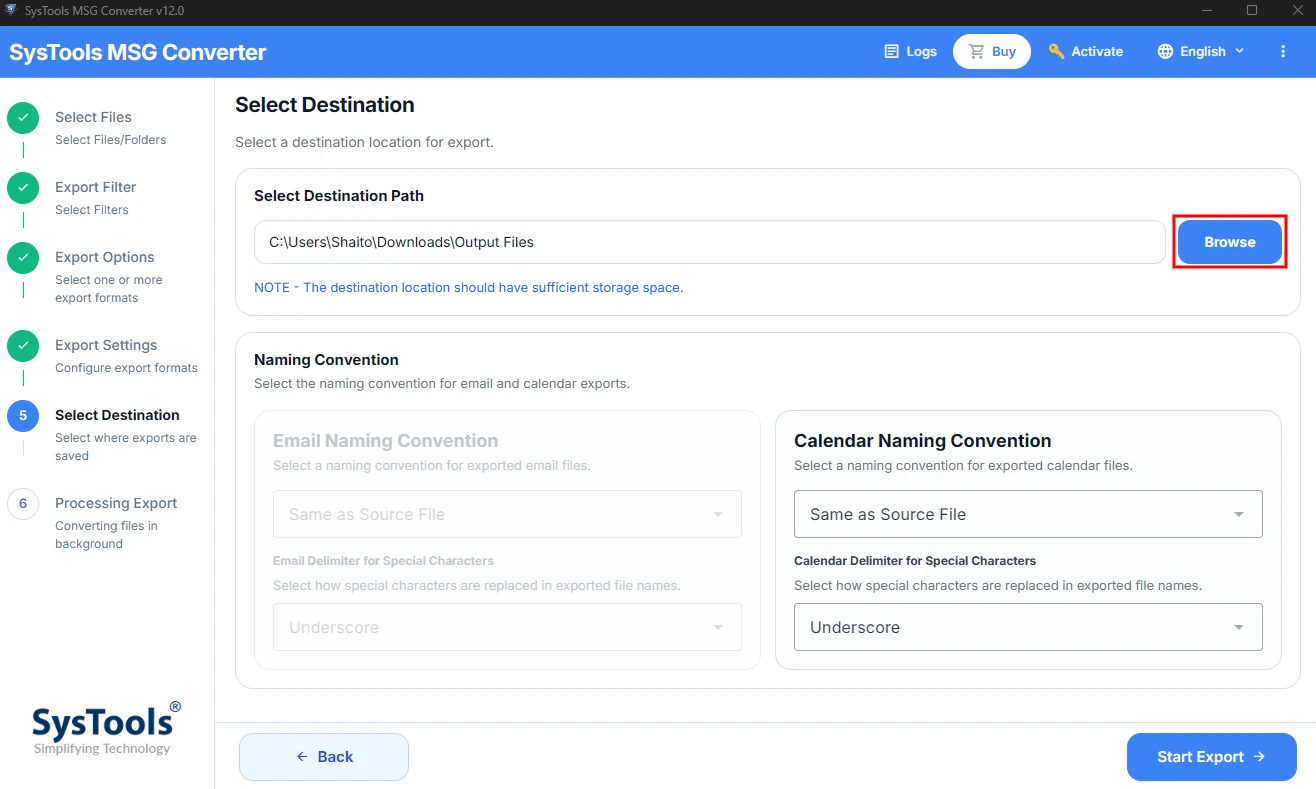
Select the Destination
Click Browse next to Select Destination Path to choose where converted files are saved. Only the calendar naming options are active for ICS.
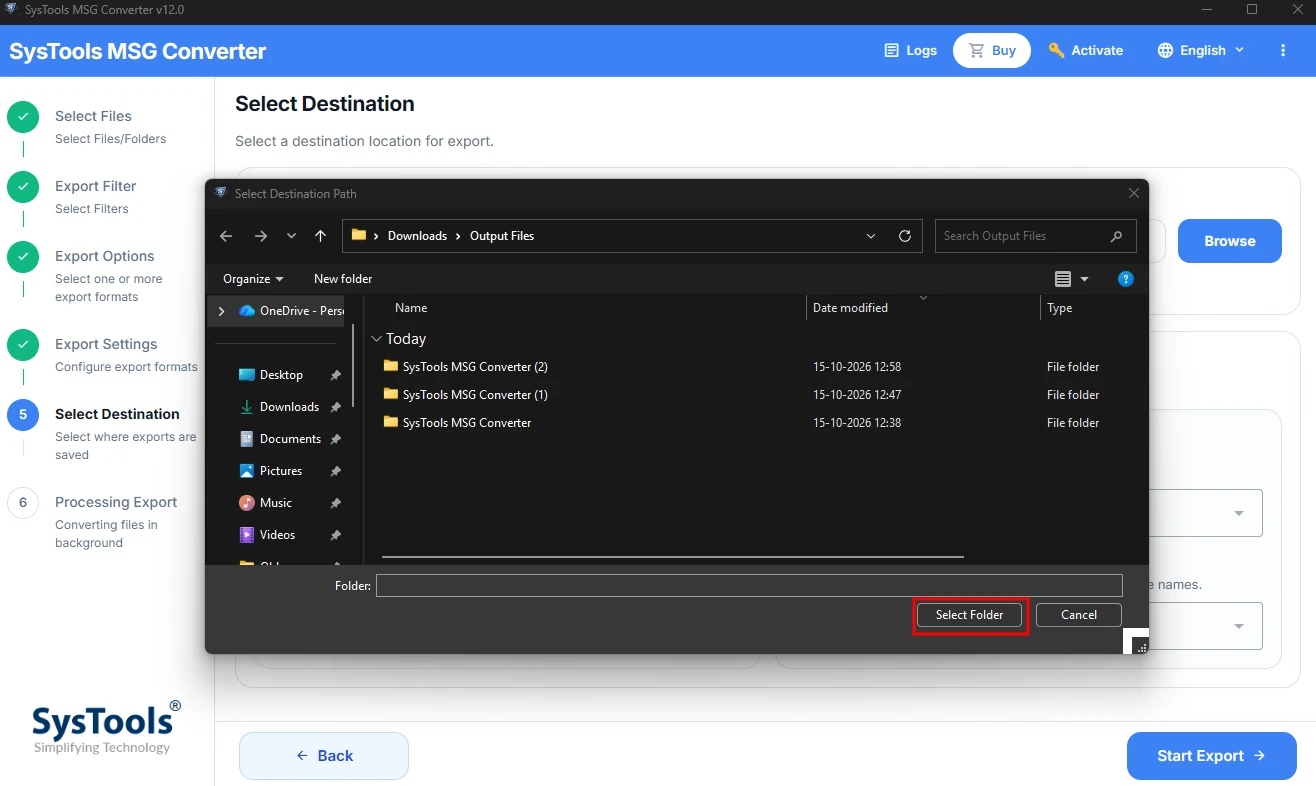
Select a folder in the dialog and click Select Folder.
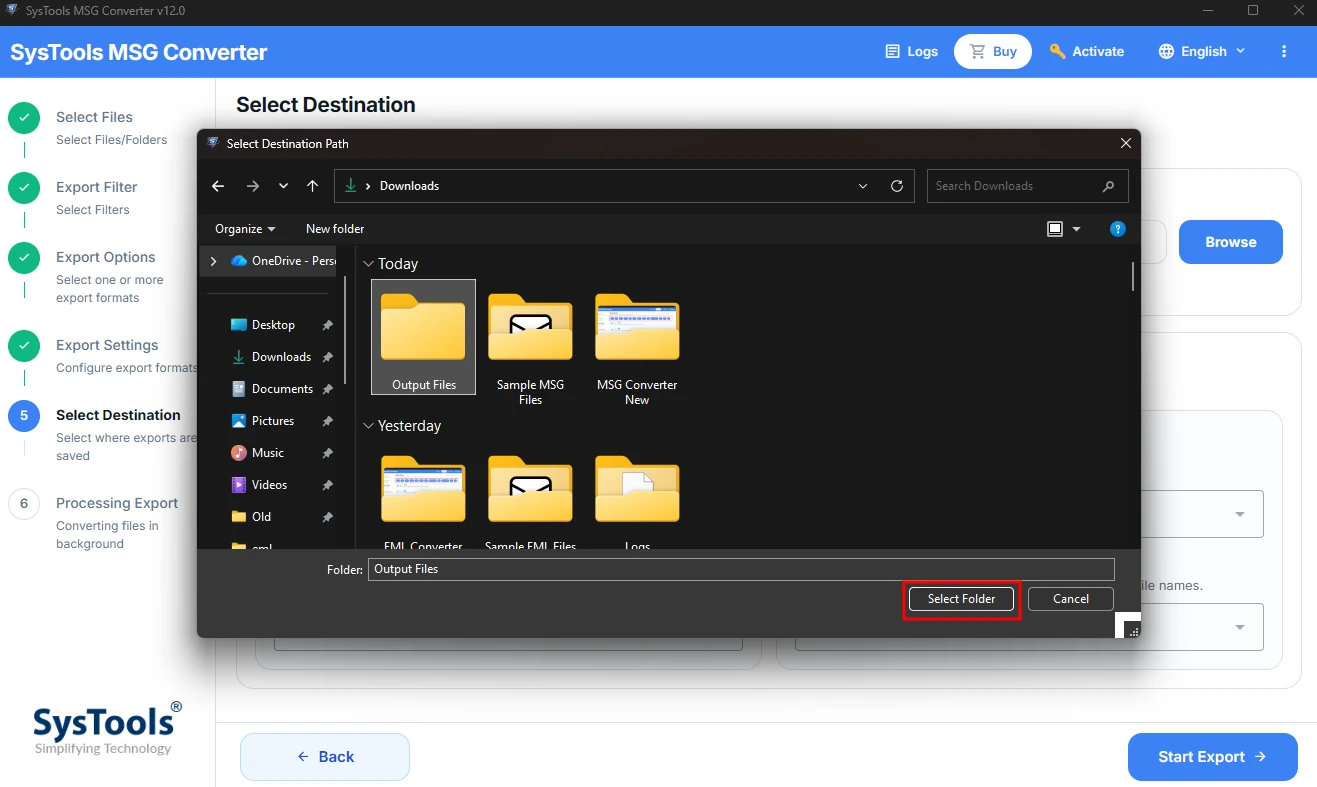
To save inside a folder you already created, open it in the dialog and click Select Folder.
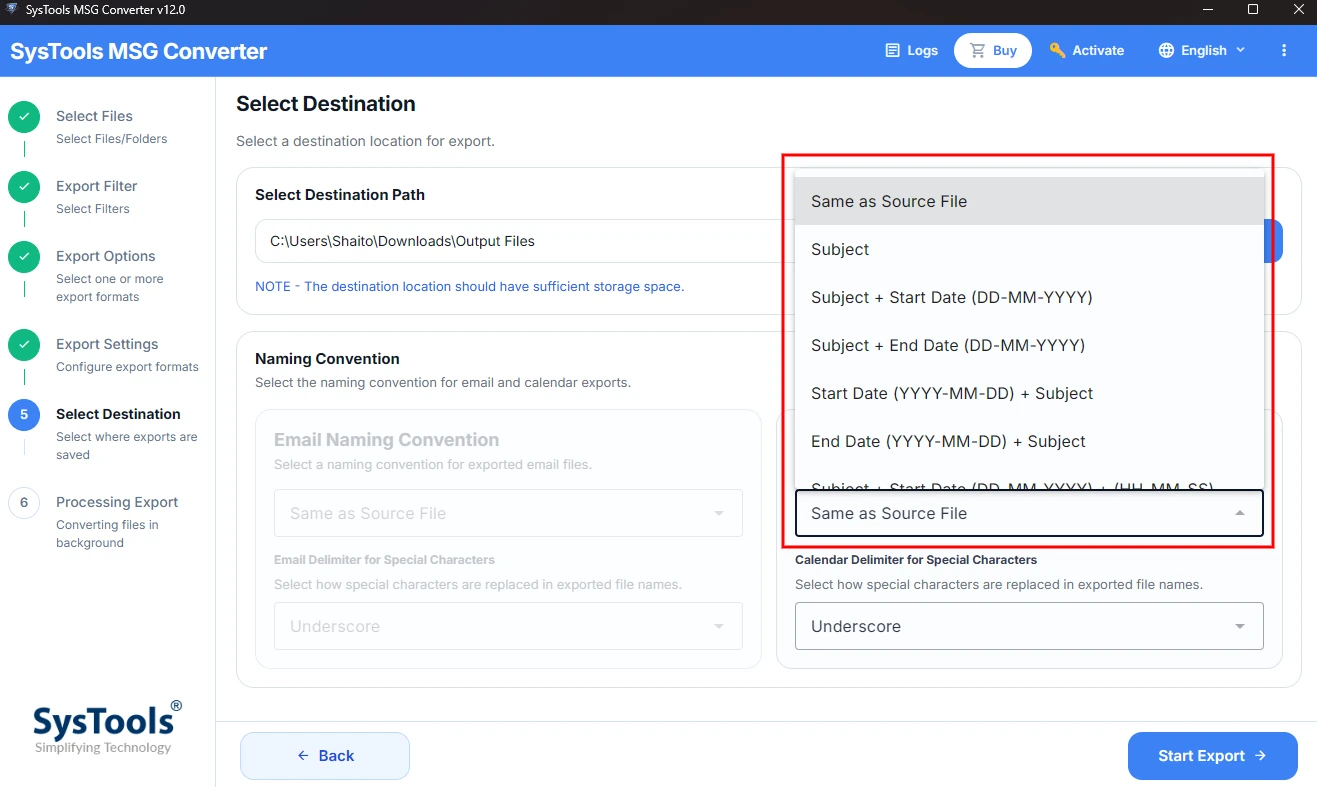
Open Calendar Naming Convention to name exported calendar files. Choose Same as Source File or a pattern built from Subject, Start Date and End Date.
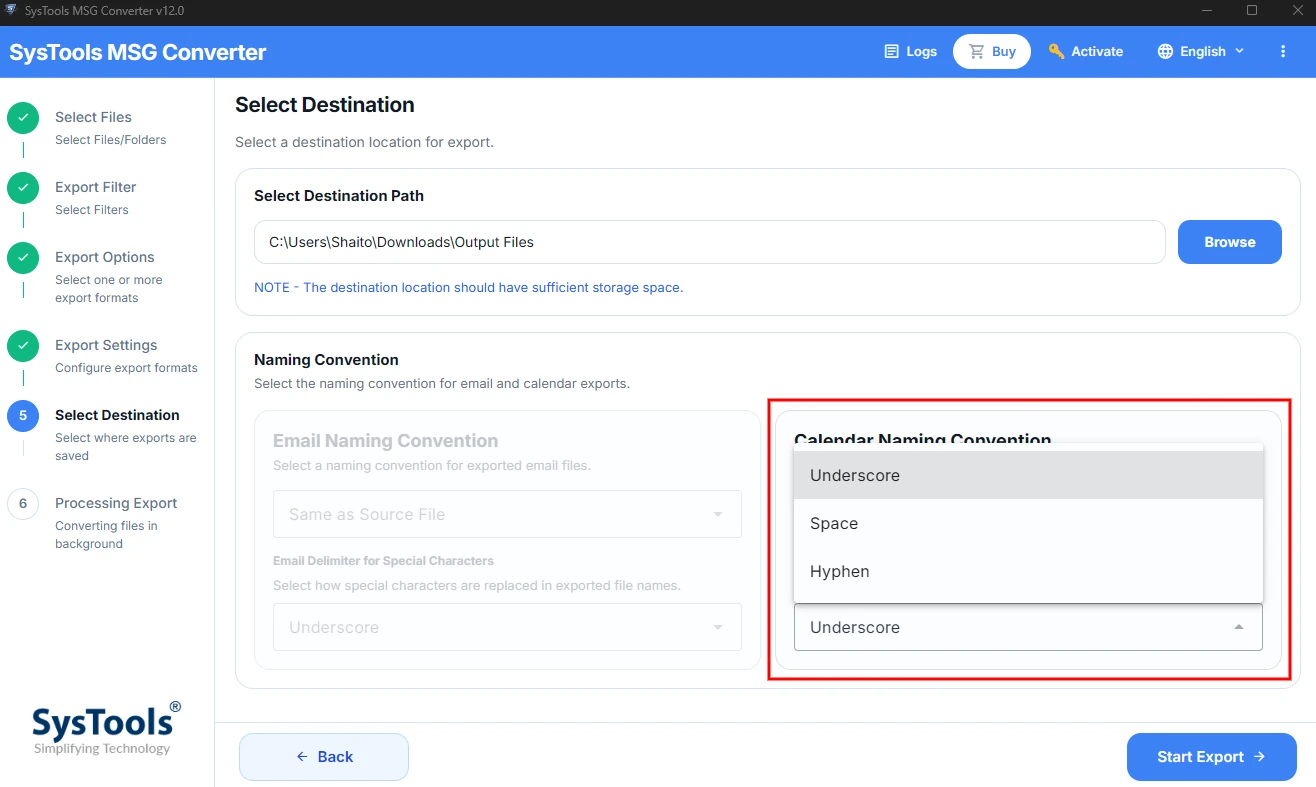
Open Calendar Delimiter for Special Characters to set what replaces special characters in file names. Select Underscore, Space or Hyphen.
Start the Export and Track Progress
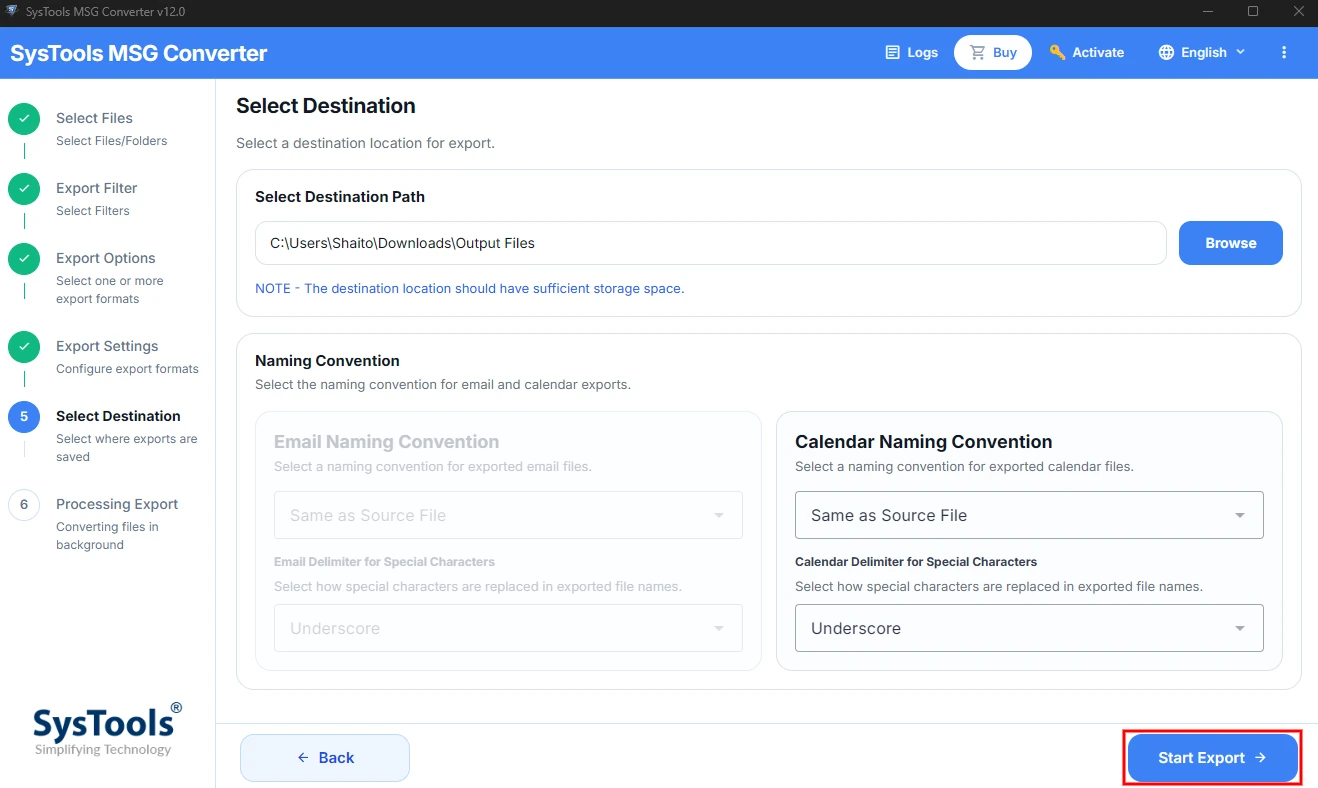
Click Start Export once the destination path is set.
A message confirms Export process completed successfully. Click OK.
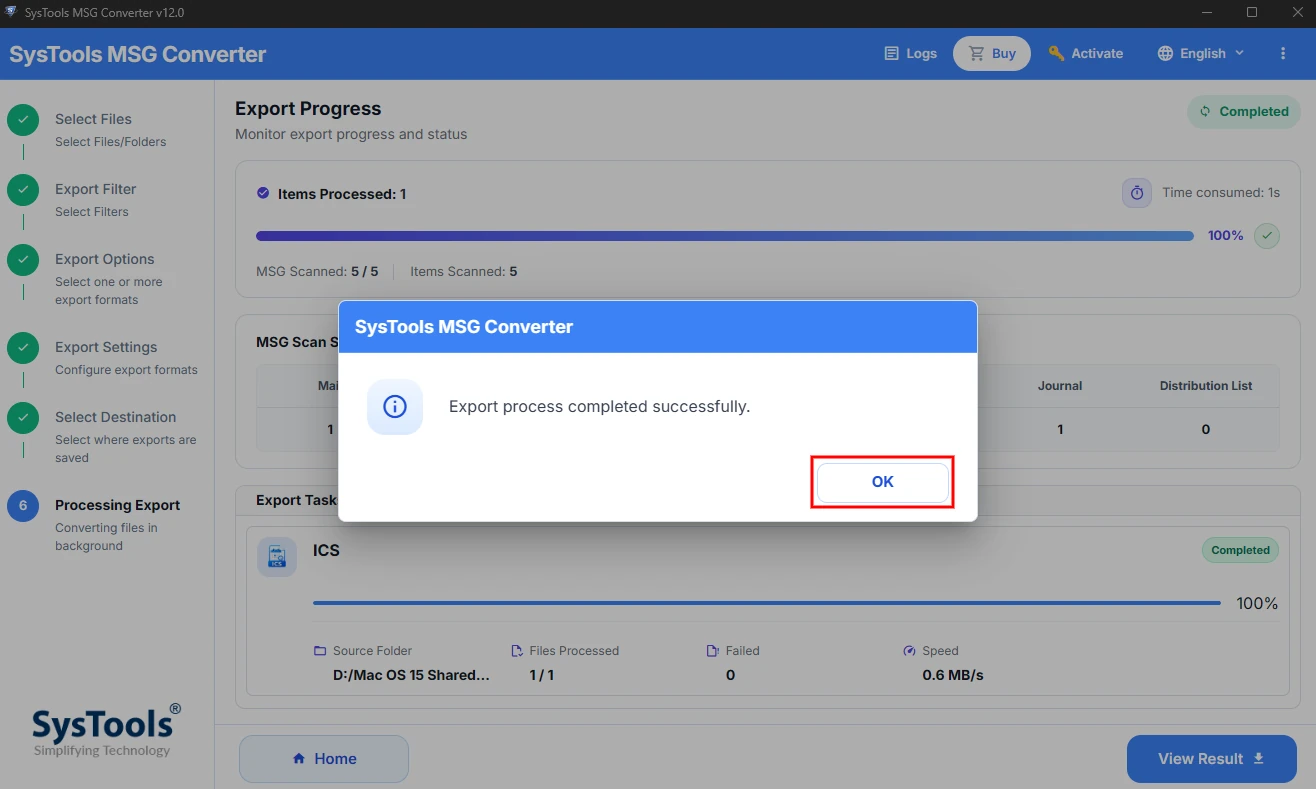
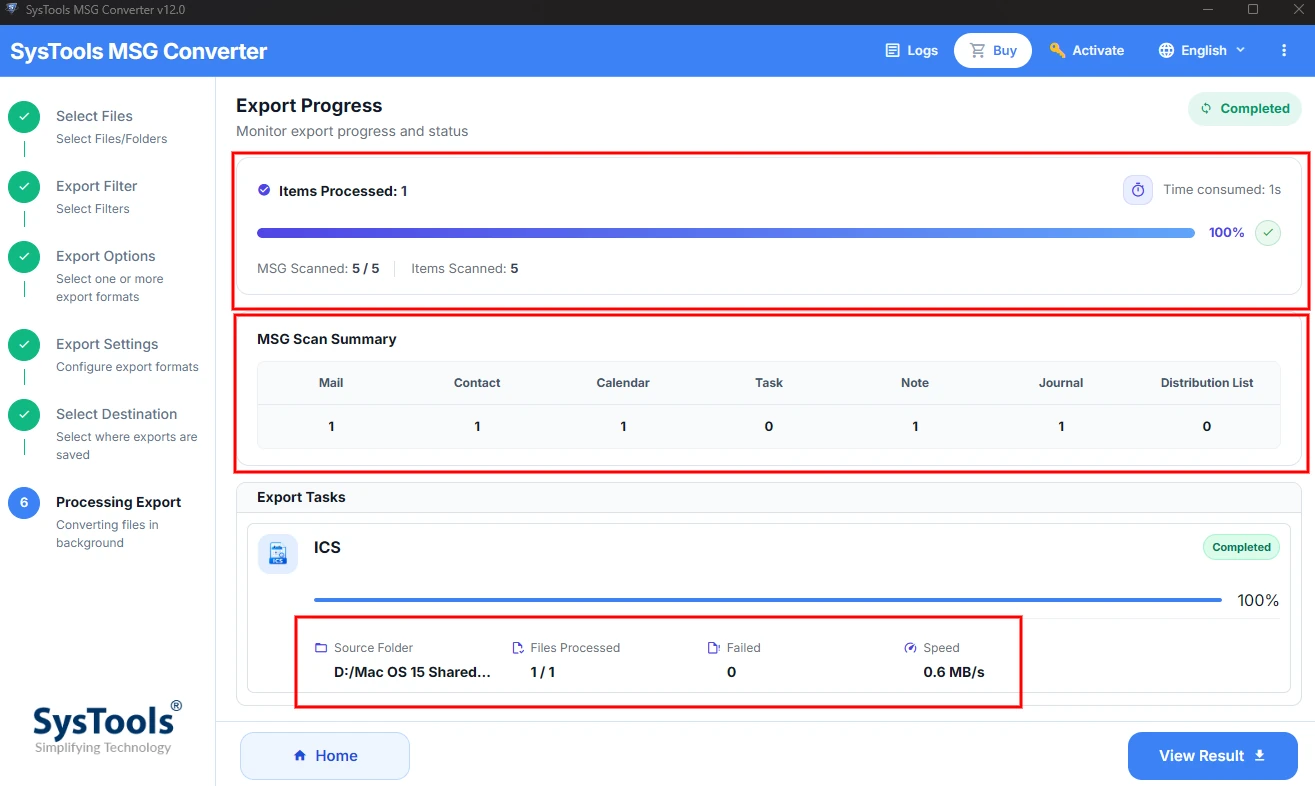
The Export Progress screen shows Items Processed and the MSG Scan Summary for Mail, Contact, Calendar, Task, Note, Journal and Distribution List. Under Export Tasks, check Files Processed, Failed and Speed for the ICS task. It shows Completed at 100%.
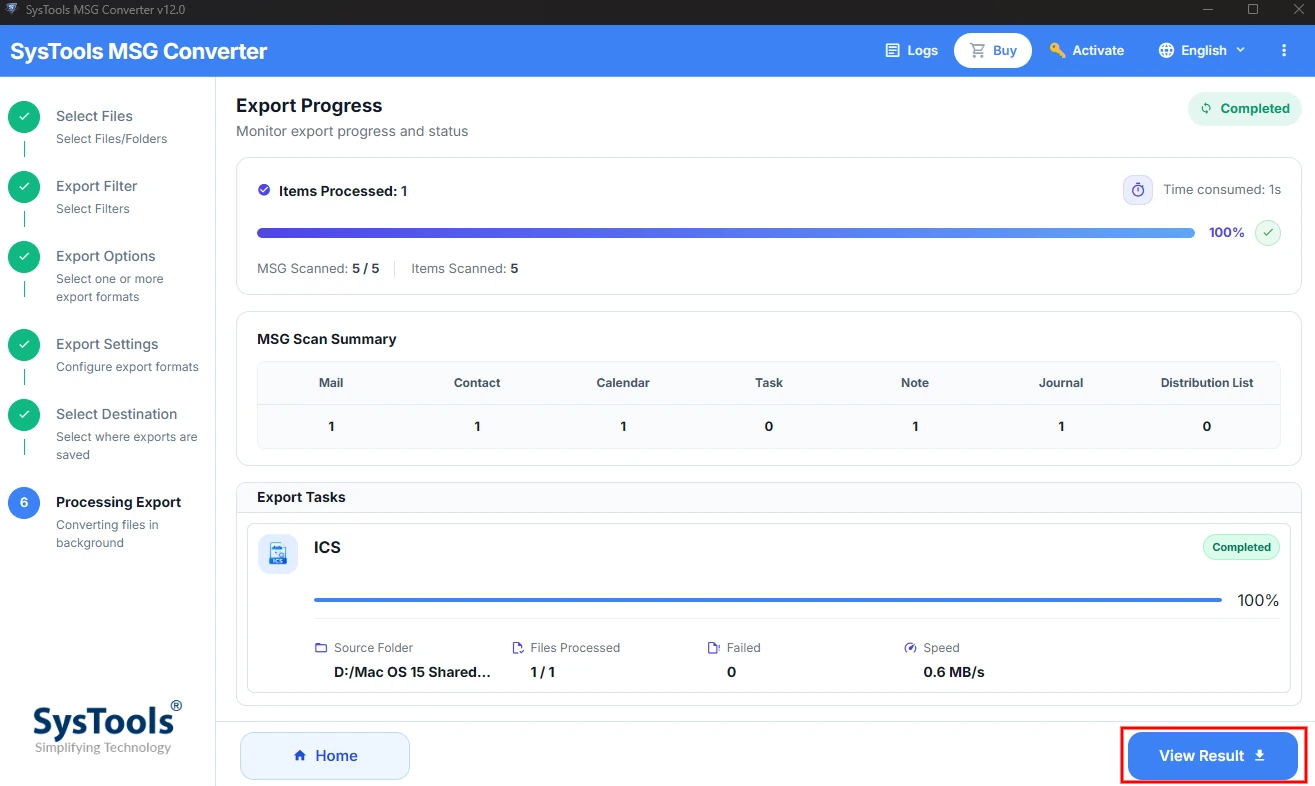
Click View Result to open the output folder.
View the Converted Files
Windows Explorer opens the output folder named SysTools MSG Converter. Open the ICS folder inside it.
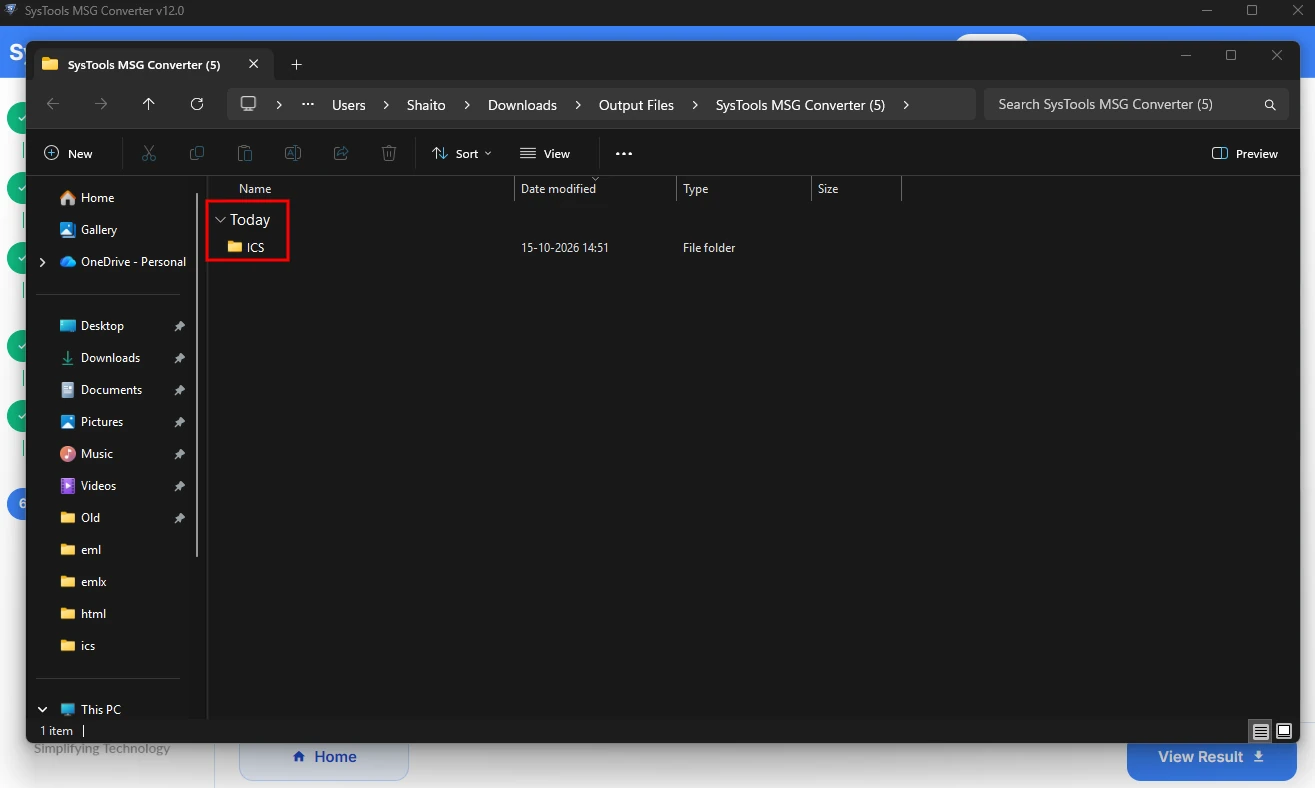
The ICS folder holds an MSG Files folder and ExportReport.csv.
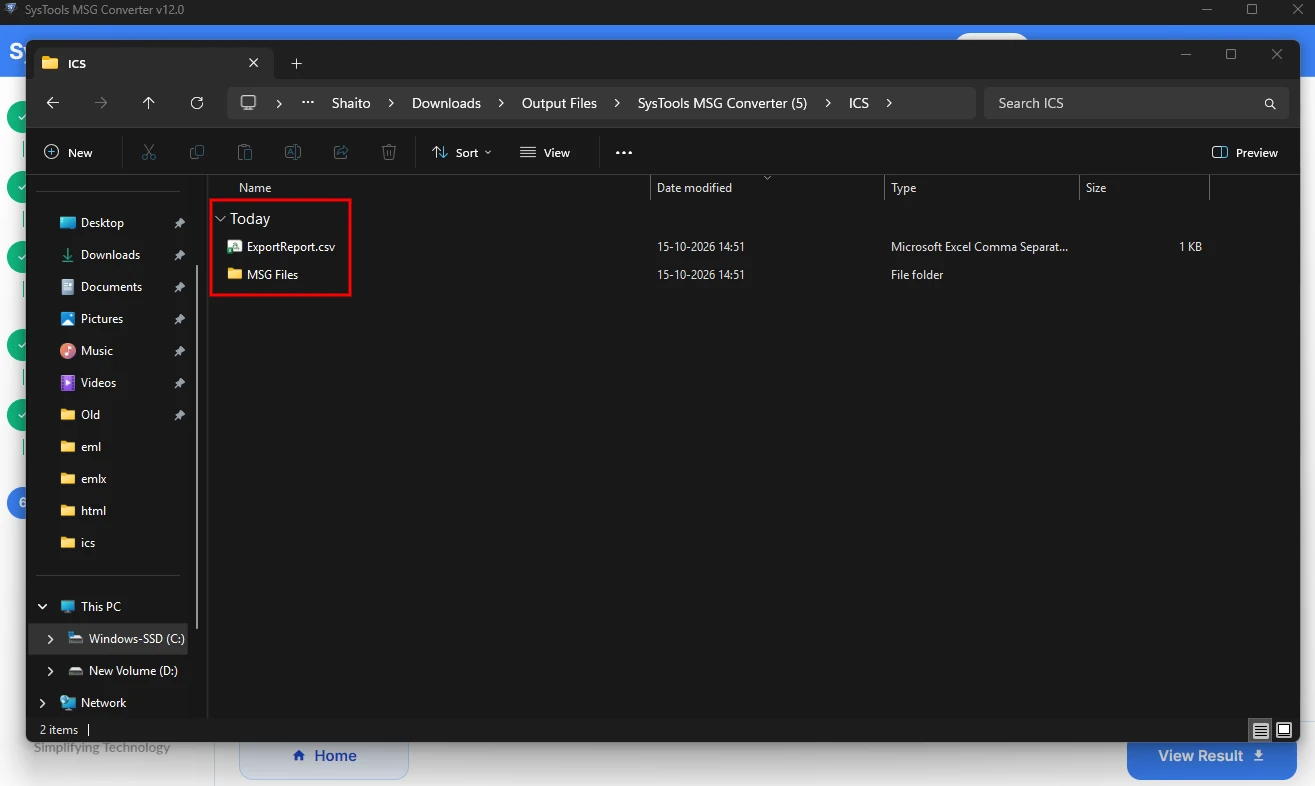
Open ExportReport.csv to see the SourcePath, Destination Path and the count for Email, Calendar, Contact, Task, Note and Journal, plus the Total count and failed count.
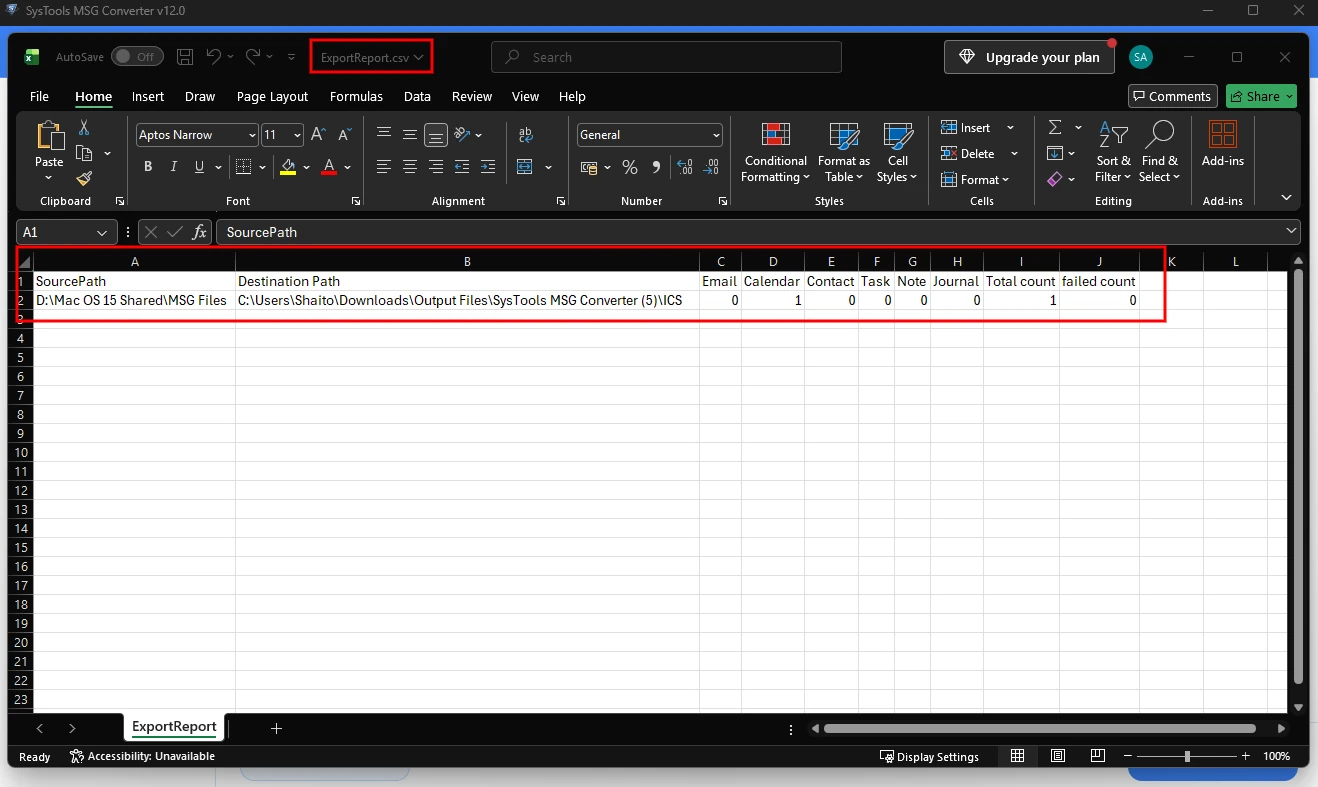
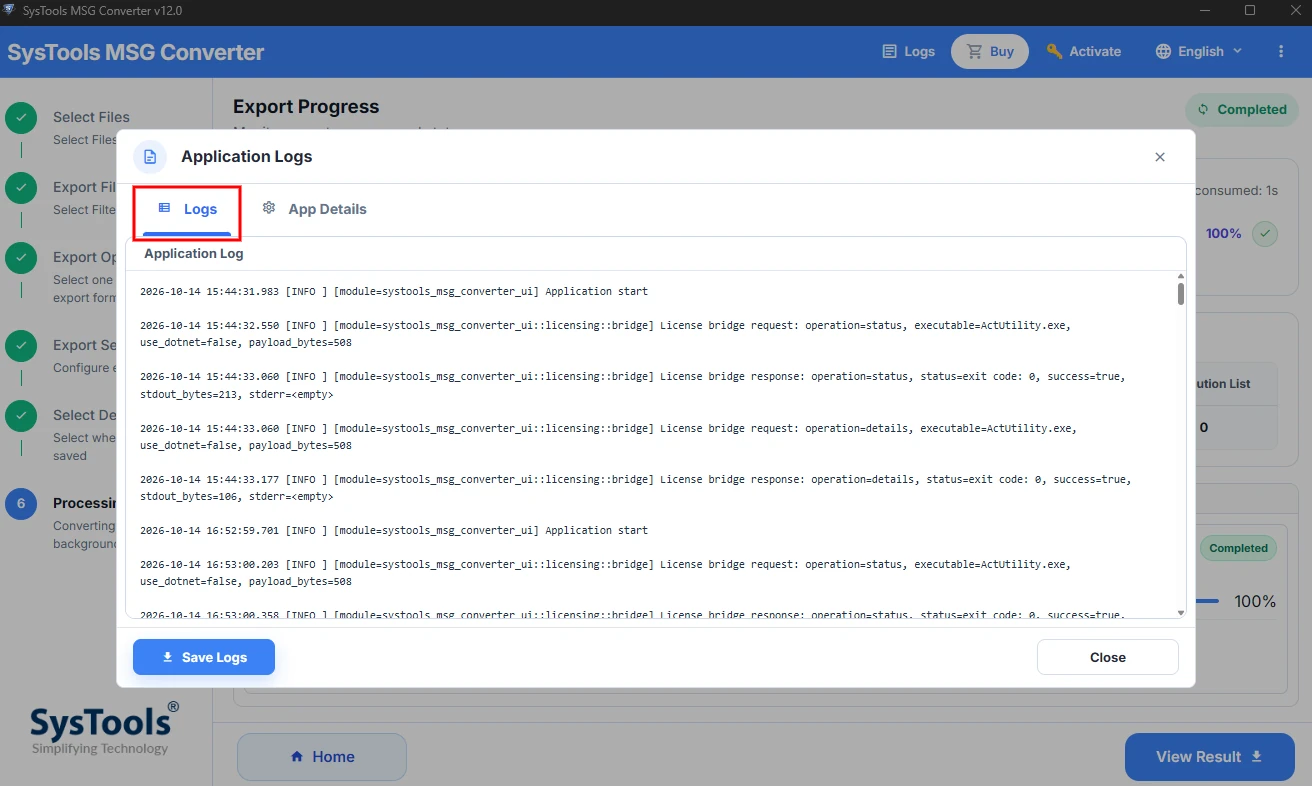
Check Logs and App Details
Click Logs in the top bar to open Application Logs. Click Save Logs to keep a copy.
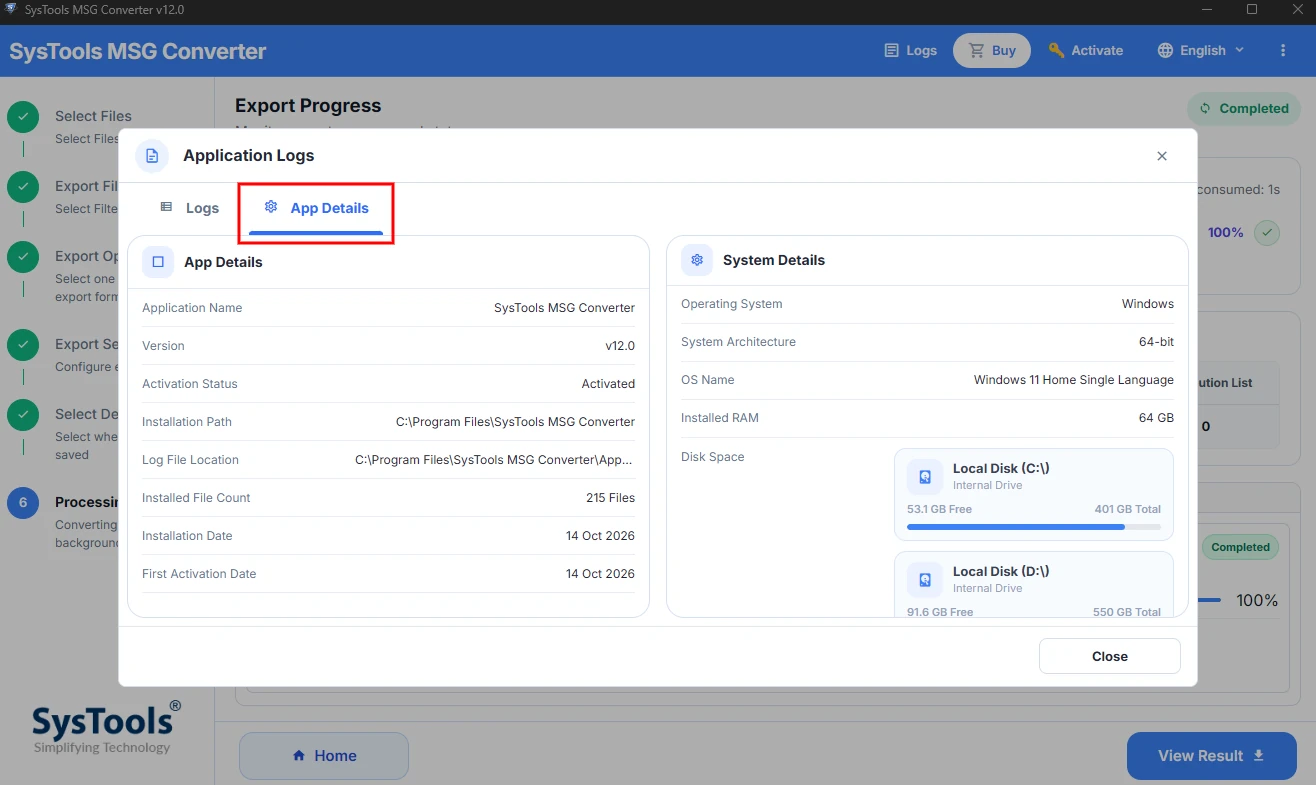
The App Details tab lists application and system details, including version, activation status and operating system.
Select the three dot menu in the top bar to open About, Support and Help.
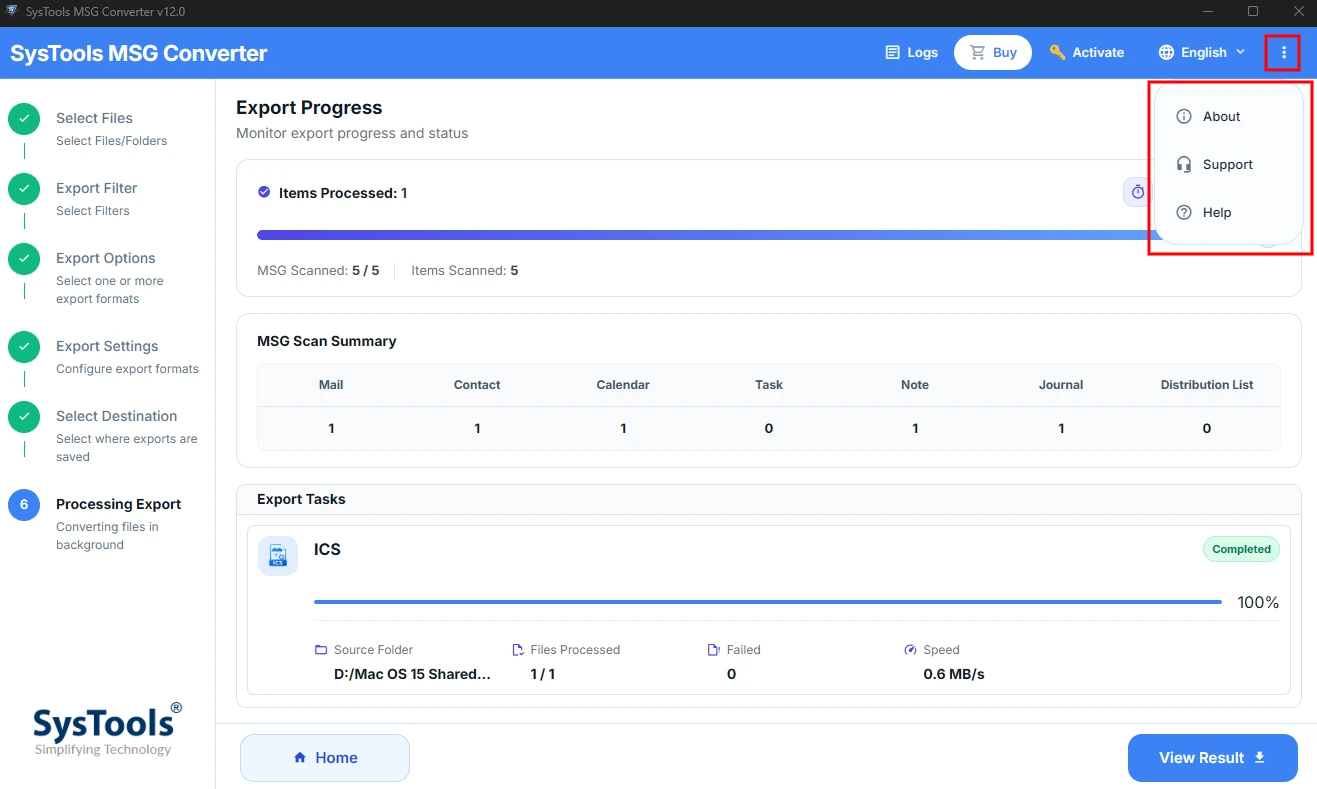
Convert MSG Files to JSON
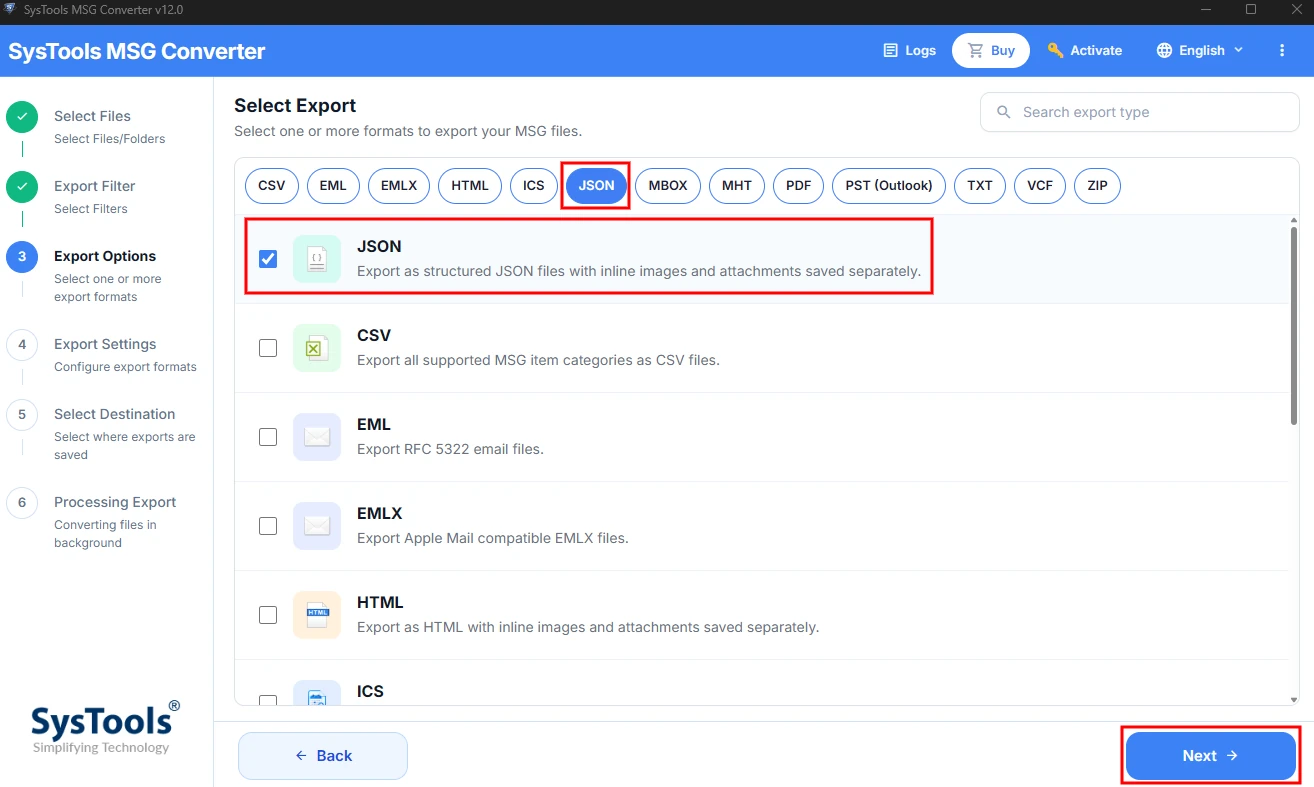
Select JSON as the Export Format
Select JSON in the Export Options list. It exports structured JSON files with inline images, while attachments save separately. Click Next.
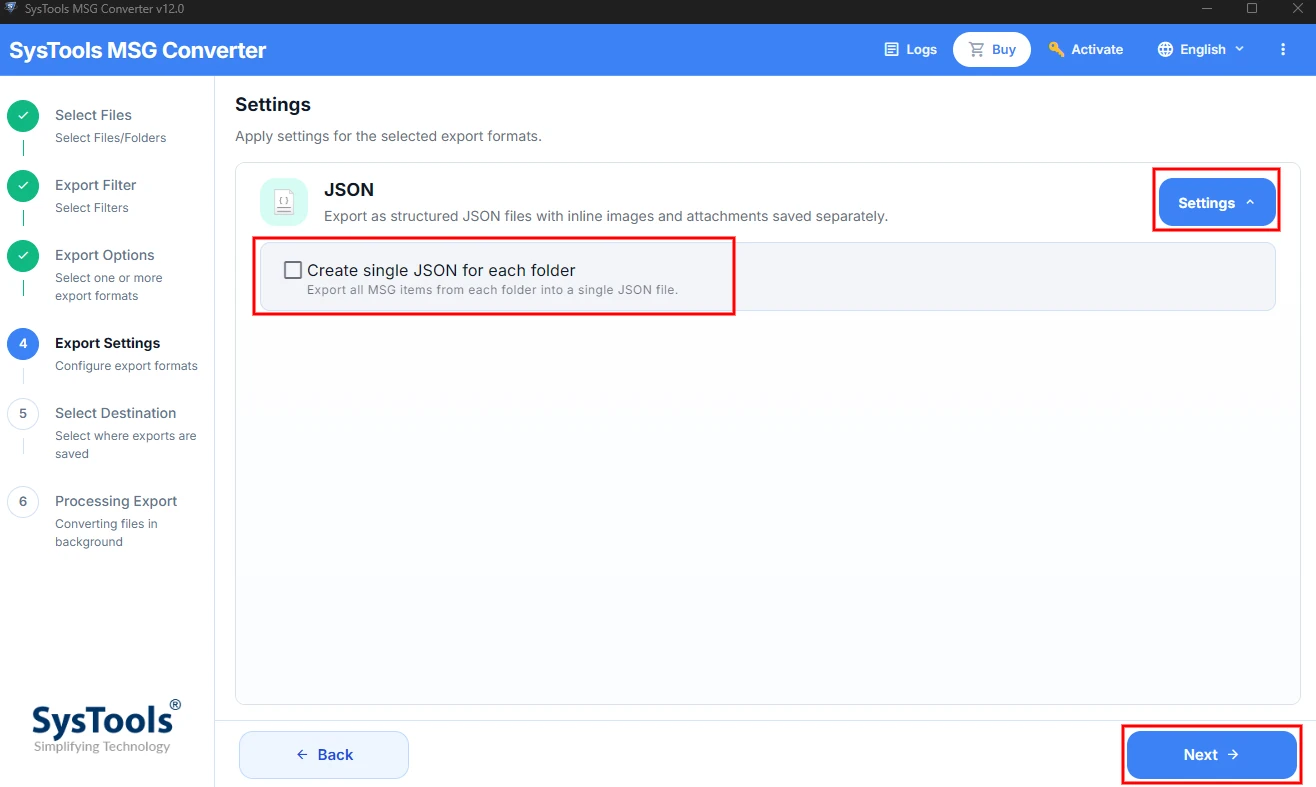
Configure JSON Export Settings
Click Settings to open the JSON options. Create single JSON file for each folder combines the MSG items from a folder into one JSON file. Click Next.
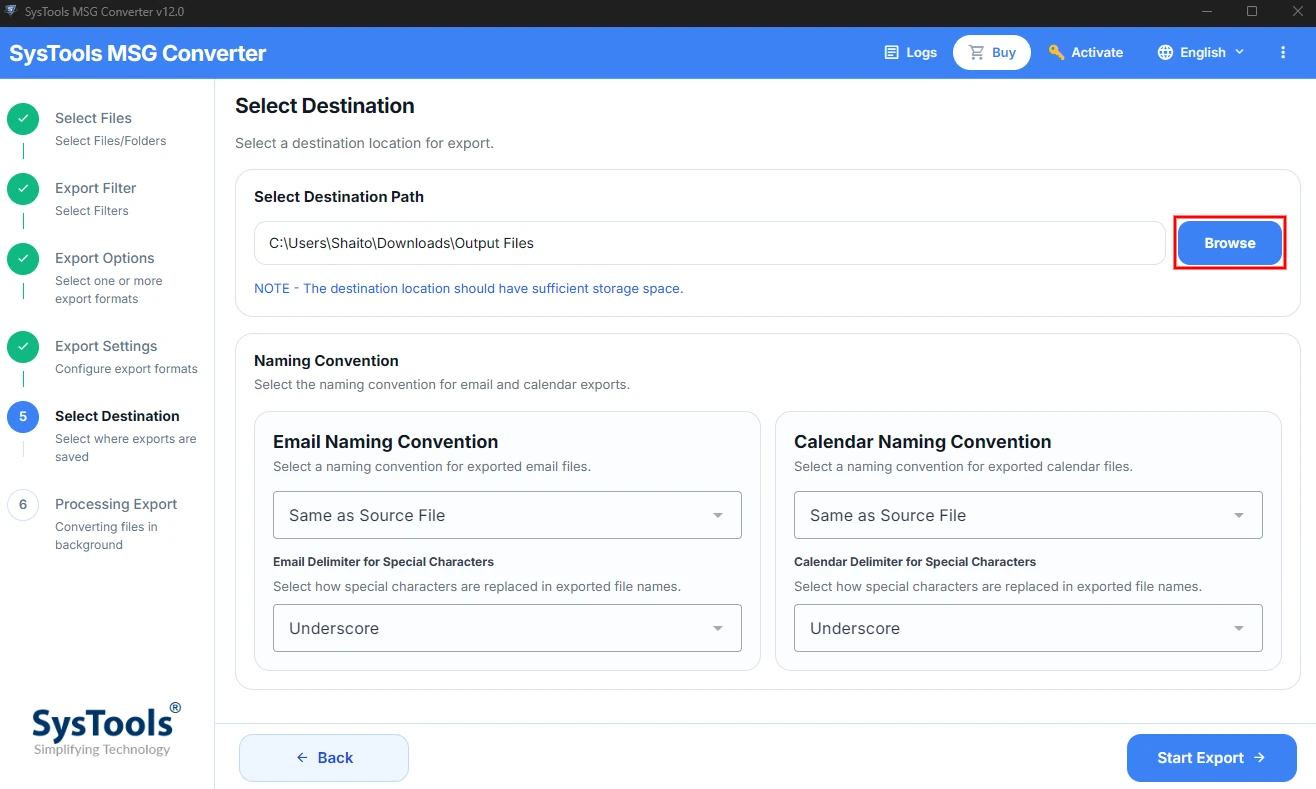
Select the Destination
Click Browse next to Select Destination Path to choose where converted files are saved. Make sure the location has enough storage space.
Select a folder in the dialog and click Select Folder.
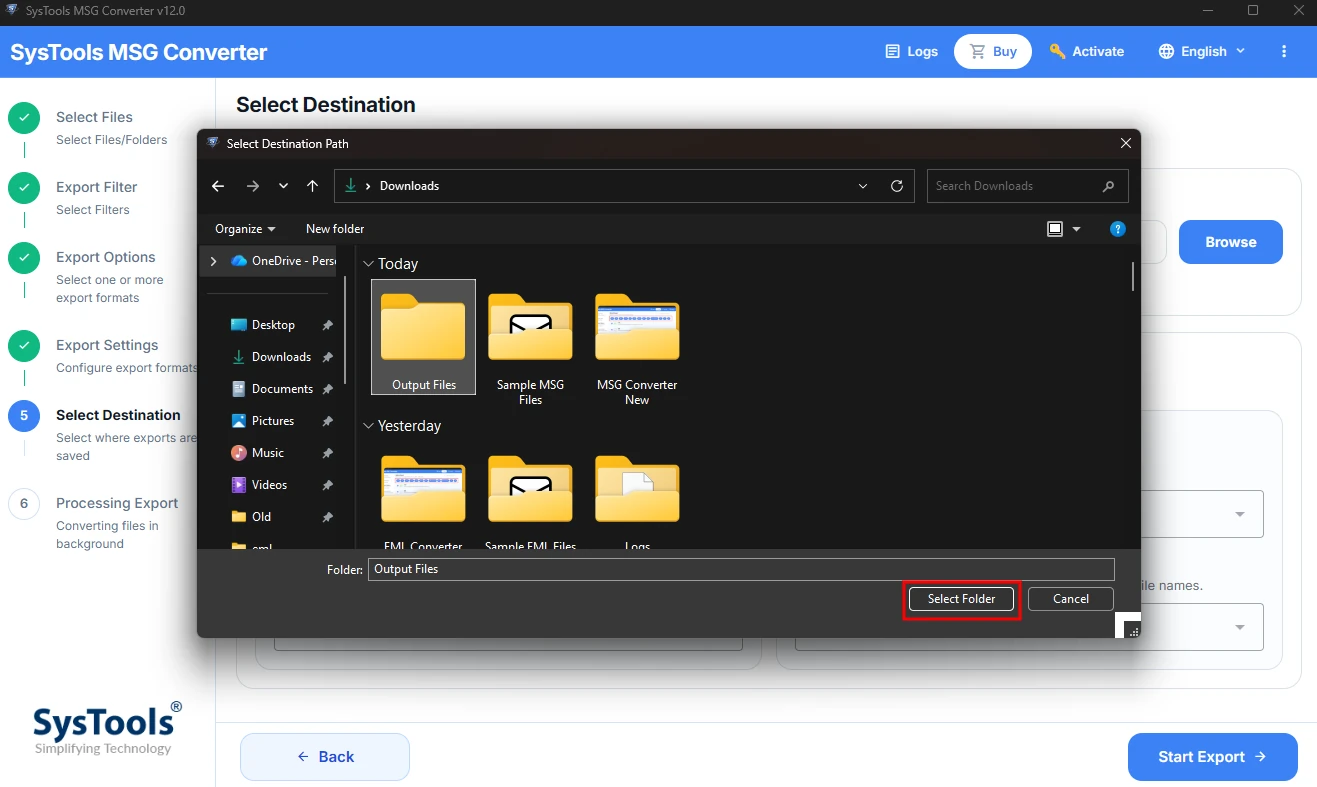
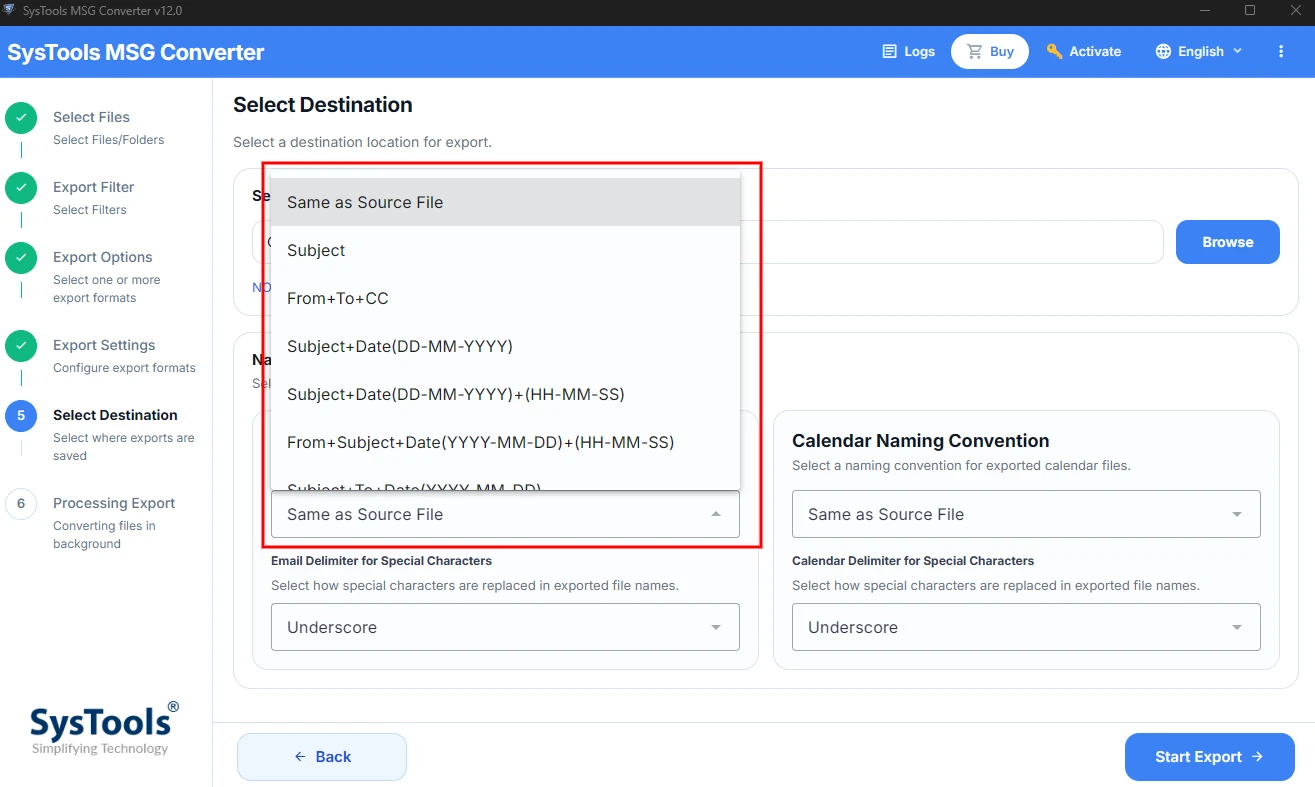
Open Email Naming Convention to name exported email files. Choose Same as Source File or a pattern built from Subject, From, To, CC and Date.
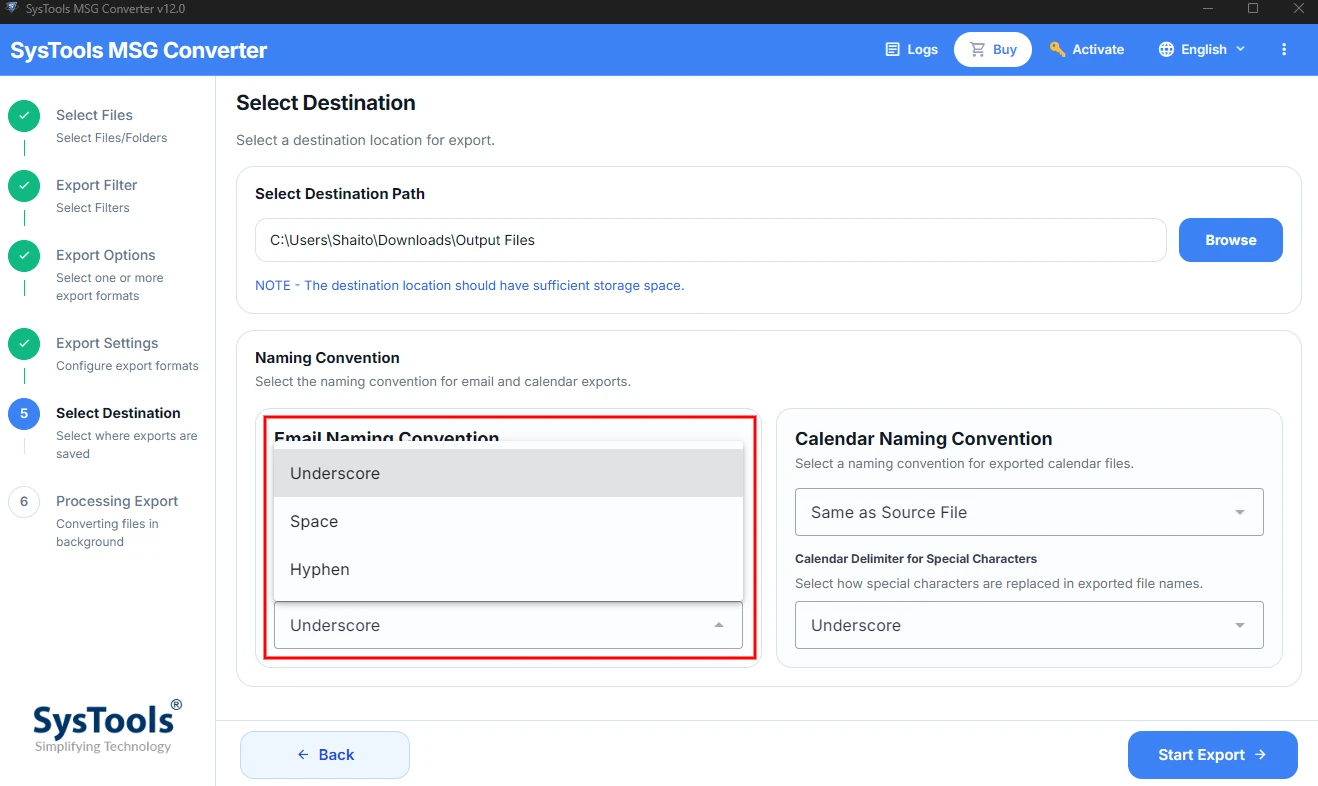
Open Email Delimiter for Special Characters to set what replaces special characters in file names. Select Underscore, Space or Hyphen.
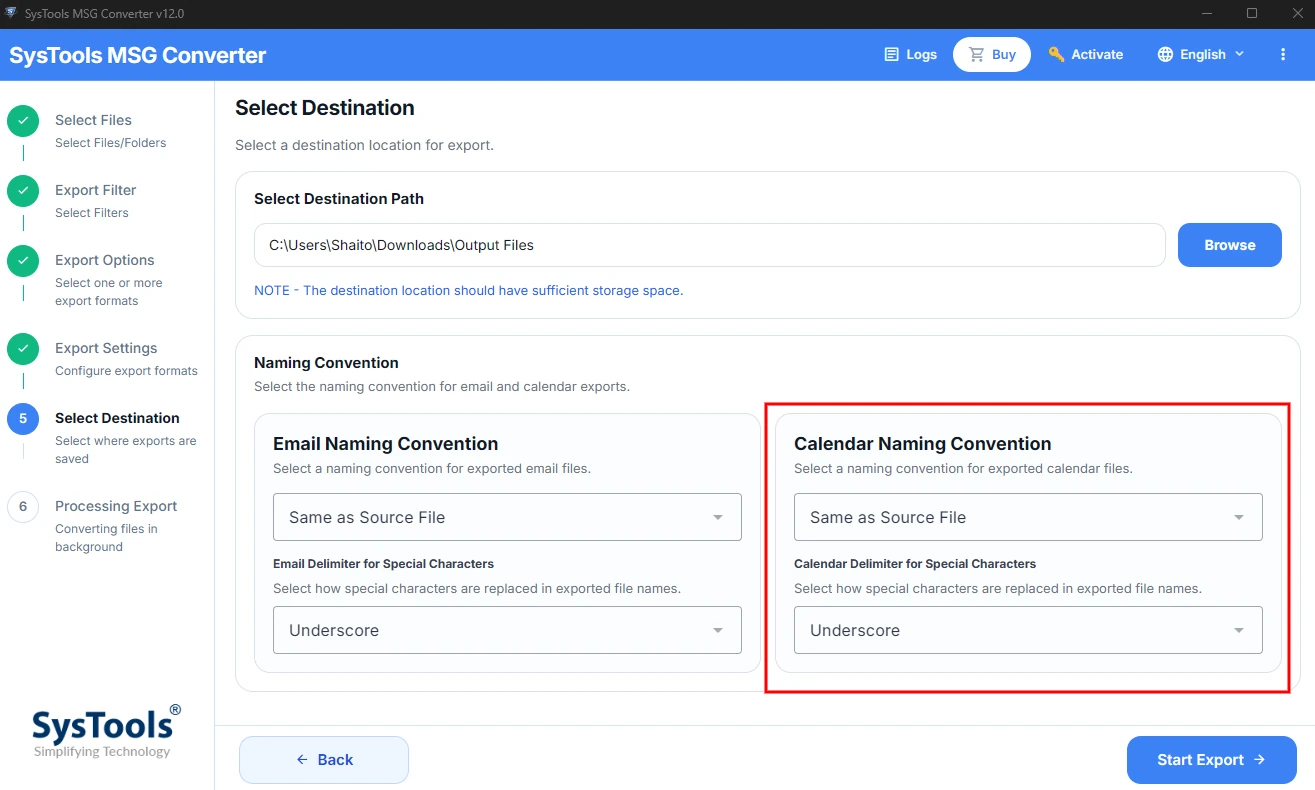
Calendar Naming Convention and Calendar Delimiter for Special Characters work the same way for calendar files.
Start the Export and Track Progress
Click Start Export once the destination path is set.
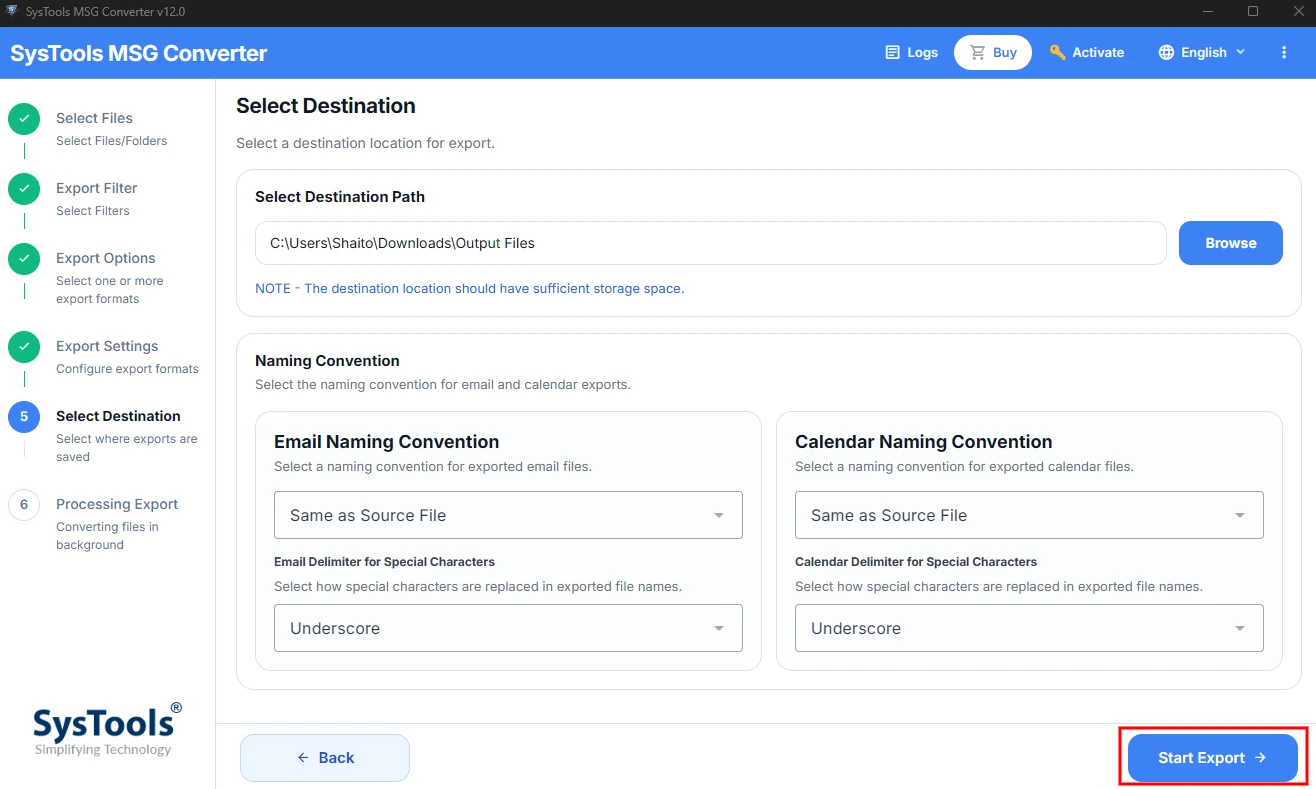
A message confirms Export process completed successfully. Click OK.
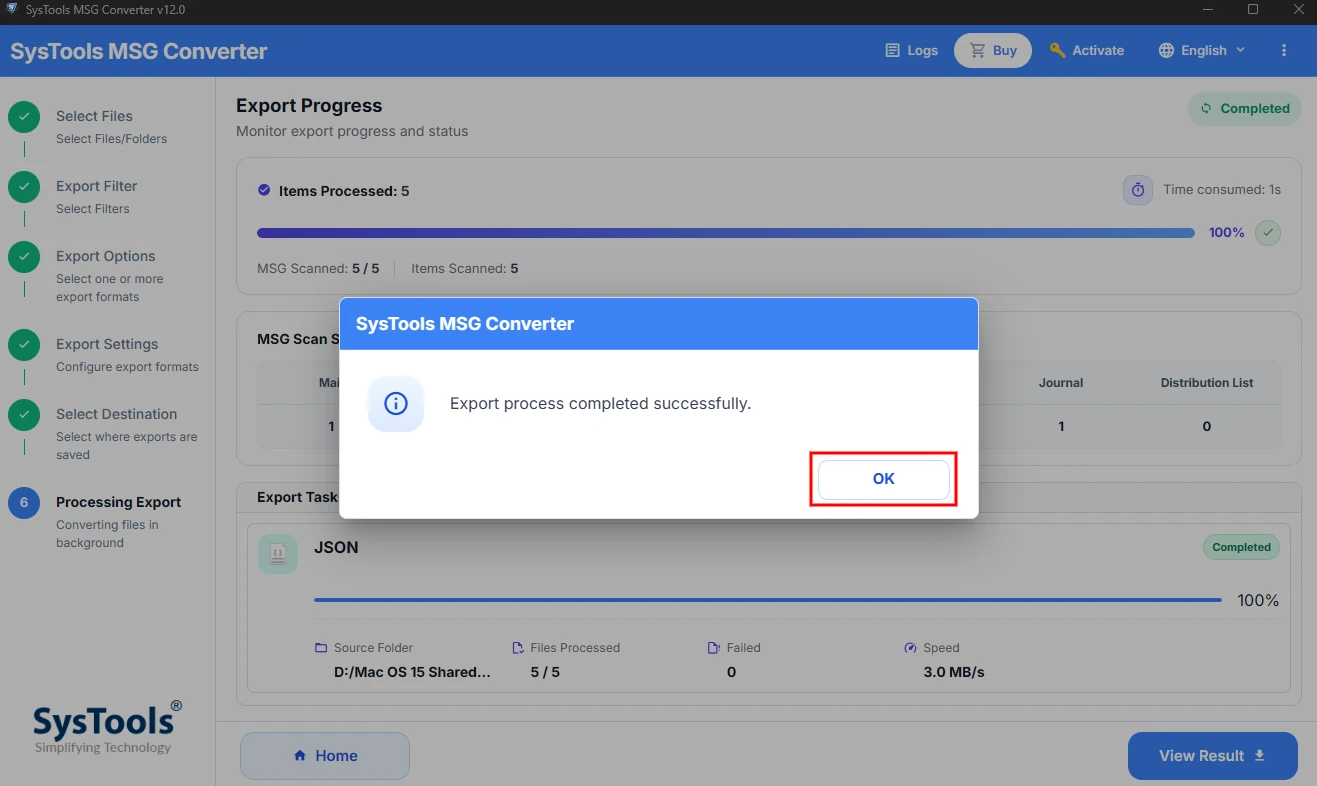
The Export Progress screen shows Items Processed and the MSG Scan Summary for Mail, Contact, Calendar, Task, Note, Journal and Distribution List. Under Export Tasks, check Files Processed, Failed and Speed for the JSON task. It shows Completed at 100%.
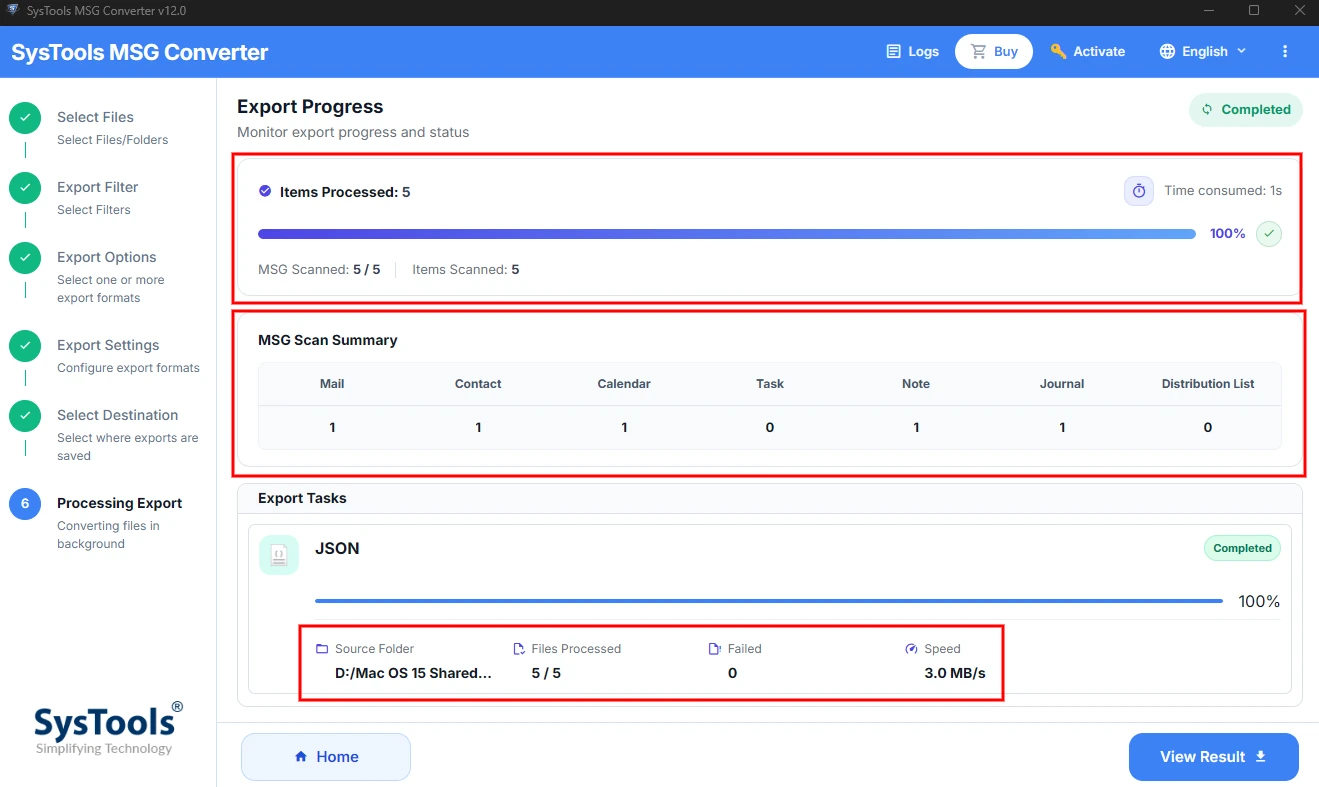
Click View Result to open the output folder.
View the Converted Files
Windows Explorer opens the output folder named SysTools MSG Converter. Open the JSON folder inside it.
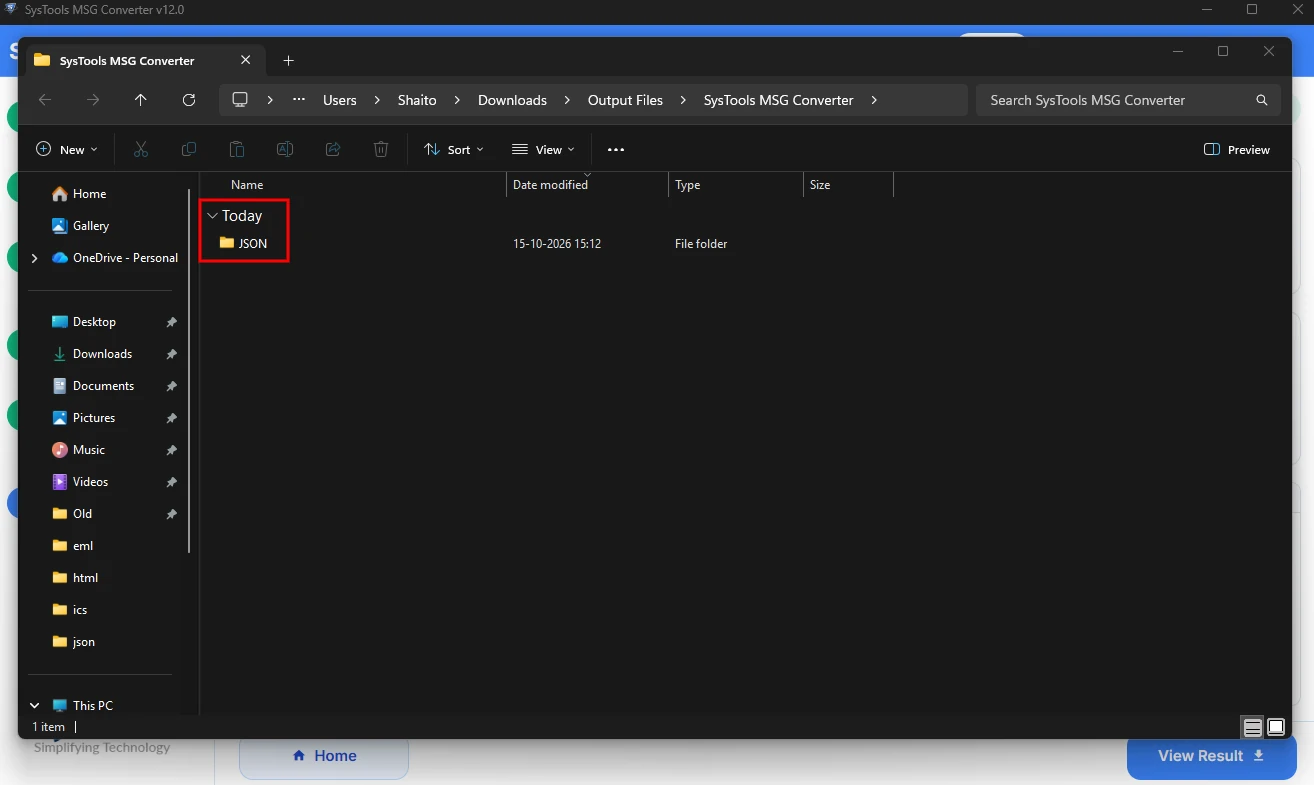
The JSON folder holds an MSG Files folder and ExportReport.csv.
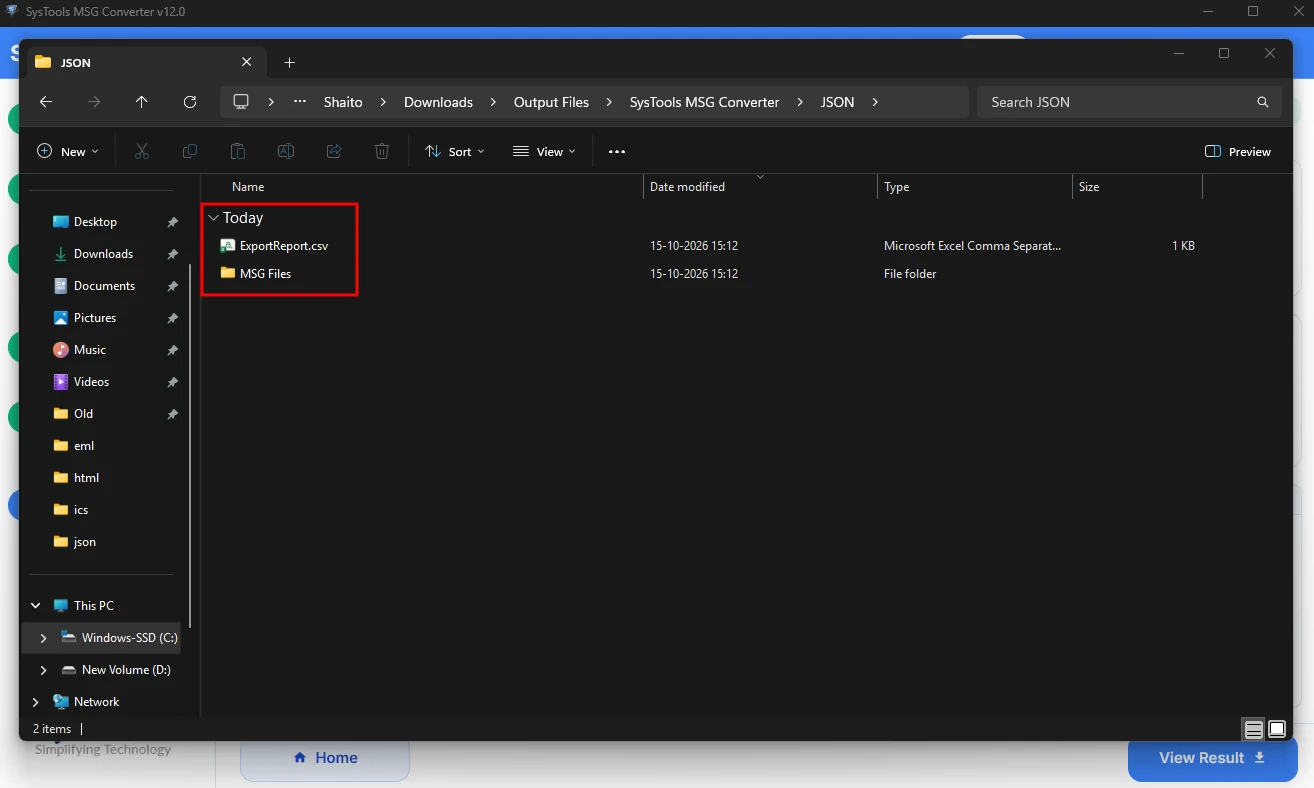
Open ExportReport.csv to see the SourcePath, Destination Path and the count for Email, Calendar, Contact, Task, Note and Journal, plus the Total count and failed count.
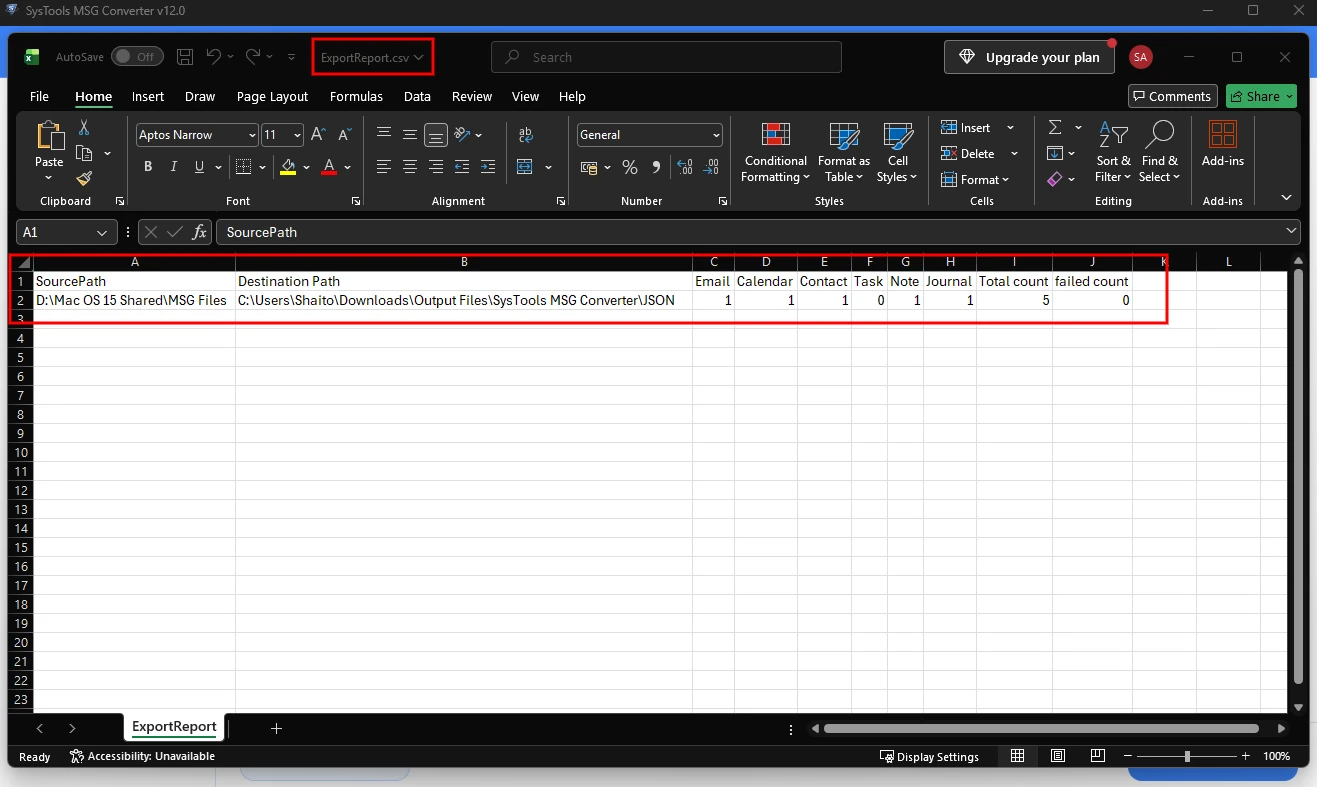
Check Logs and App Details
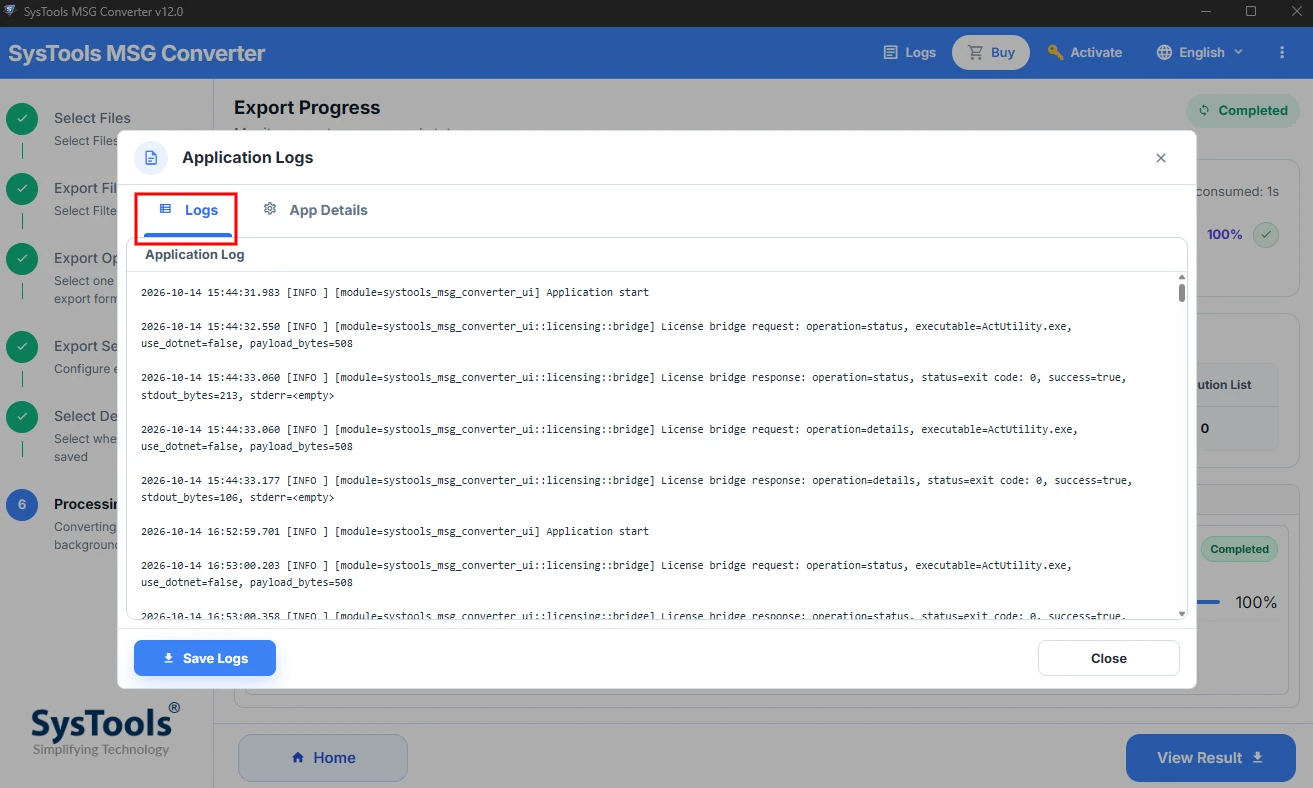
Click Logs in the top bar to open Application Logs. Click Save Logs to keep a copy.
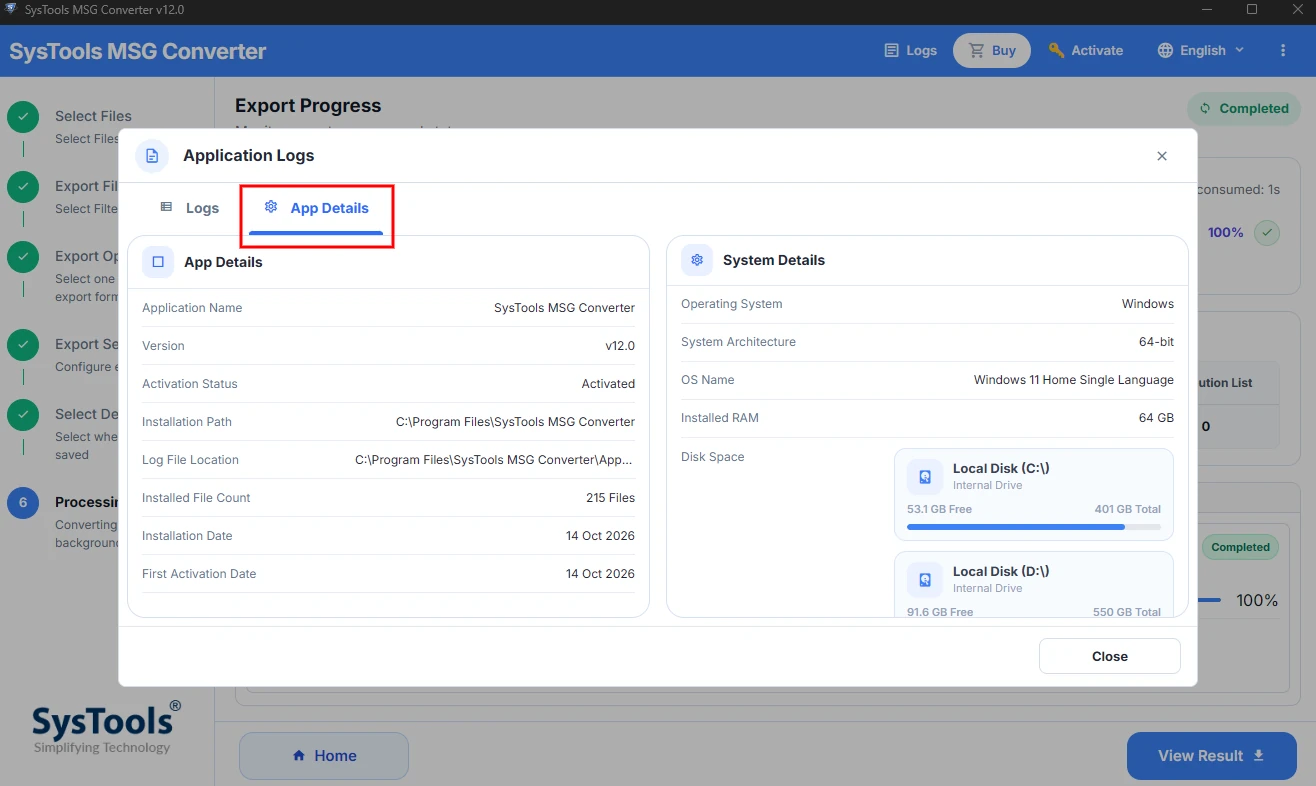
The App Details tab lists application and system details, including version, activation status and operating system.
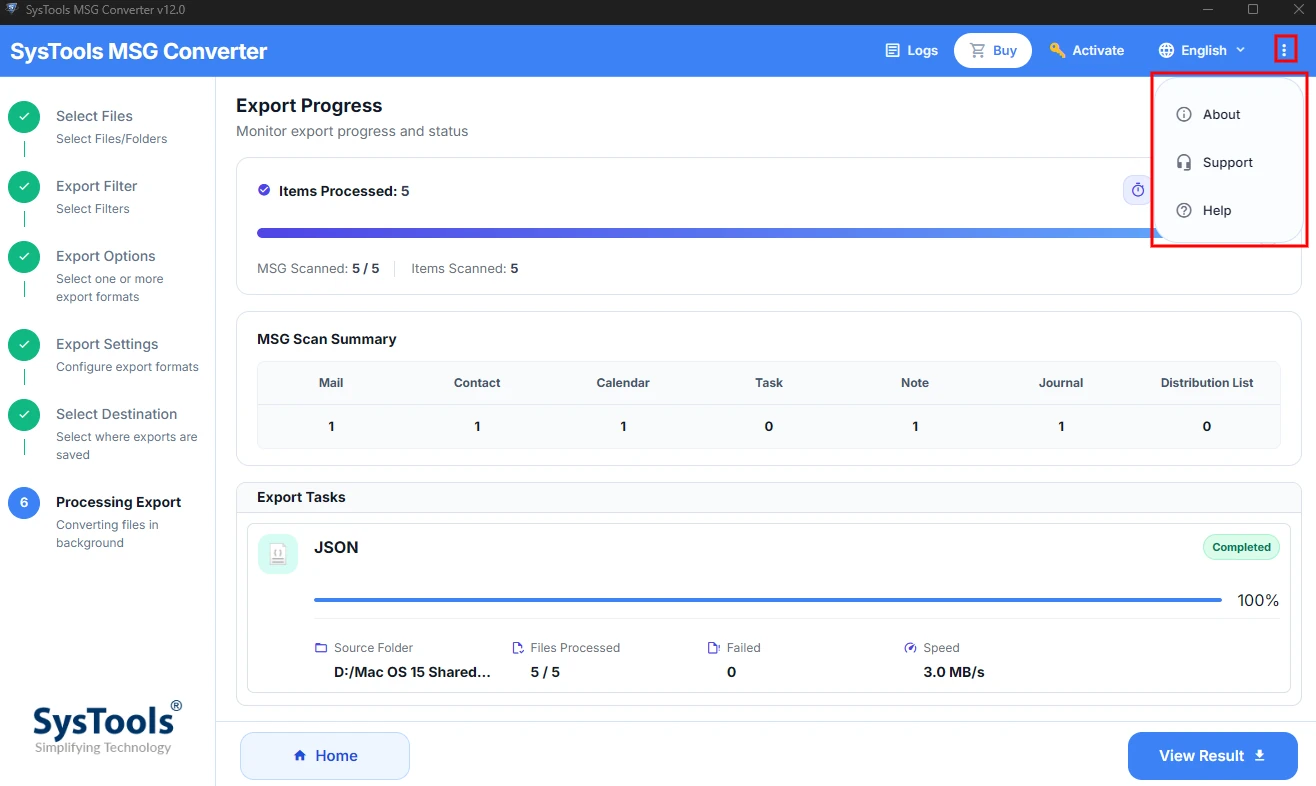
Select the three dot menu in the top bar to open About, Support and Help.
Convert MSG Files to MBOX
Select MBOX as the Export Format
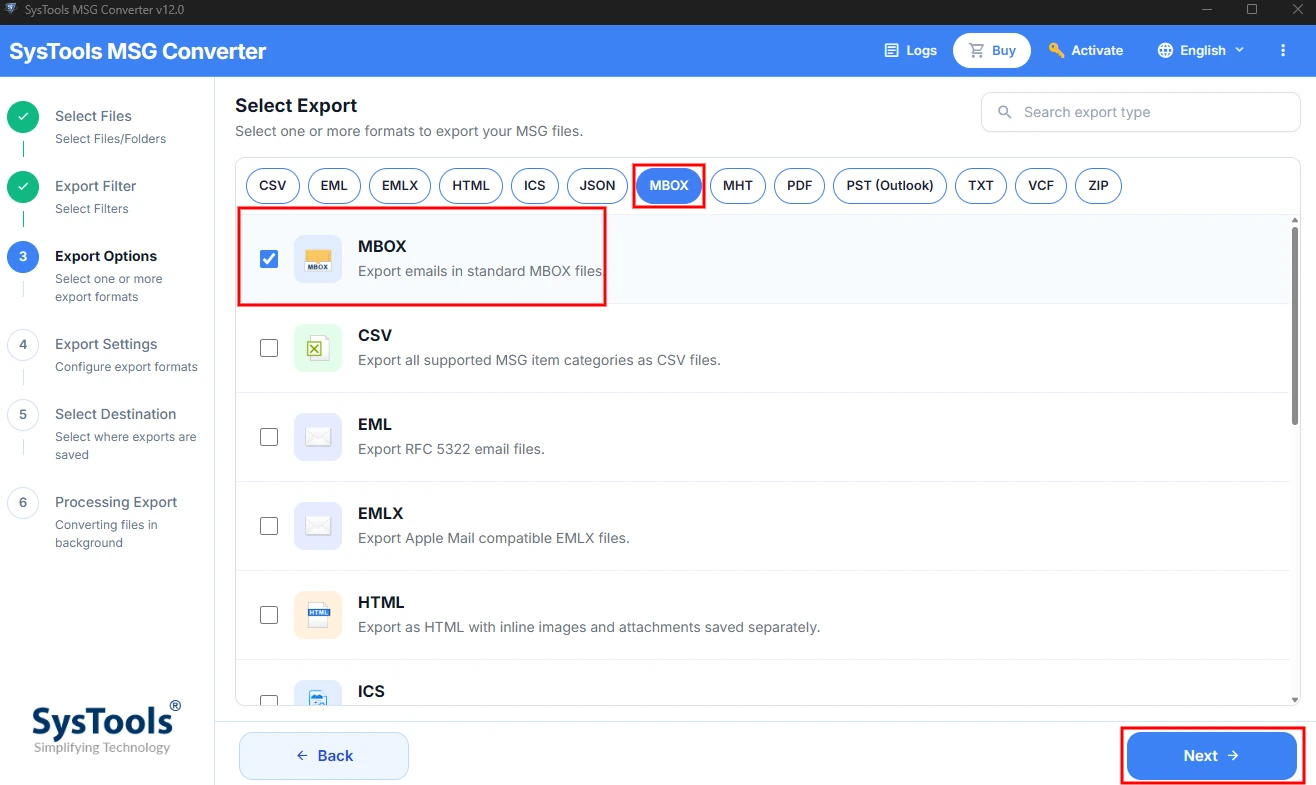
Select MBOX in the Export Options list. It exports emails in standard MBOX files. Click Next.
Configure MBOX Export Settings
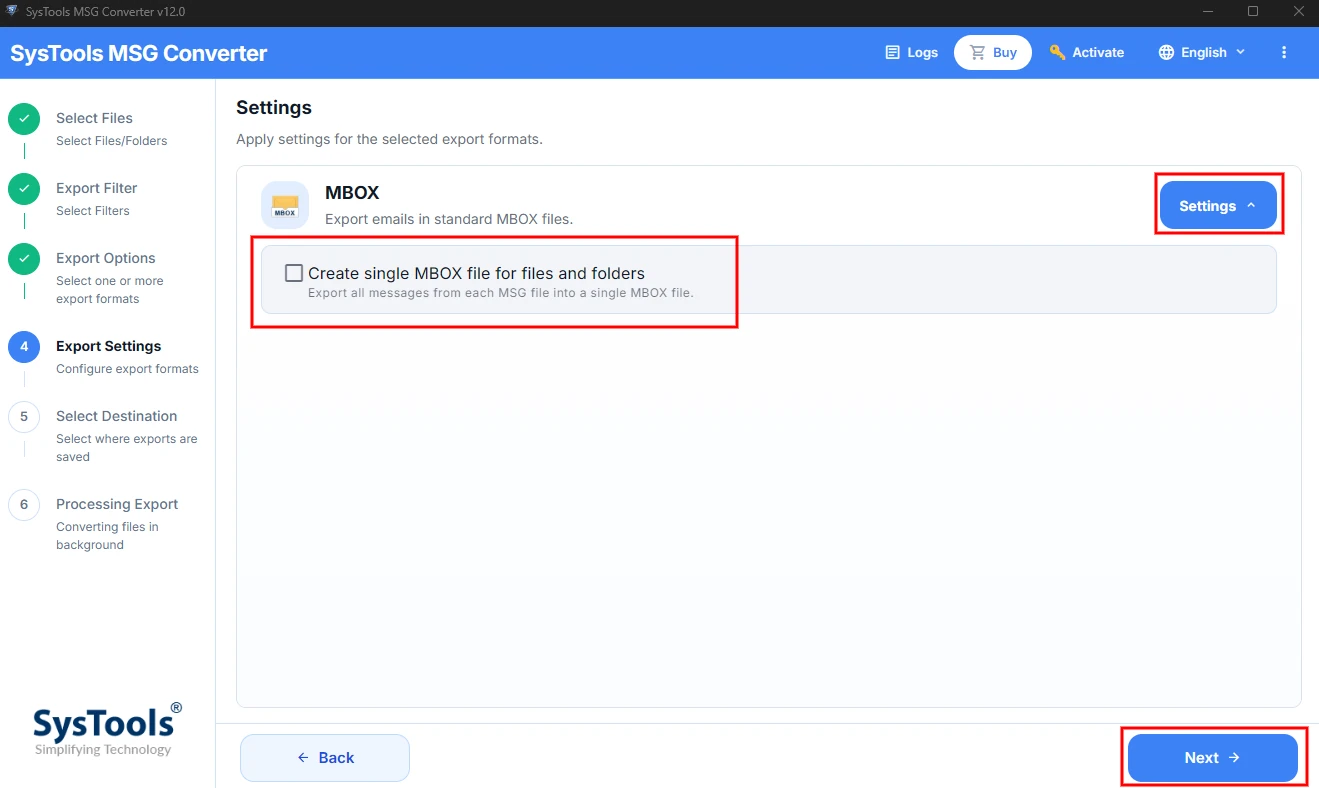
Click Settings to open the MBOX options. Create single MBOX file for files and folders exports all messages to one MBOX file. Click Next.
Select the Destination
Click Browse next to Select Destination Path to choose where converted files are saved. Make sure the location has enough storage space.
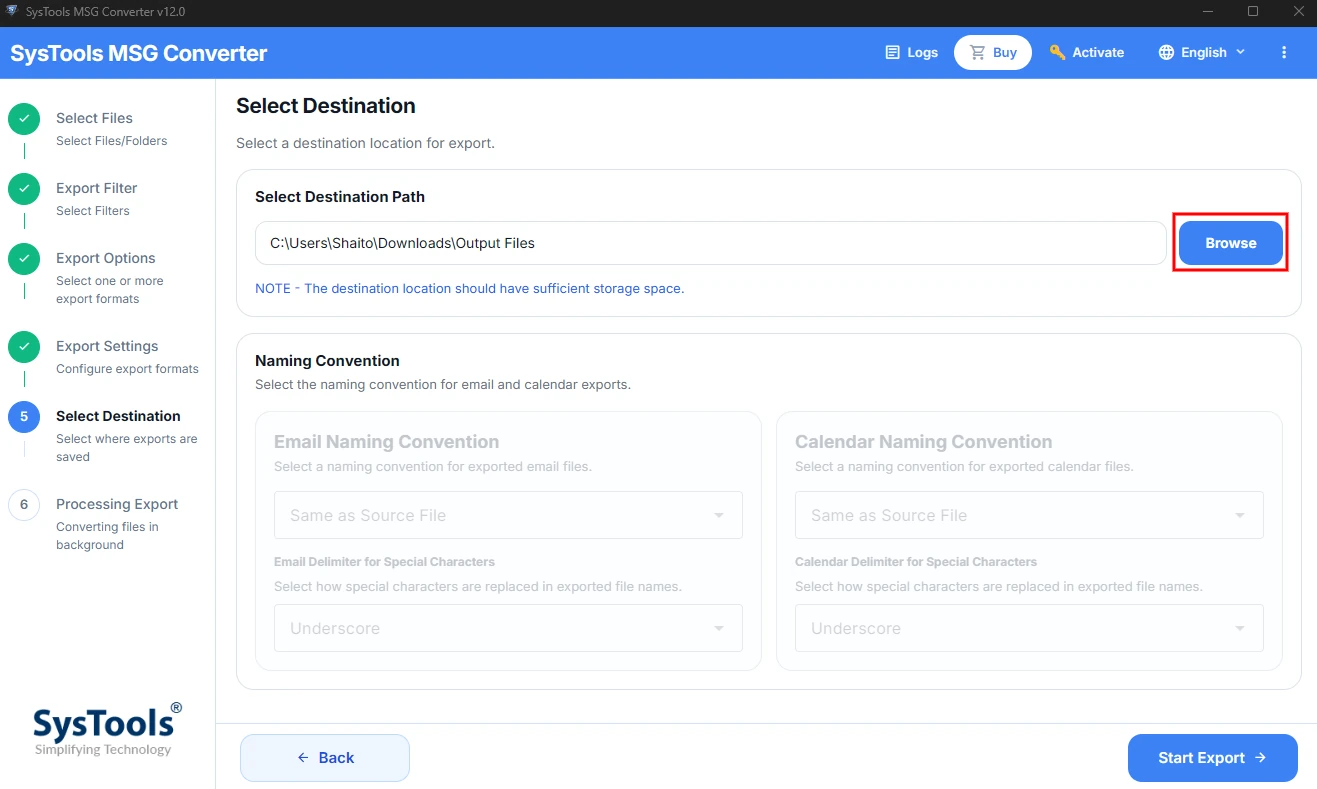
Select a folder in the dialog and click Select Folder. The naming options stay greyed out for MBOX.
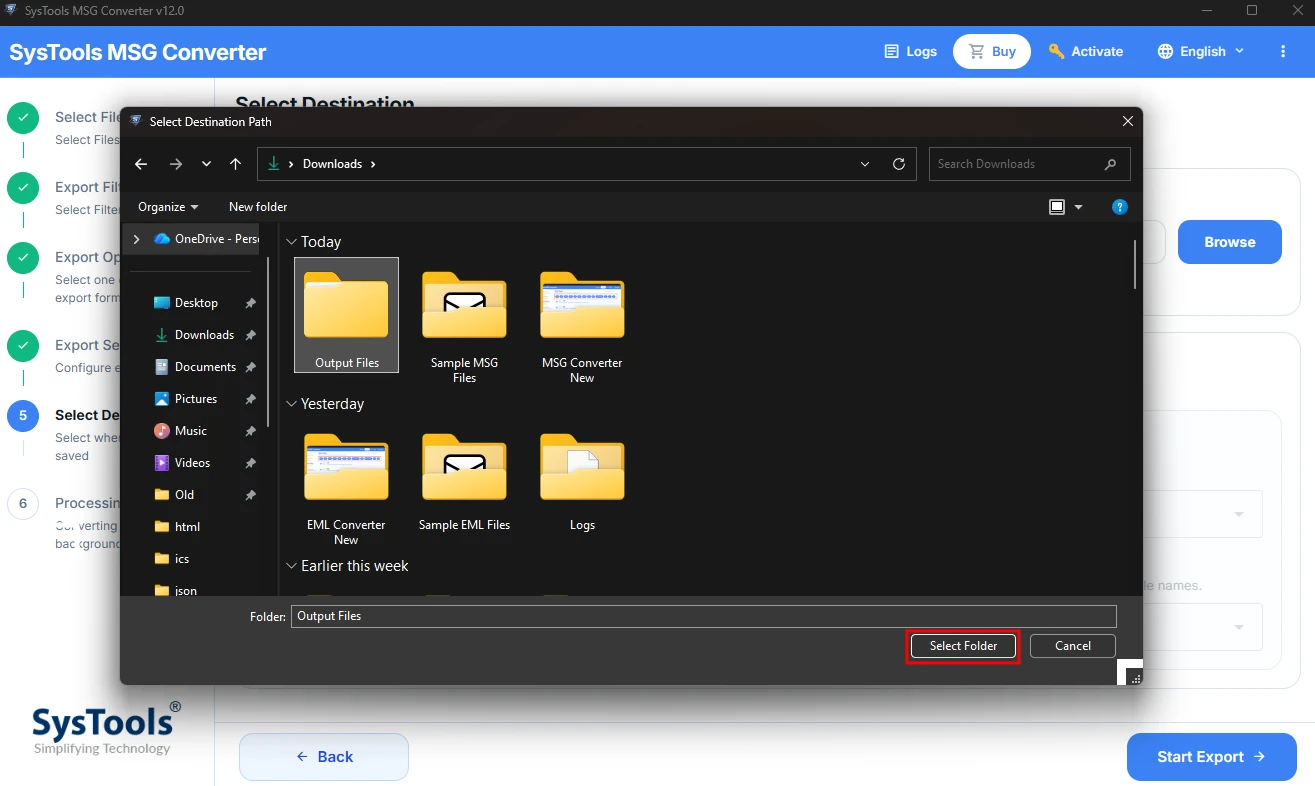
Start the Export and Track Progress
Click Start Export once the destination path is set.
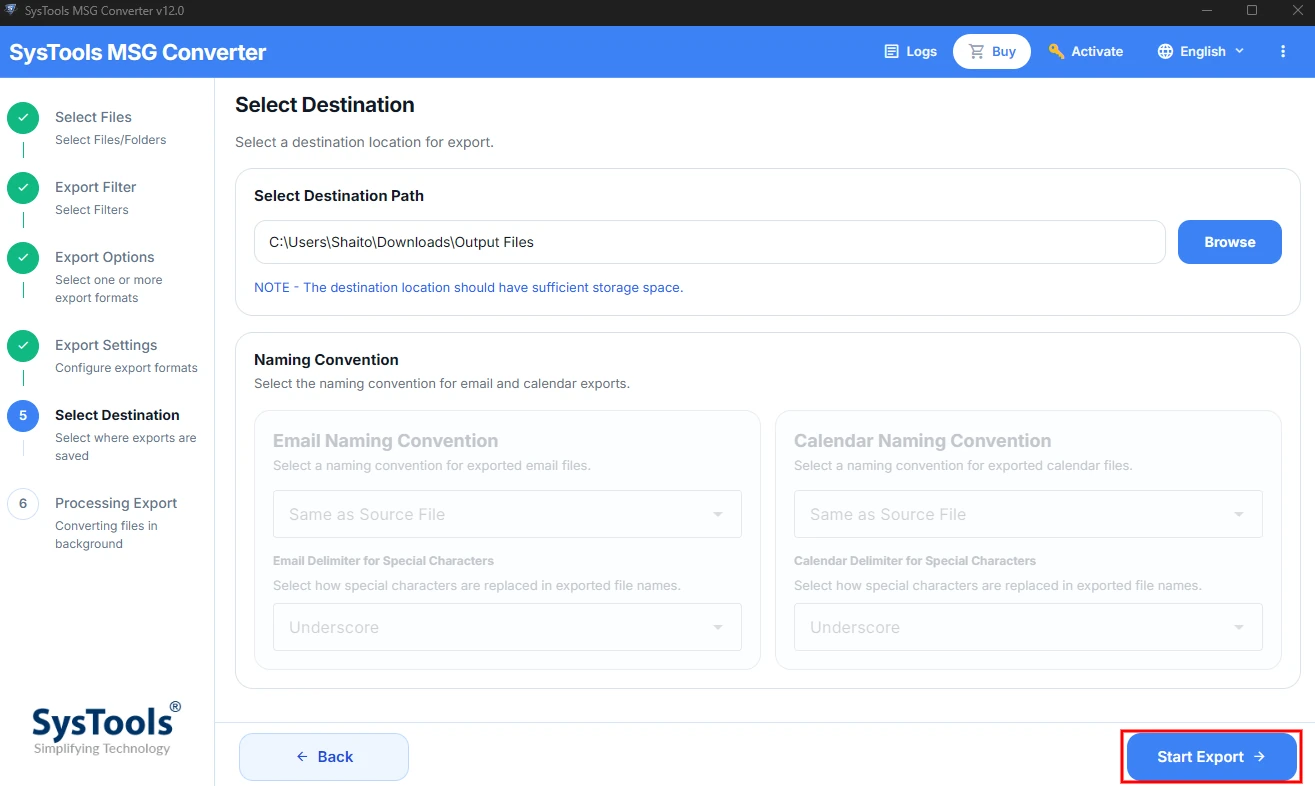
A message confirms Export process completed successfully. Click OK.
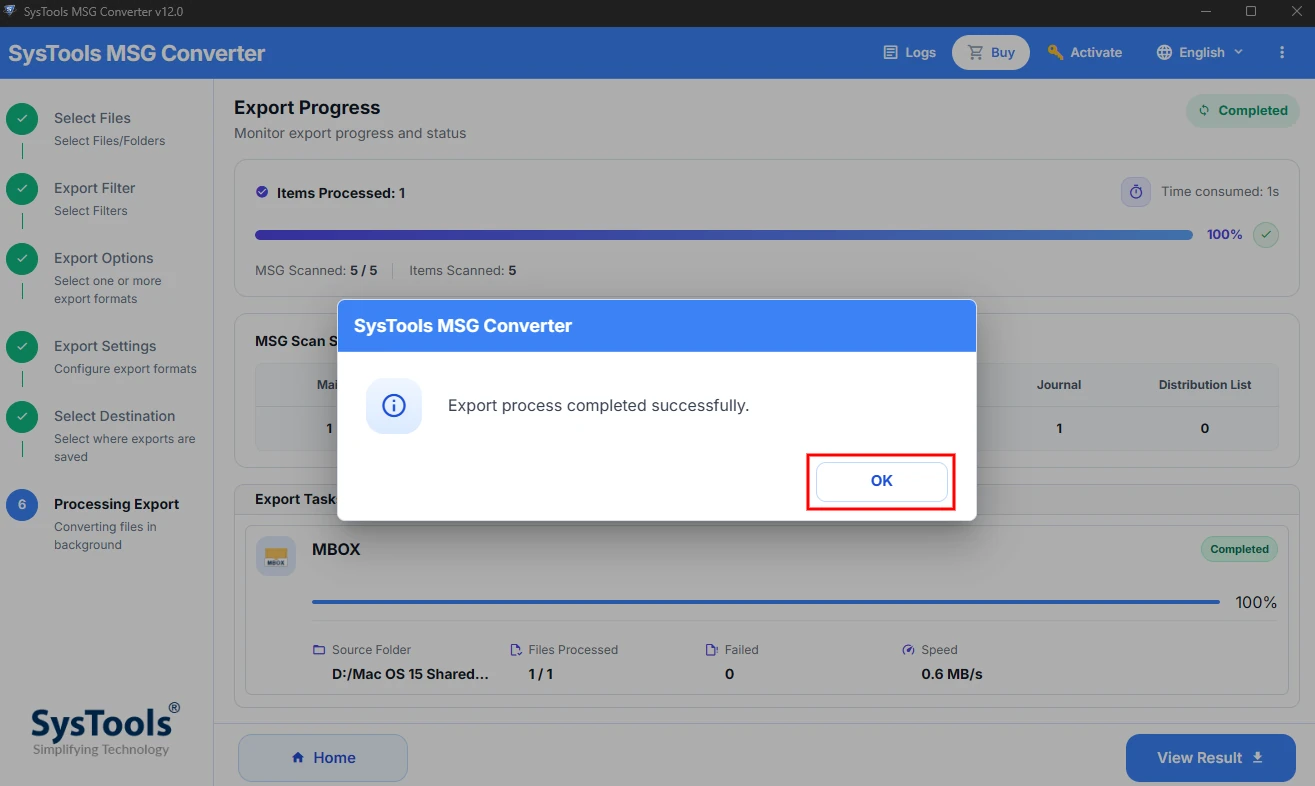
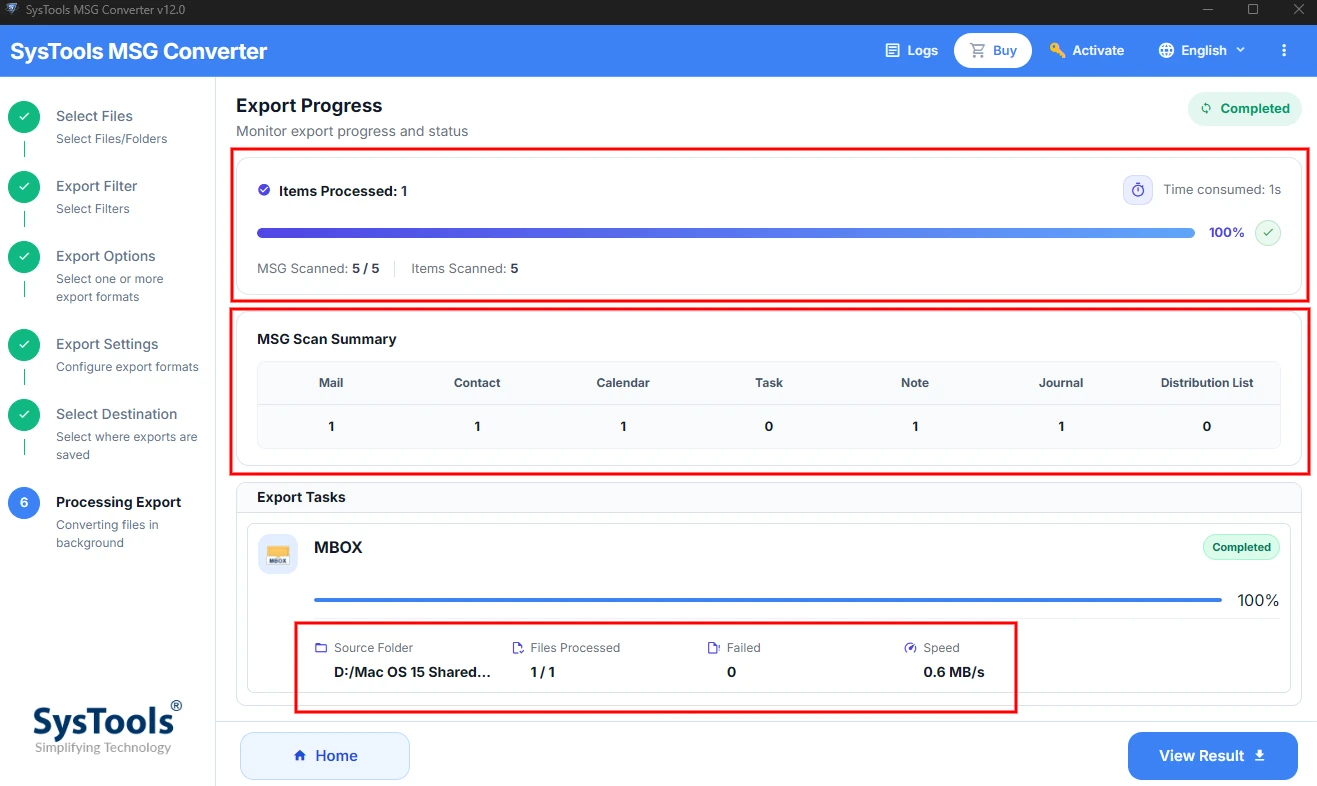
The Export Progress screen shows Items Processed and the MSG Scan Summary for Mail, Contact, Calendar, Task, Note, Journal and Distribution List. Under Export Tasks, check Files Processed, Failed and Speed for the MBOX task. It shows Completed at 100%.
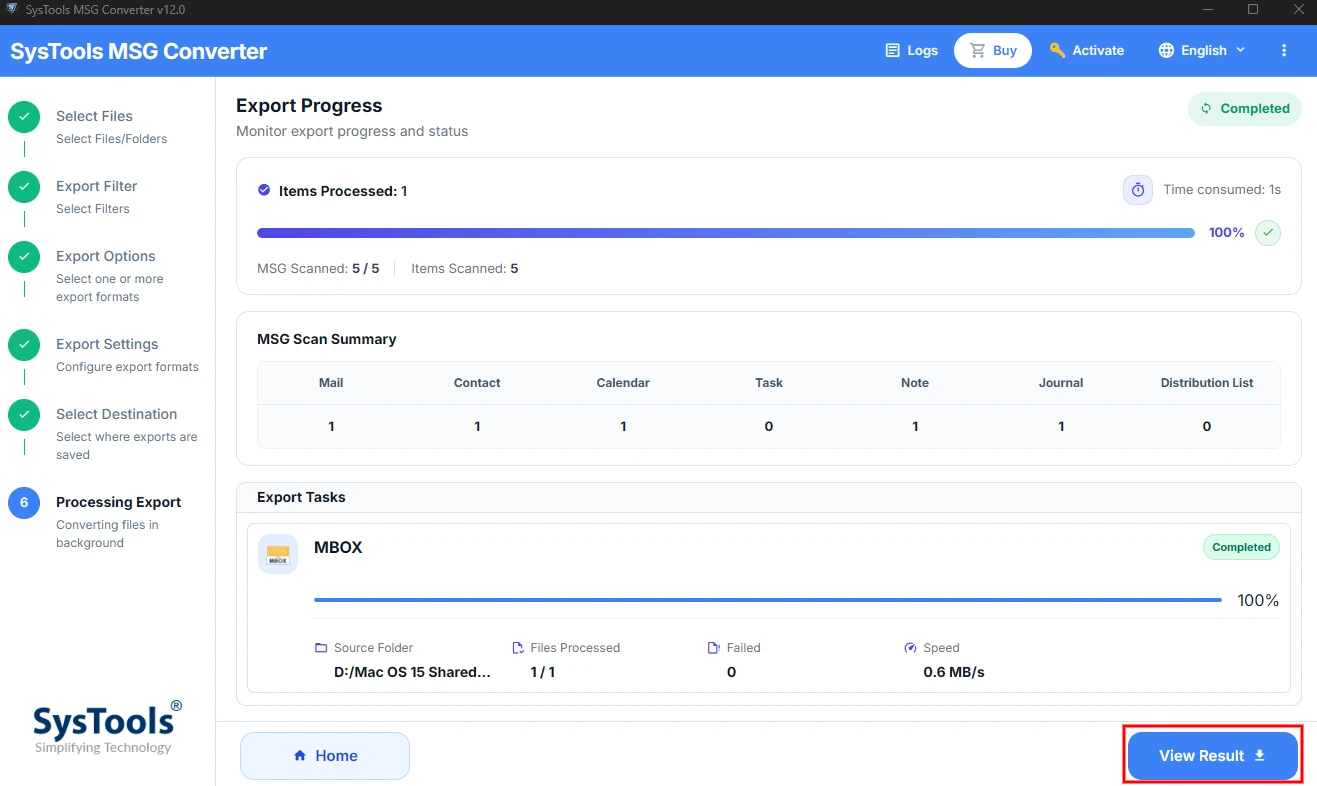
Click View Result to open the output folder.
View the Converted Files
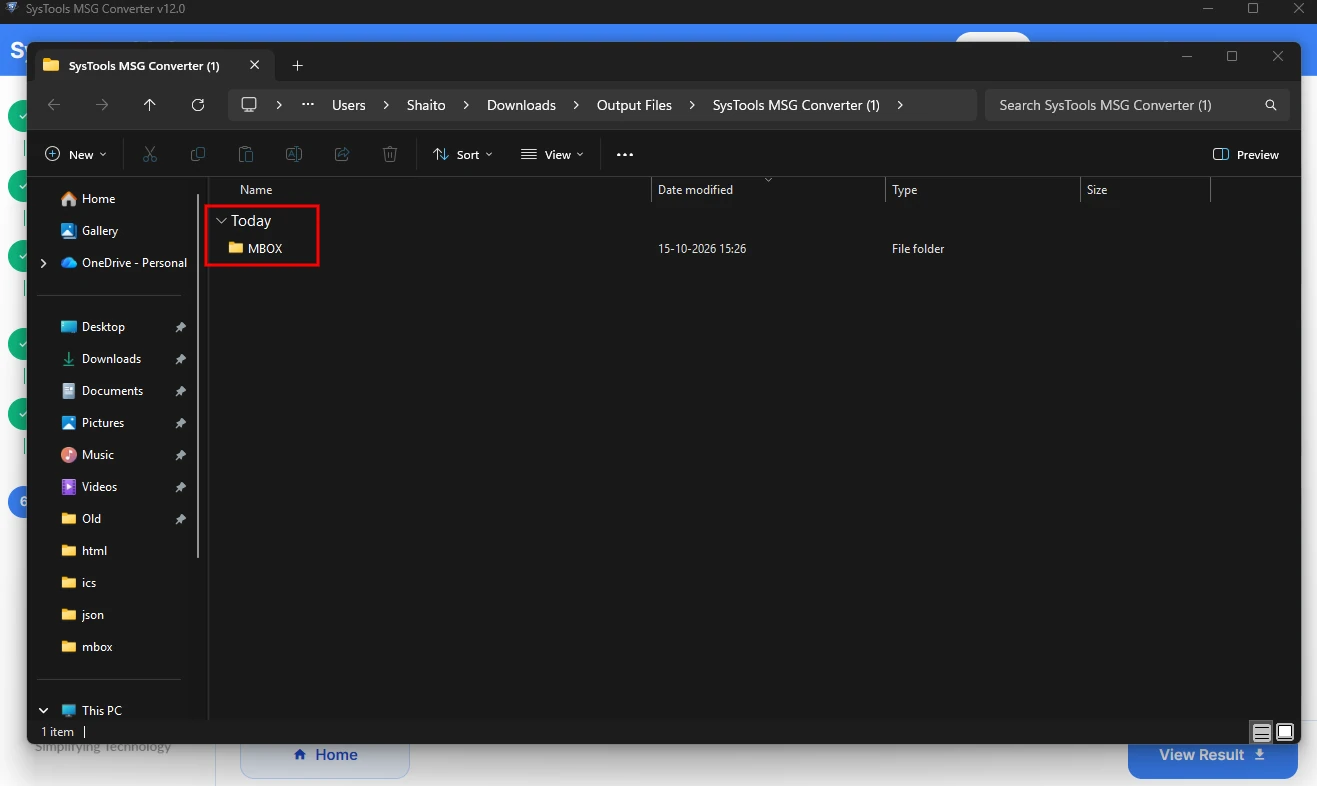
Windows Explorer opens the output folder named SysTools MSG Converter. Open the MBOX folder inside it.
The MBOX folder holds an MSG Files folder and ExportReport.csv.
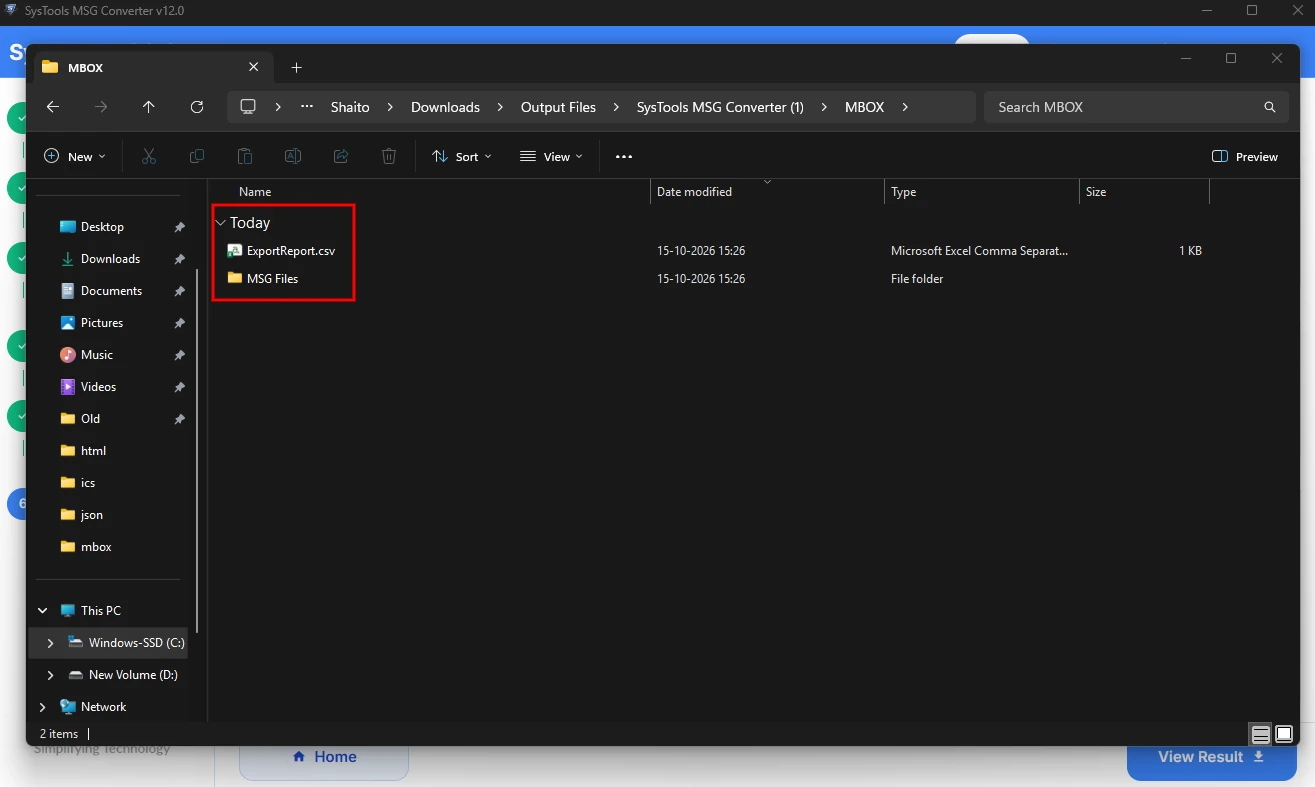
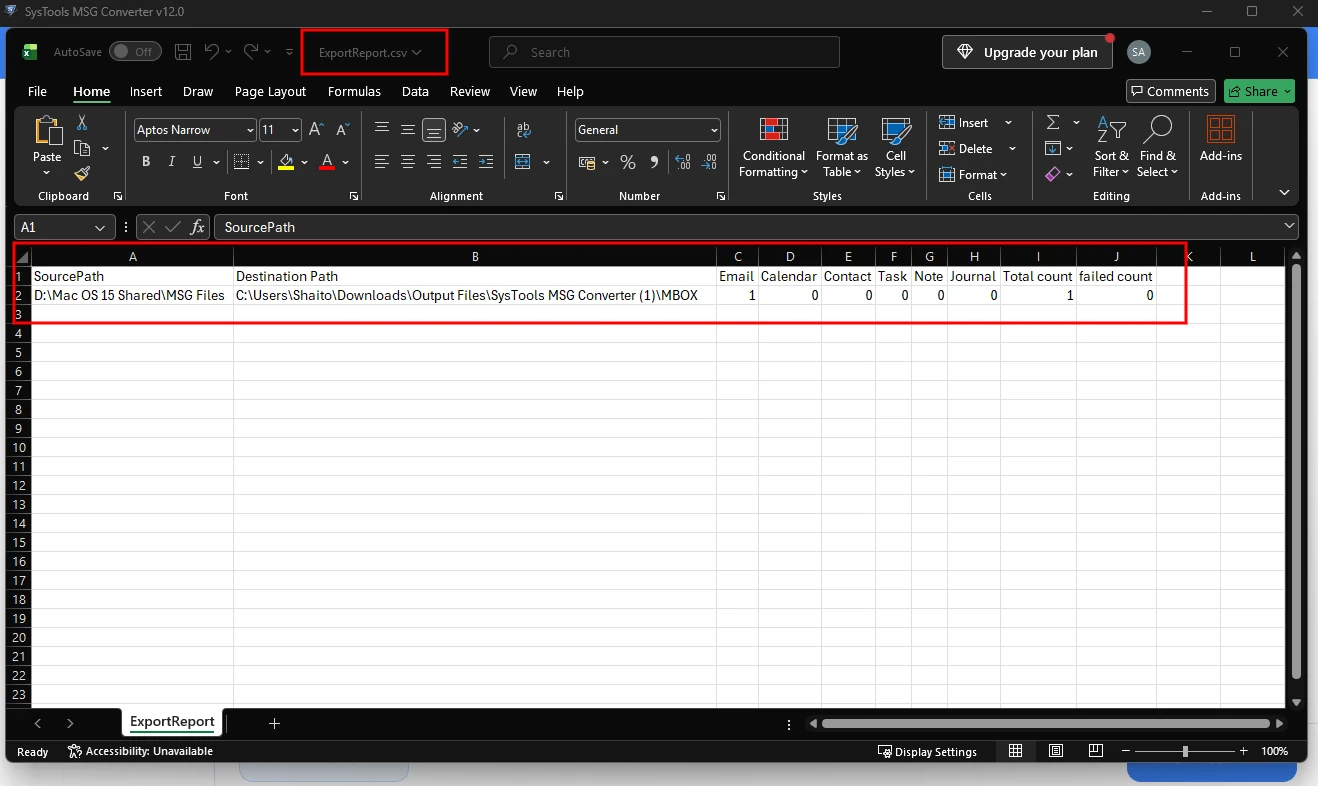
Open ExportReport.csv to see the SourcePath, Destination Path and the count for Email, Calendar, Contact, Task, Note and Journal, plus the Total count and failed count.
Check Logs and App Details
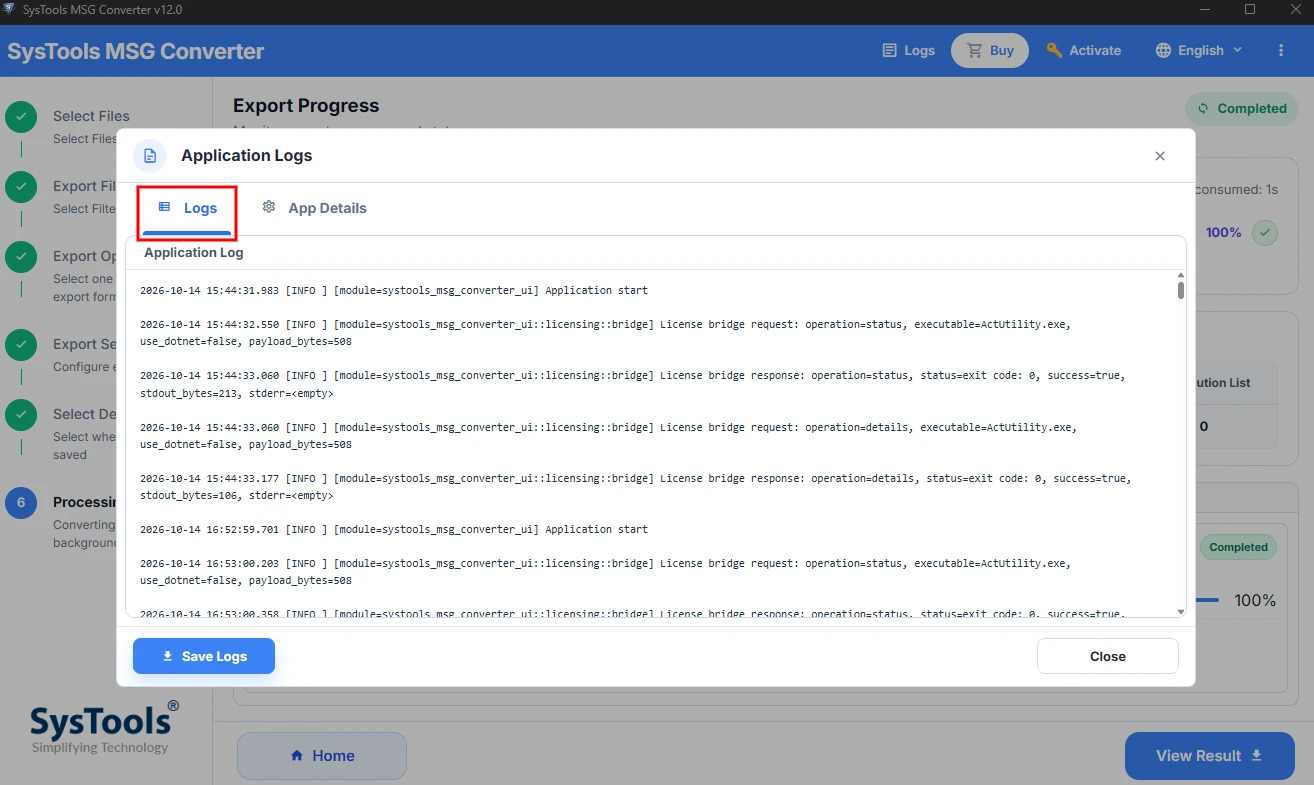
Click Logs in the top bar to open Application Logs. Click Save Logs to keep a copy.
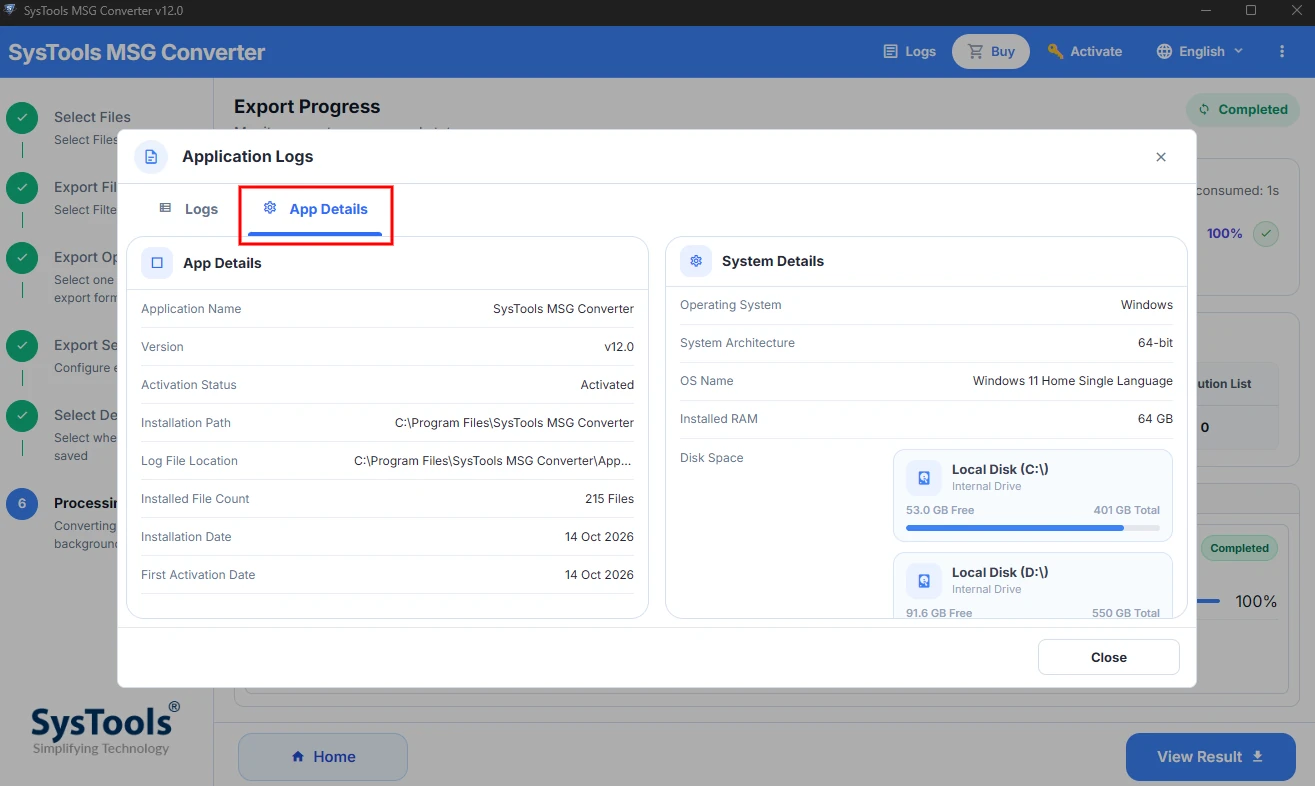
The App Details tab lists application and system details, including version, activation status and operating system.
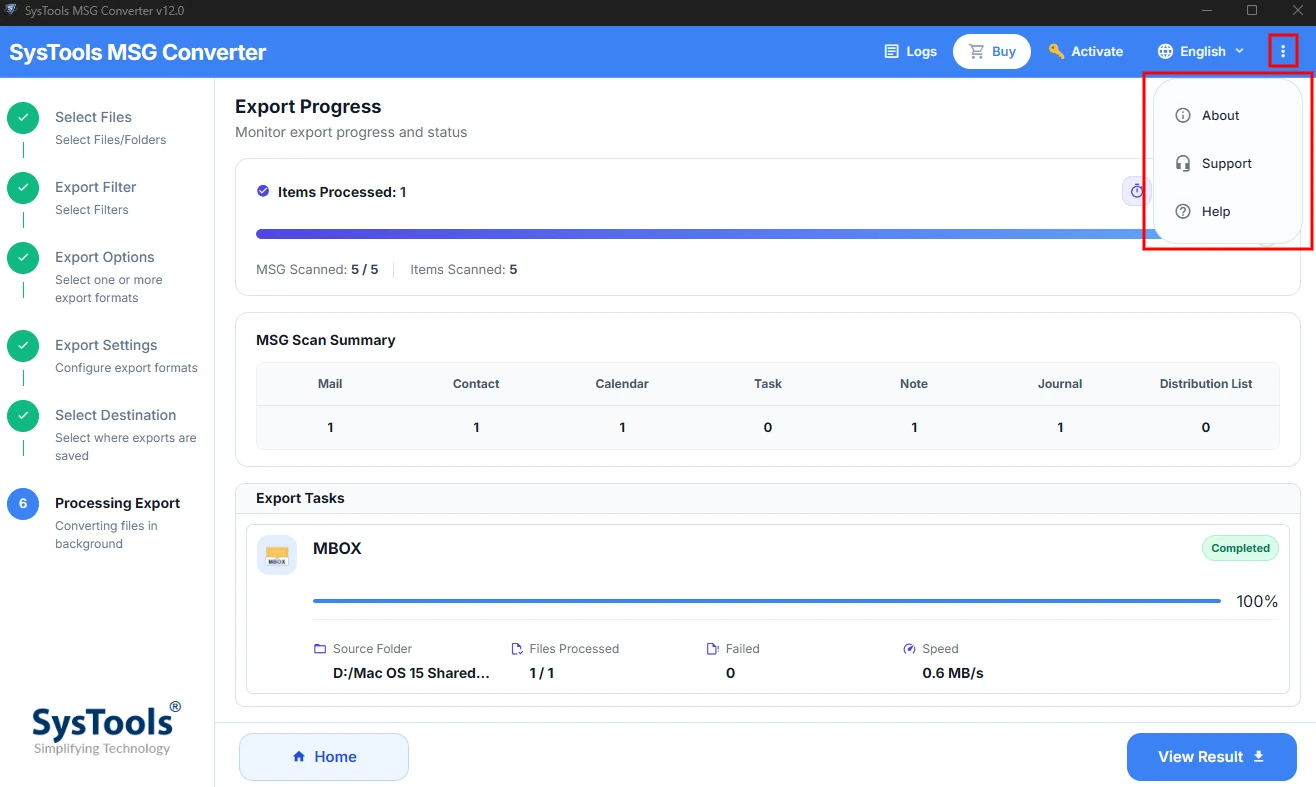
Select the three dot menu in the top bar to open About, Support and Help.
Convert MSG Files to MHT
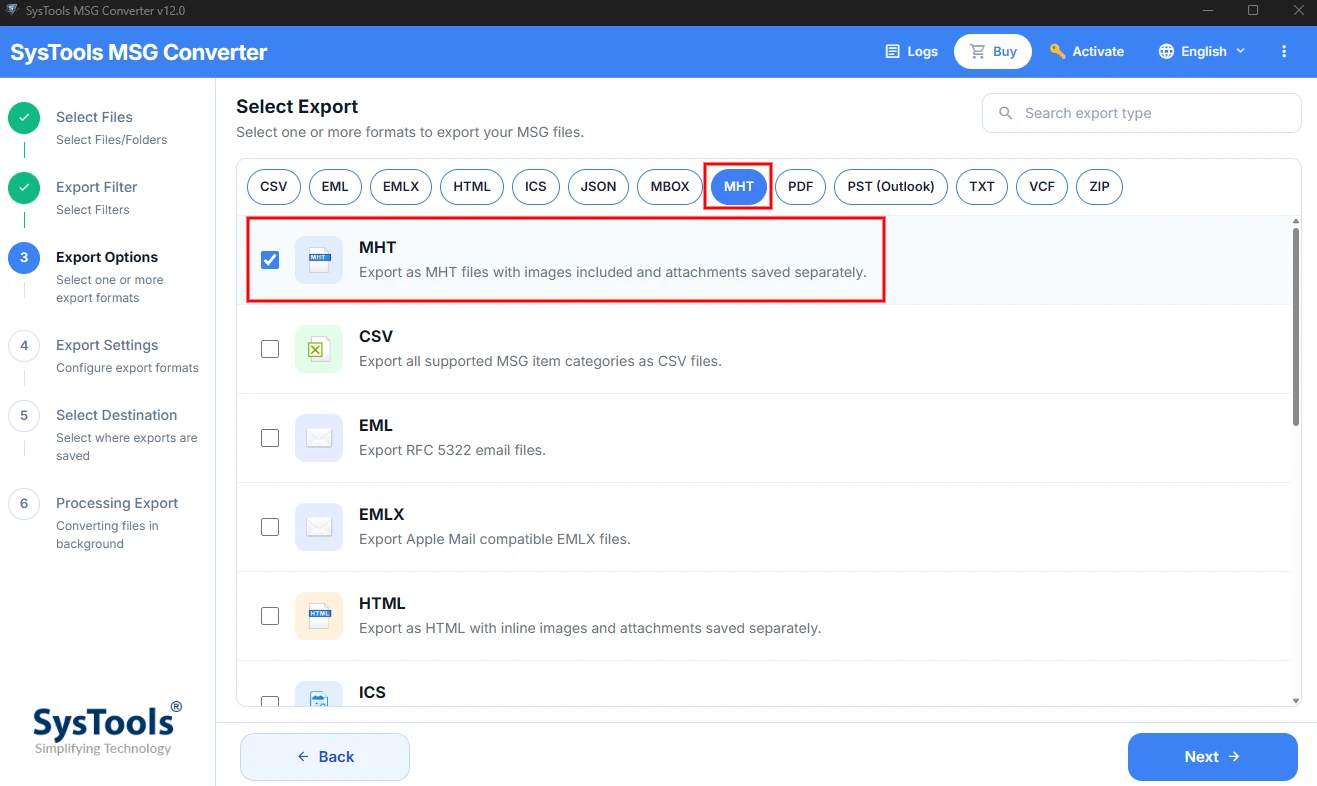
Select MHT as the Export Format
Select MHT in the Export Options list. It exports MHT files with images included, while attachments save separately. Click Next.
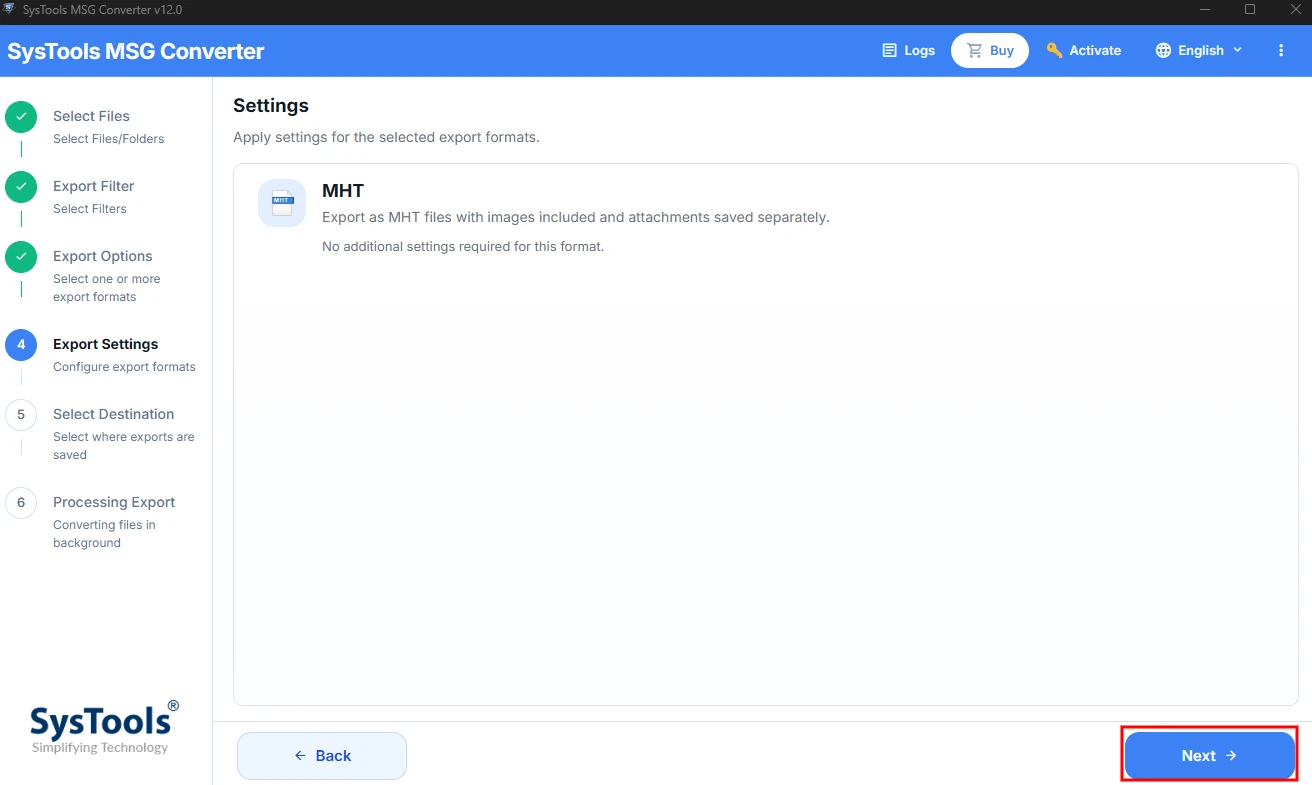
Configure MHT Export Settings
MHT needs no extra settings. The screen shows No additional settings required for this format. Click Next.
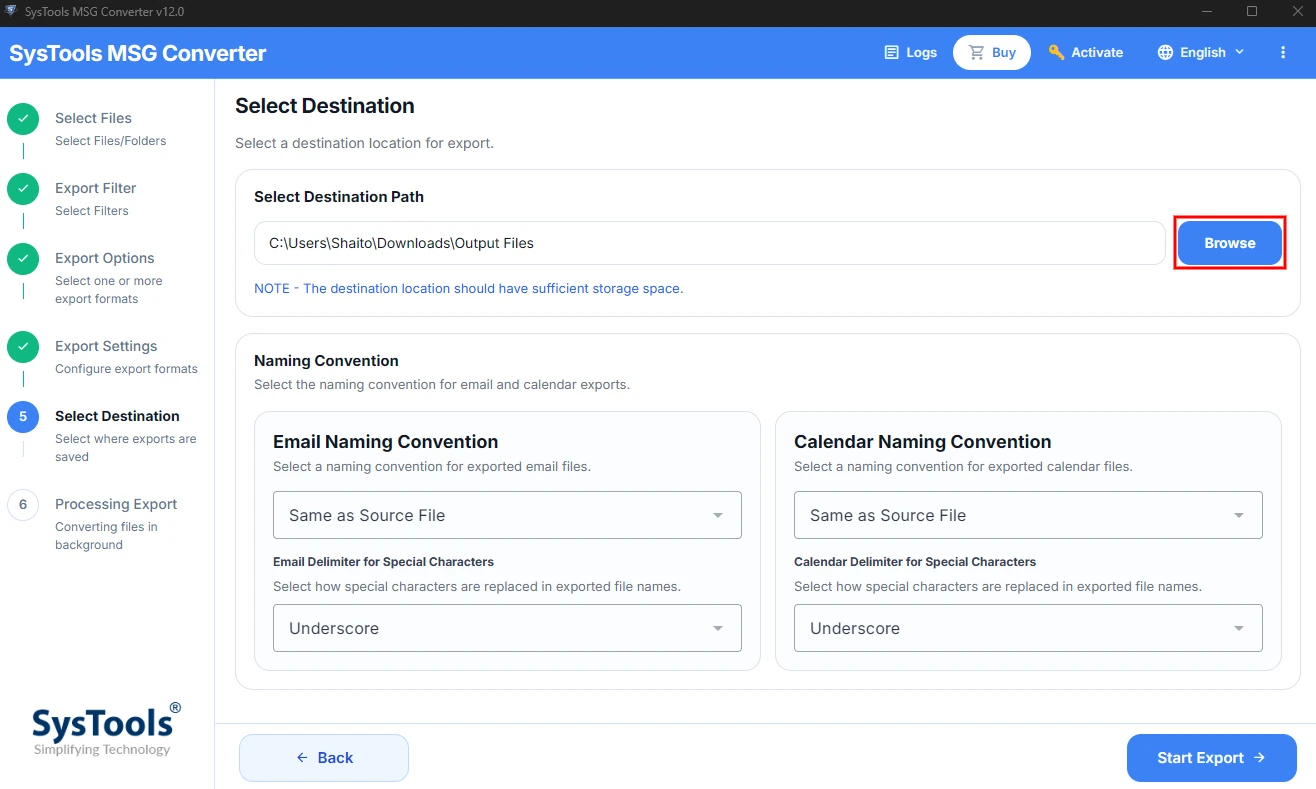
Select the Destination
Click Browse next to Select Destination Path to choose where converted files are saved. Make sure the location has enough storage space.
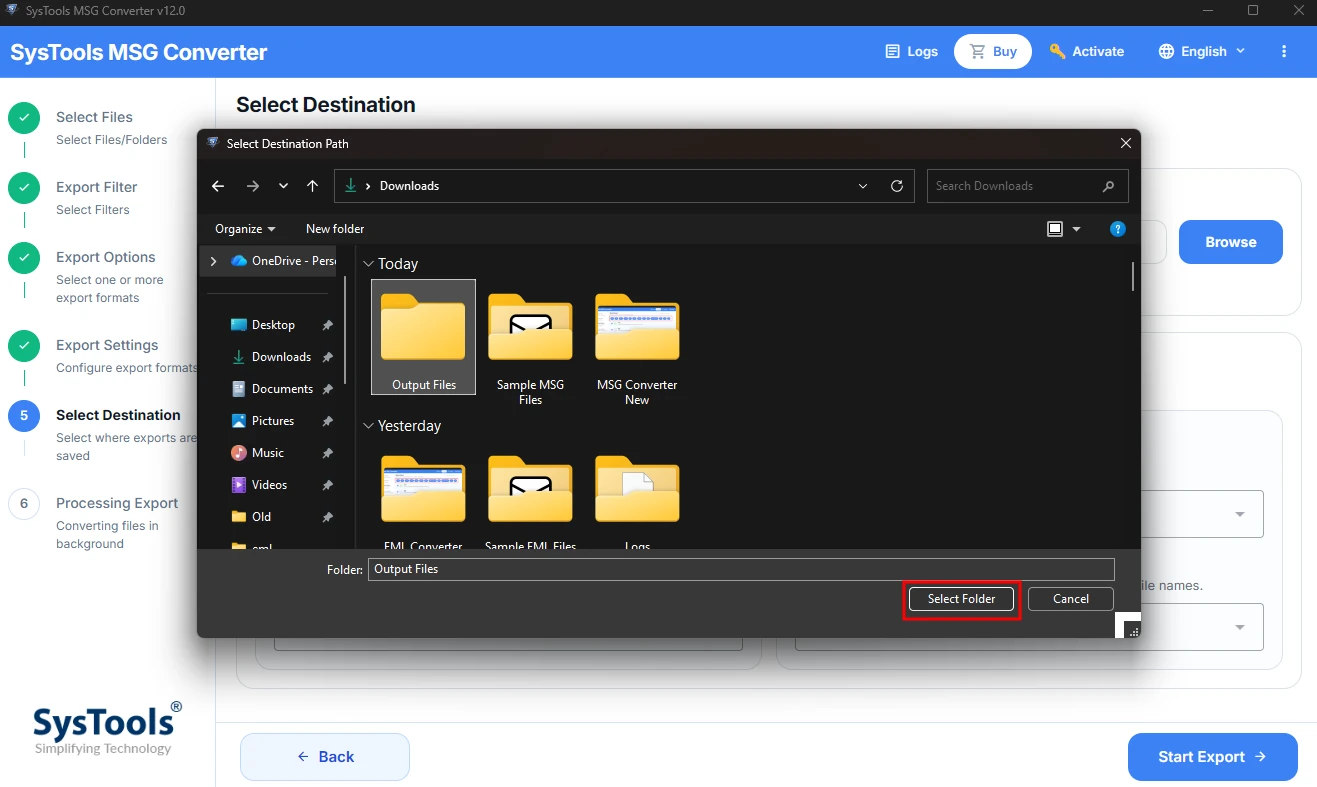
Select a folder in the dialog and click Select Folder.
Open Email Naming Convention to name exported email files. Choose Same as Source File or a pattern built from Subject, From, To, CC and Date.
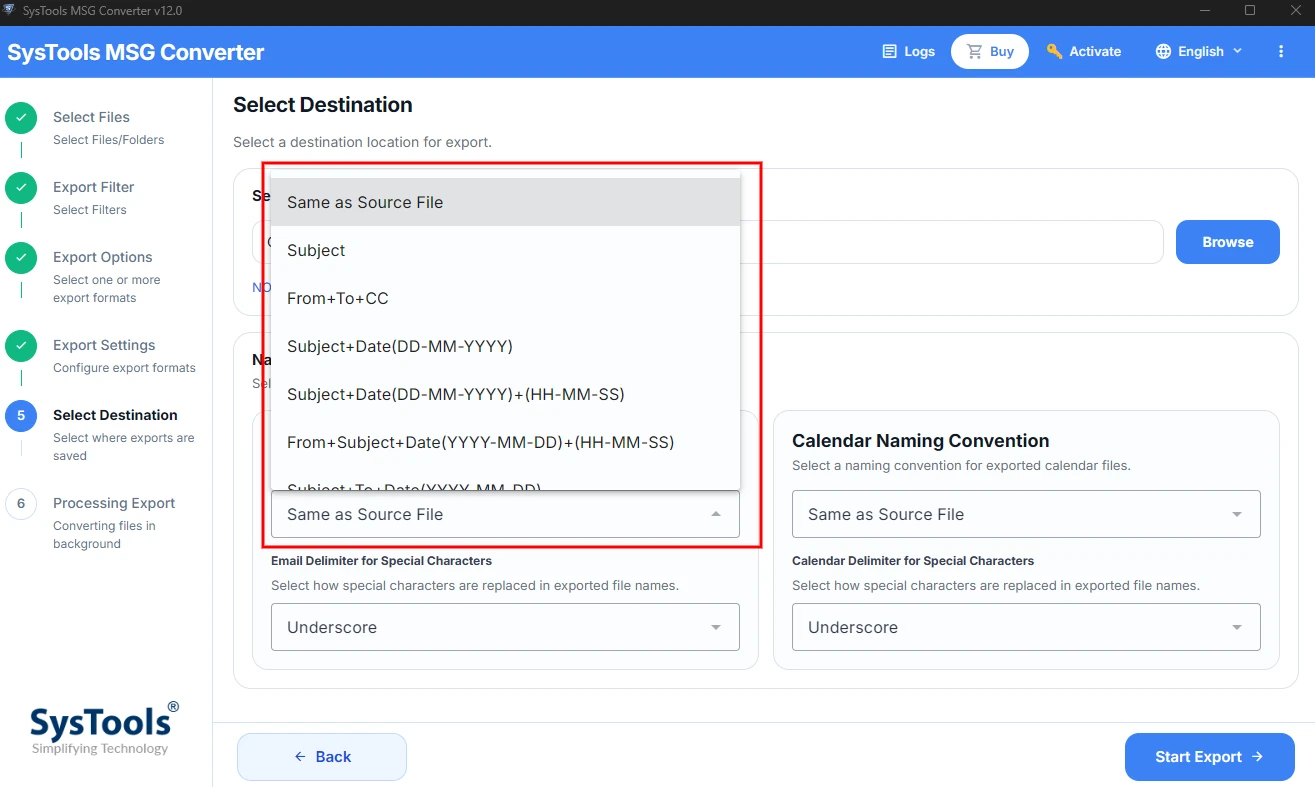
Open Email Delimiter for Special Characters to set what replaces special characters in file names. Select Underscore, Space or Hyphen.
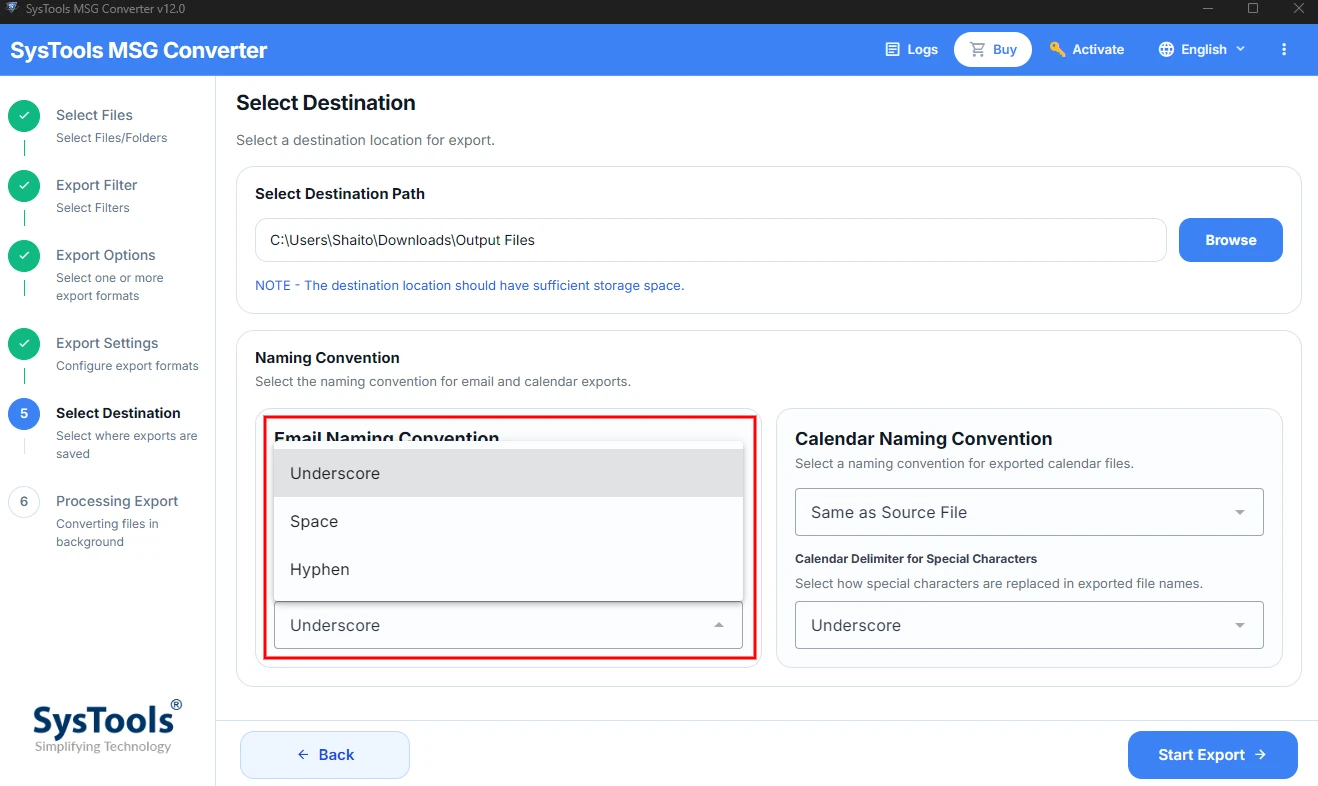
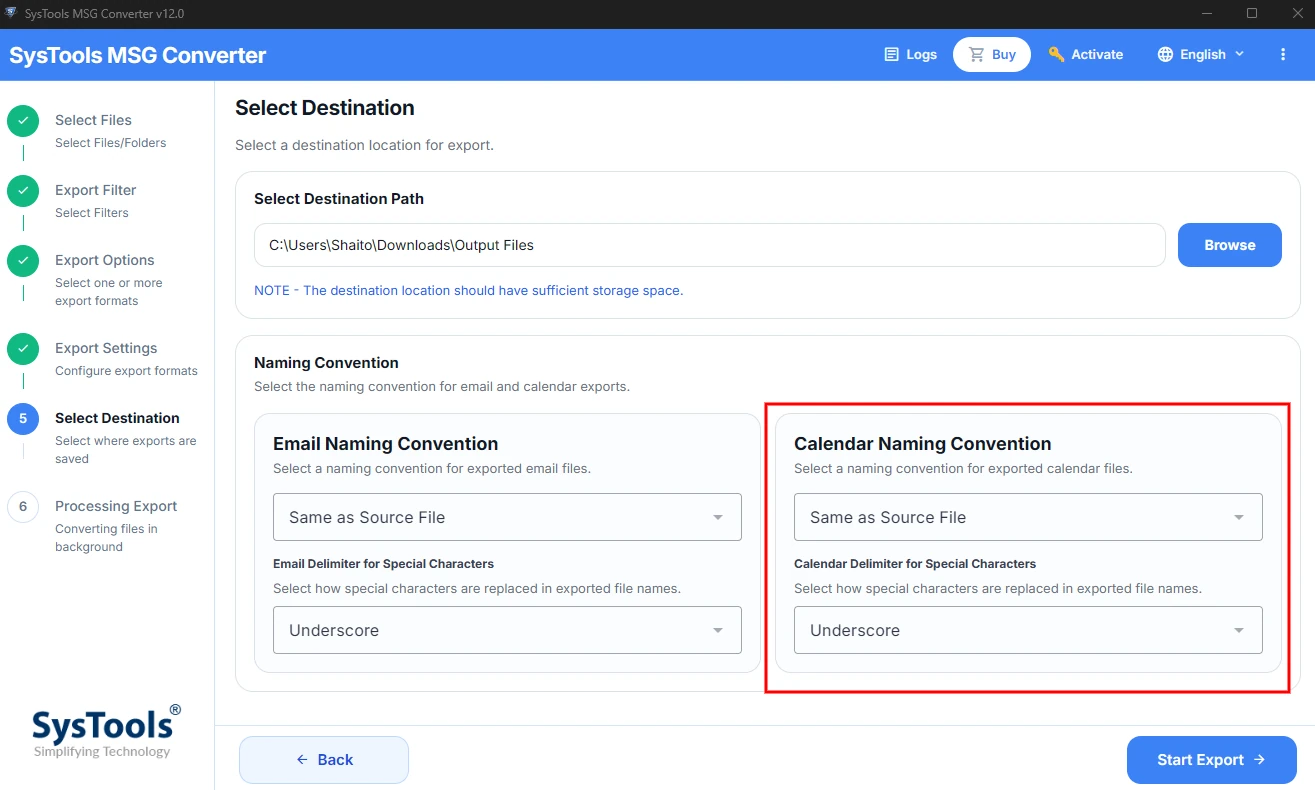
Calendar Naming Convention and Calendar Delimiter for Special Characters work the same way for calendar files.
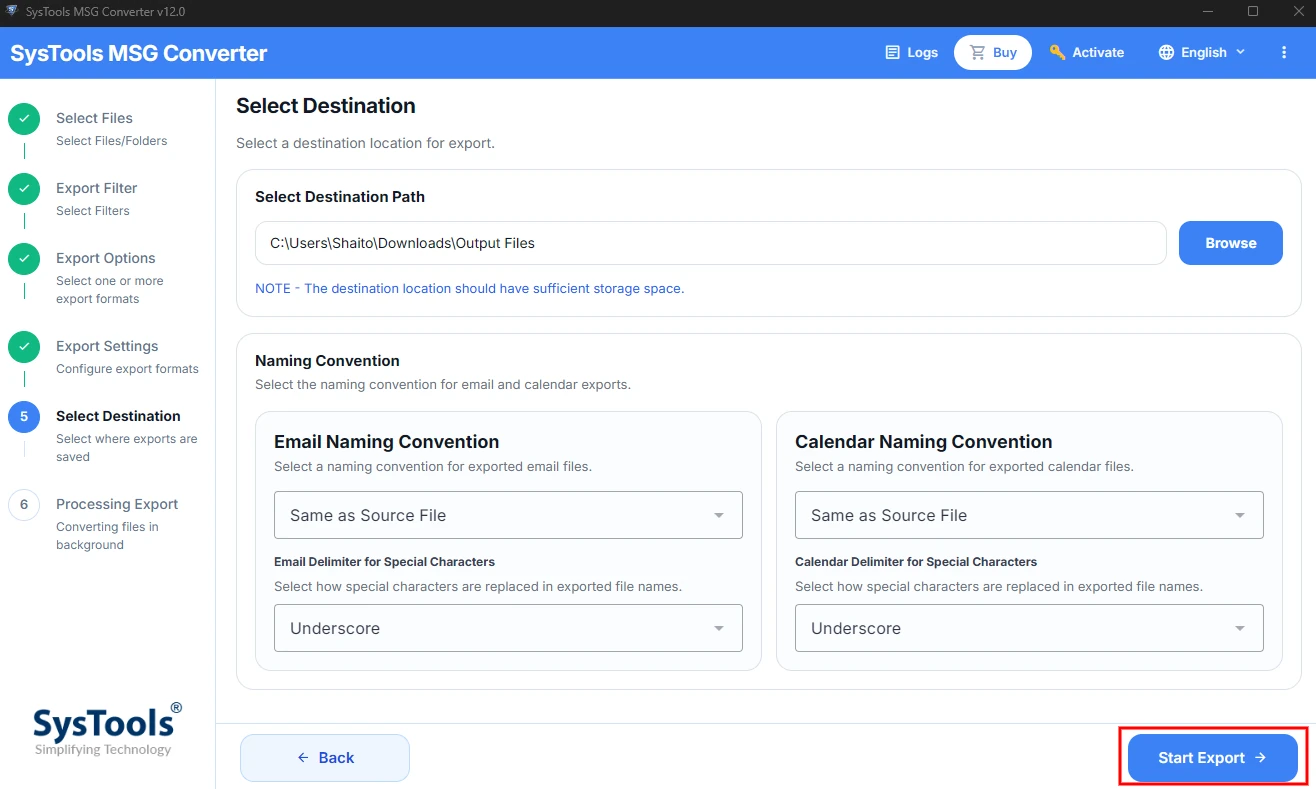
Start the Export and Track Progress
Click Start Export once the destination path is set.
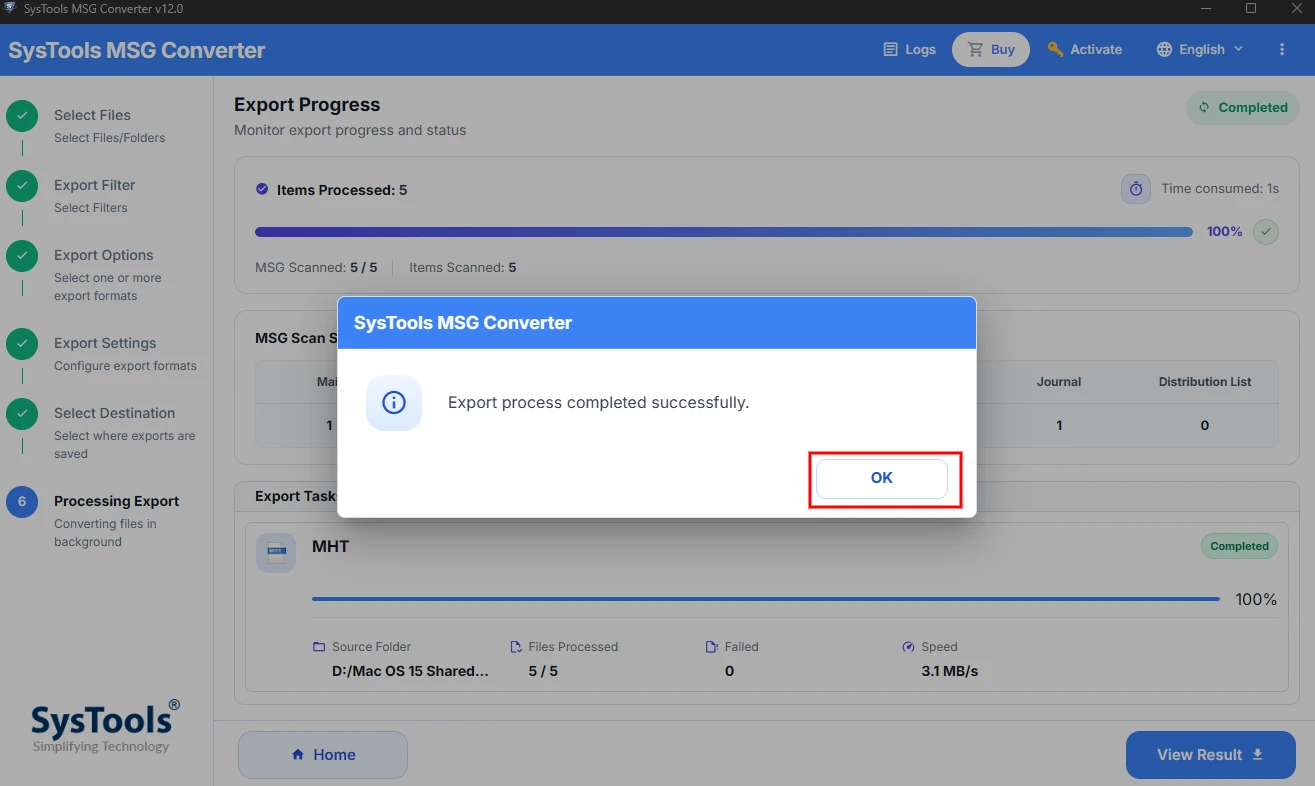
A message confirms Export process completed successfully. Click OK.
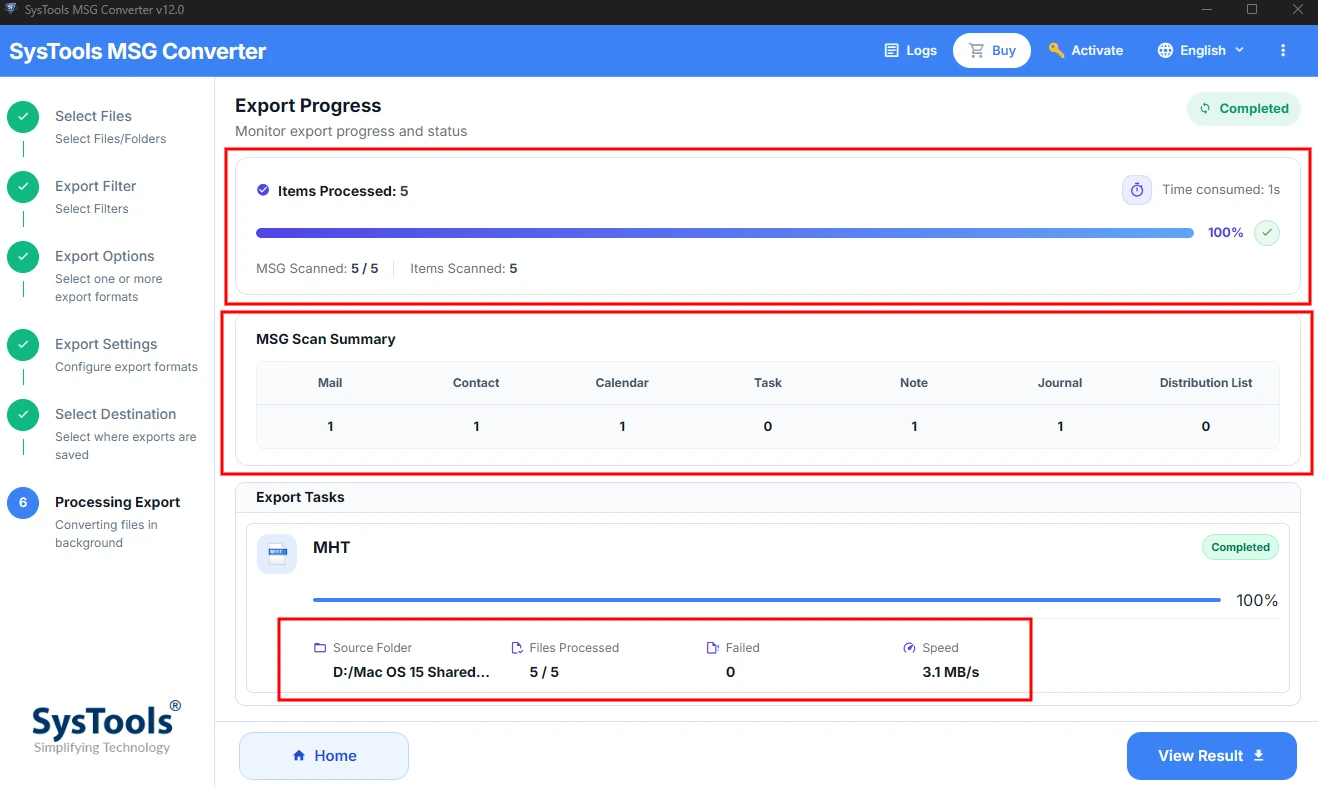
The Export Progress screen shows Items Processed and the MSG Scan Summary for Mail, Contact, Calendar, Task, Note, Journal and Distribution List. Under Export Tasks, check Files Processed, Failed and Speed for the MHT task. It shows Completed at 100%.
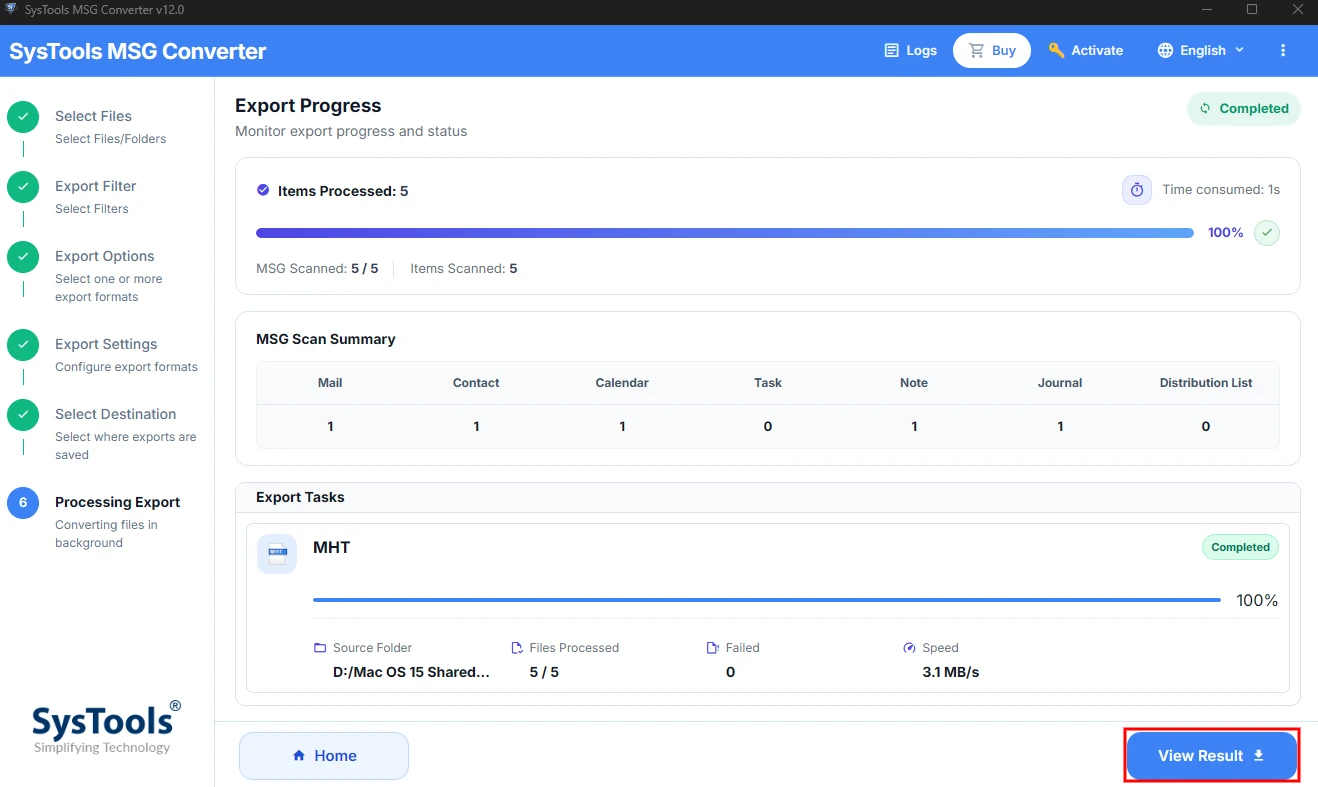
Click View Result to open the output folder.
View the Converted Files
Windows Explorer opens the output folder named SysTools MSG Converter. Open the MHT folder inside it.
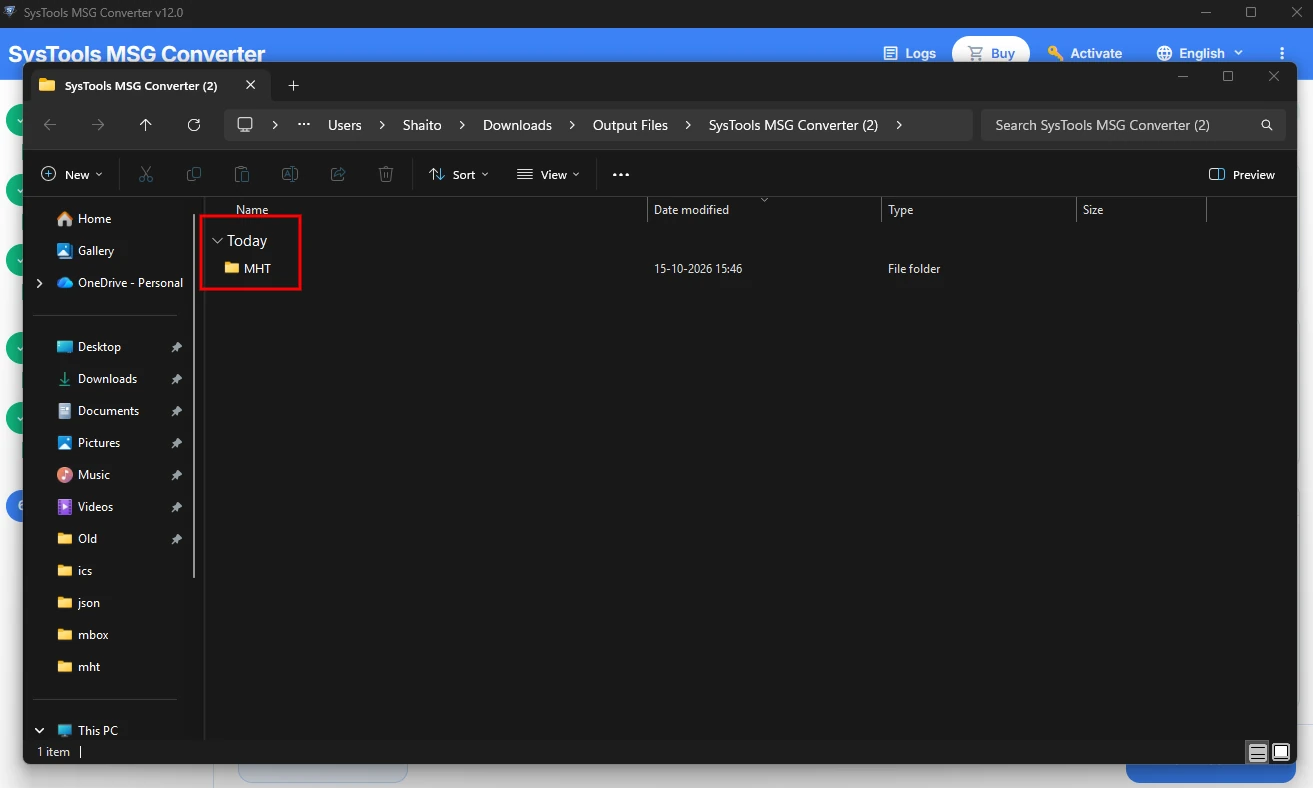
The MHT folder holds an MSG Files folder and ExportReport.csv.
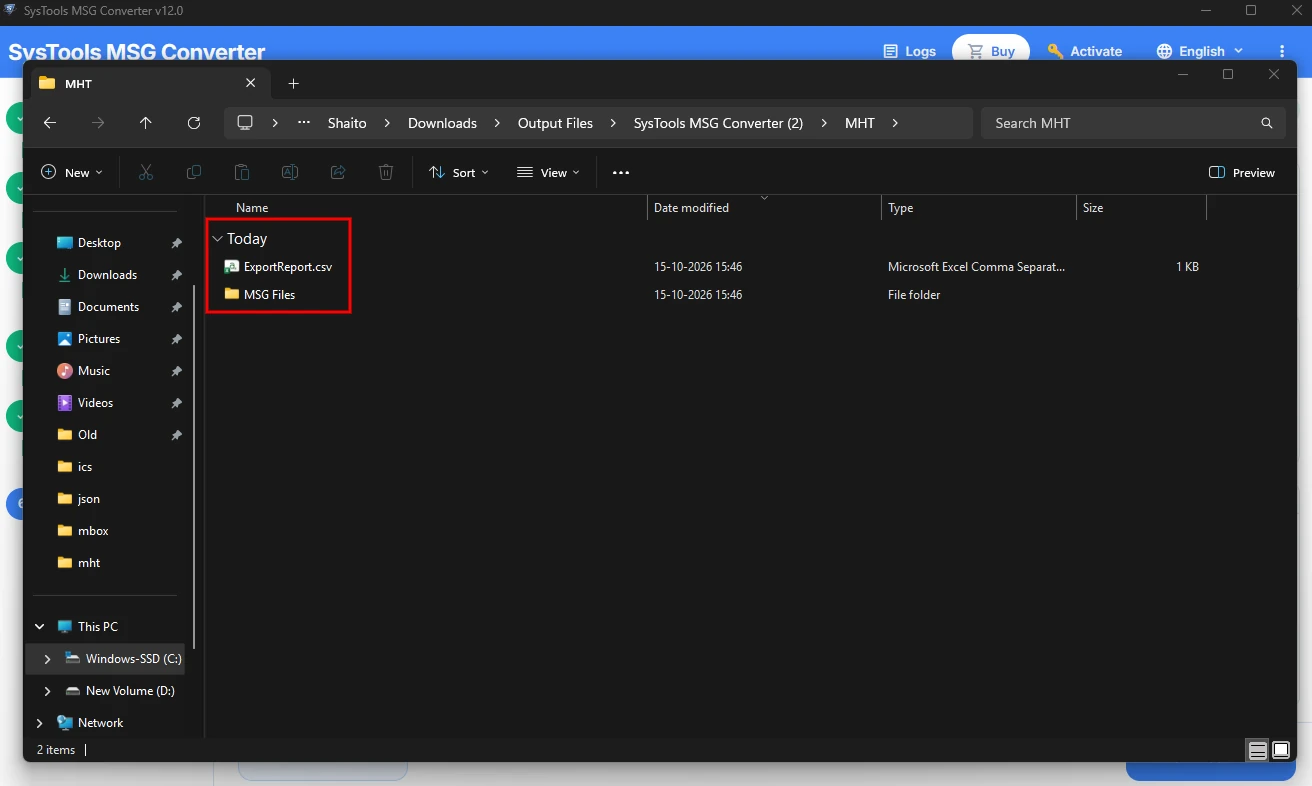
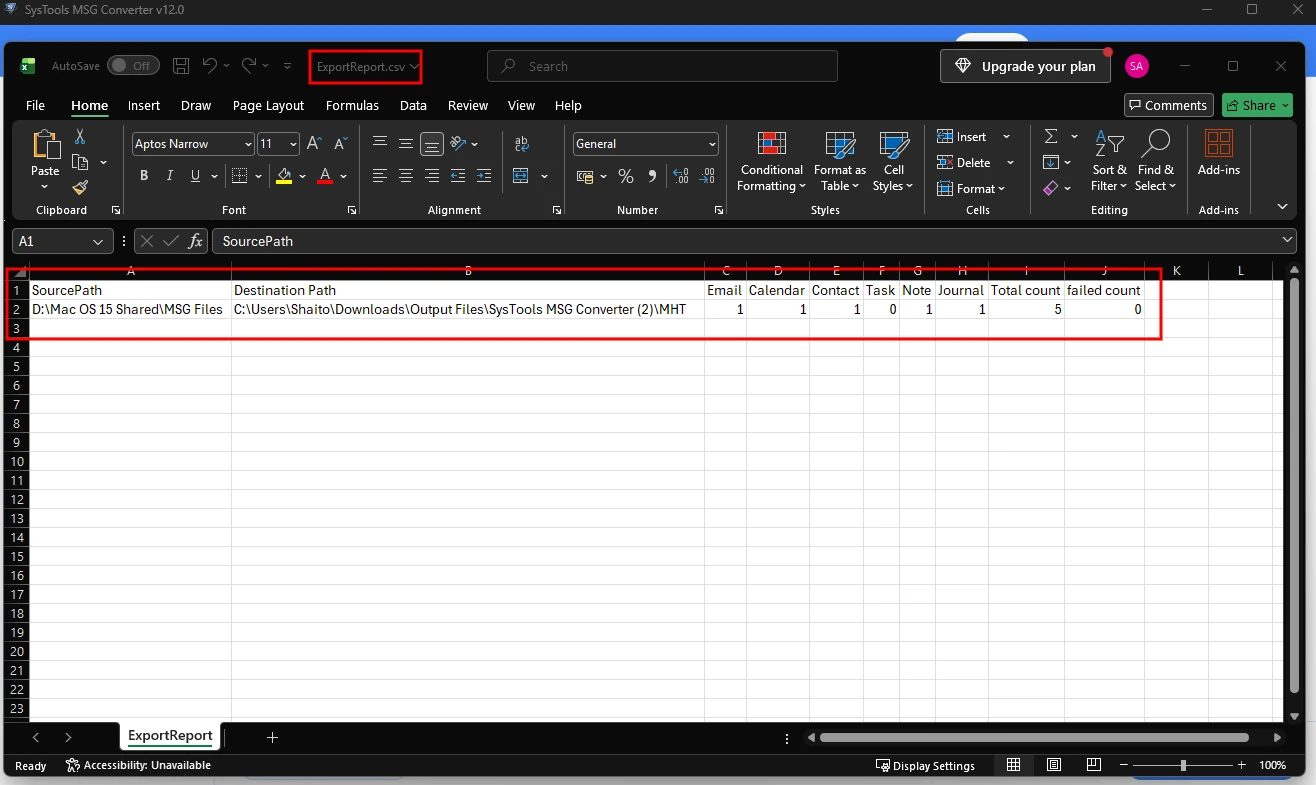
Open ExportReport.csv to see the SourcePath, Destination Path and the count for Email, Calendar, Contact, Task, Note and Journal, plus the Total count and failed count.
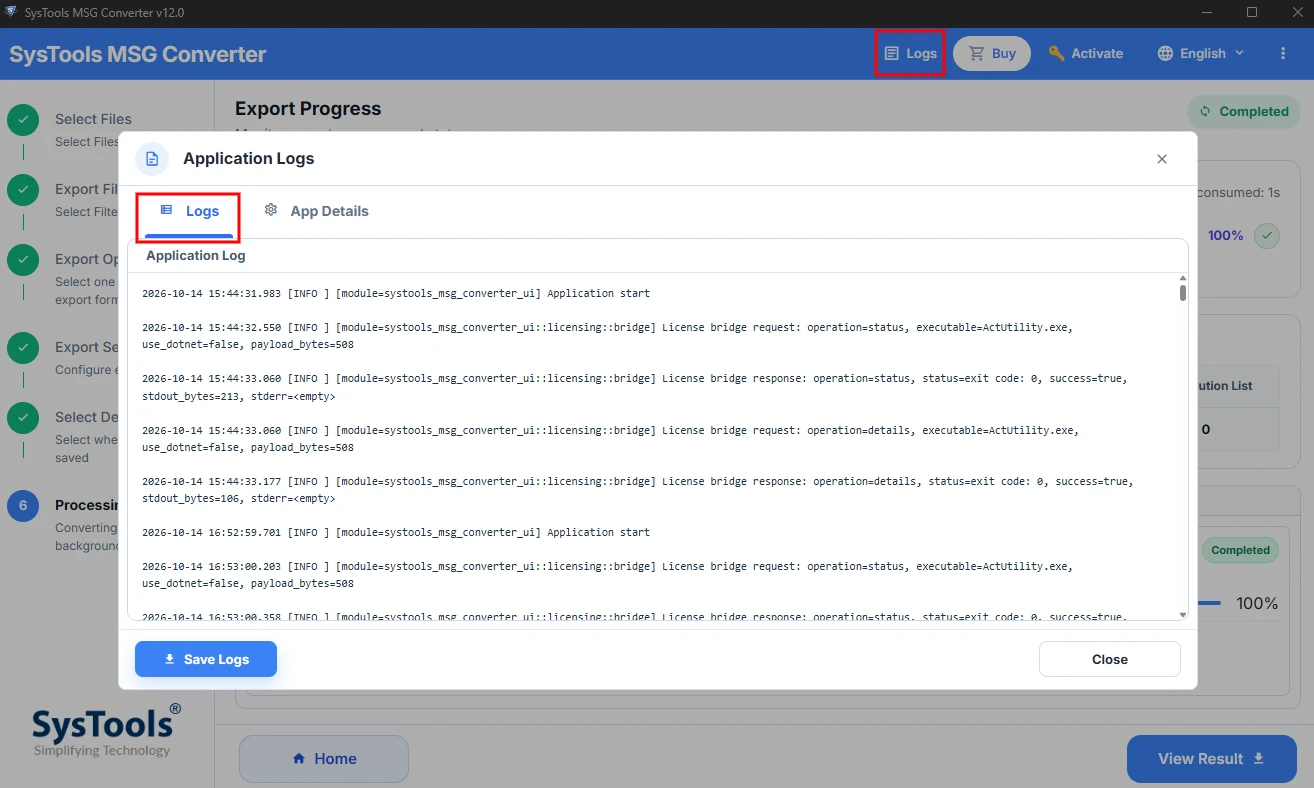
Check Logs and App Details
Click Logs in the top bar to open Application Logs. Click Save Logs to keep a copy.
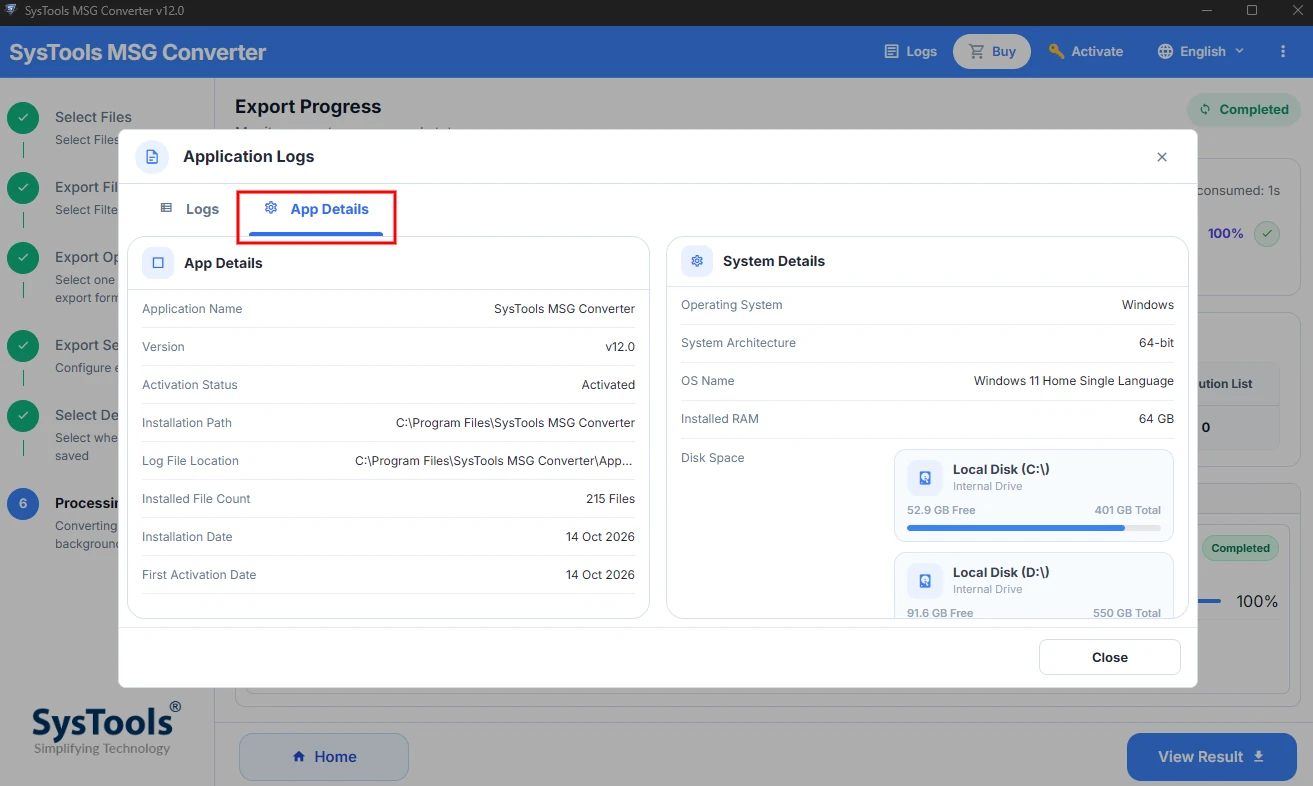
The App Details tab lists application and system details, including version, activation status and operating system.
Select the three dot menu in the top bar to open About, Support and Help.
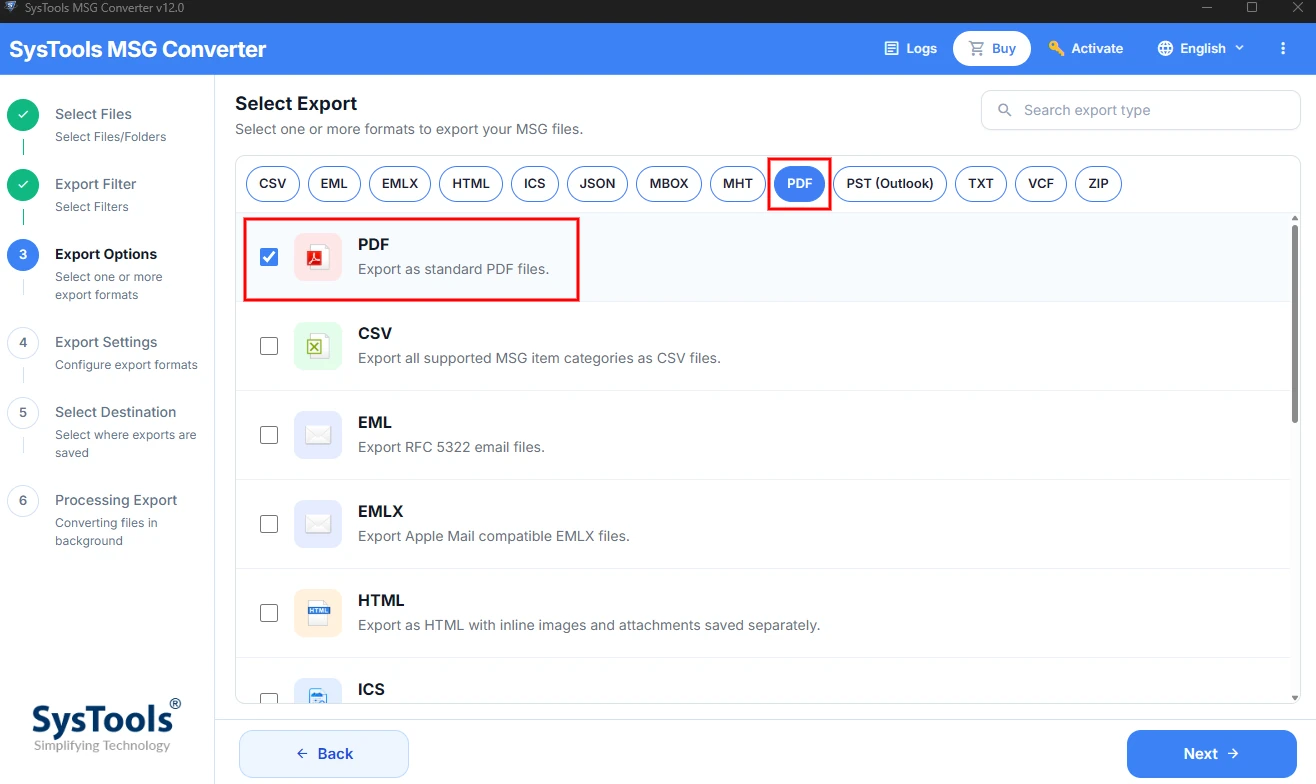
Convert MSG Files to PDF
Select PDF as the Export Format
Select PDF in the Export Options list. It exports standard PDF files. Click Next.
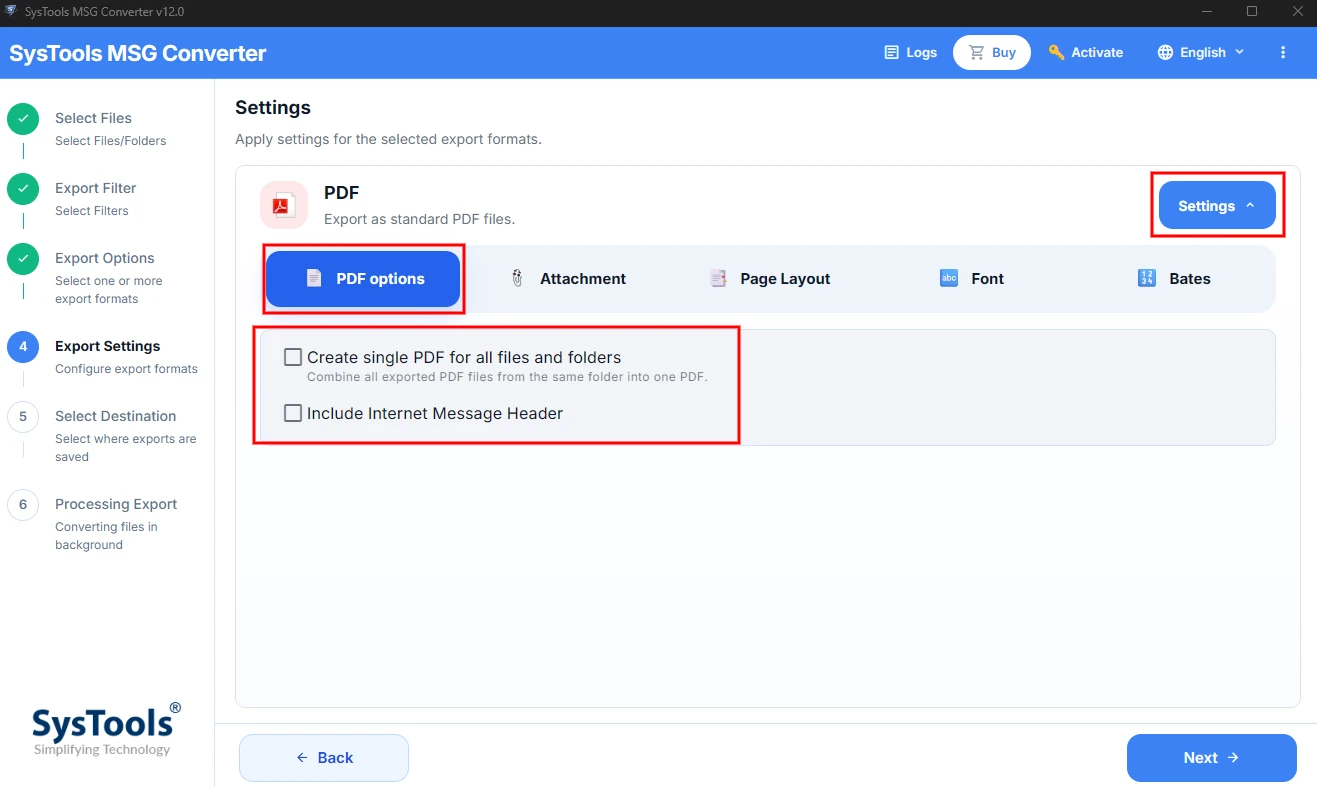
Configure PDF Export Settings
Click Settings. PDF has five tabs, which are PDF options, Attachment, Page Layout, Font and Bates. On PDF options, select Create single PDF for all files and folders to combine the PDF files from the same folder into one PDF. Select Include Internet Message Header to add header details.
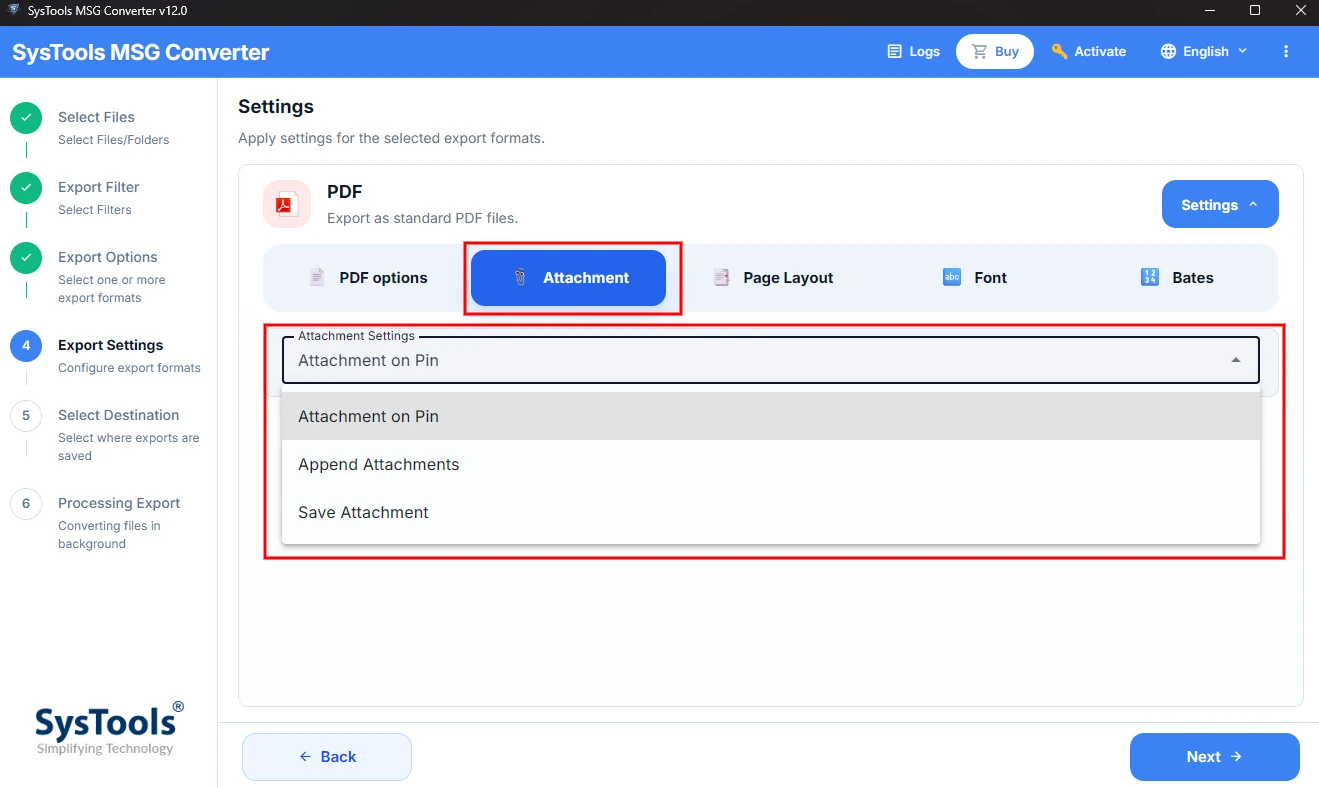
On the Attachment tab, open Attachment Settings and select Attachment on Pin, Append Attachments or Save Attachment.
Attachment on Pin: Allows users to include email attachments as attachment pins within the PDF. Users can access the attached files directly from the PDF.
Append Attachment: Converts email attachments into PDF format and appends them at the end of the corresponding email content in the exported PDF.
Save Attachment: Saves email attachments separately in their original file formats without converting them into PDF.
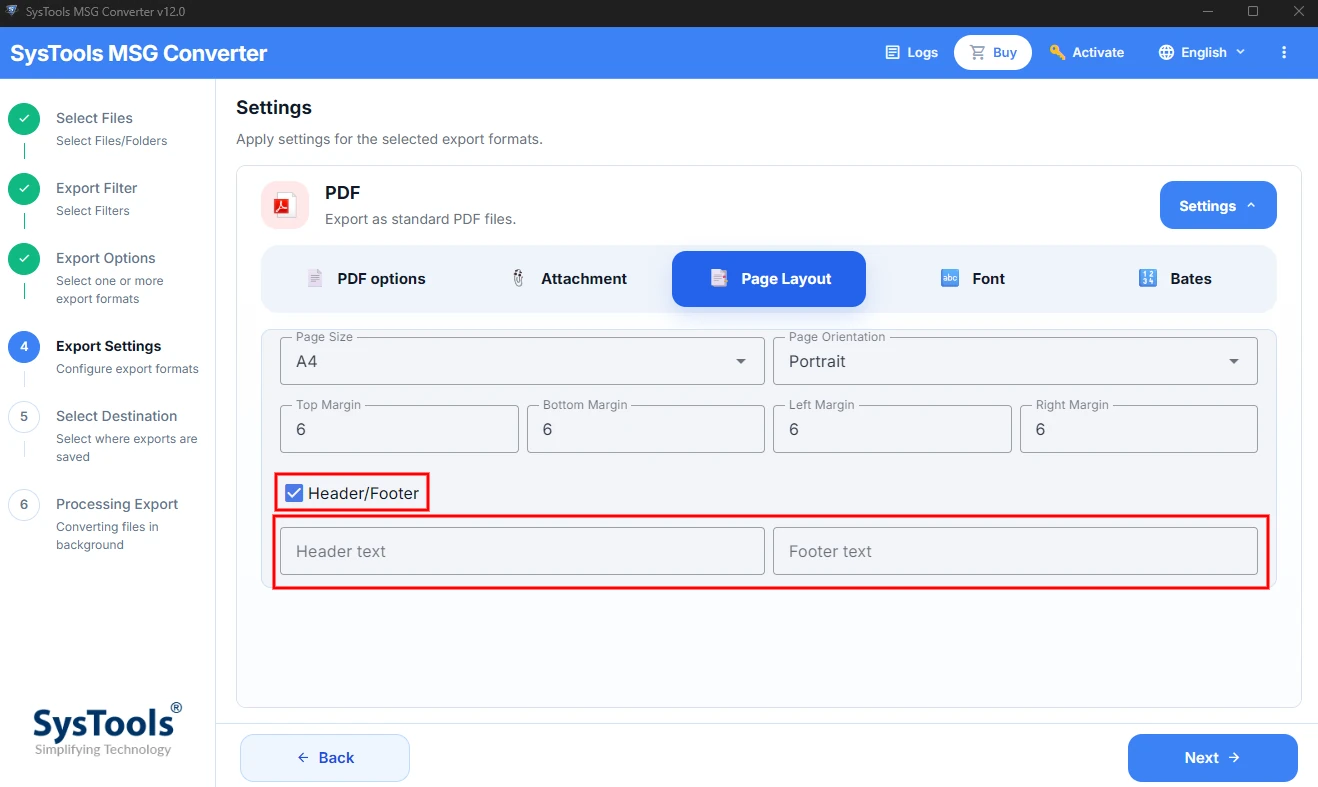
On the Page Layout tab, set Page Size, Page Orientation and the four margins. Select Header/Footer to add header and footer text.
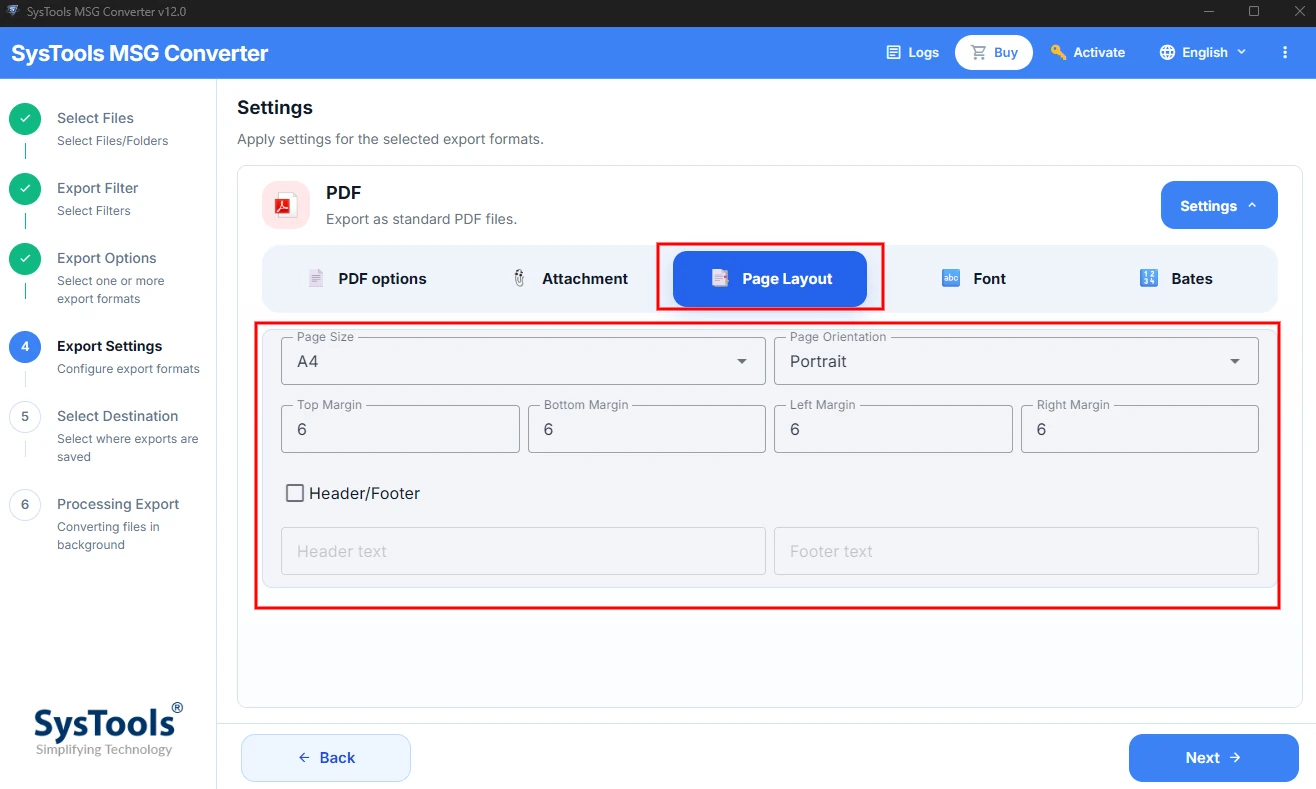
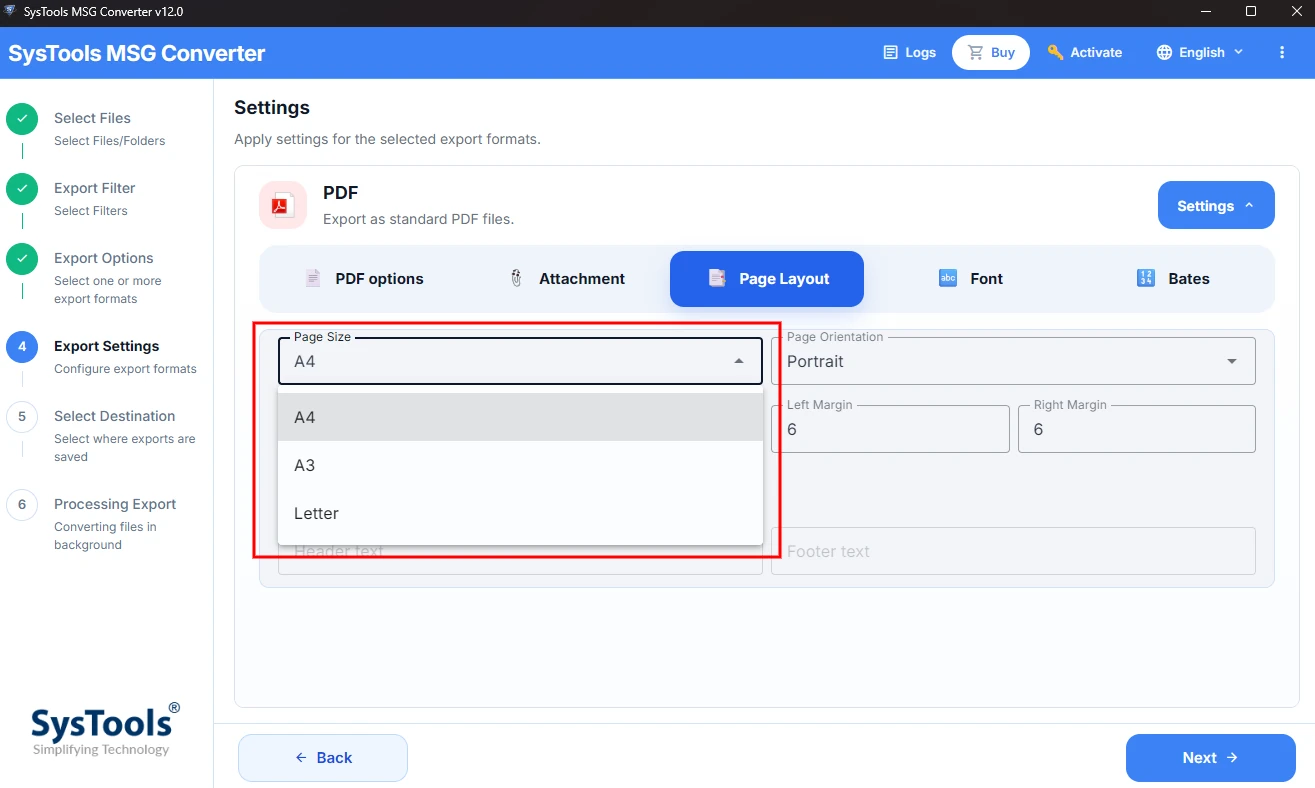
Select a page size from A4, A3 or Letter.
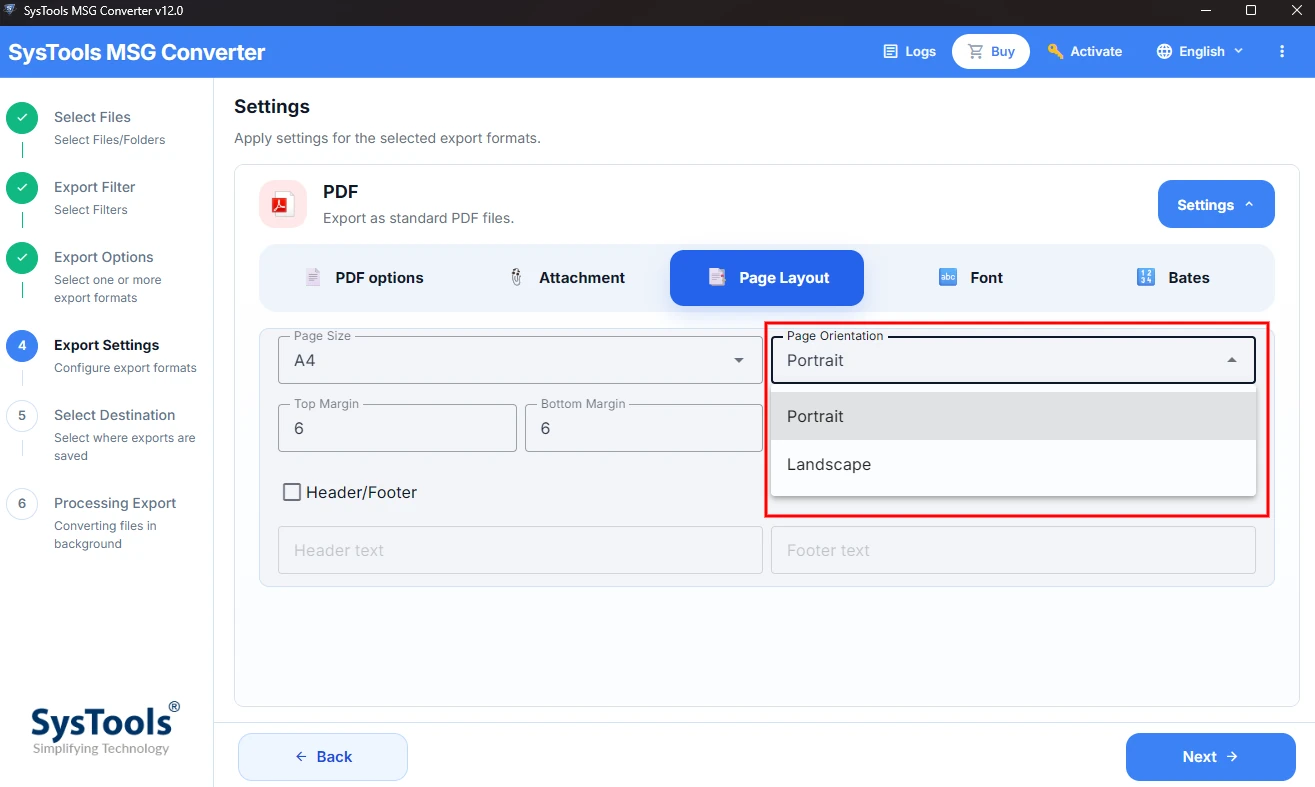
Select Portrait or Landscape for the page orientation.
Enter your Header text and Footer text after selecting Header/Footer.
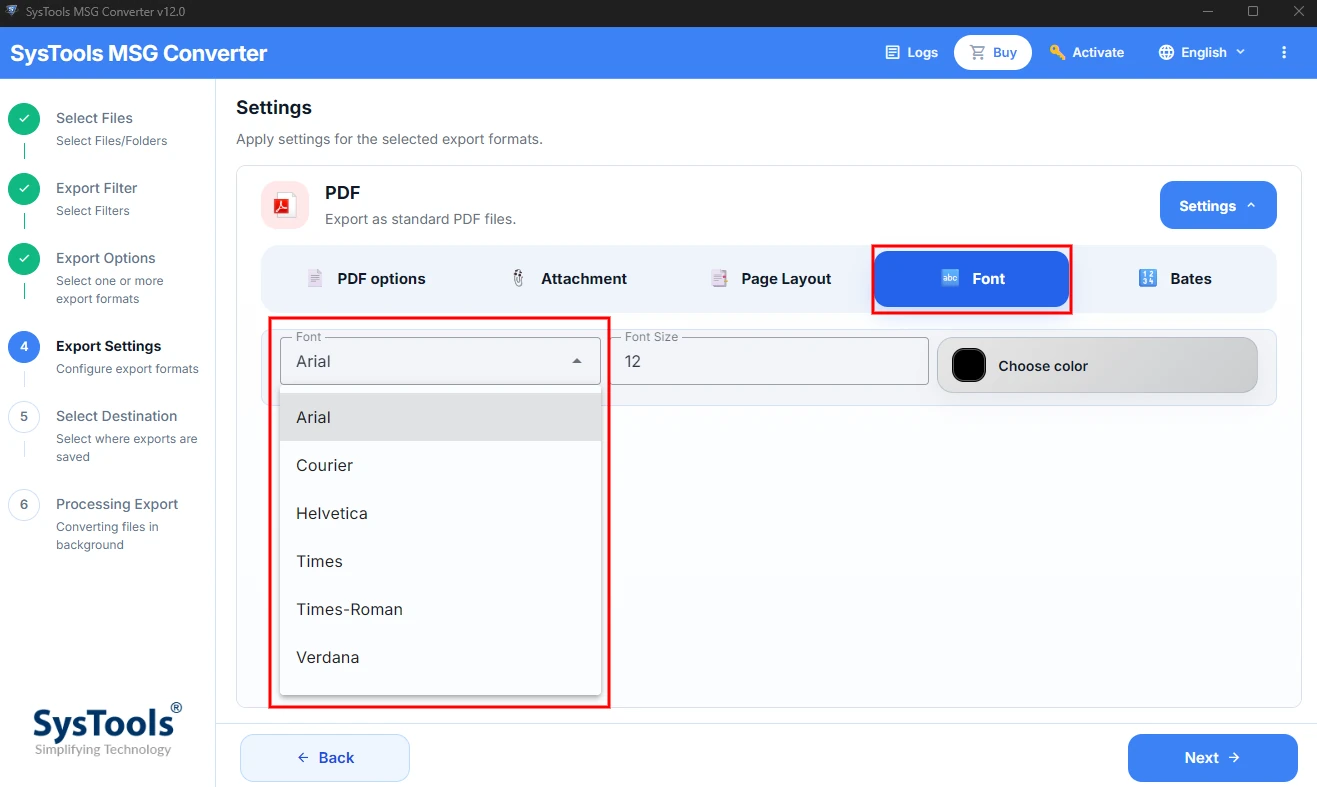
On the Font tab, select Arial, Courier, Helvetica, Times, Times-Roman or Verdana. Then set the Font Size and select a color with Choose color.
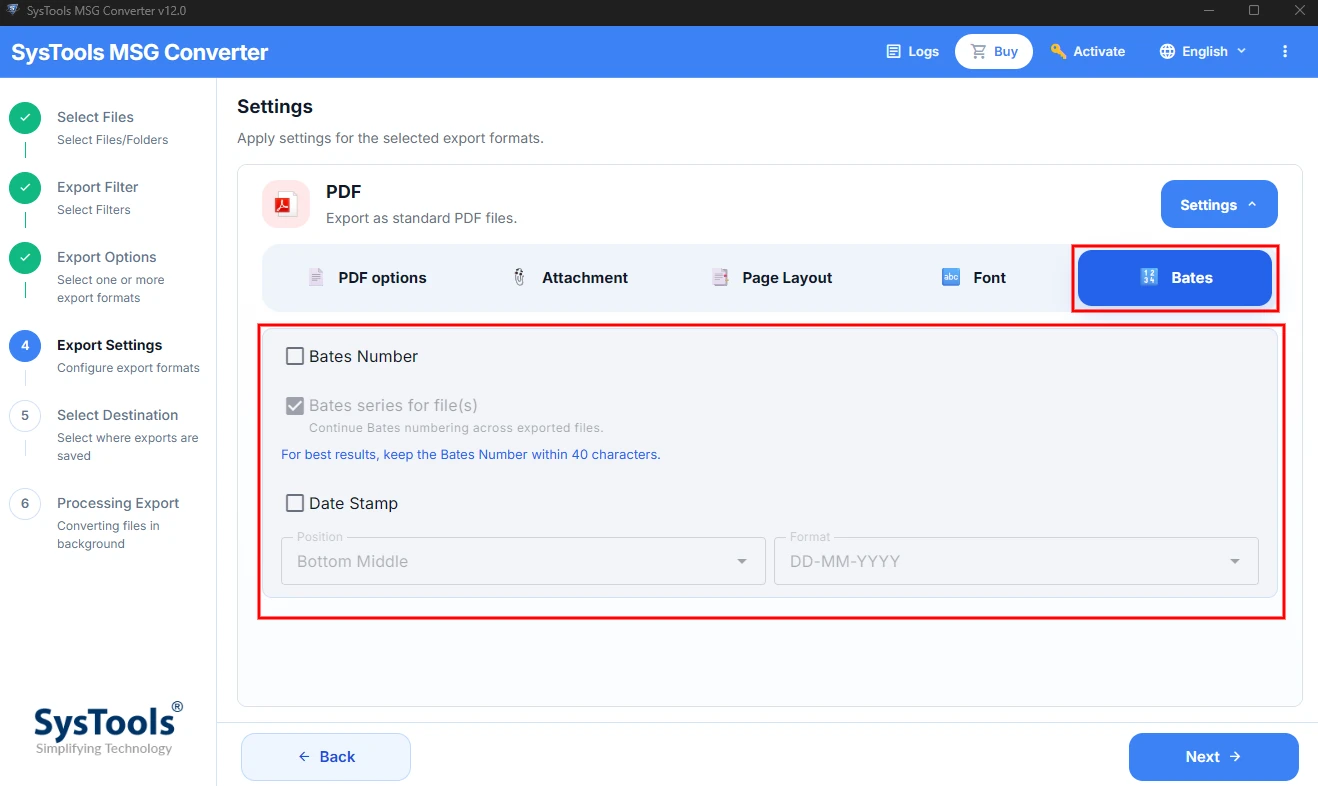
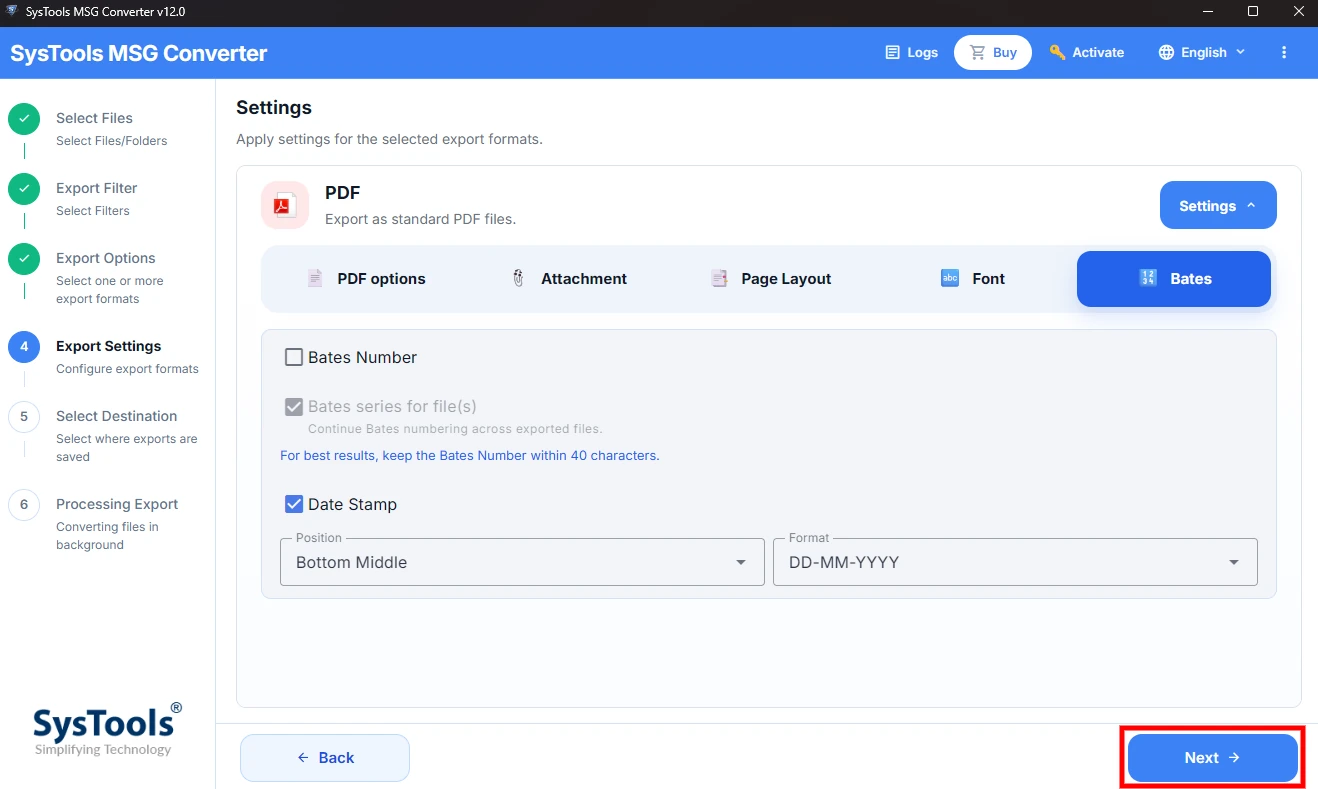
The Bates tab has Bates Number and Date Stamp options. For best results, keep the Bates Number within 40 characters.
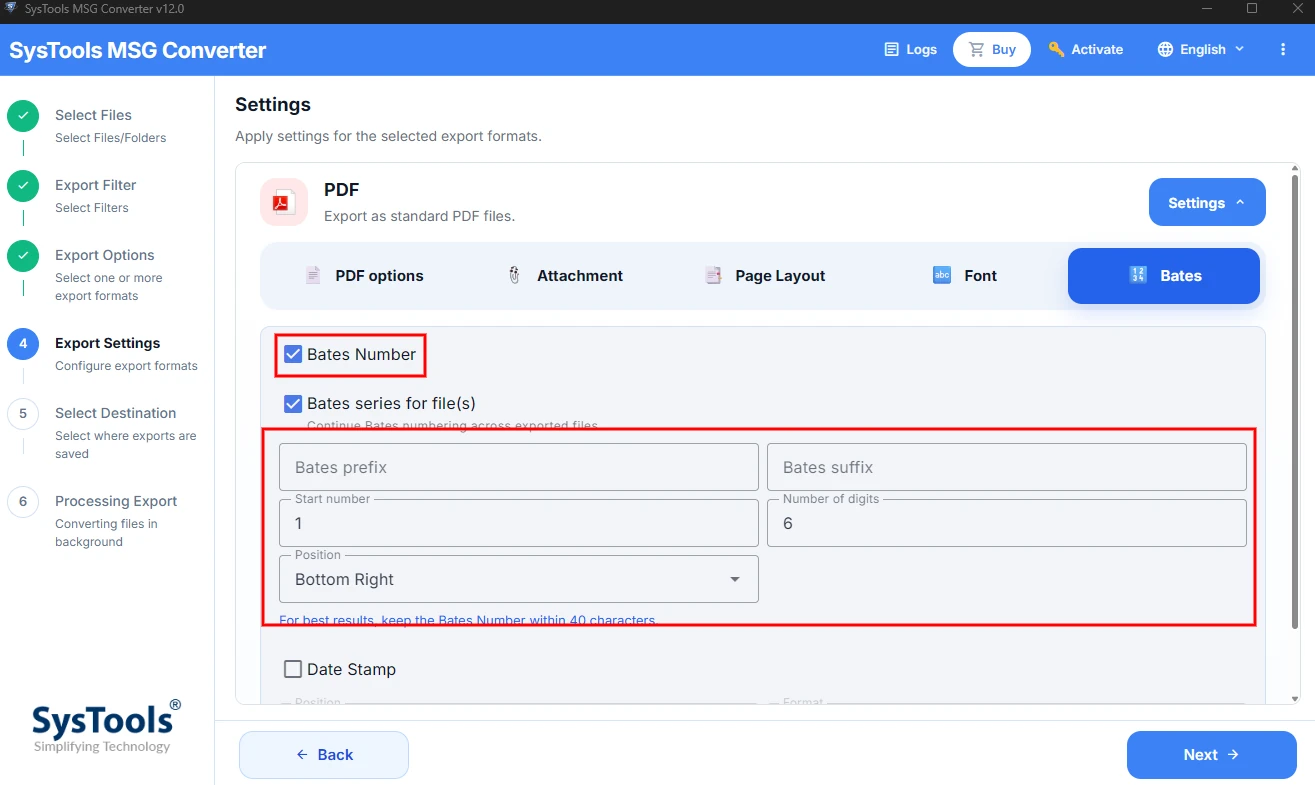
Select Bates Number to number pages in a series. Add a prefix or suffix, set the start number and digits, then select a position. Bates series for file(s) continues the numbering across exported files.
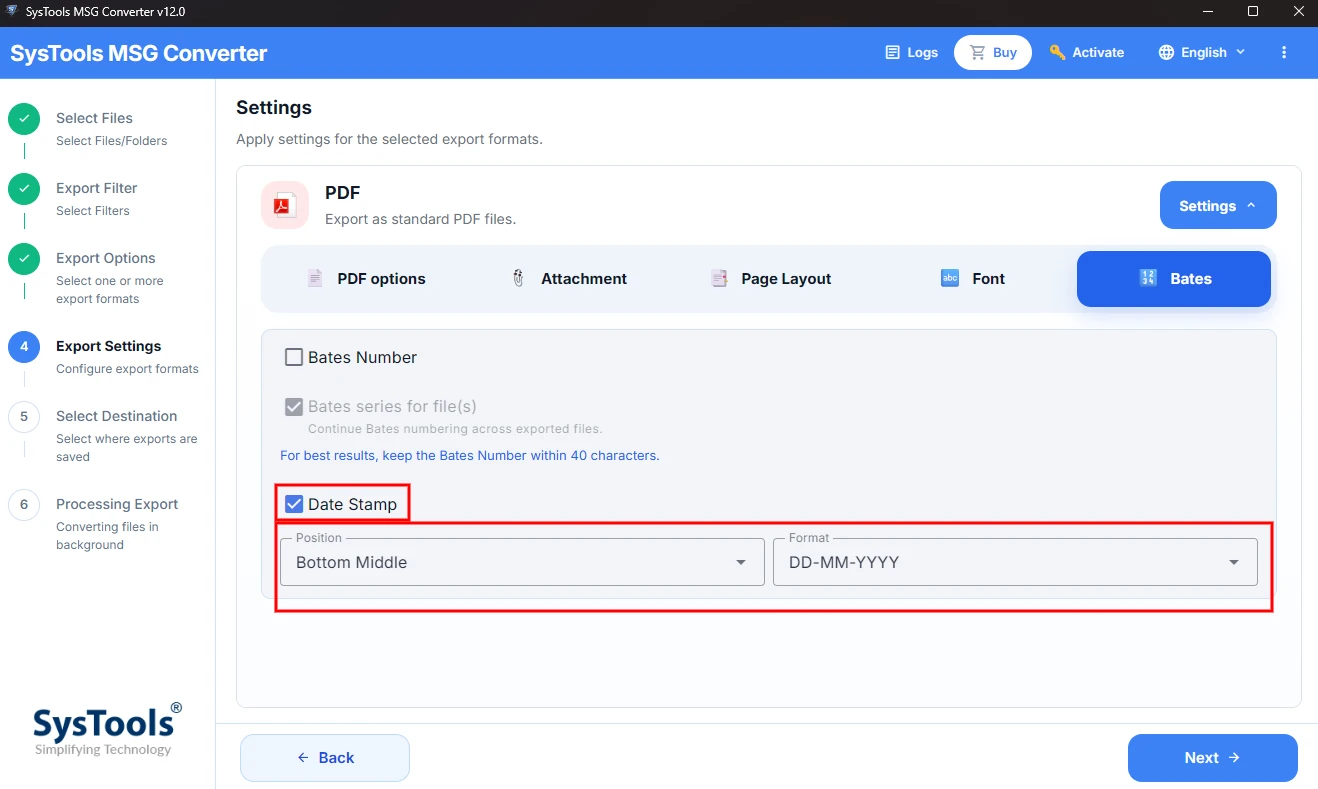
Select Date Stamp to add a date. Choose its position and a format like DD-MM-YYYY.
Click Next once your PDF options are set.
Select the Destination
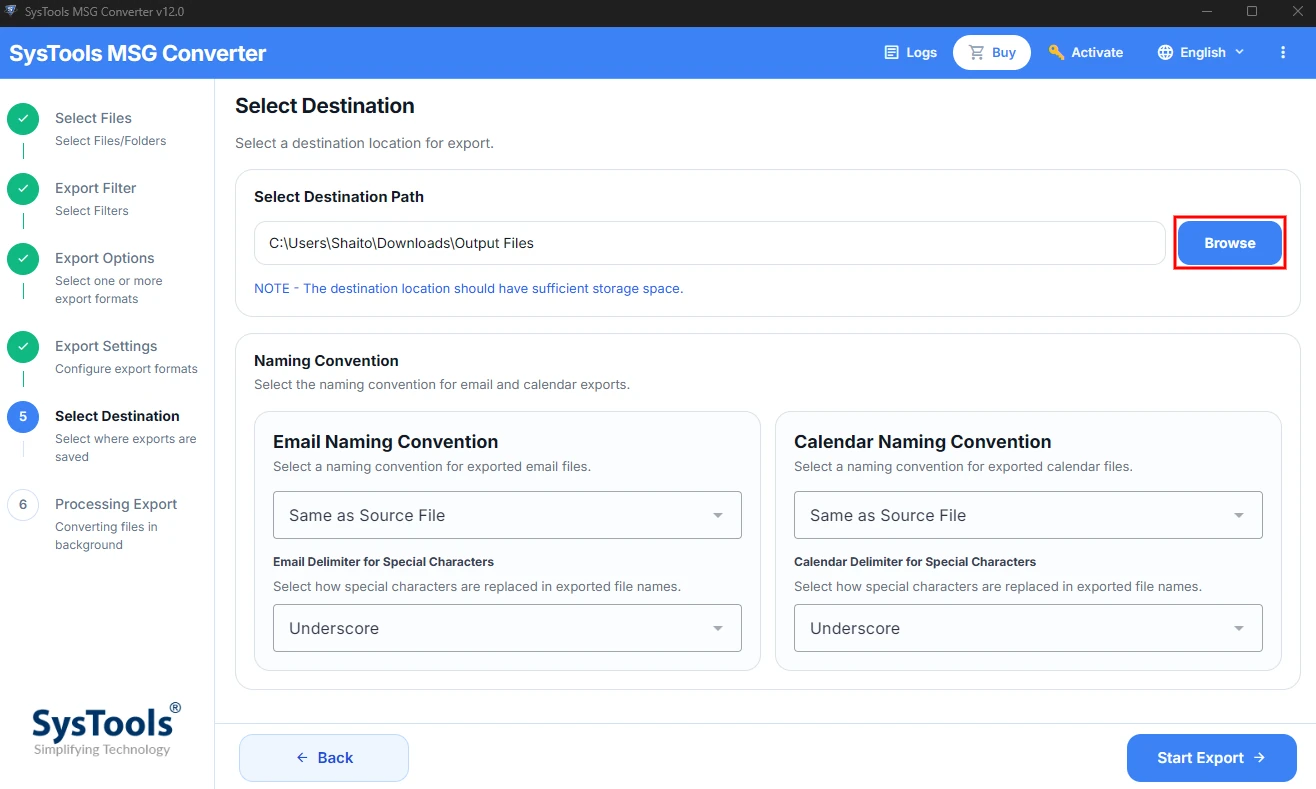
Click Browse next to Select Destination Path to choose where converted files are saved. Make sure the location has enough storage space.
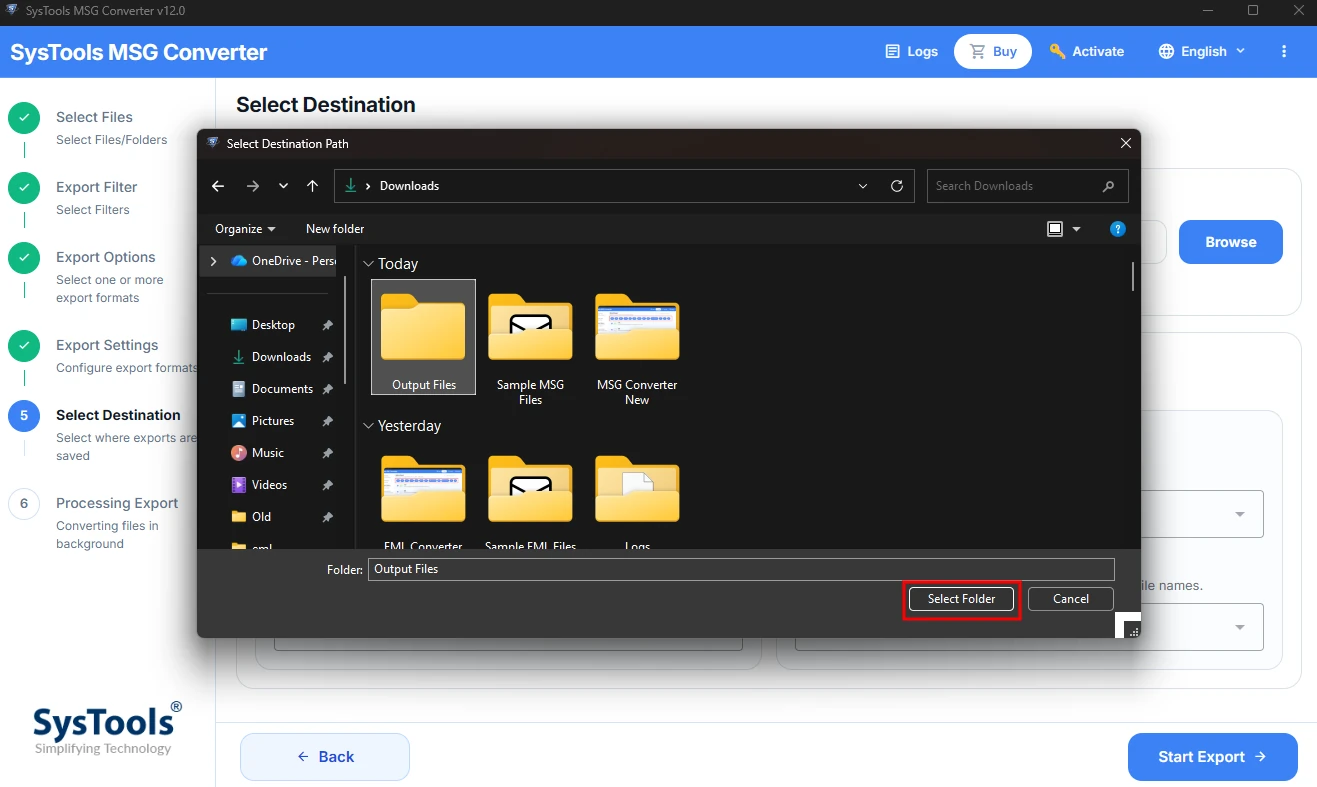
Select a folder in the dialog and click Select Folder.
Open Email Naming Convention to name exported email files. Choose Same as Source File or a pattern built from Subject, From, To, CC and Date.
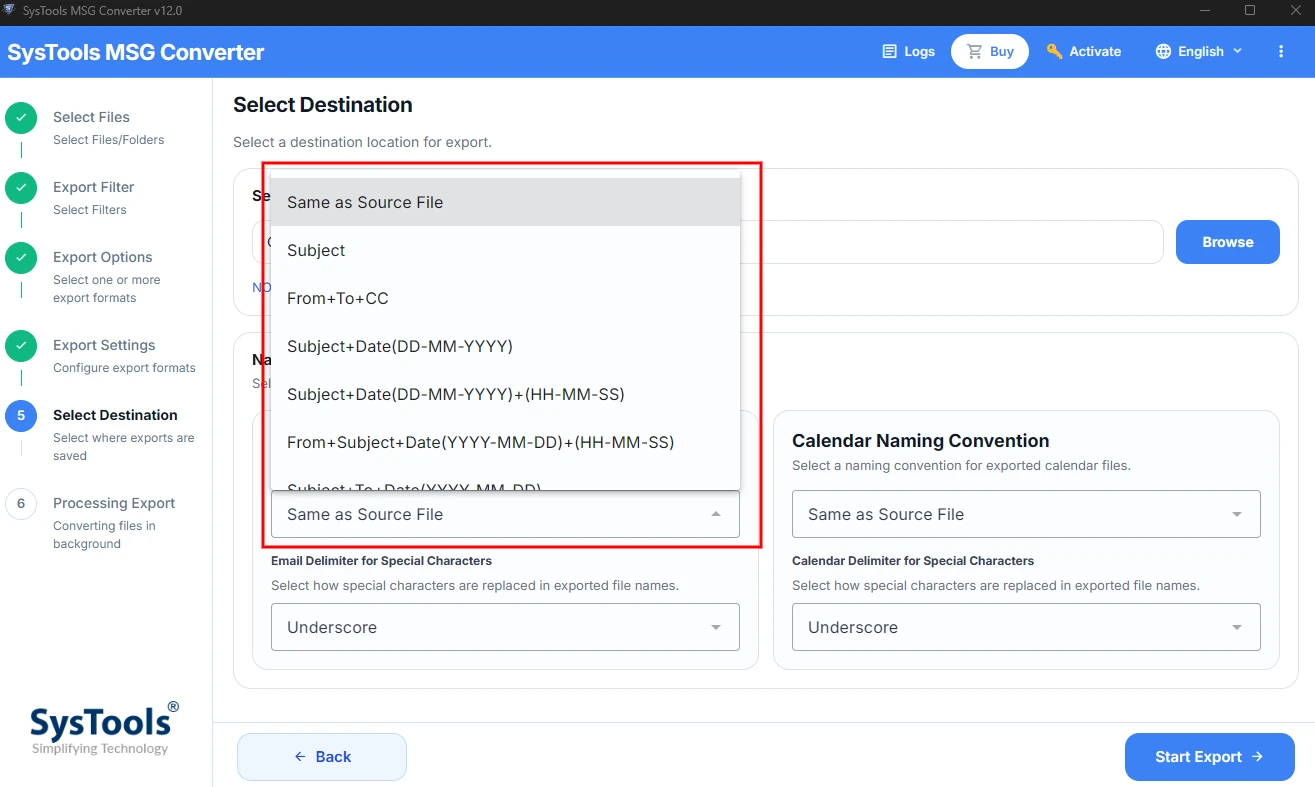
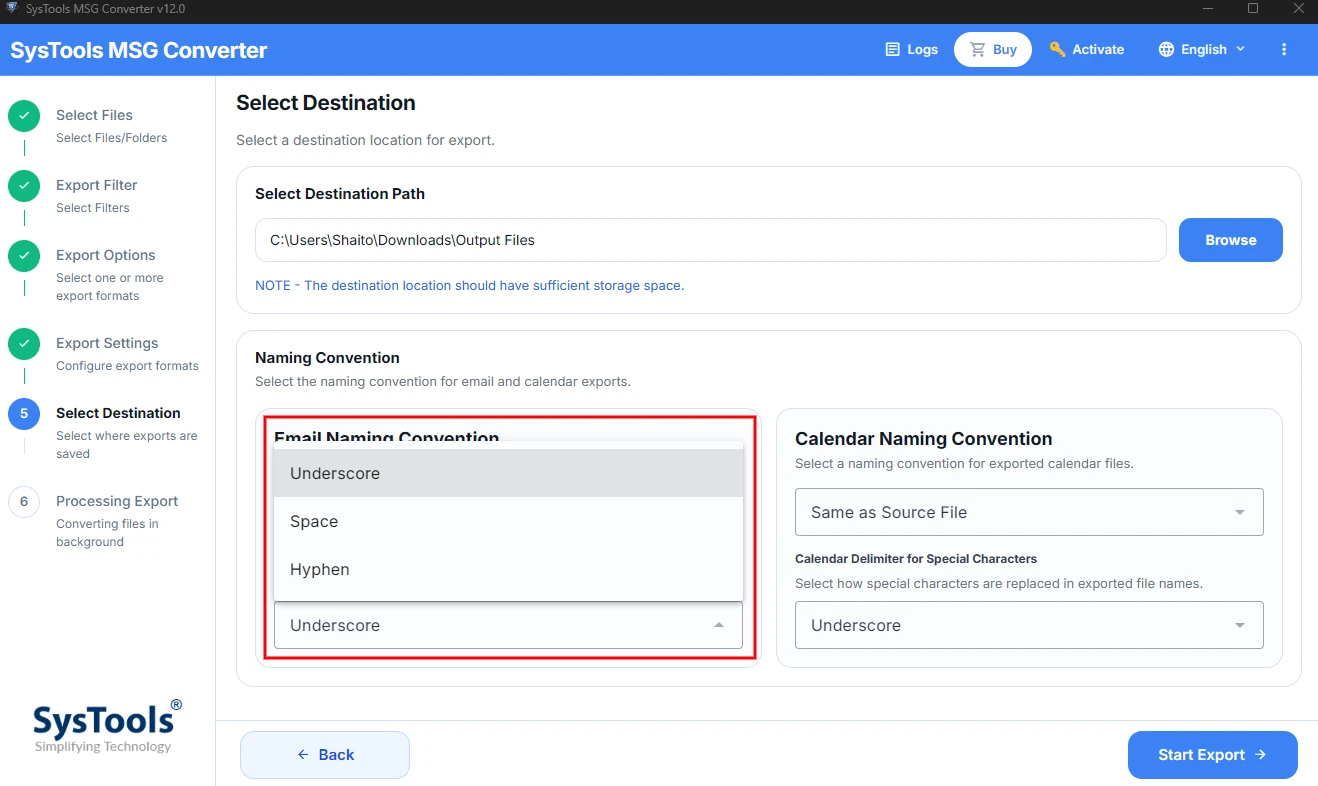
Open Email Delimiter for Special Characters to set what replaces special characters in file names. Select Underscore, Space or Hyphen.
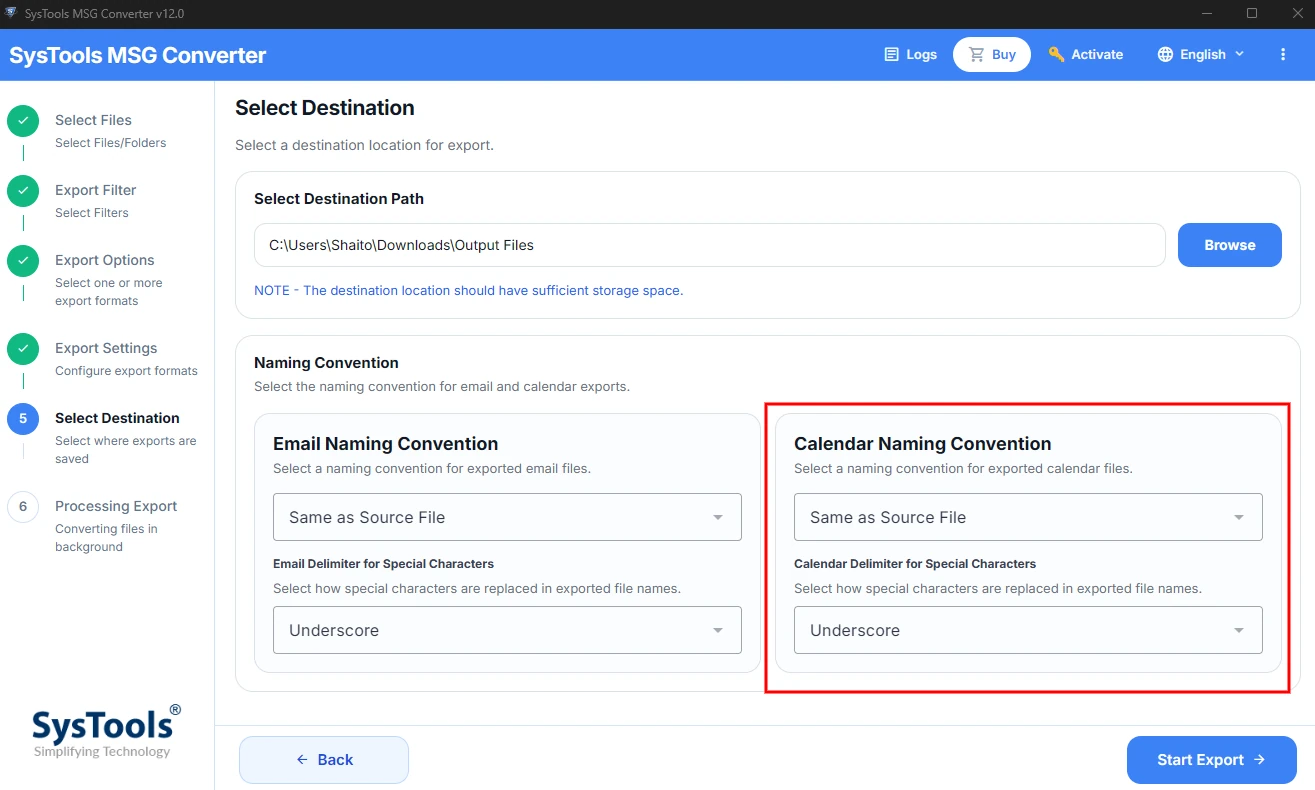
Calendar Naming Convention and Calendar Delimiter for Special Characters work the same way for calendar files.
Start the Export and Track Progress
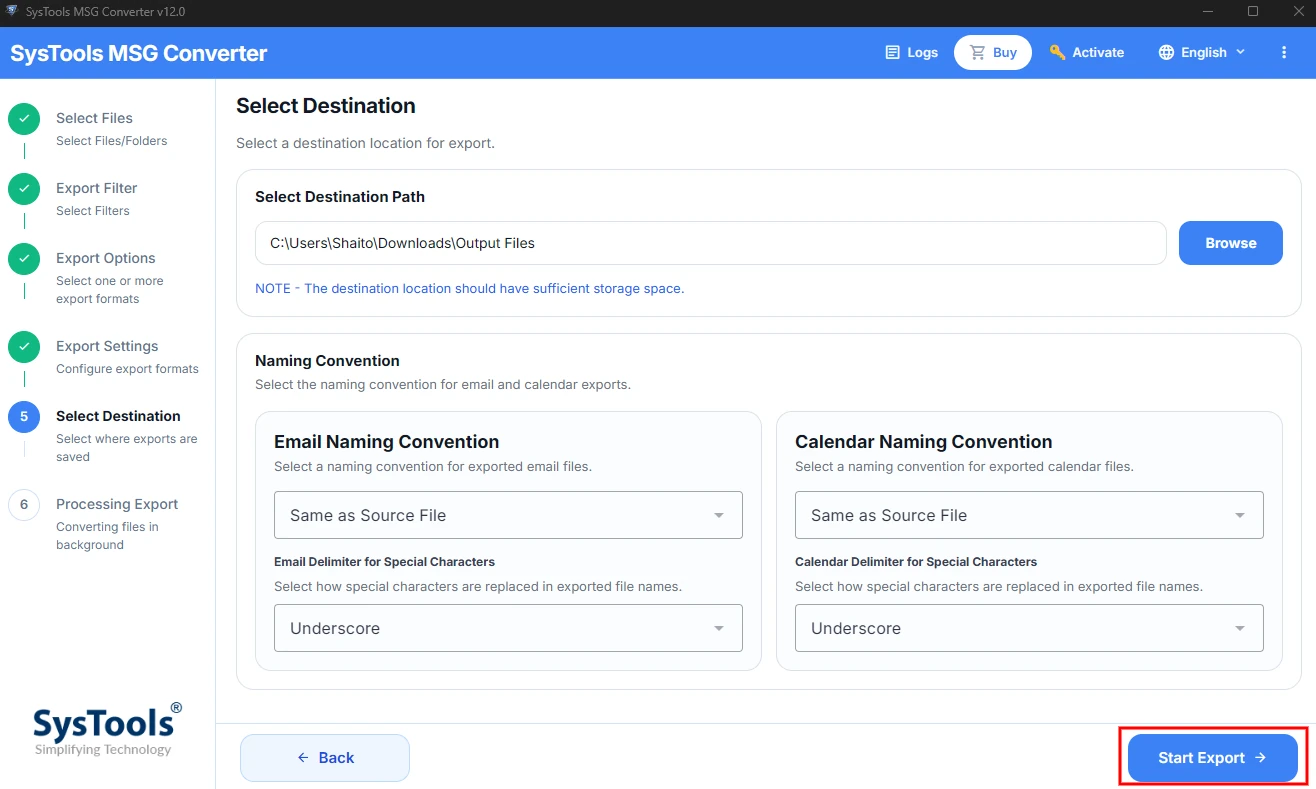
Click Start Export once the destination path is set.
A message confirms Export process completed successfully. Click OK.
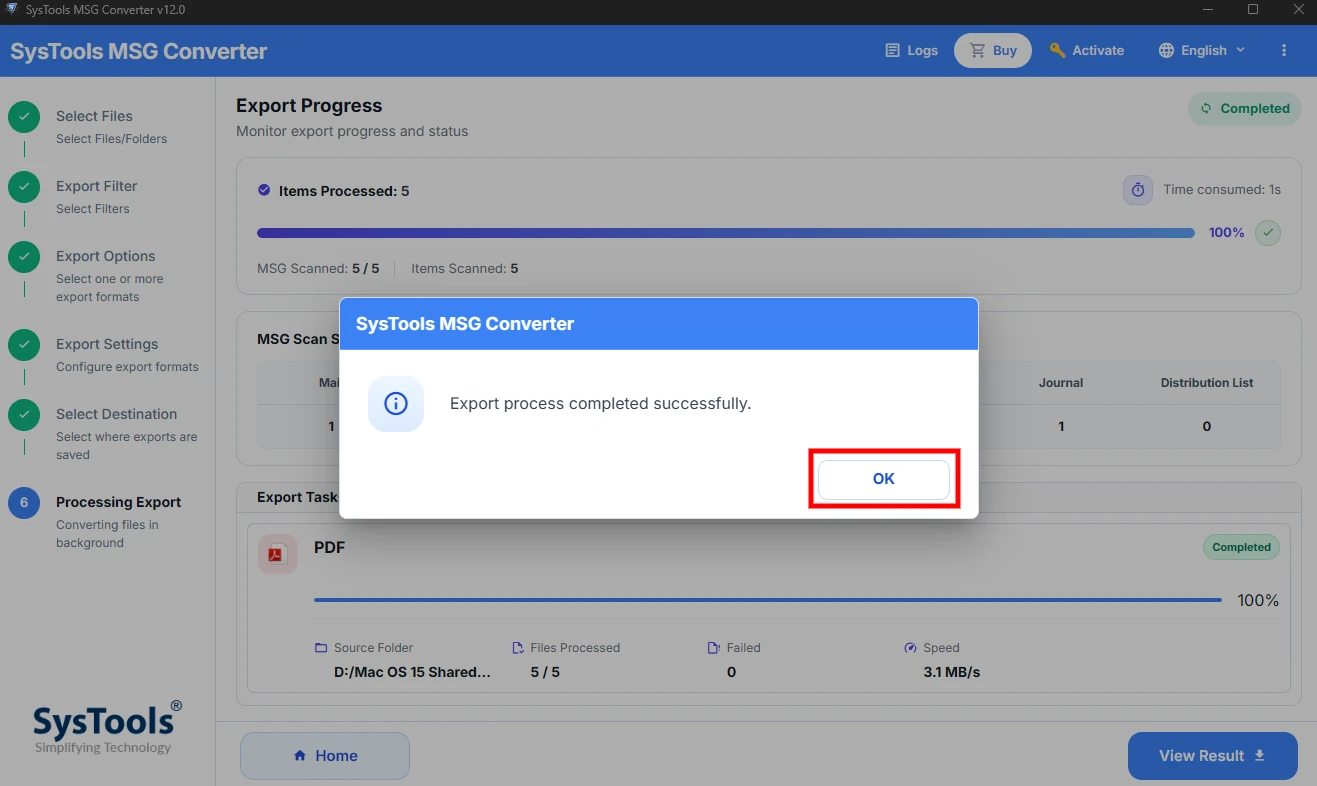
The Export Progress screen shows Items Processed and the MSG Scan Summary for Mail, Contact, Calendar, Task, Note, Journal and Distribution List. Under Export Tasks, check Files Processed, Failed and Speed for the PDF task. It shows Completed at 100%.
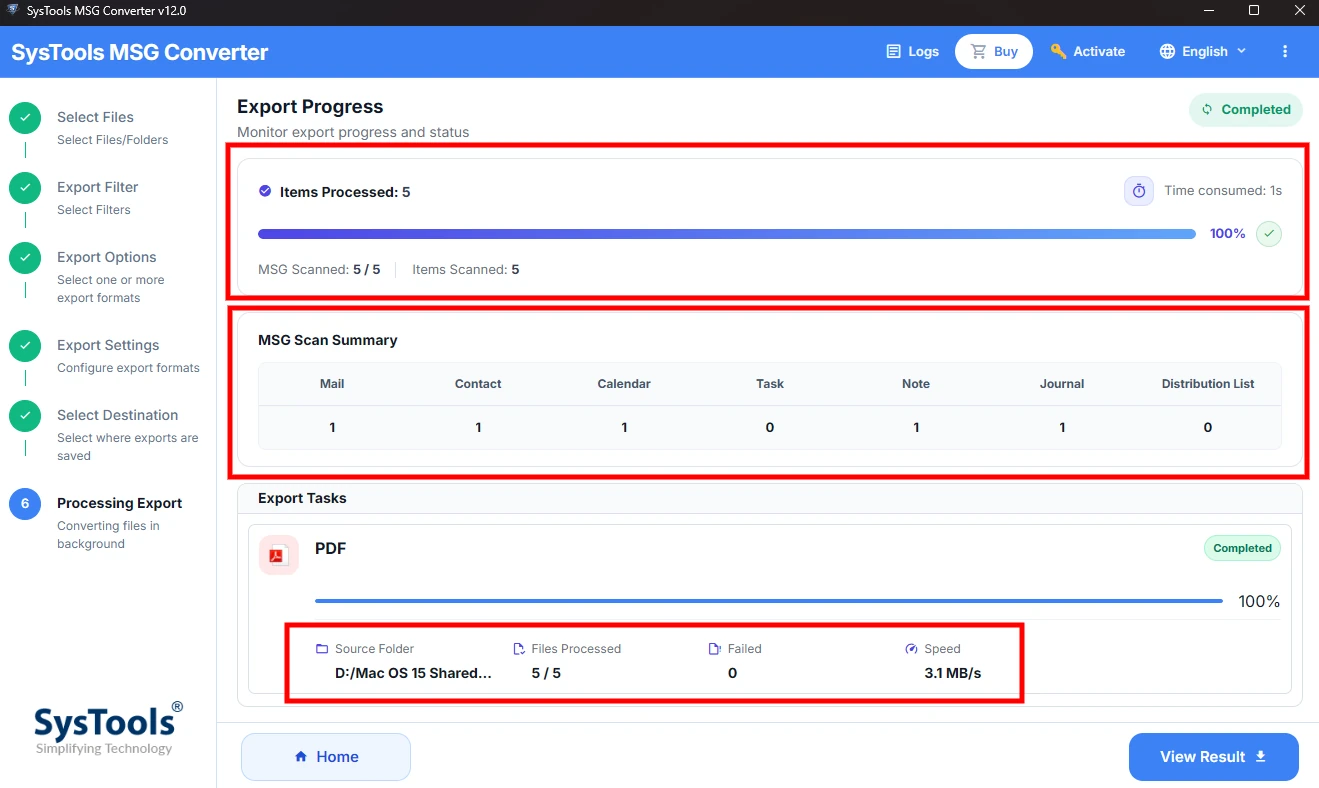
Click View Result to open the output folder.
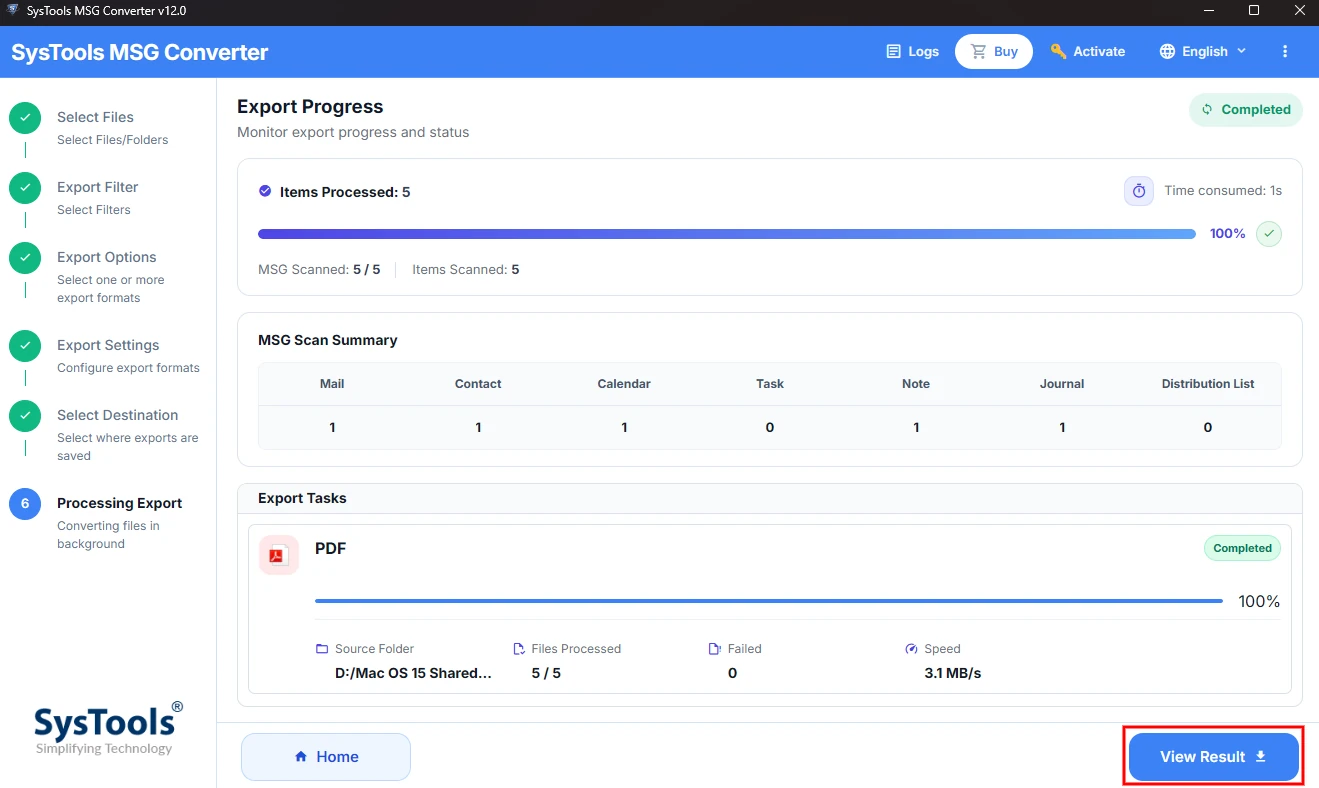
View the Converted Files
Windows Explorer opens the output folder named SysTools MSG Converter. Open the PDF folder inside it.
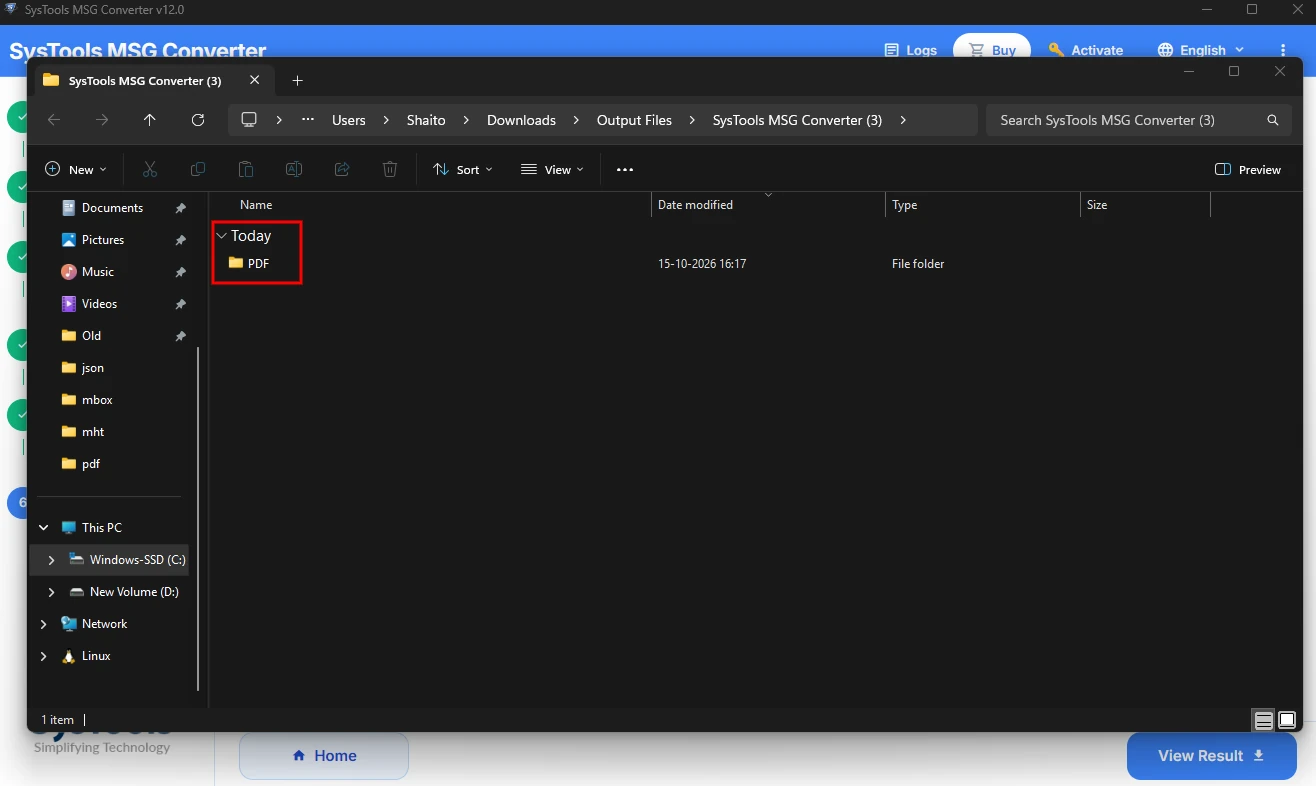
The PDF folder holds an MSG Files folder and ExportReport.csv.
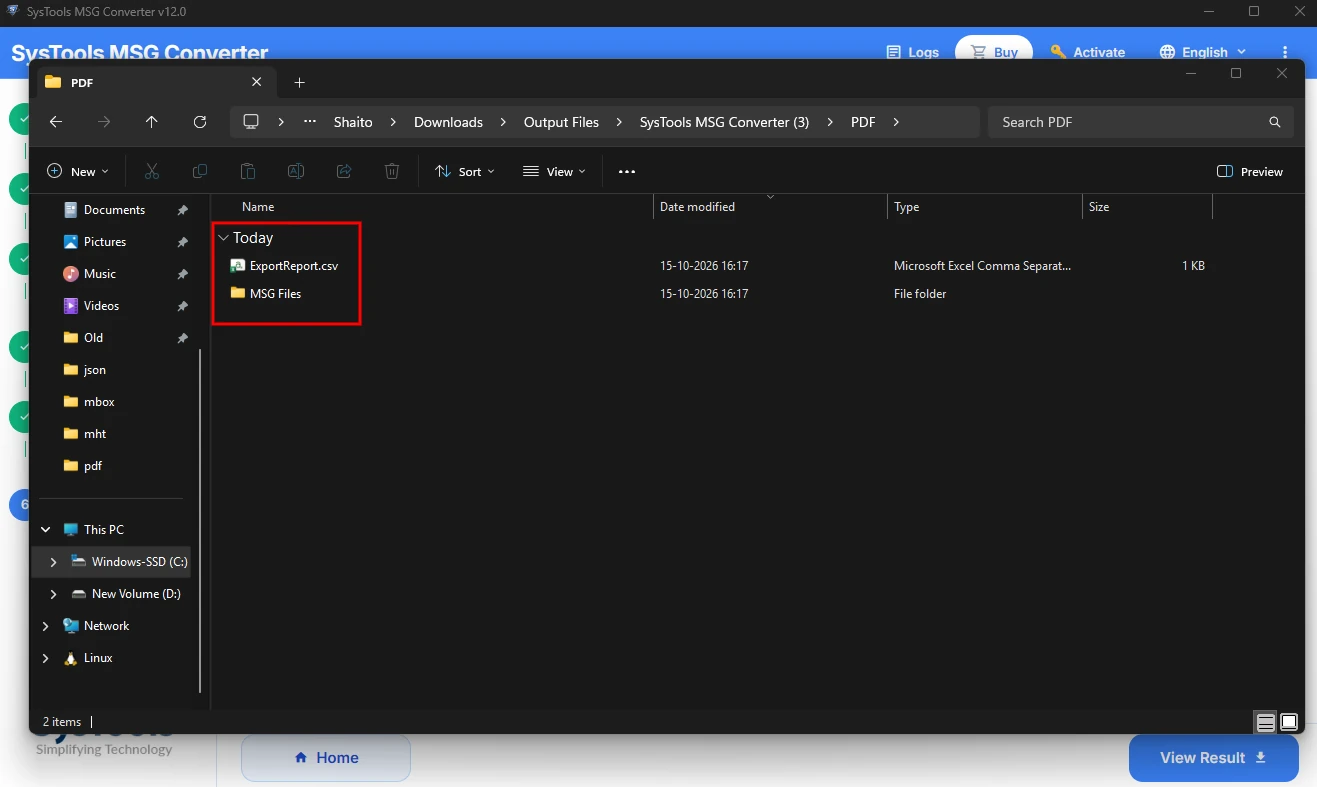
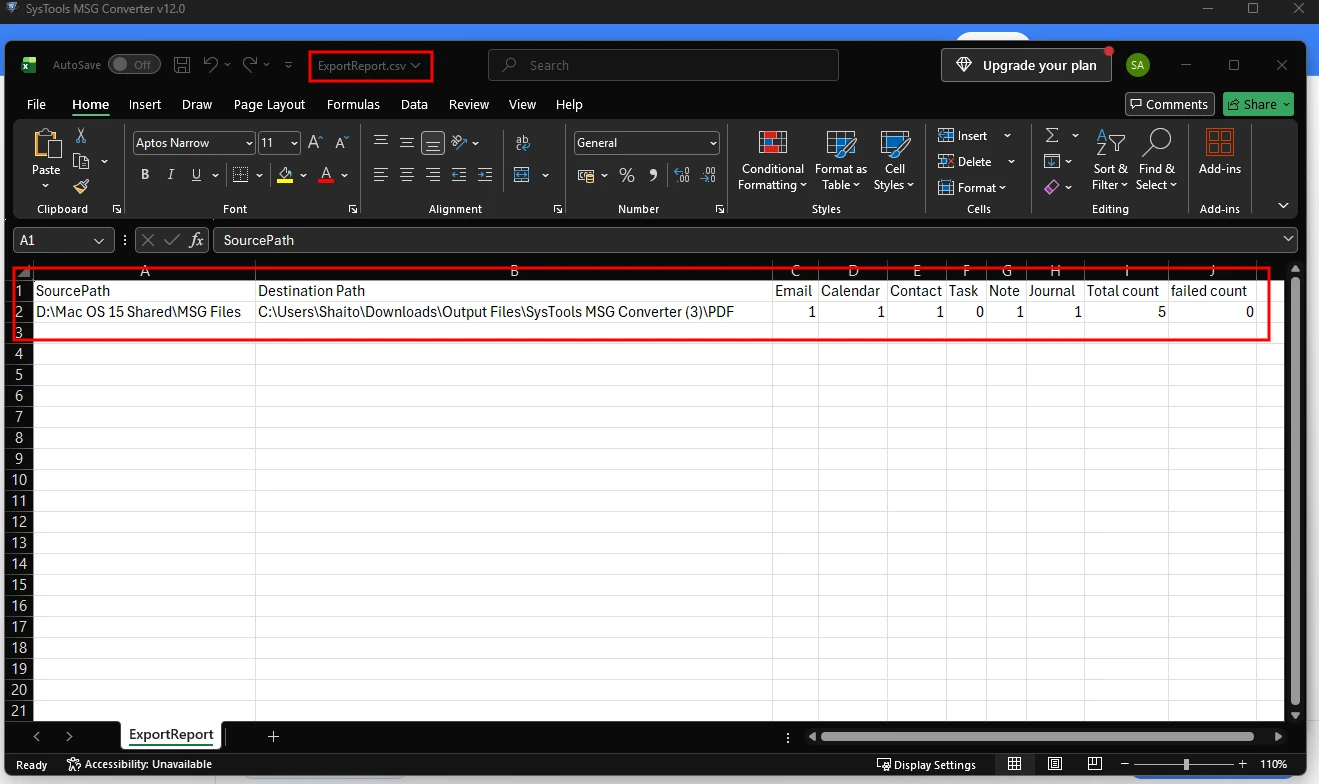
Open ExportReport.csv to see the SourcePath, Destination Path and the count for Email, Calendar, Contact, Task, Note and Journal, plus the Total count and failed count.
Check Logs and App Details
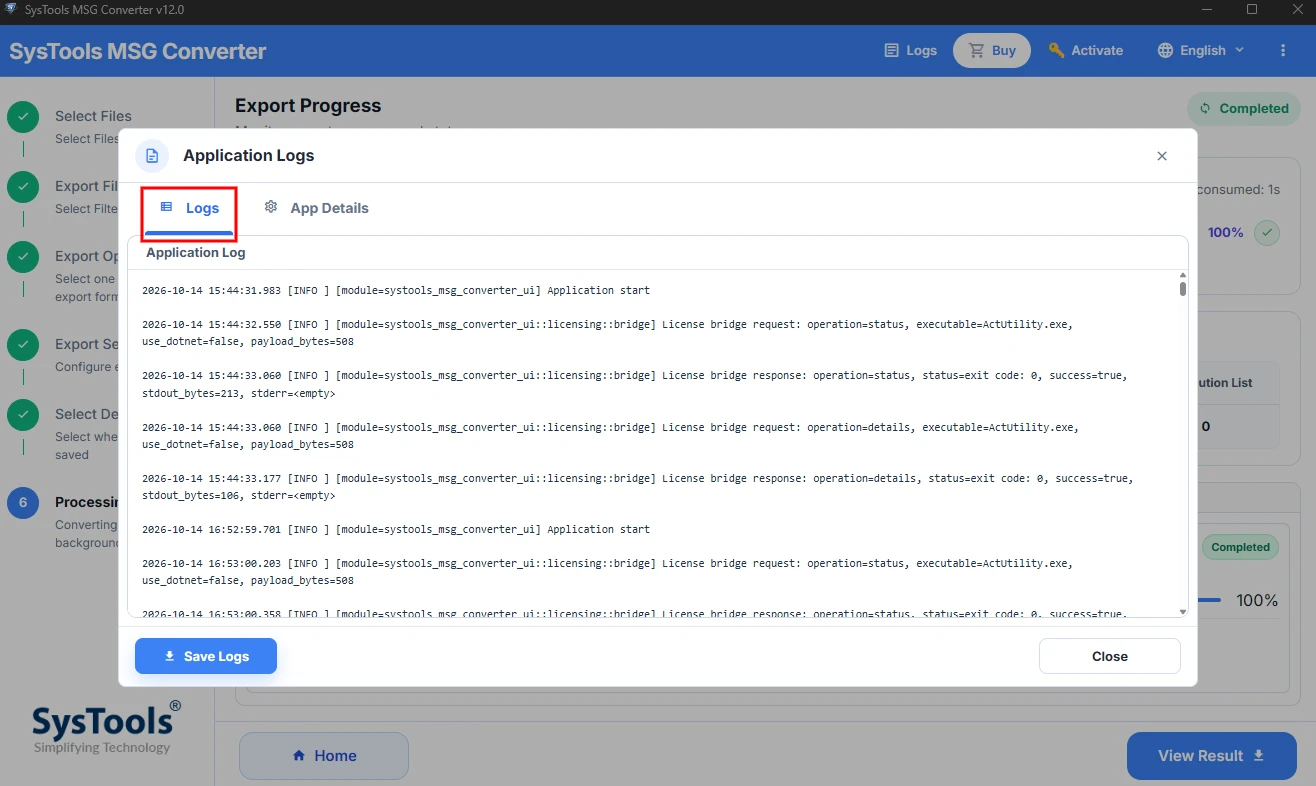
Click Logs in the top bar to open Application Logs. Click Save Logs to keep a copy.
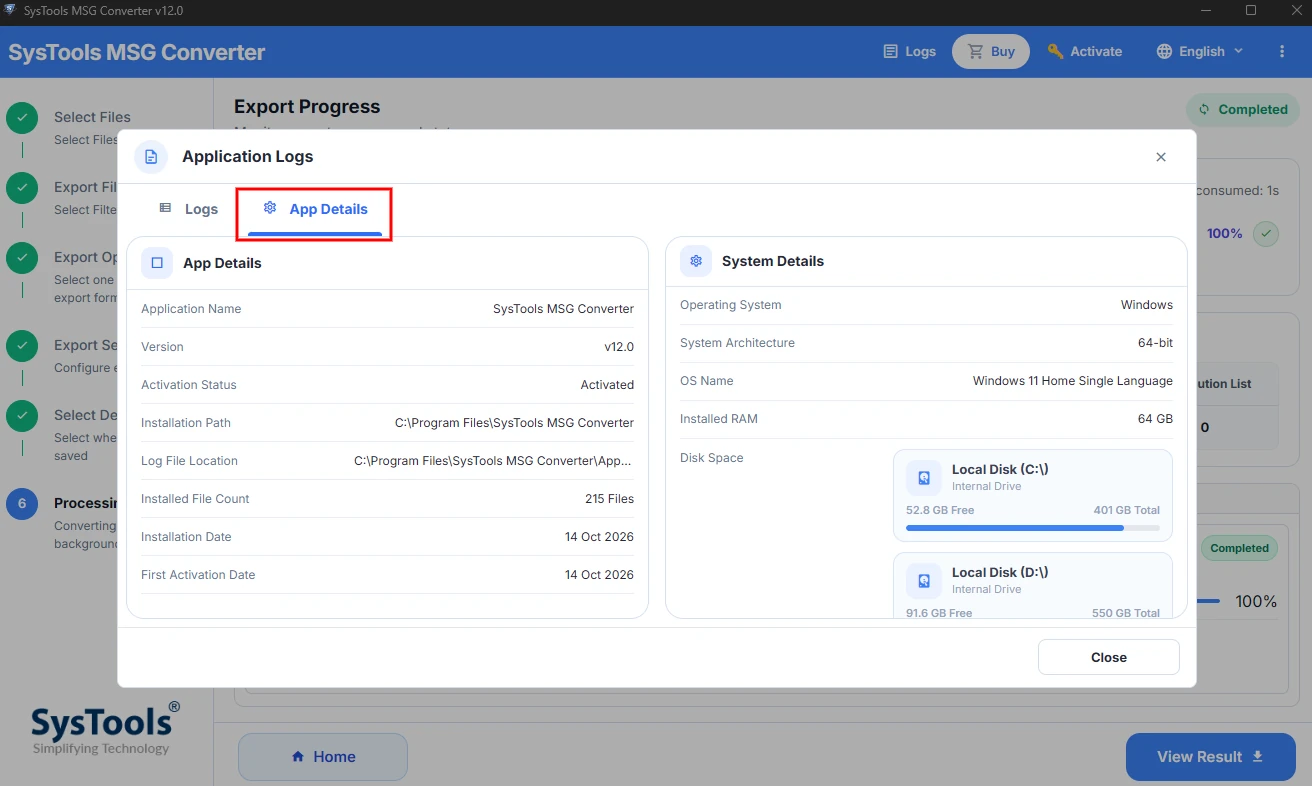
The App Details tab lists application and system details, including version, activation status and operating system.
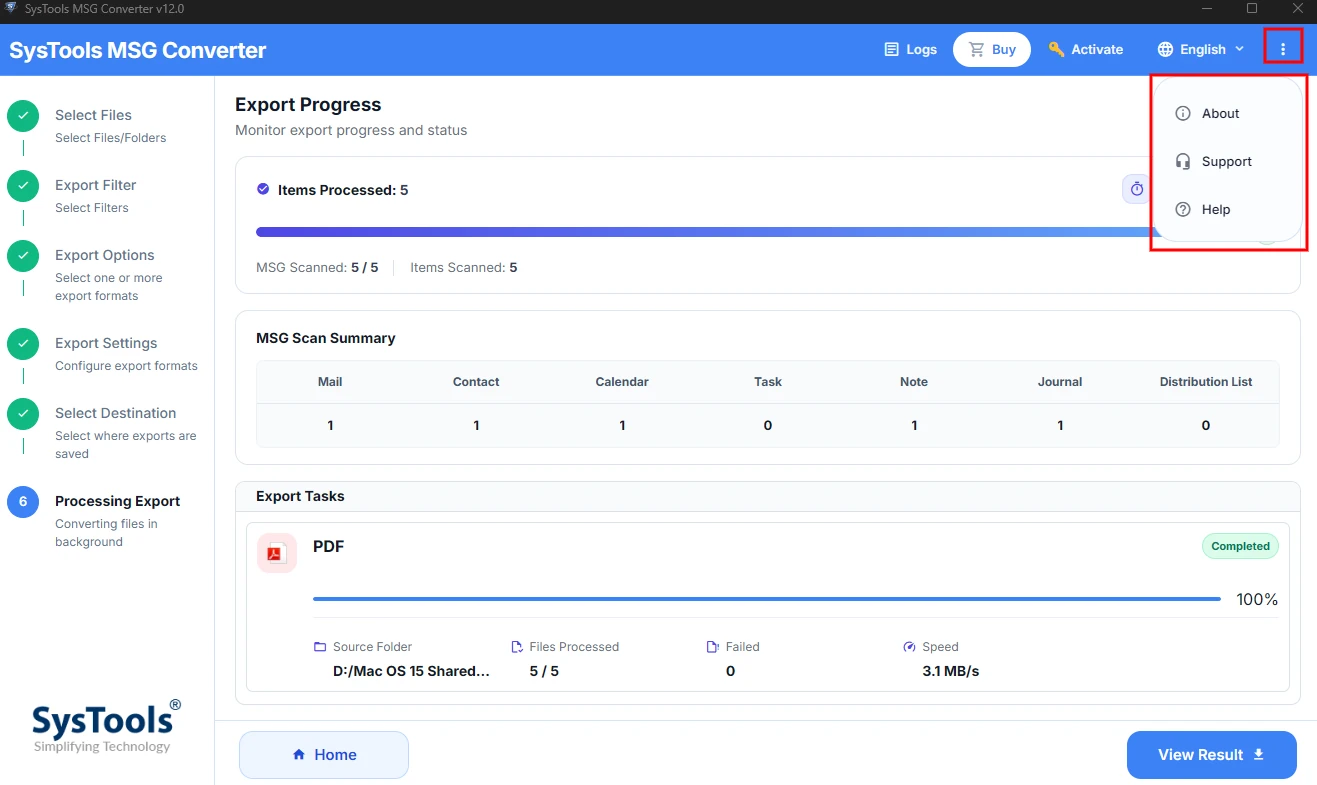
Select the three dot menu in the top bar to open About, Support and Help.
Convert MSG Files to PST (Outlook)
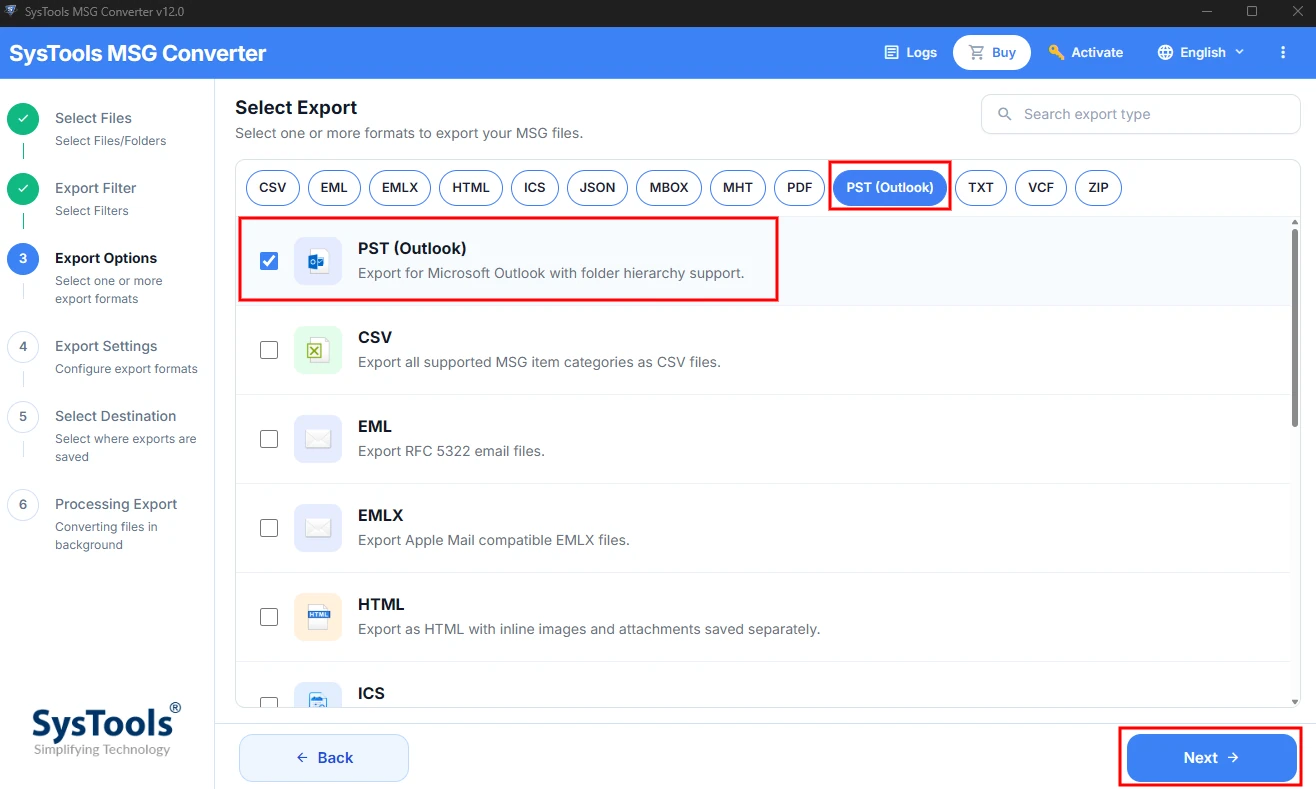
Select PST (Outlook) as the Export Format
Select PST (Outlook) in the Export Options list. It exports a PST file for Microsoft Outlook with folder hierarchy support. Click Next.
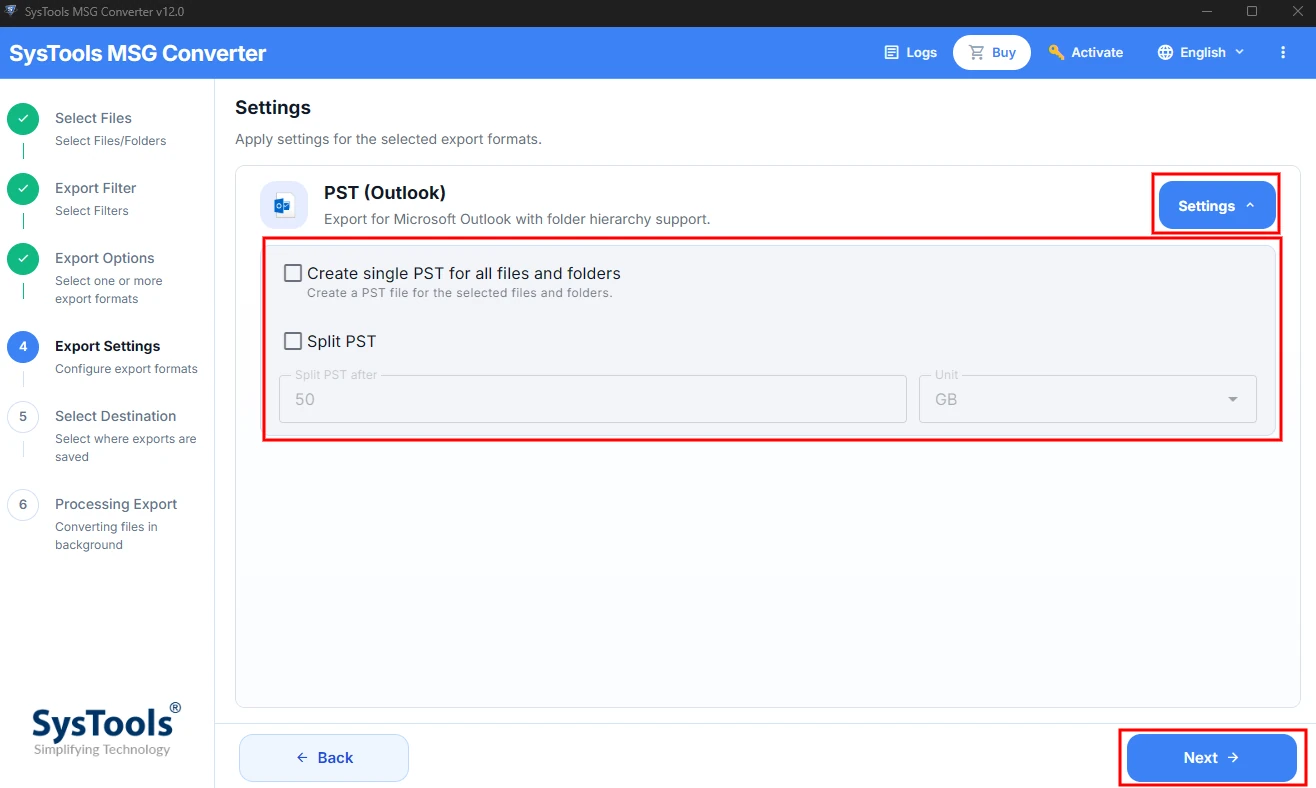
Configure PST (Outlook) Export Settings
Click Settings to open the PST options. Create single PST for all files and folders keeps everything in an individual PST file for each of the folders. Select Split PST to cut a large PST into parts. Set Split PST after and choose MB or GB as the unit. The default is 50 GB. Click Next.
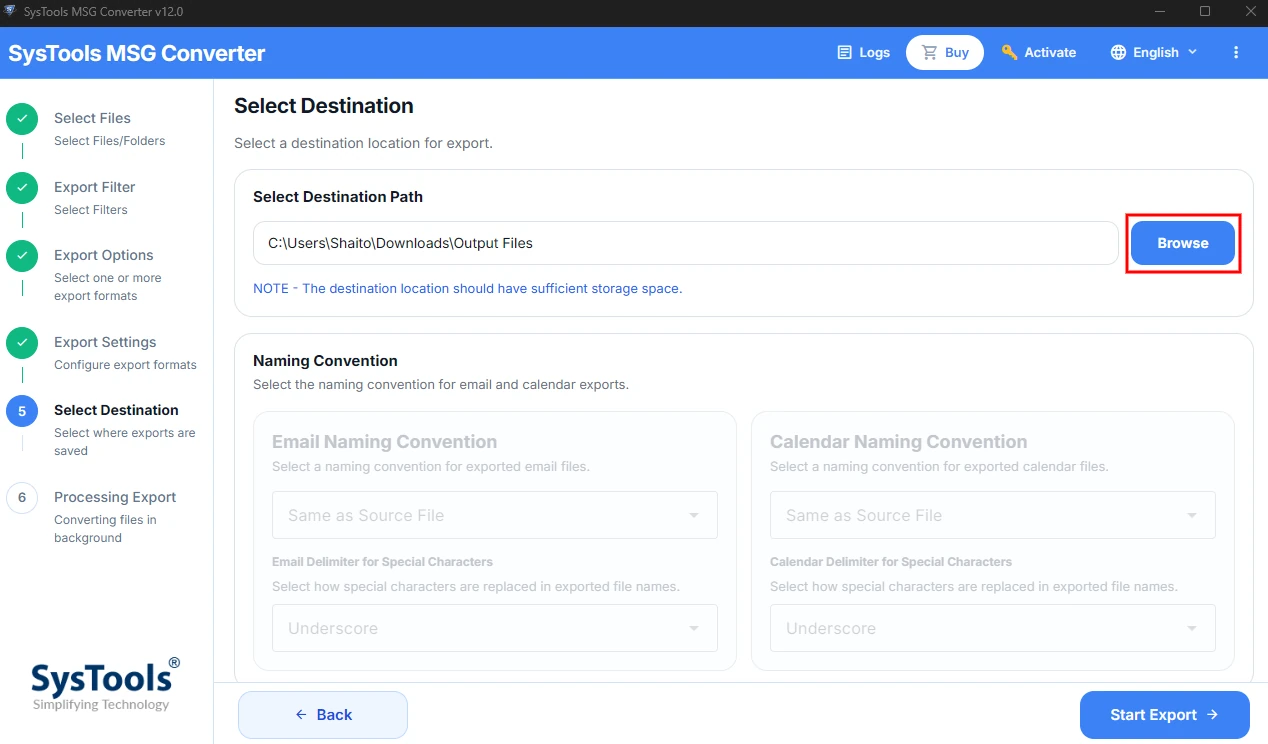
Select the Destination
Click Browse next to Select Destination Path to choose where converted files are saved. Make sure the location has enough storage space.
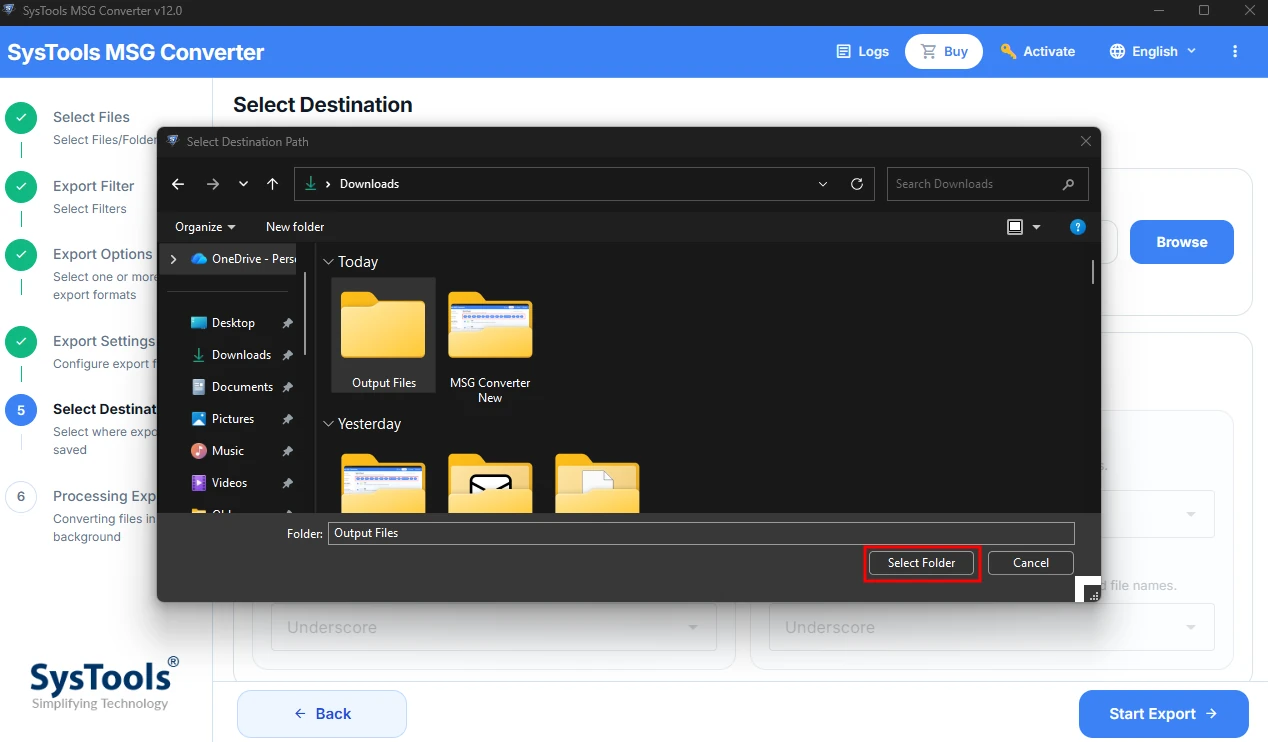
Select a folder in the dialog and click Select Folder. The naming options stay greyed out for PST (Outlook).
Start the Export and Track Progress
Click Start Export once the destination path is set.
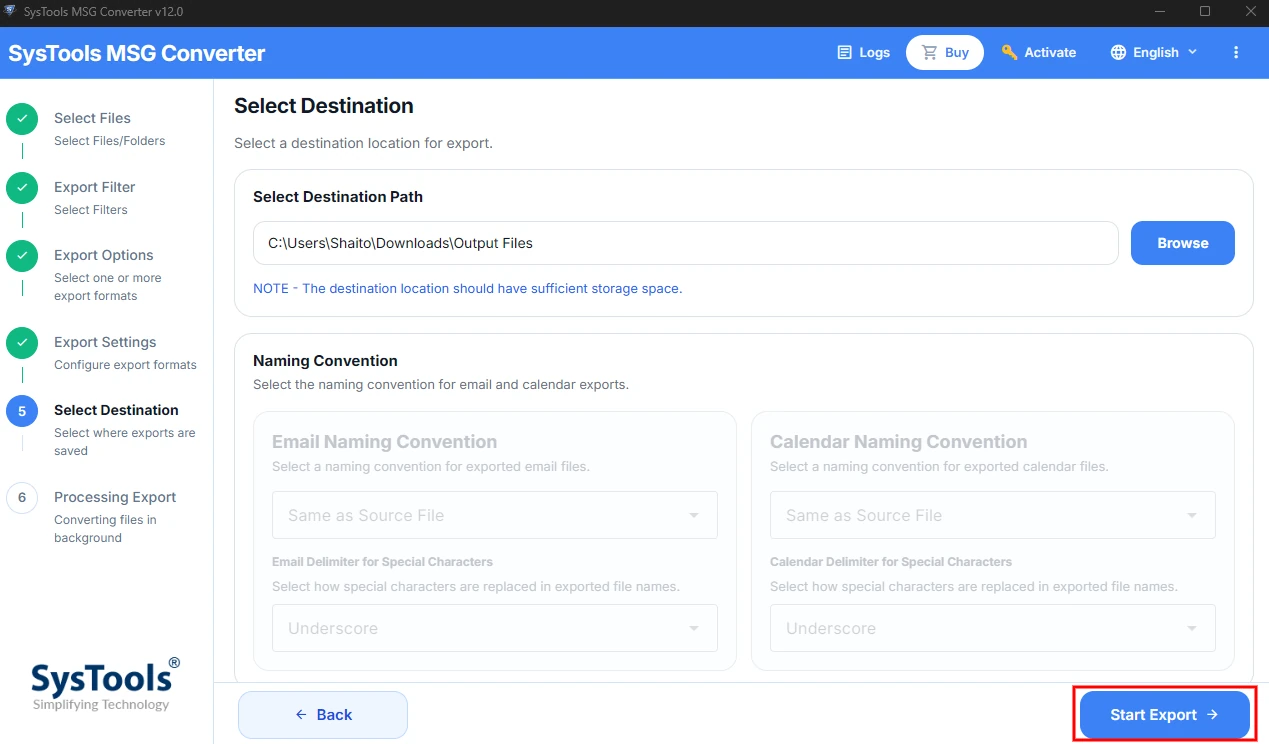
A message confirms Export process completed successfully. Click OK.
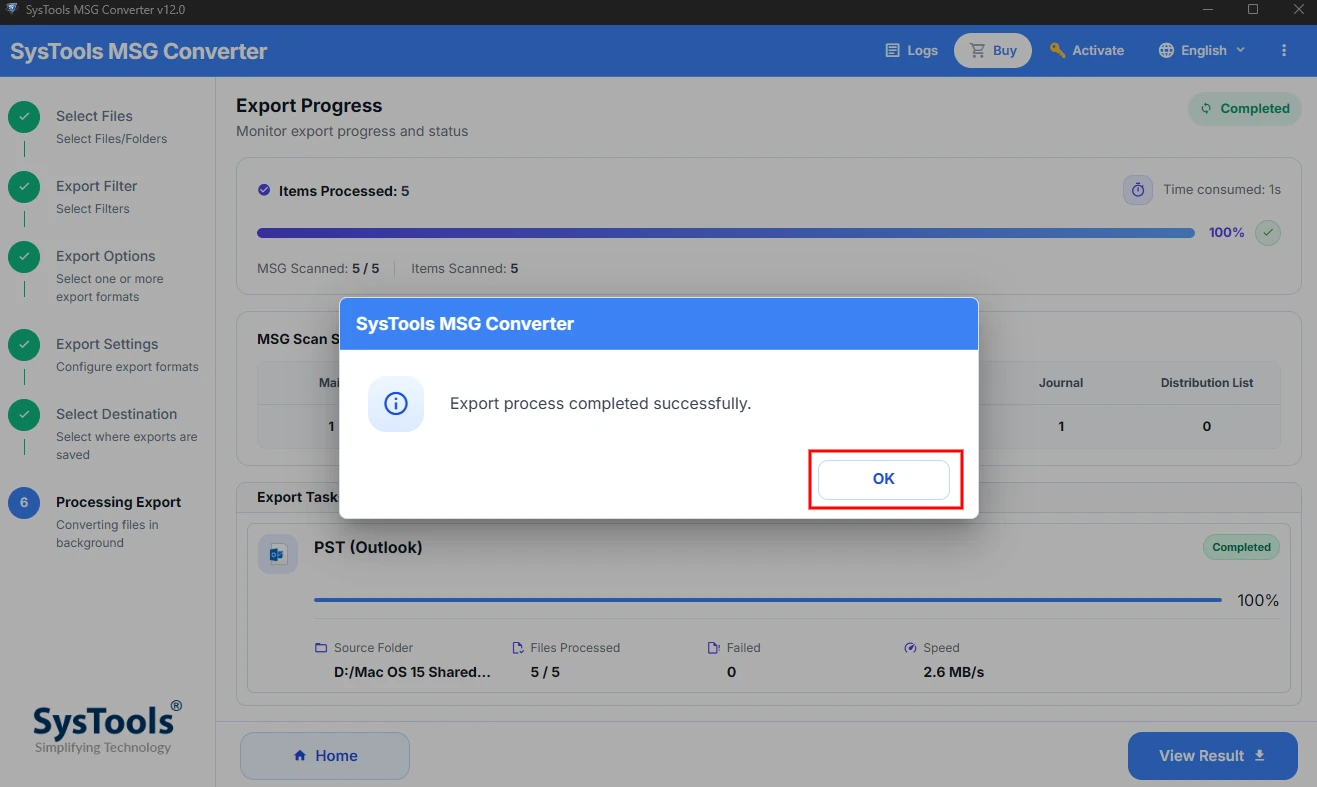
The Export Progress screen shows Items Processed and the MSG Scan Summary for Mail, Contact, Calendar, Task, Note, Journal and Distribution List. Under Export Tasks, check Files Processed, Failed and Speed for the PST (Outlook) task. It shows Completed at 100%.
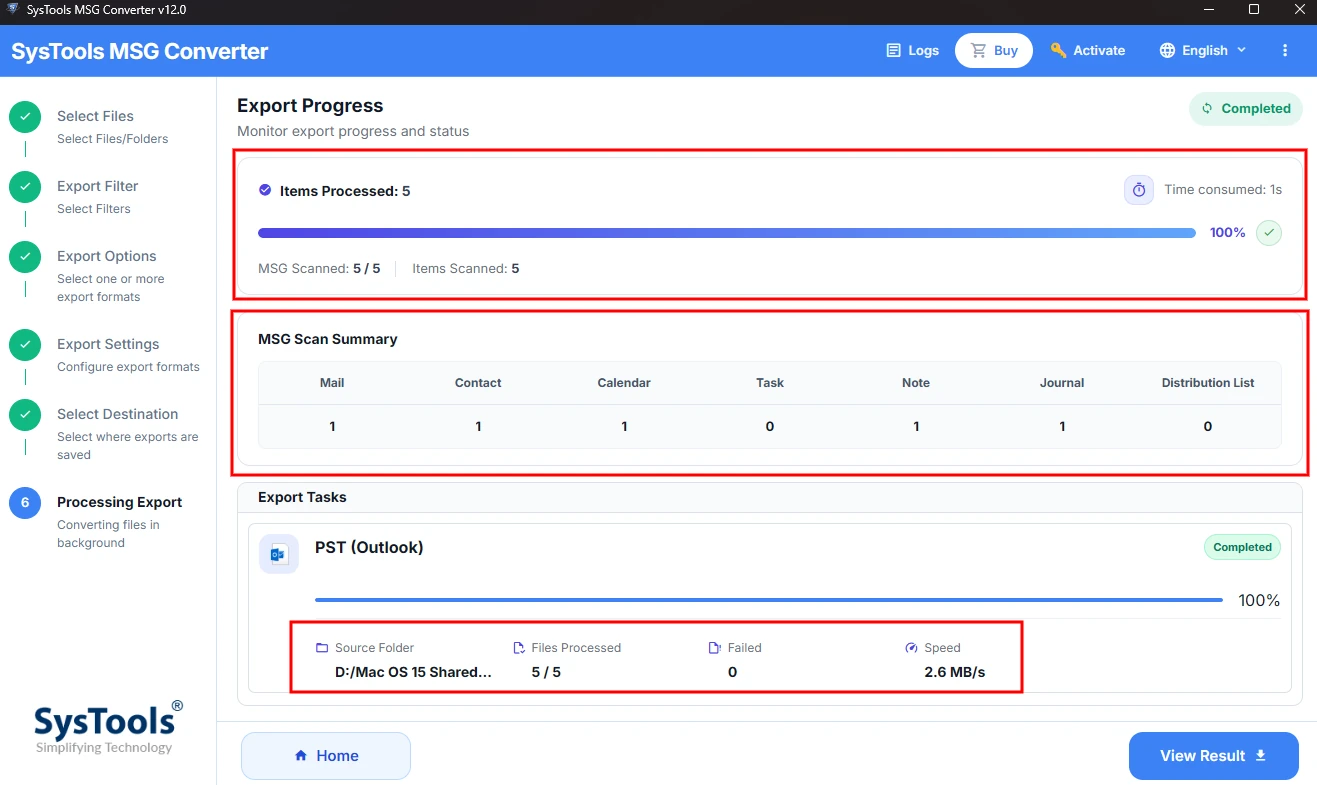
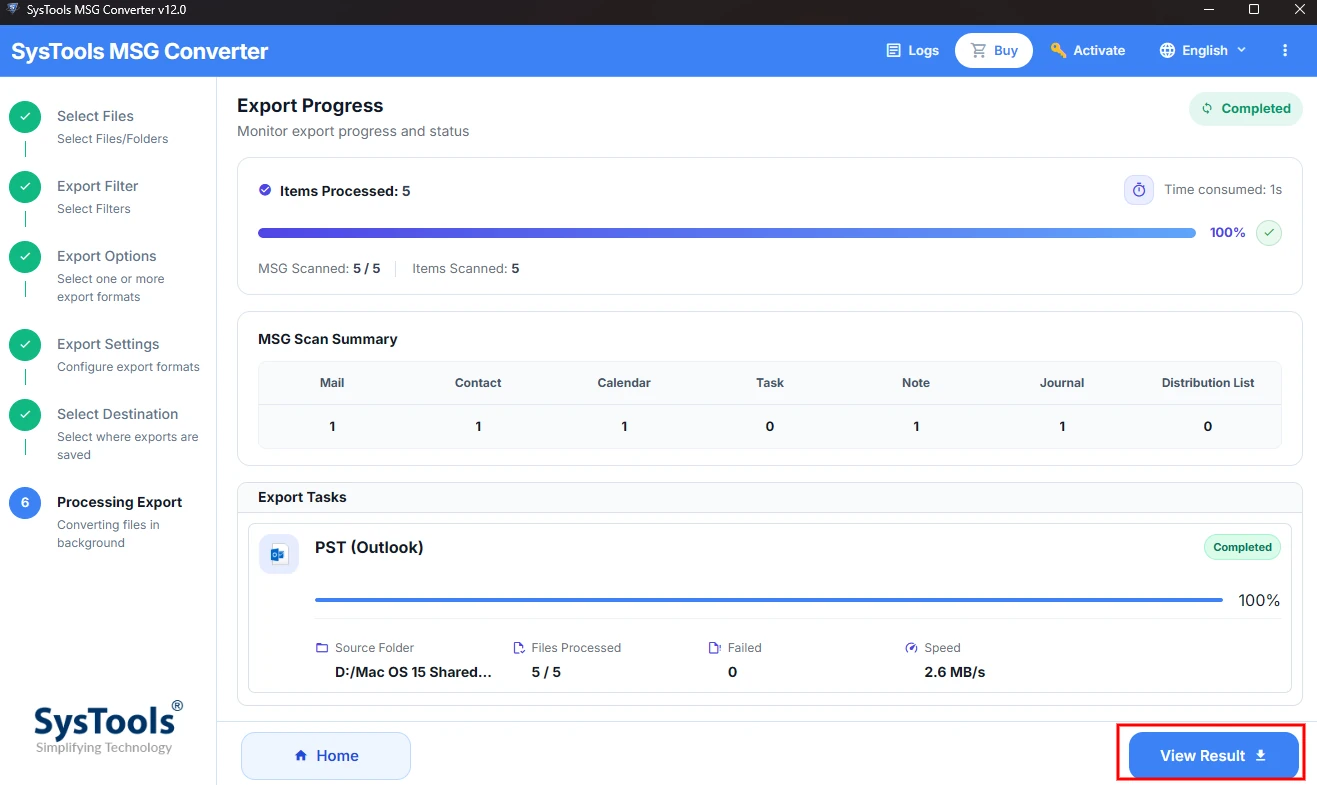
Click View Result to open the output folder.
View the Converted Files
Windows Explorer opens the output folder named SysTools MSG Converter. Open the PST folder inside it.
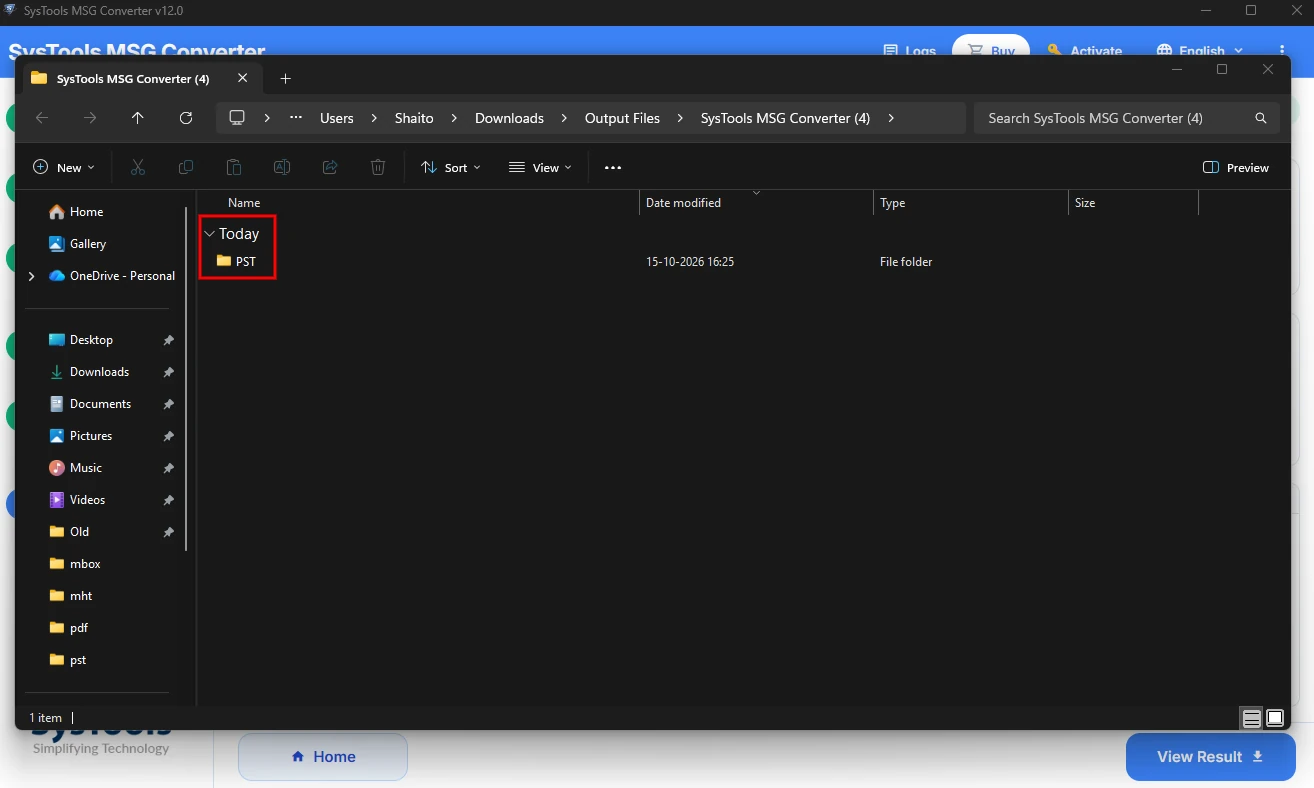
The PST folder holds your PST file and ExportReport.csv.
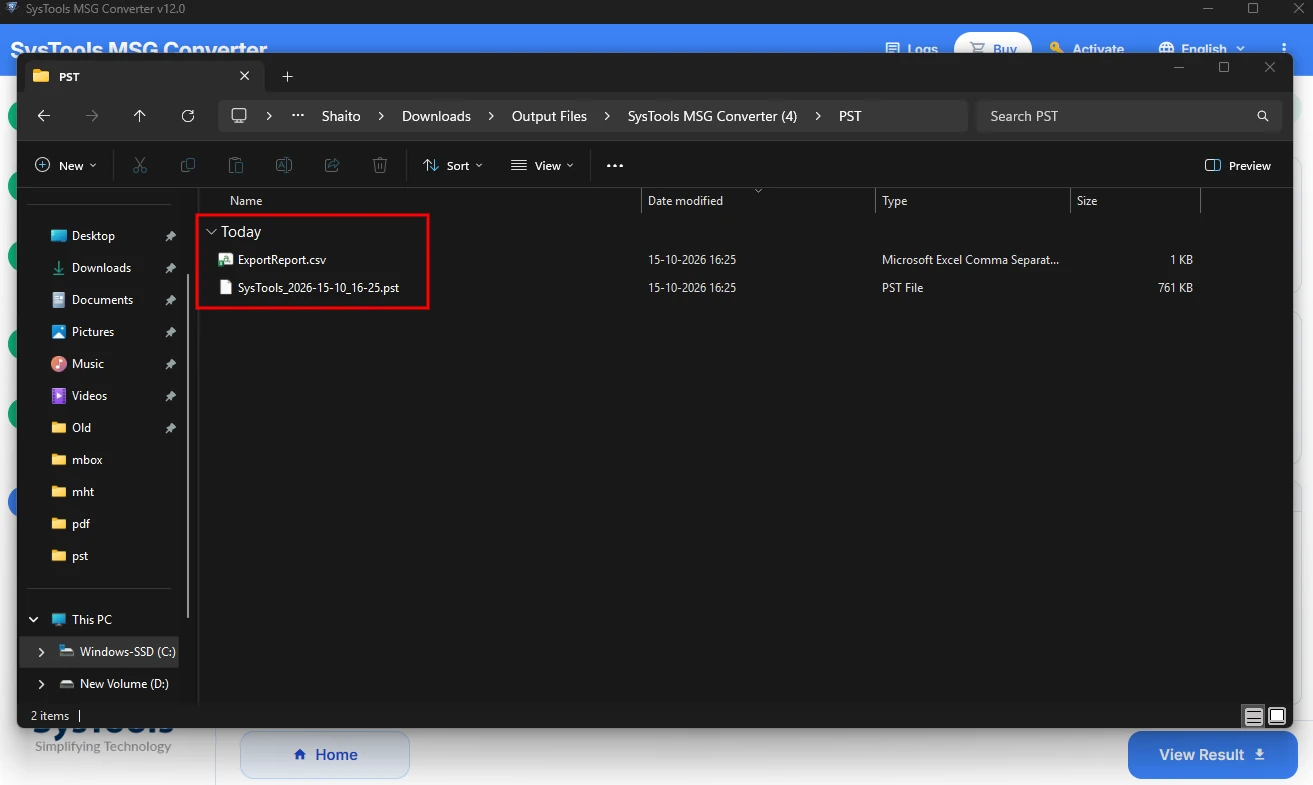
Open ExportReport.csv to see the SourcePath, Destination Path and the count for Email, Calendar, Contact, Task, Note and Journal, plus the Total count and failed count.
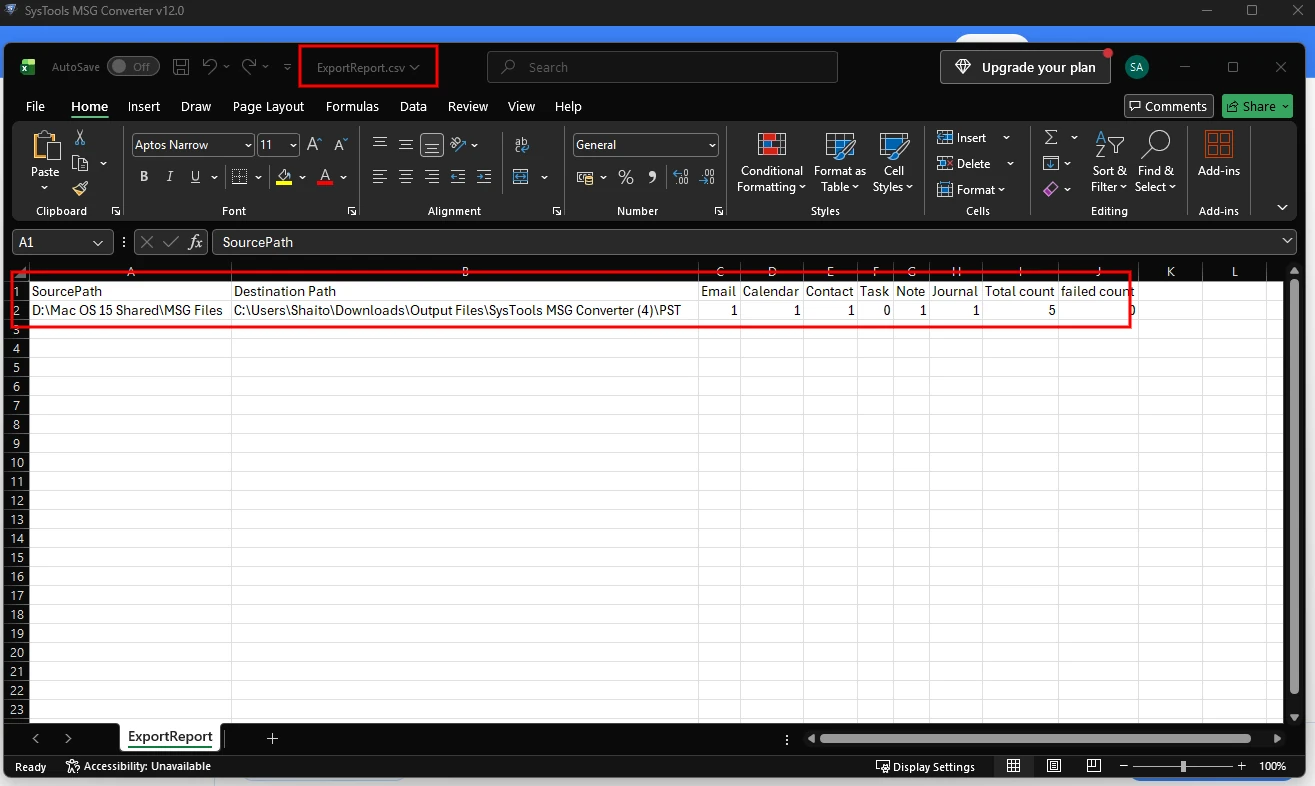
Check Logs and App Details
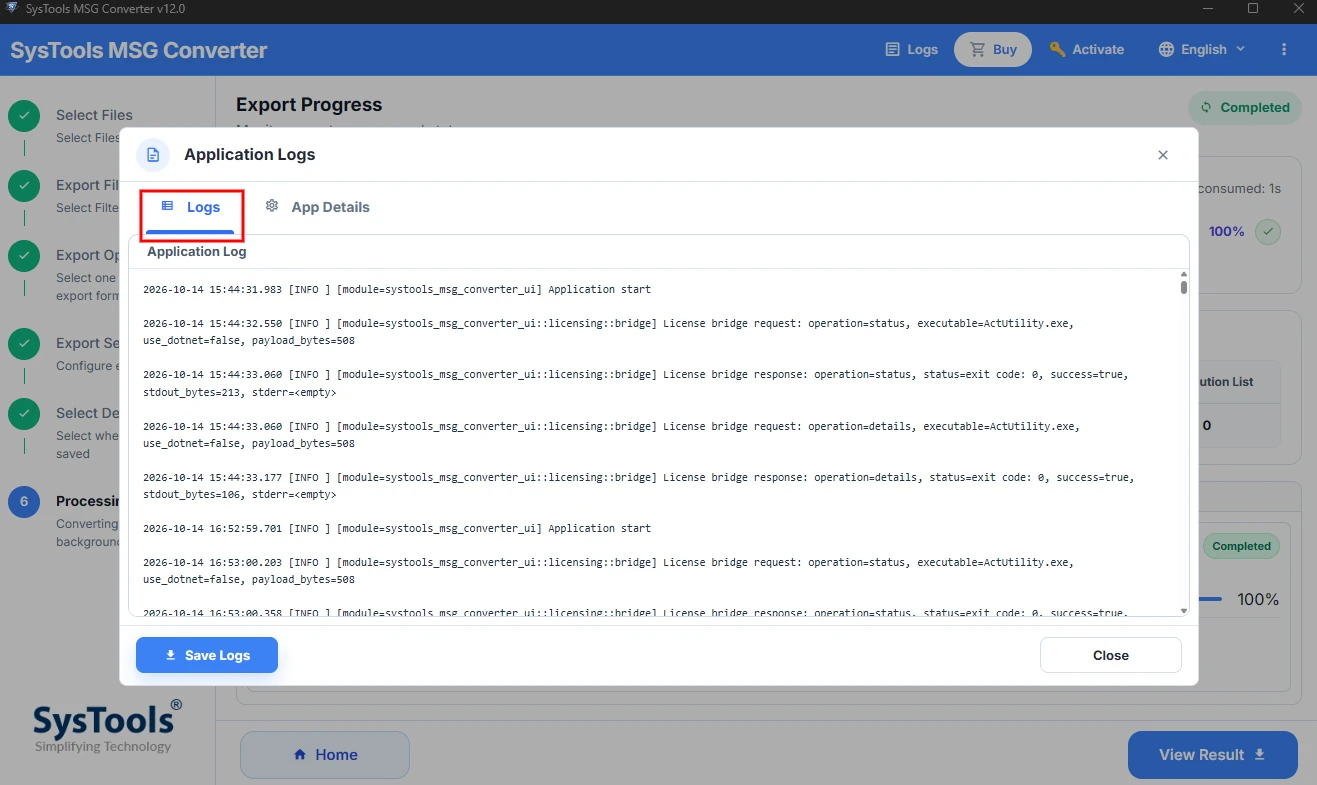
Click Logs in the top bar to open Application Logs. Click Save Logs to keep a copy.
The App Details tab lists application and system details, including version, activation status and operating system.
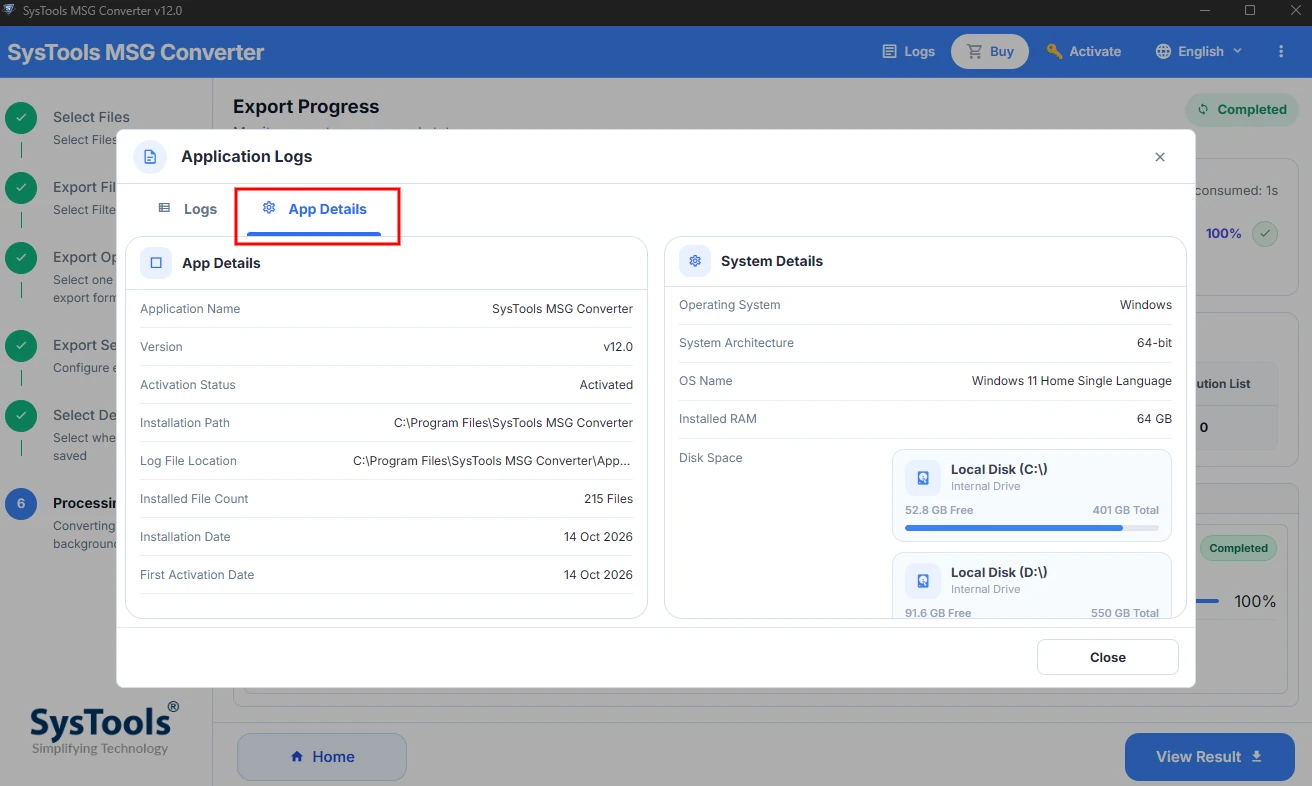
Select the three dot menu in the top bar to open About, Support and Help.
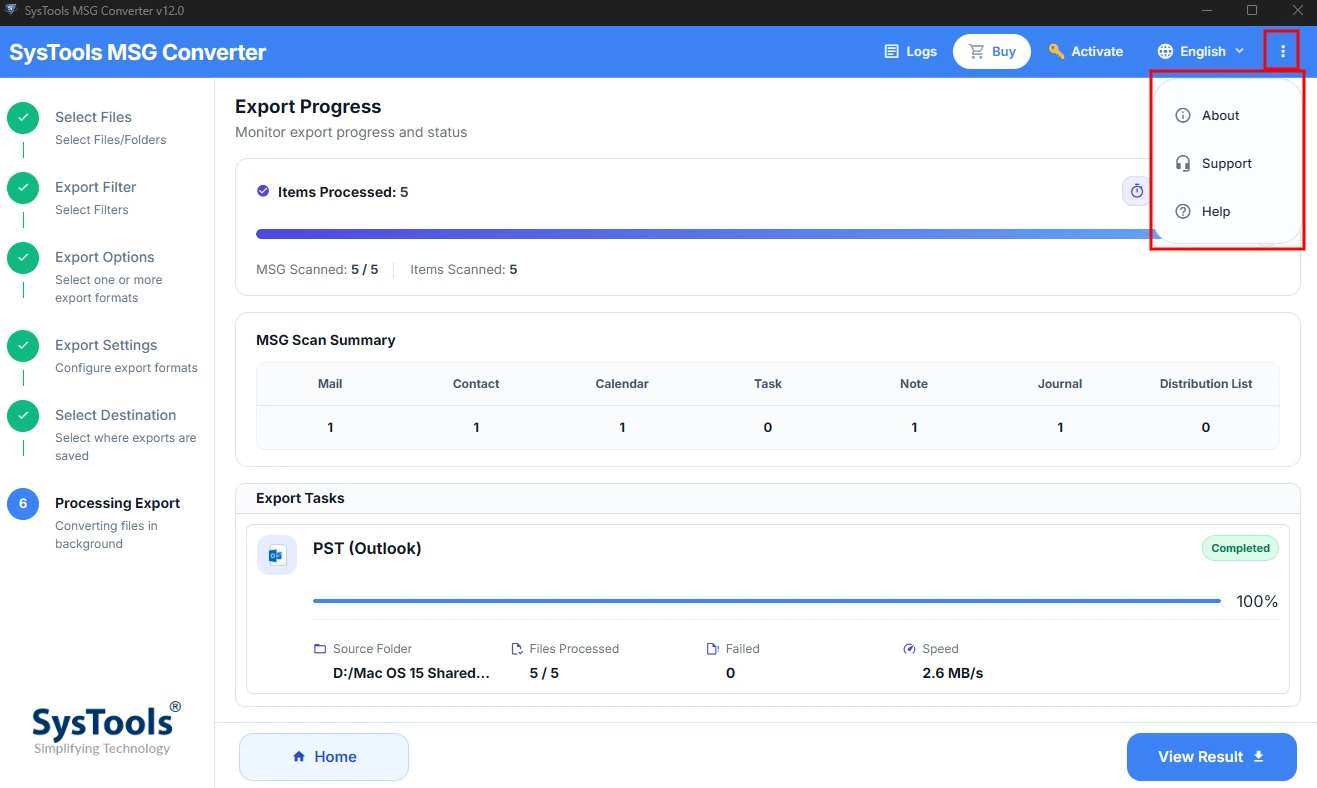
Convert MSG Files to TXT
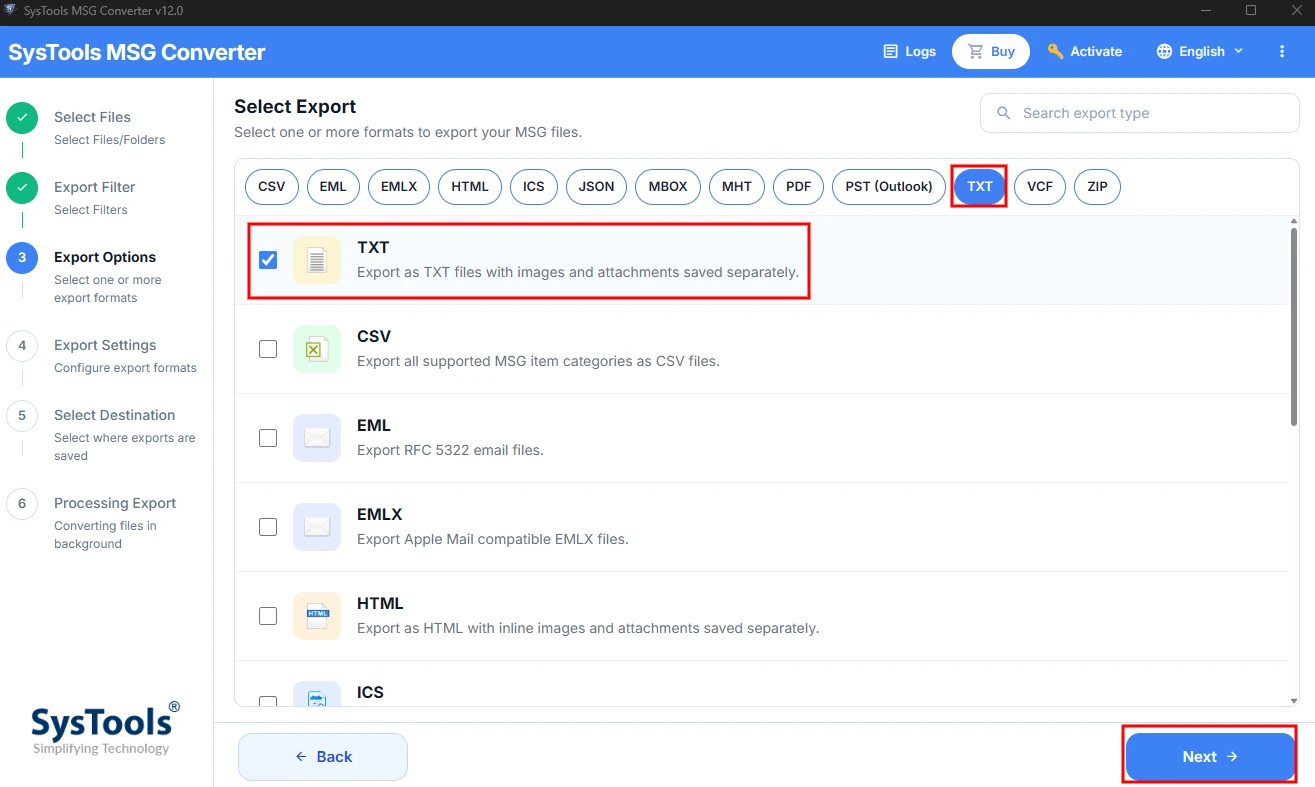
Select TXT as the Export Format
Select TXT in the Export Options list. It exports TXT files with images, while attachments save separately. Click Next.
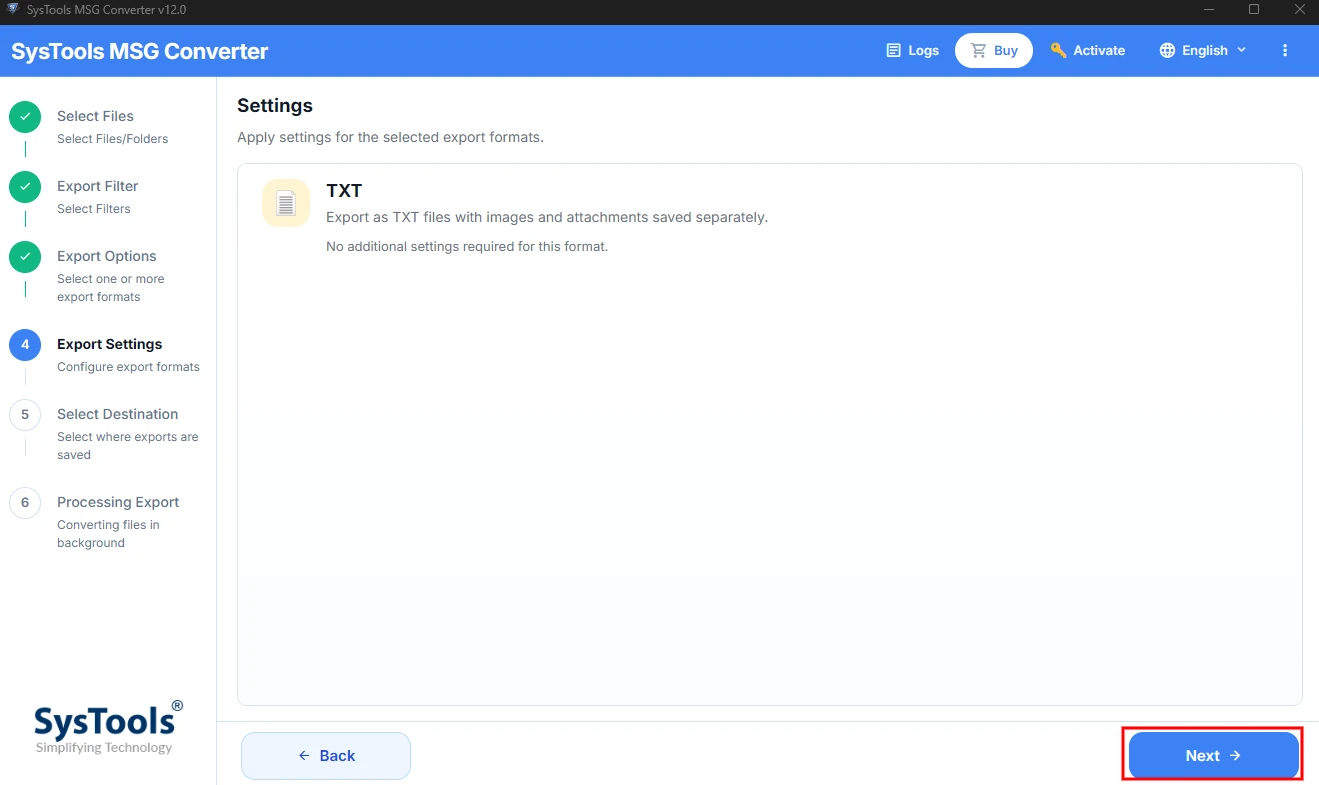
Configure TXT Export Settings
TXT needs no extra settings. The screen shows No additional settings required for this format. Click Next.
Select the Destination
Click Browse next to Select Destination Path to choose where converted files are saved. Make sure the location has enough storage space.
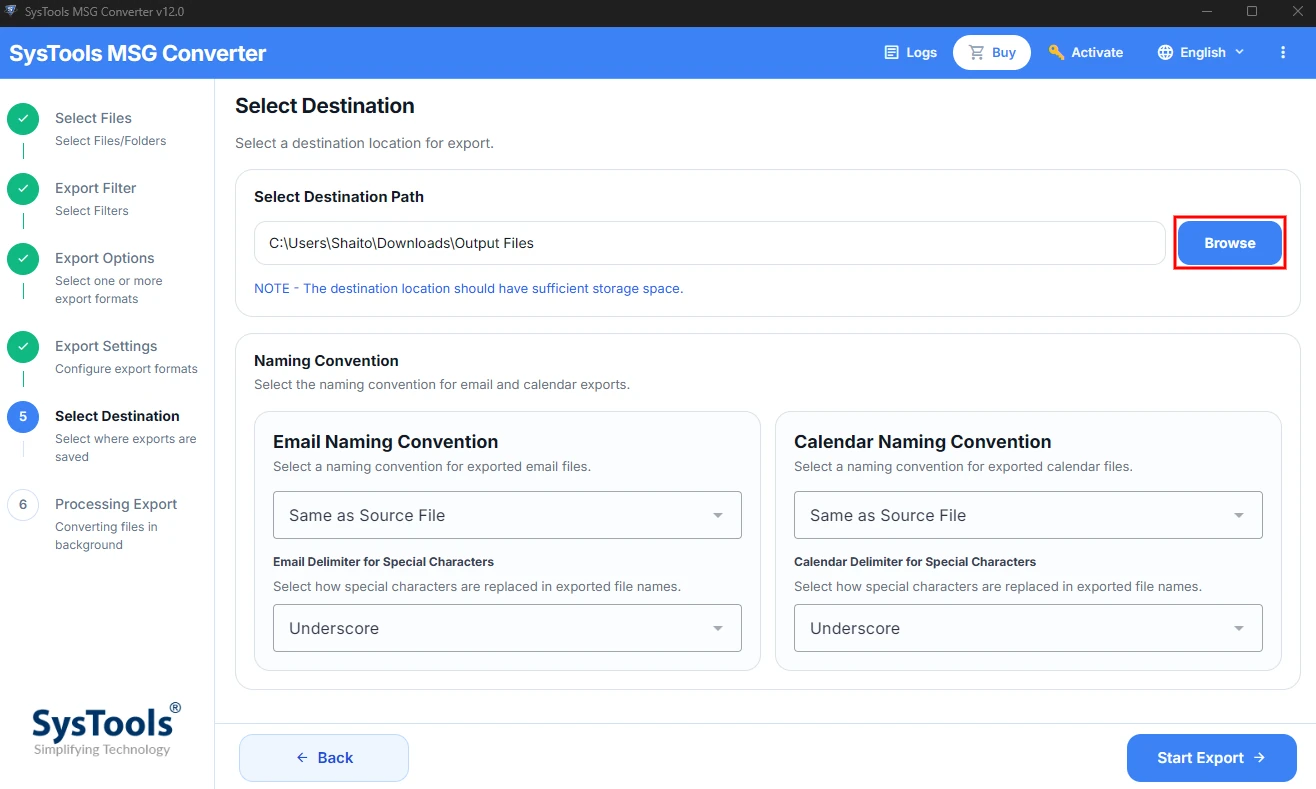
Select a folder in the dialog and click Select Folder.
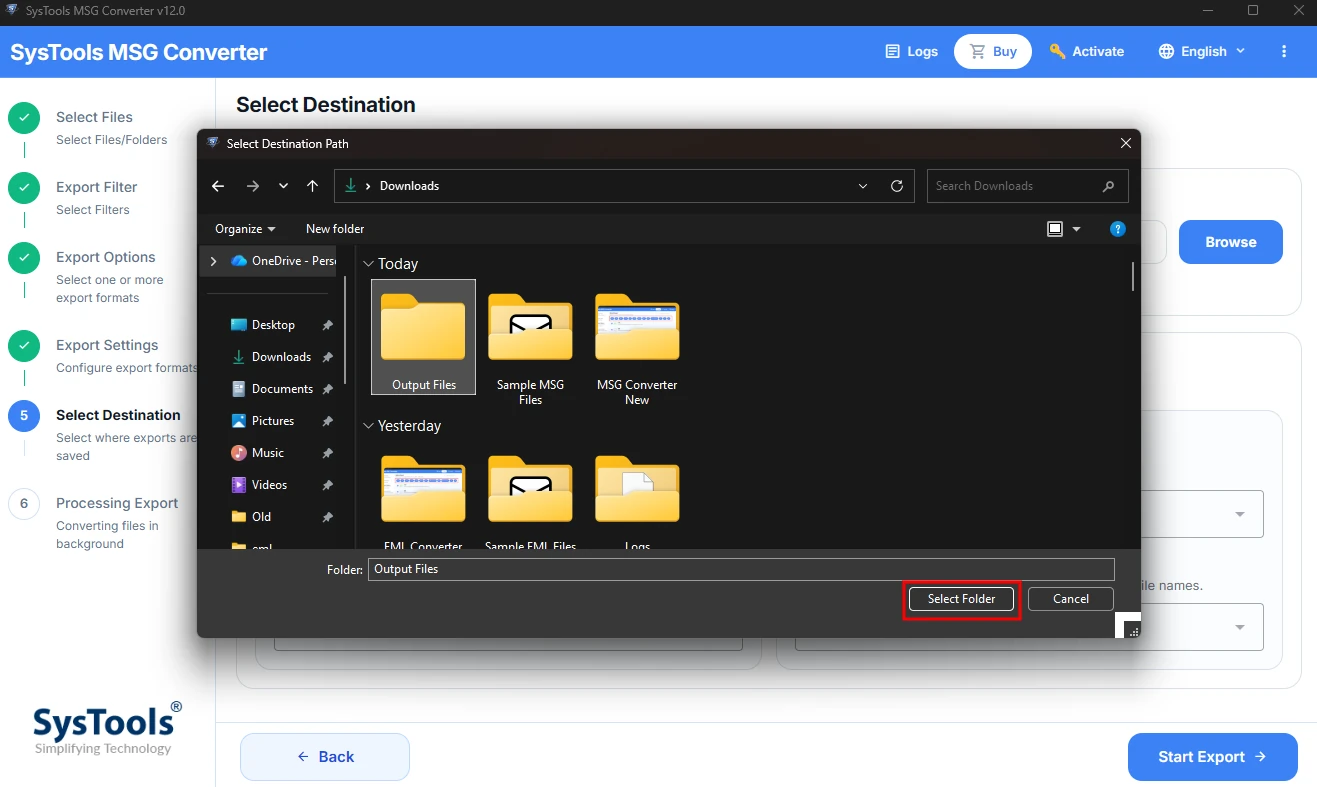
Open Email Naming Convention to name exported email files. Choose Same as Source File or a pattern built from Subject, From, To, CC and Date.
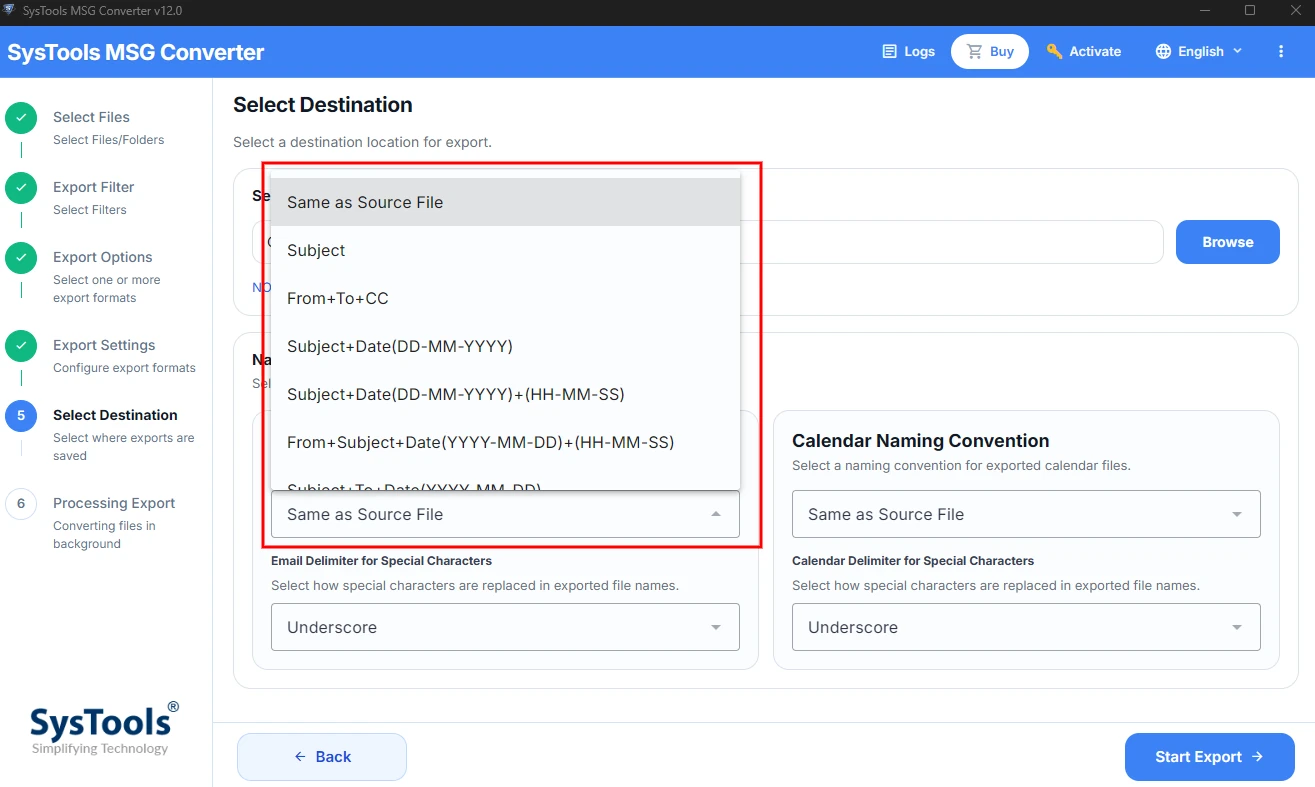
Open Email Delimiter for Special Characters to set what replaces special characters in file names. Select Underscore, Space or Hyphen.
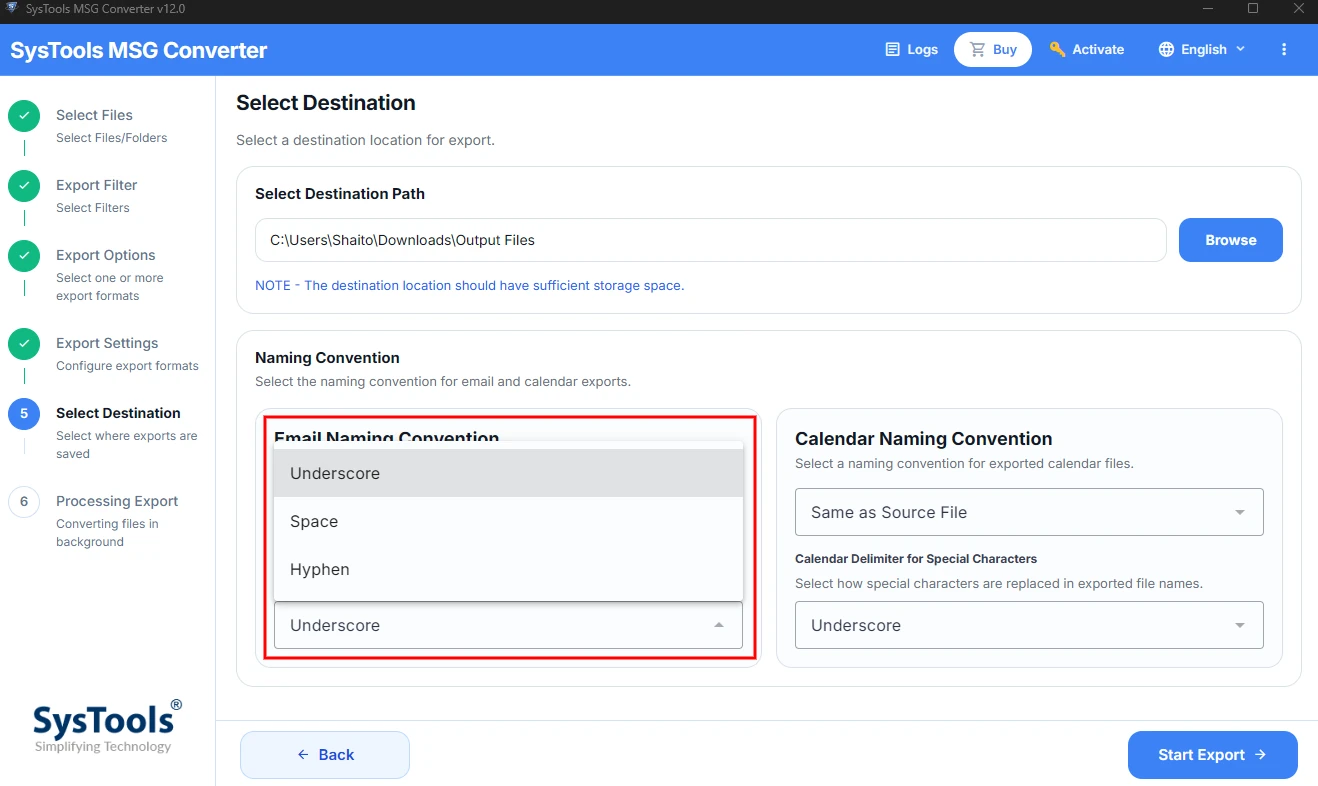
Calendar Naming Convention and Calendar Delimiter for Special Characters work the same way for calendar files.
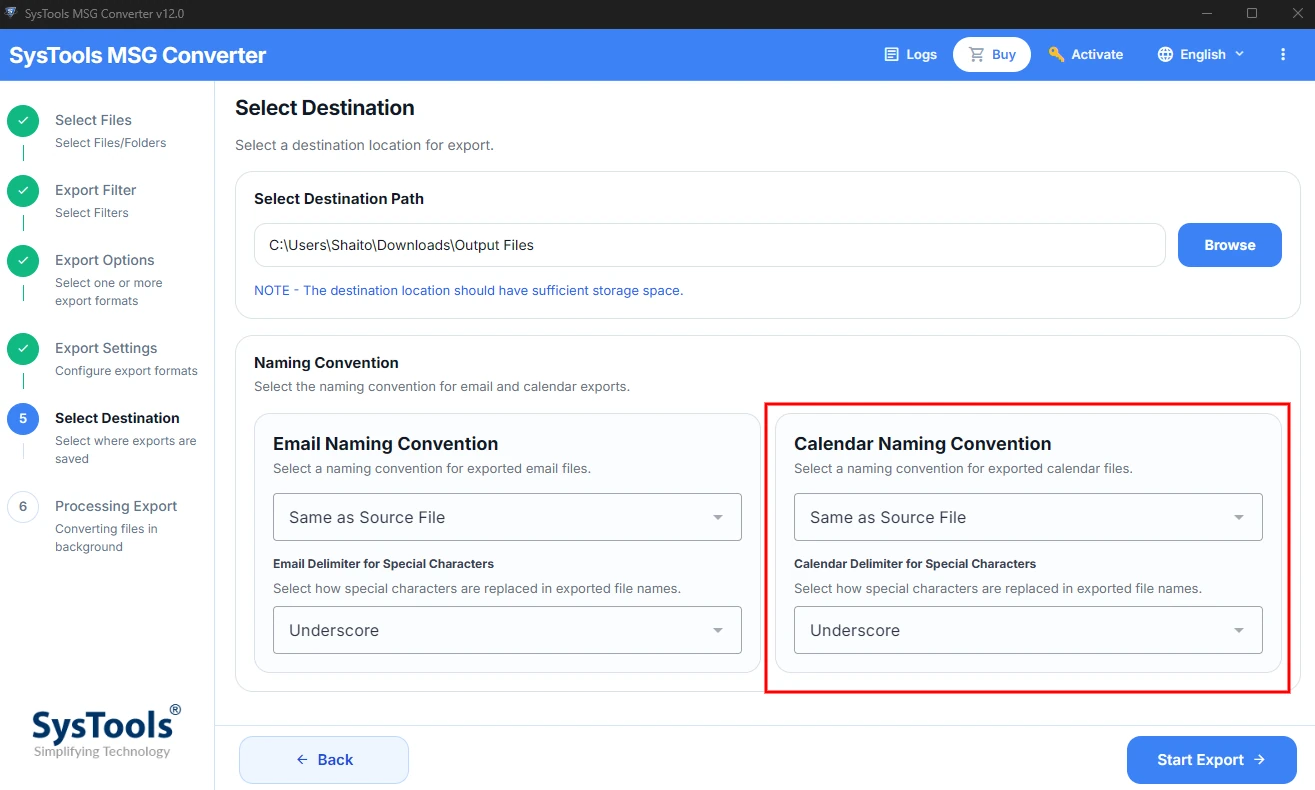
Start the Export and Track Progress
Click Start Export once the destination path is set.
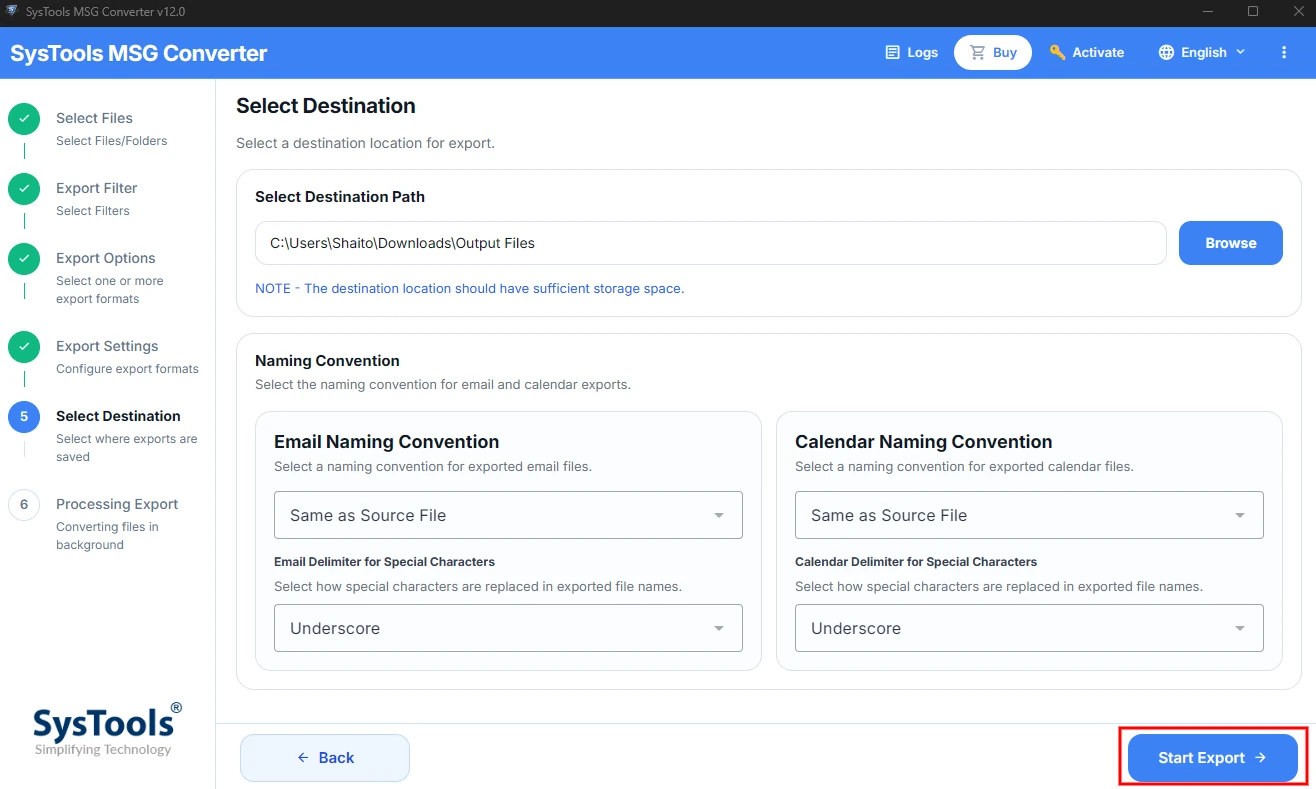
A message confirms Export process completed successfully. Click OK.
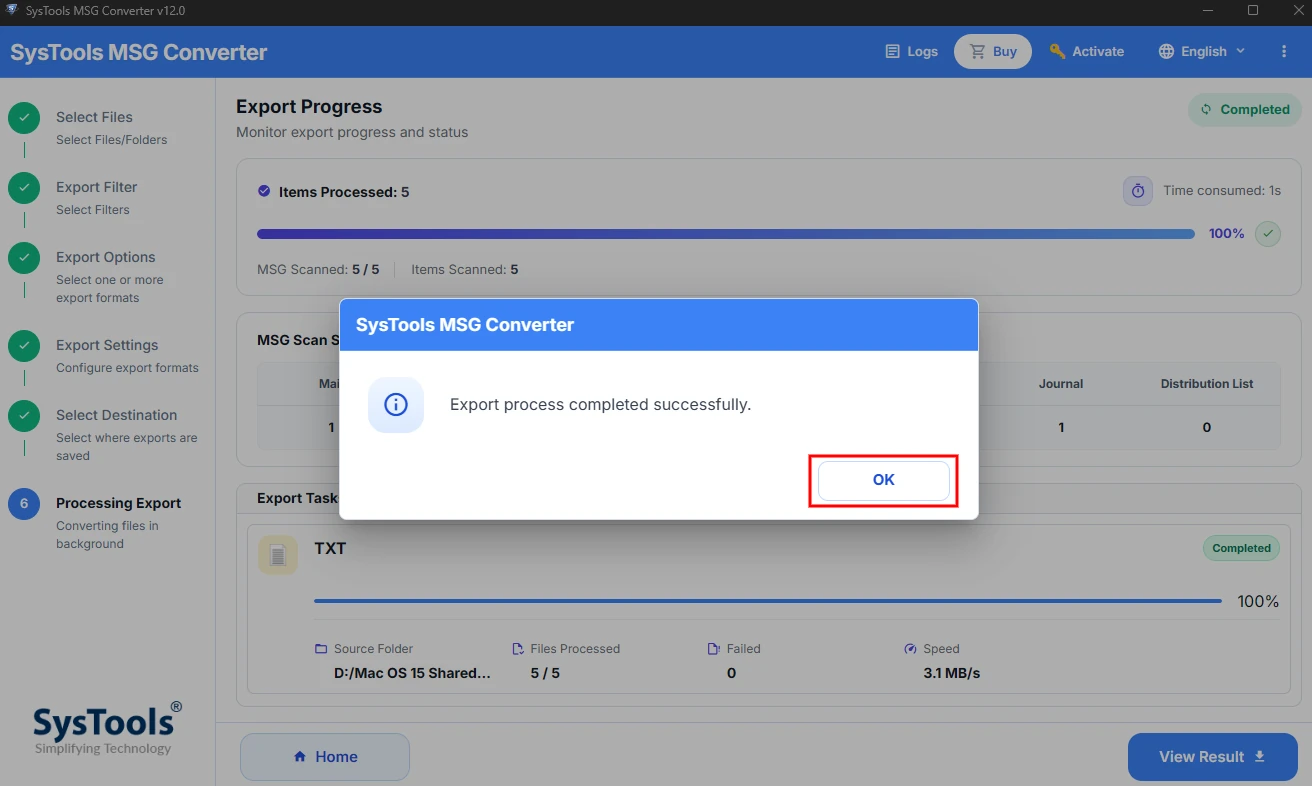
The Export Progress screen shows Items Processed and the MSG Scan Summary for Mail, Contact, Calendar, Task, Note, Journal and Distribution List. Under Export Tasks, check Files Processed, Failed and Speed for the TXT task. It shows Completed at 100%.
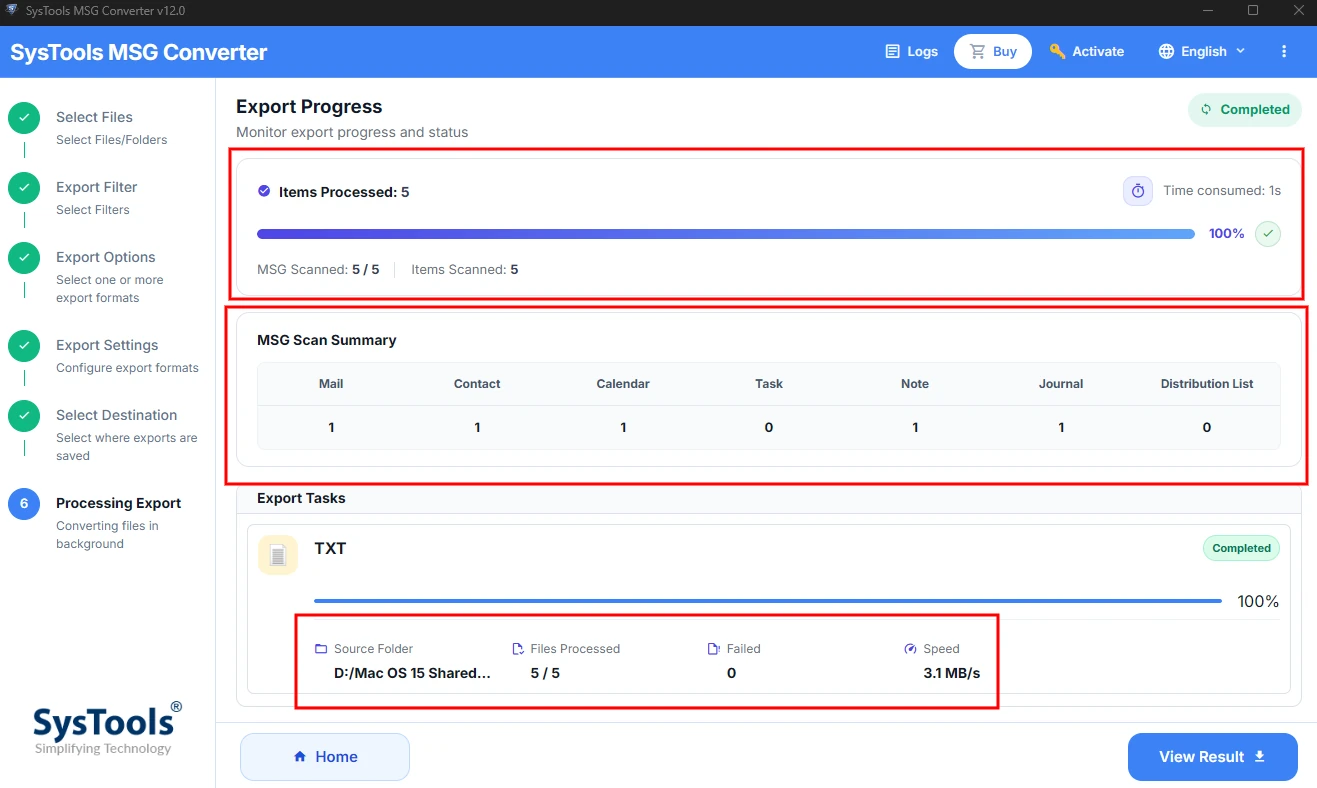
Click View Result to open the output folder.
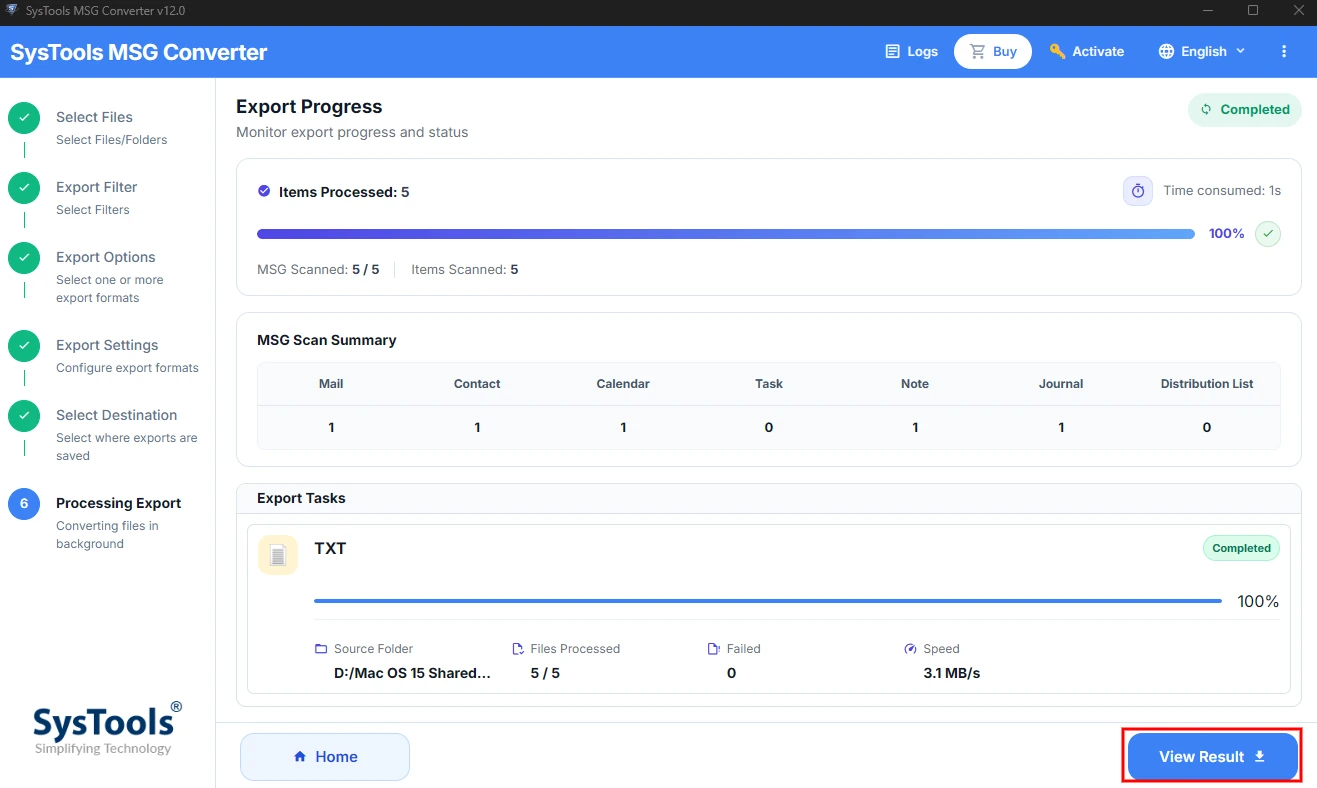
View the Converted Files
Windows Explorer opens the output folder named SysTools MSG Converter. Open the TXT folder inside it.
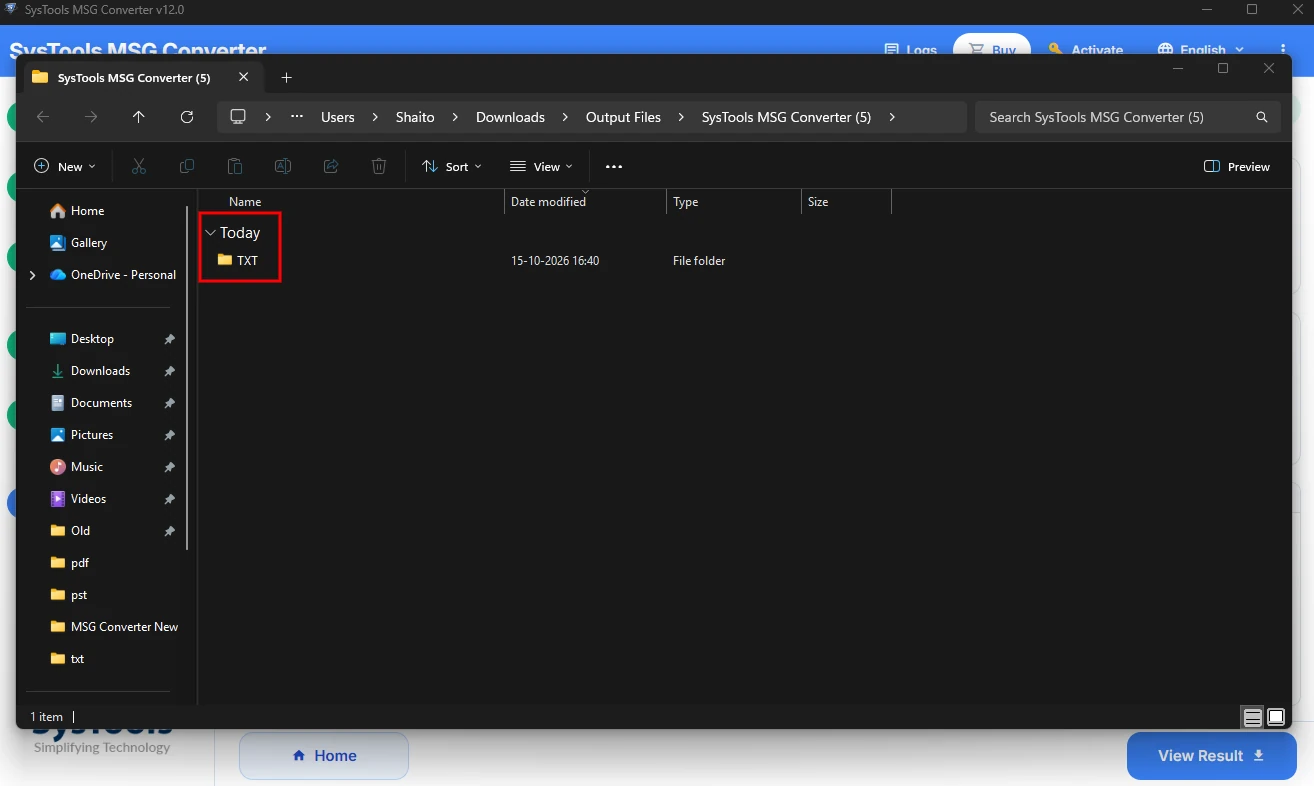
The TXT folder holds an MSG Files folder and ExportReport.csv.
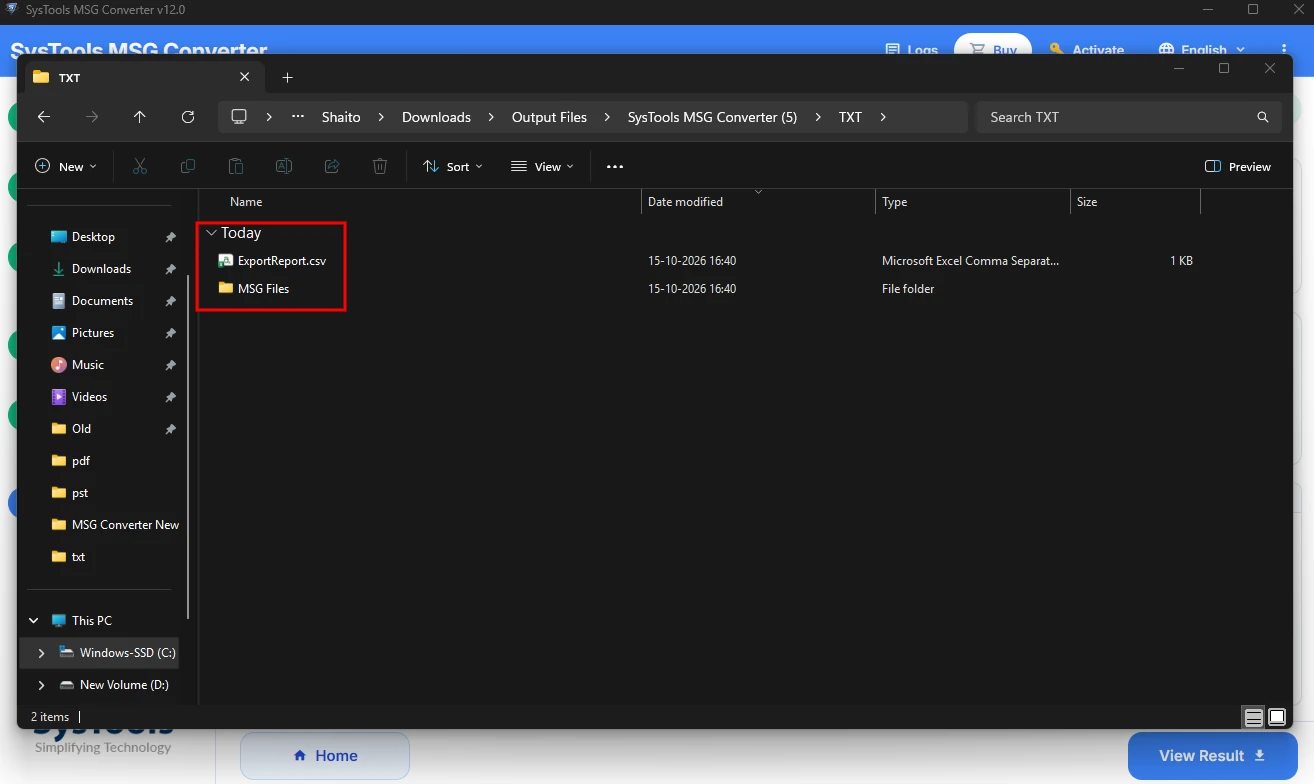
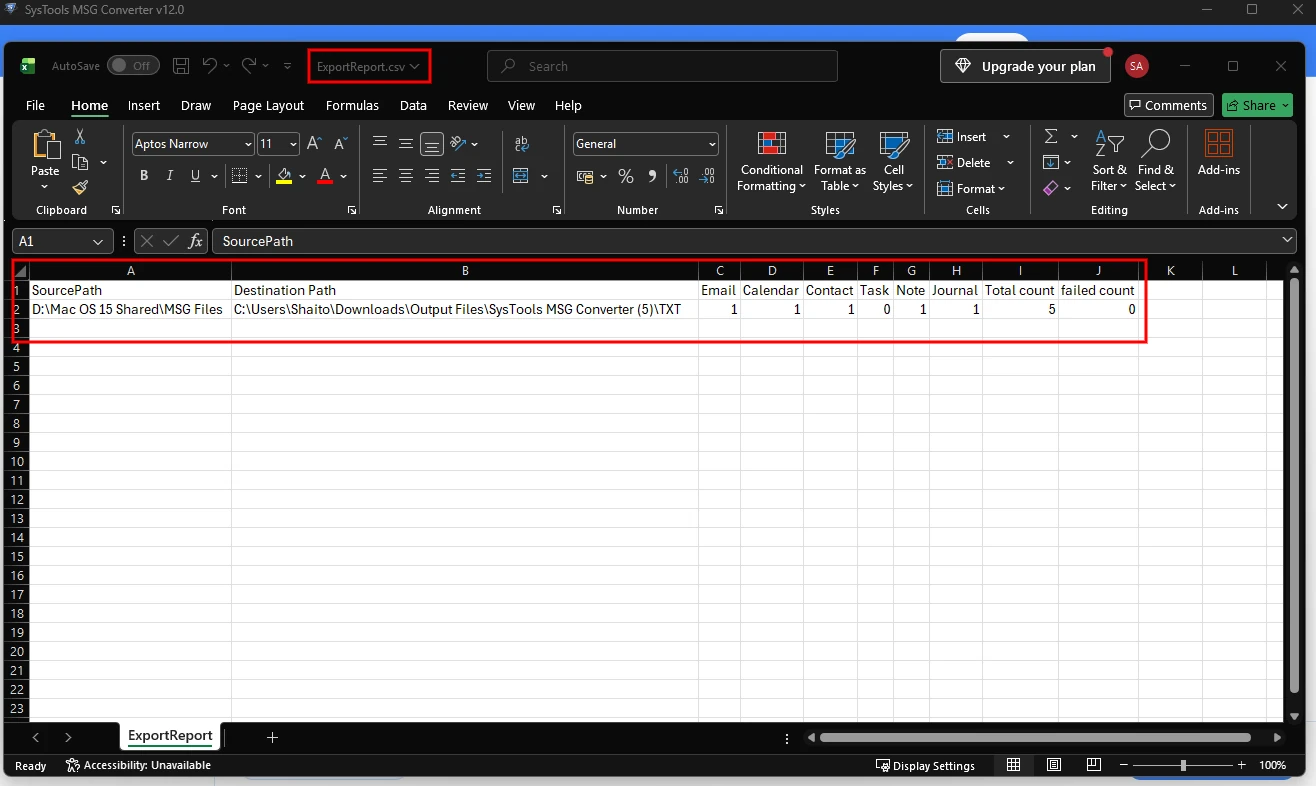
Open ExportReport.csv to see the SourcePath, Destination Path and the count for Email, Calendar, Contact, Task, Note and Journal, plus the Total count and failed count.
Check Logs and App Details
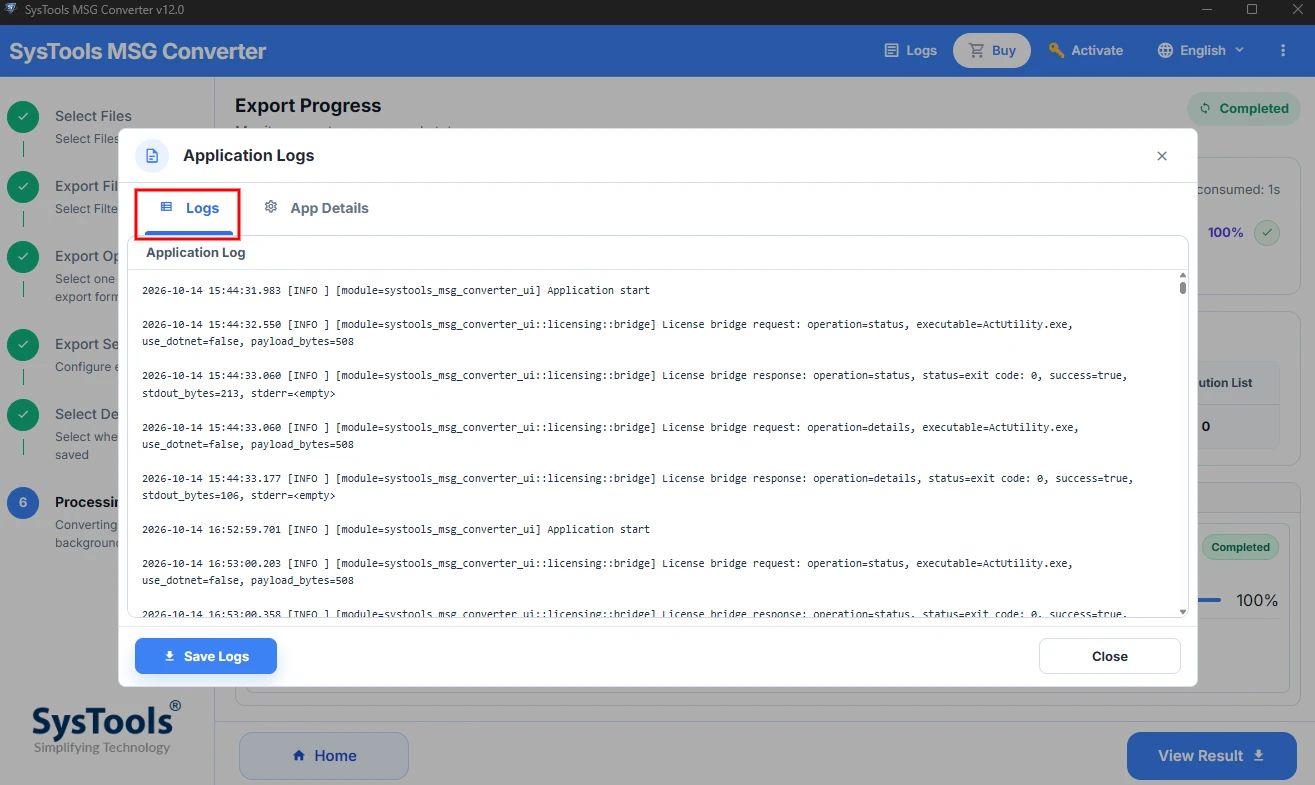
Click Logs in the top bar to open Application Logs. Click Save Logs to keep a copy.
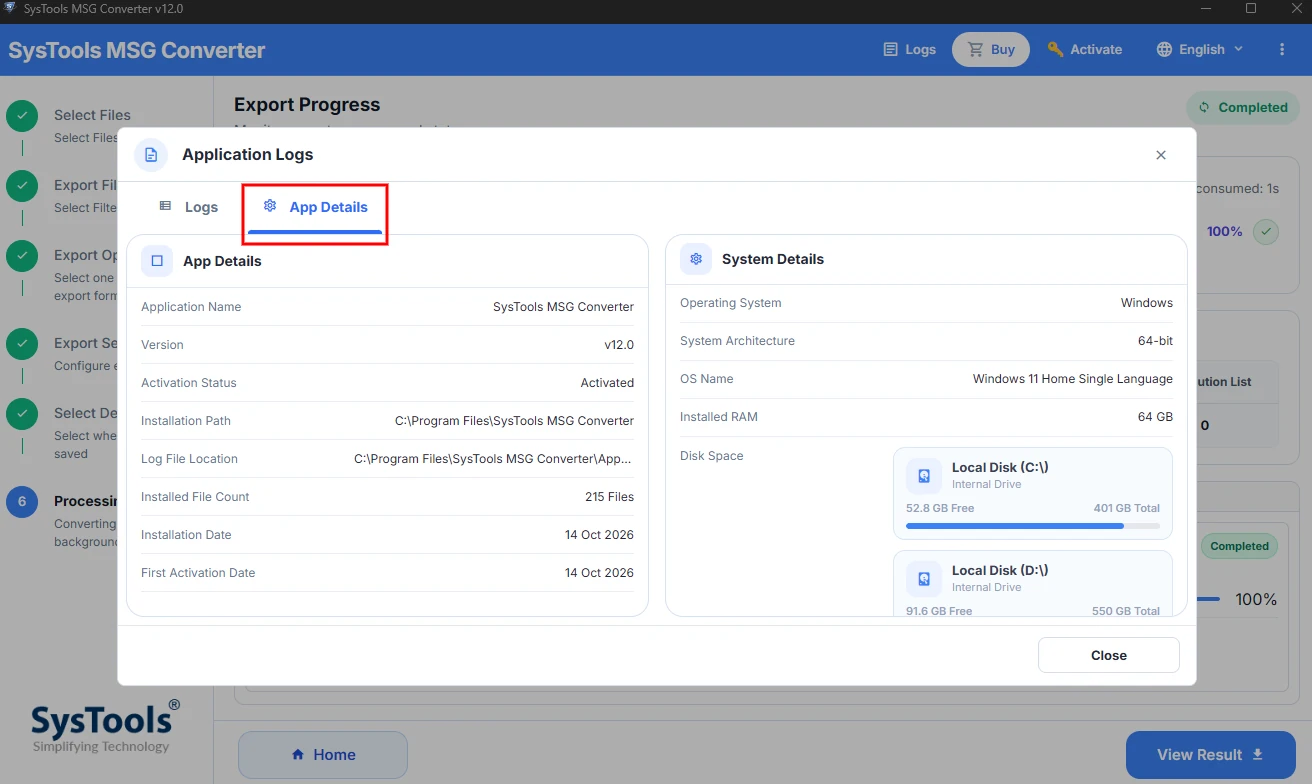
The App Details tab lists application and system details, including version, activation status and operating system.
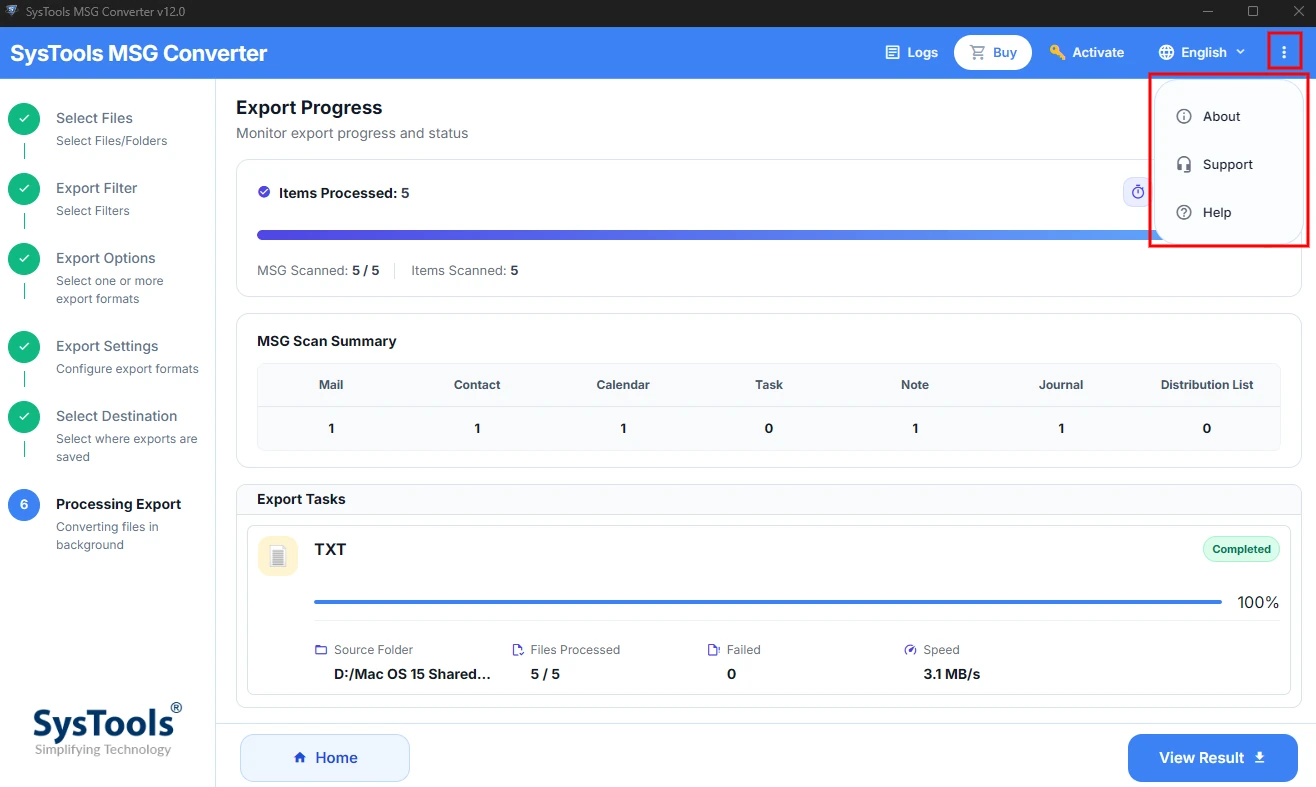
Select the three dot menu in the top bar to open About, Support and Help.
Convert MSG Files to VCF
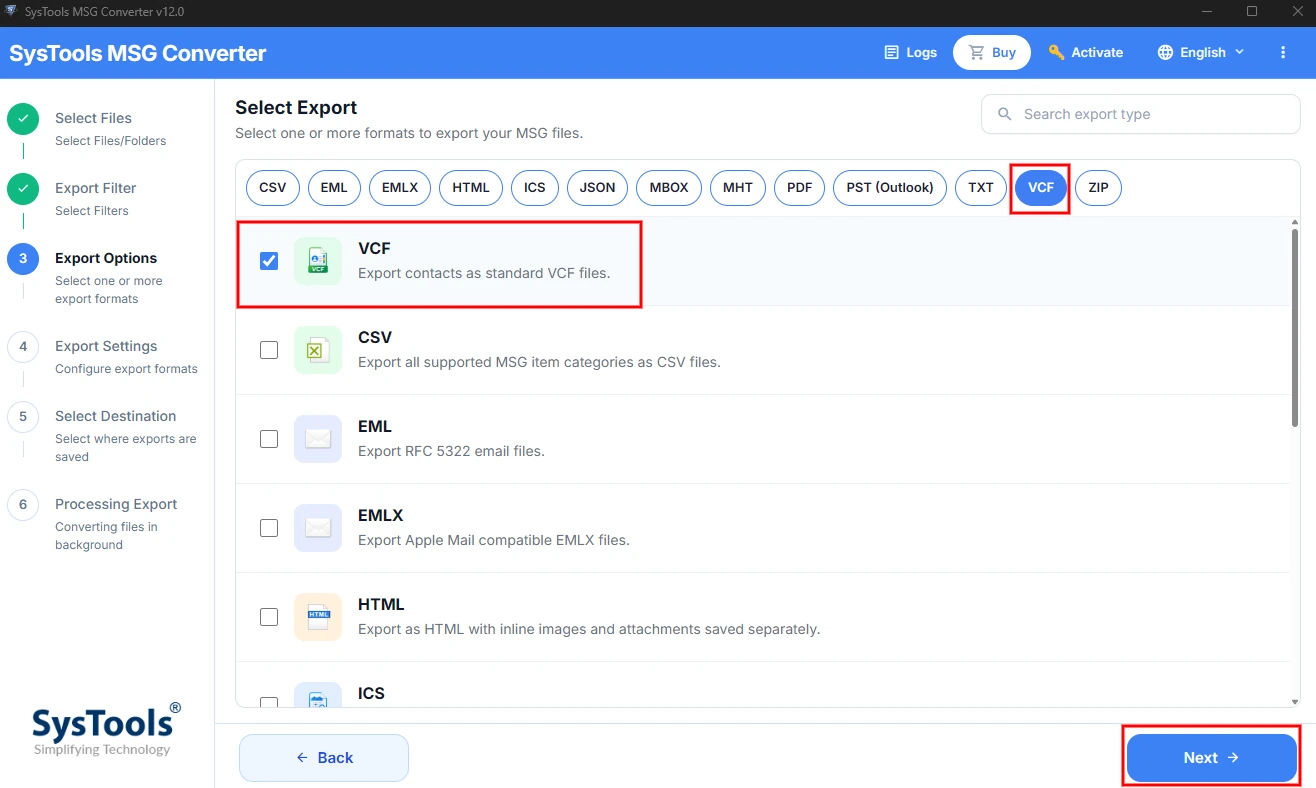
Select VCF as the Export Format
Select VCF in the Export Options list. It exports contacts as standard VCF files. Click Next.
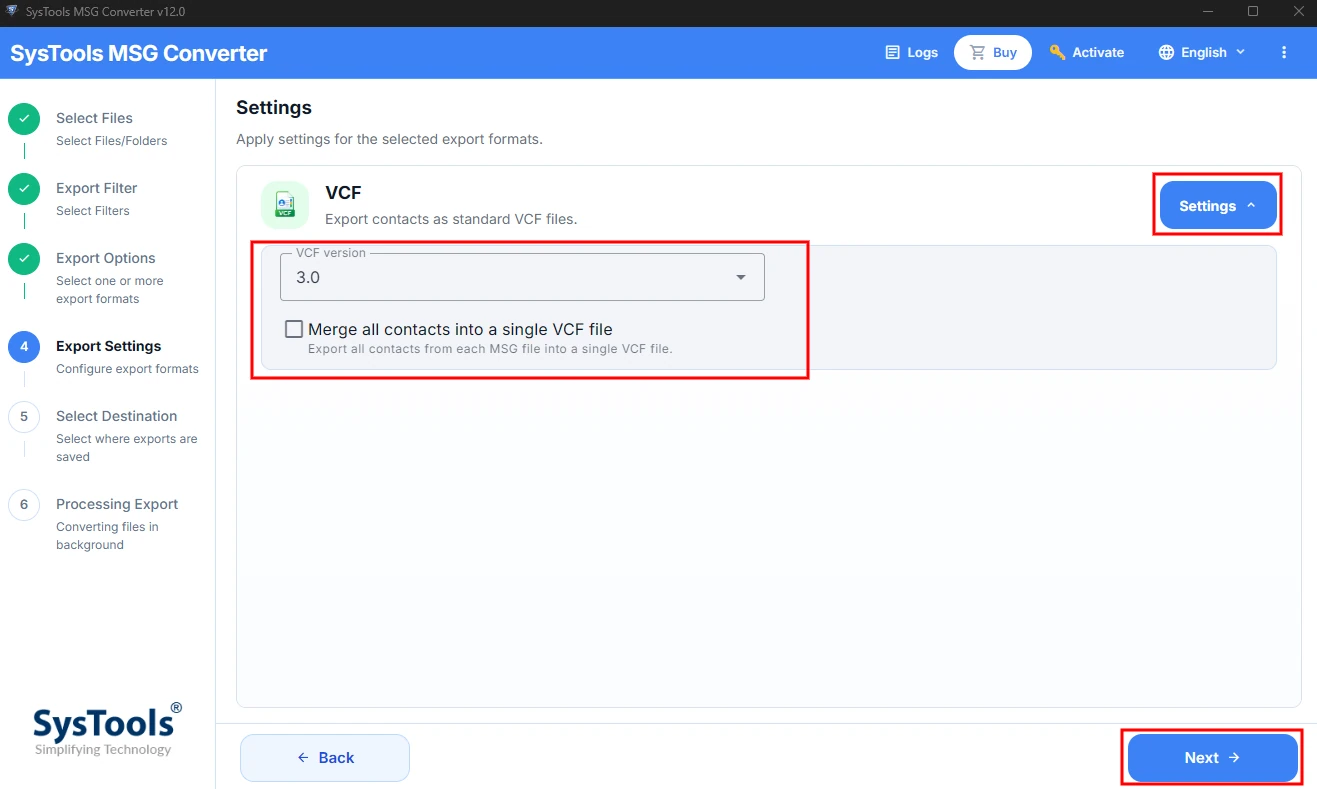
Configure VCF Export Settings
Click Settings to open the VCF options. Choose a VCF version from the list. The default is 3.0. Merge all contacts into a single VCF file exports all contacts to one VCF file. Click Next.
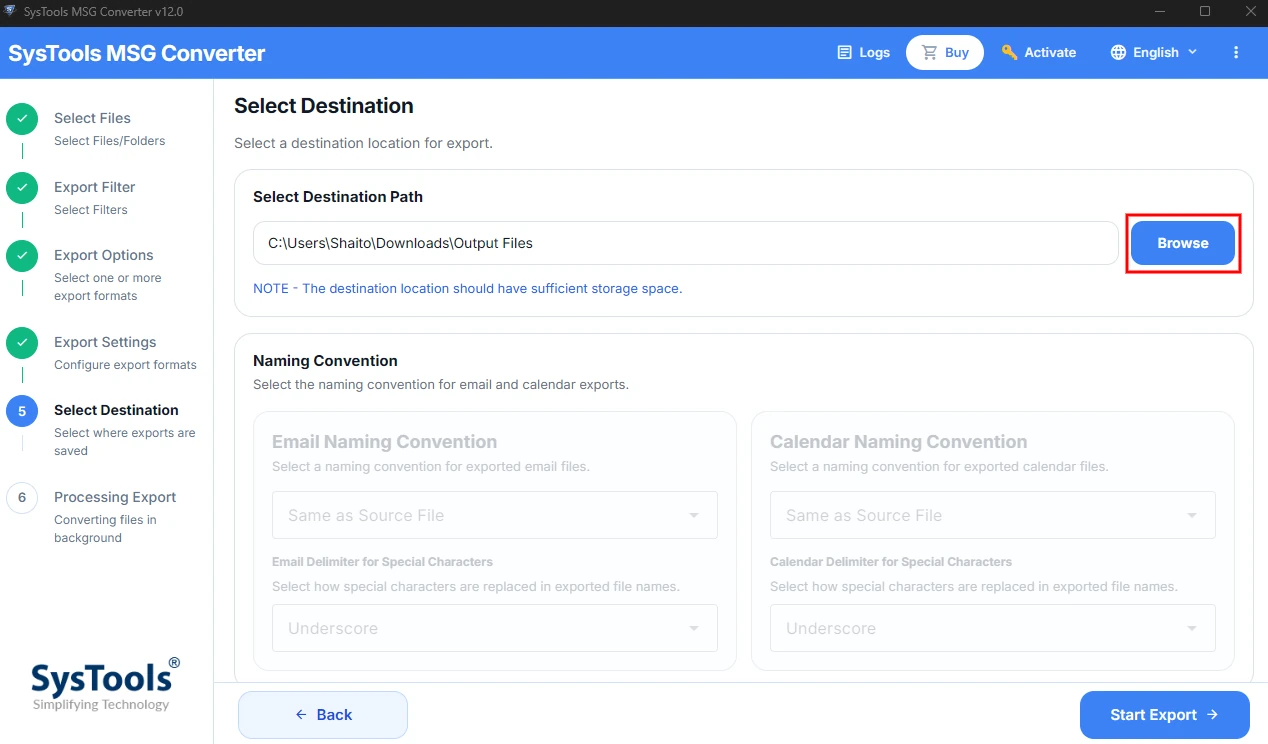
Select the Destination
Click Browse next to Select Destination Path to choose where converted files are saved. Make sure the location has enough storage space.
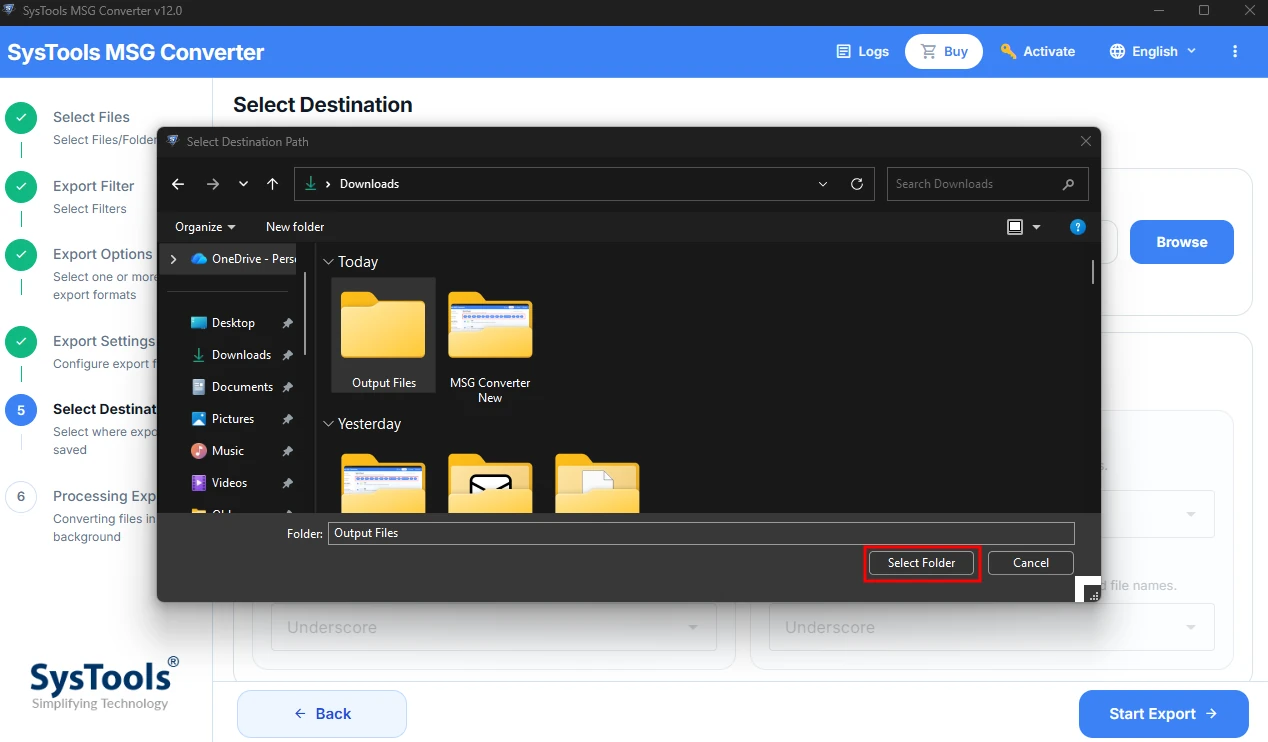
Select a folder in the dialog and click Select Folder. The naming options stay greyed out for VCF.
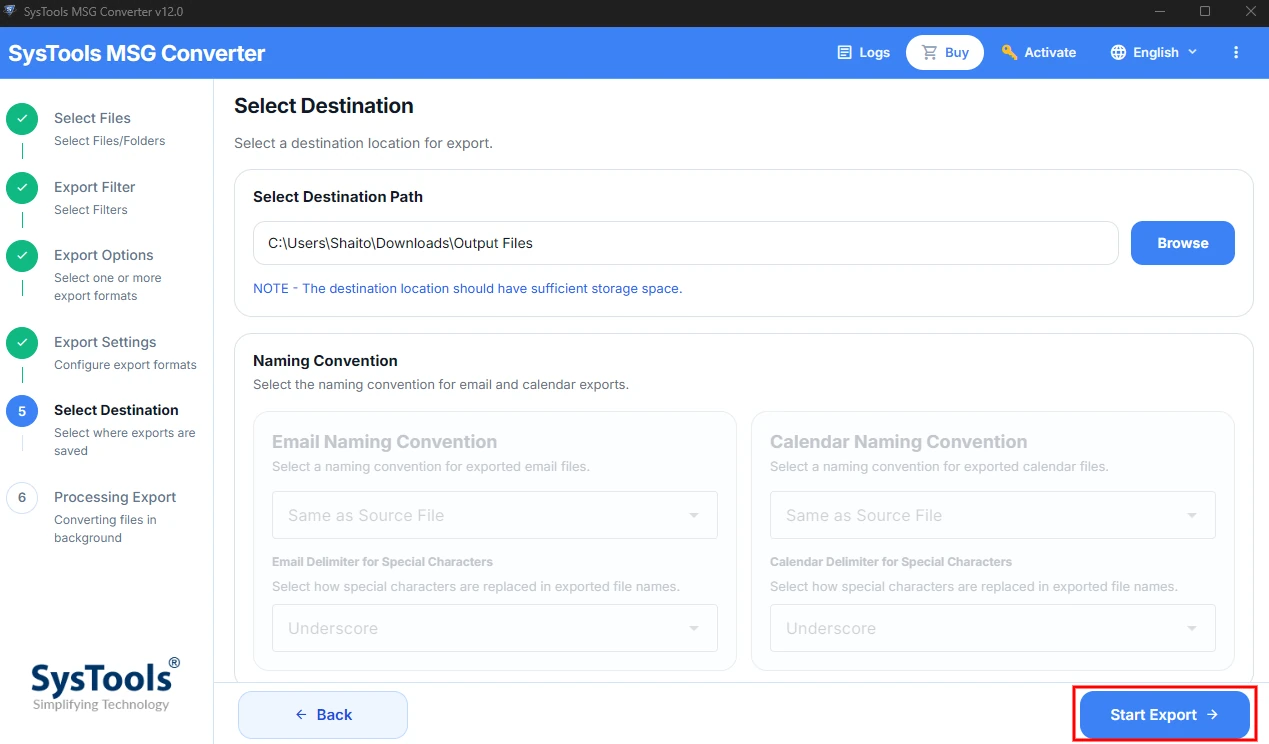
Start the Export and Track Progress
Click Start Export once the destination path is set.
A message confirms Export process completed successfully. Click OK.
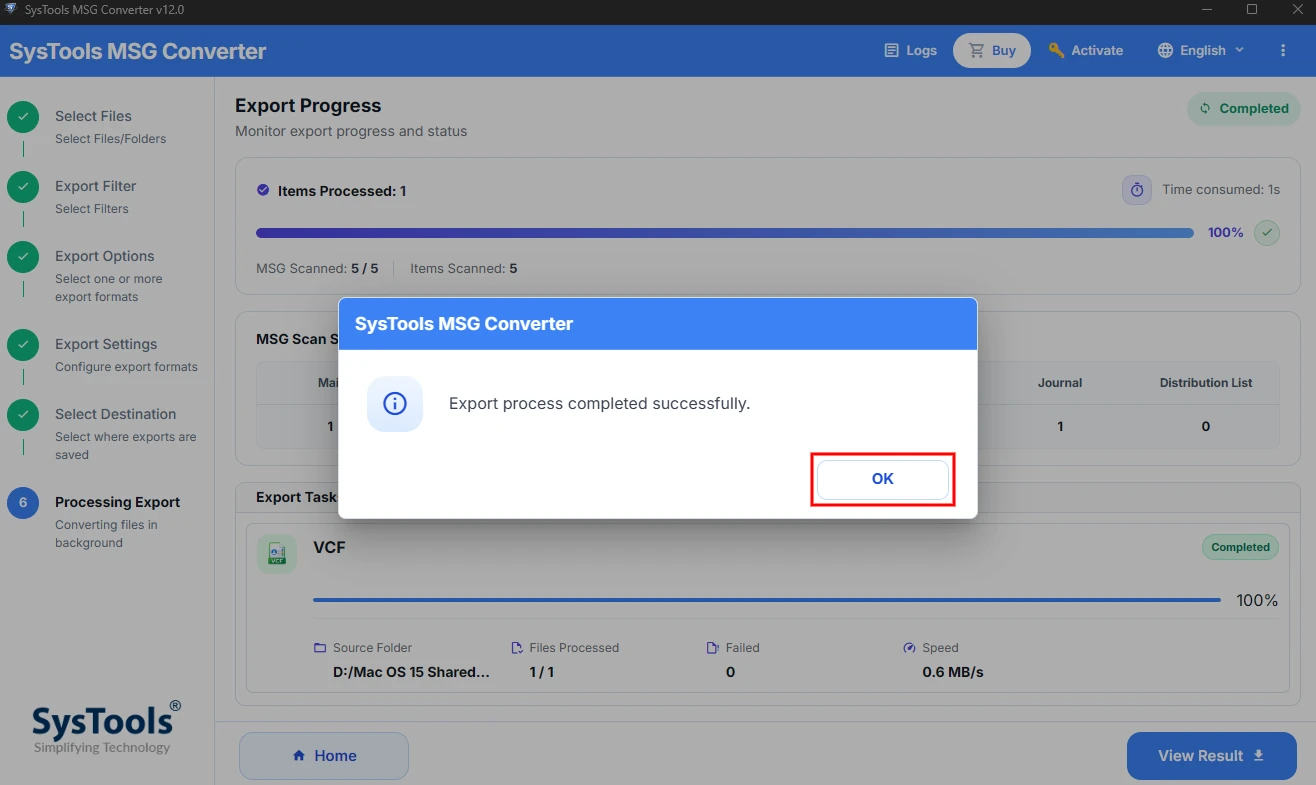
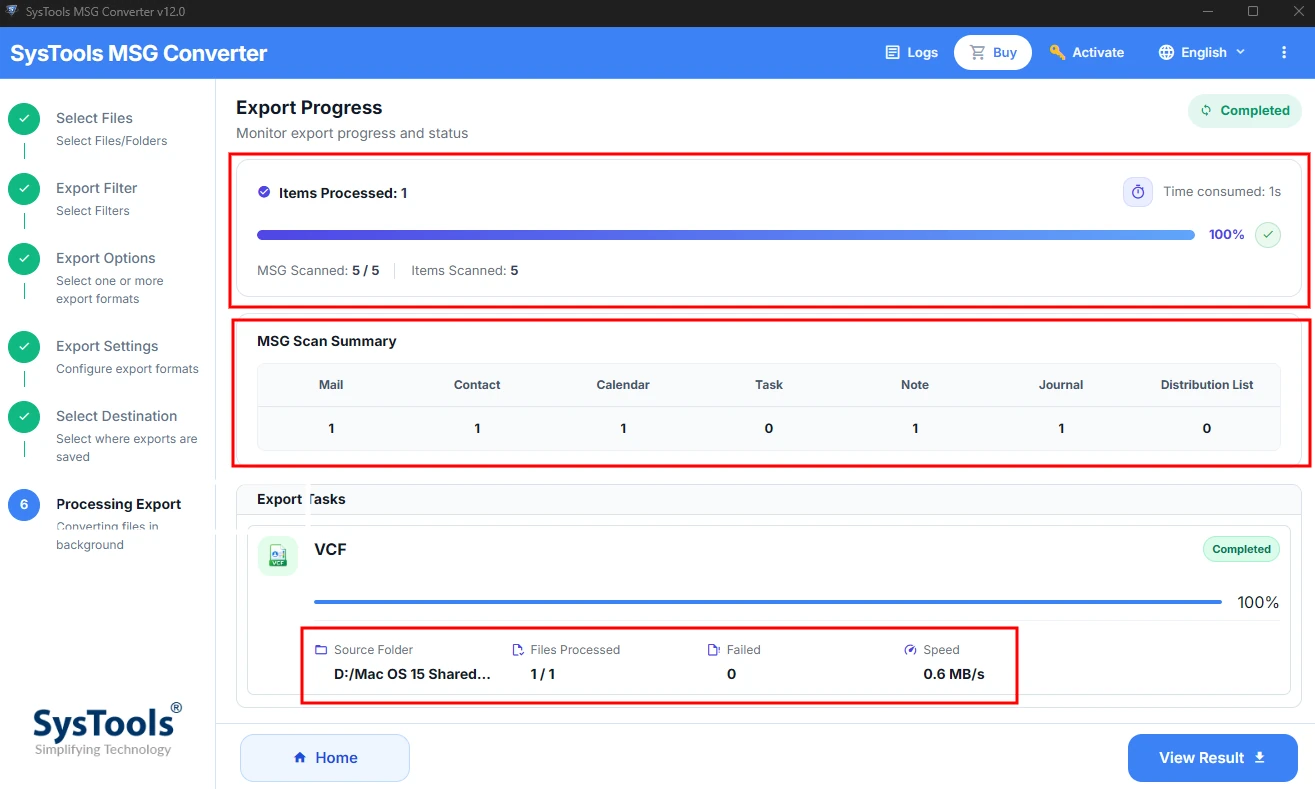
The Export Progress screen shows Items Processed and the MSG Scan Summary for Mail, Contact, Calendar, Task, Note, Journal and Distribution List. Under Export Tasks, check Files Processed, Failed and Speed for the VCF task. It shows Completed at 100%.
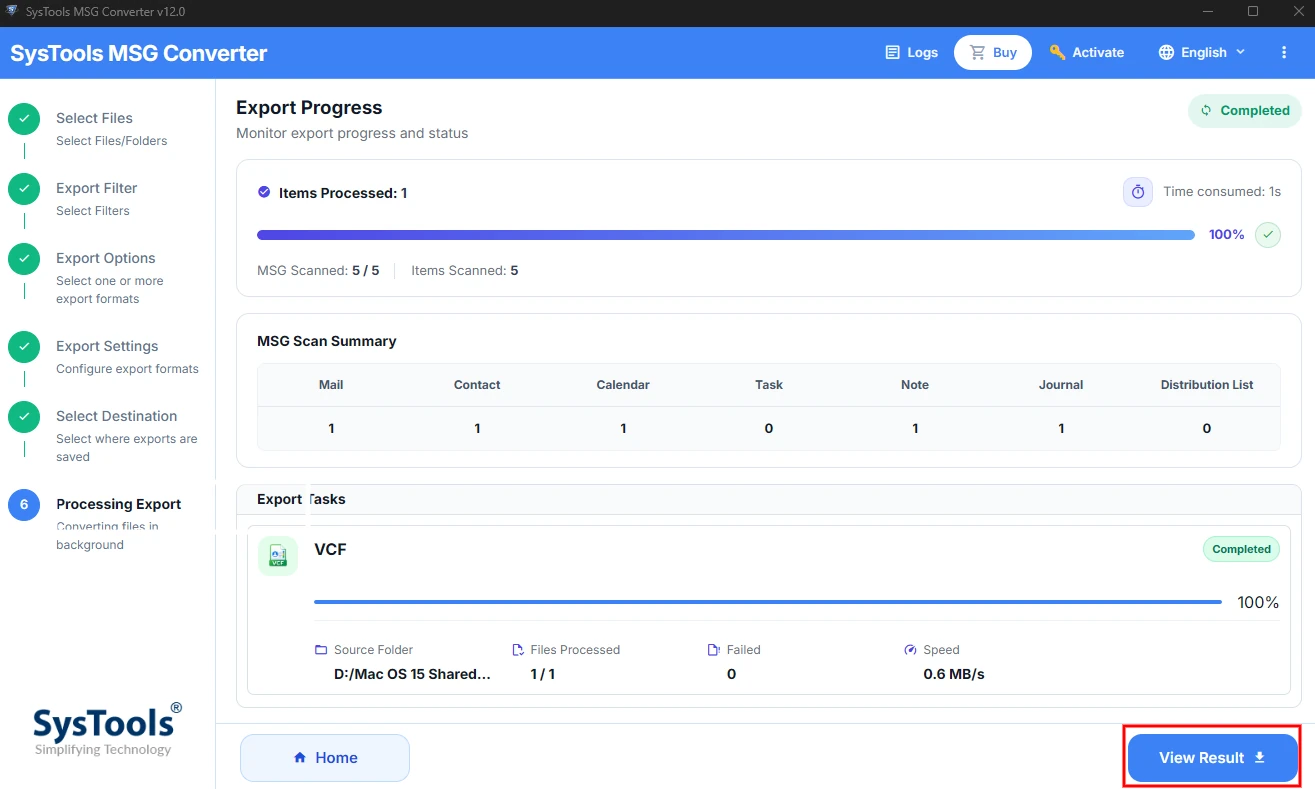
Click View Result to open the output folder.
View the Converted Files
Windows Explorer opens the output folder named SysTools MSG Converter. Open the VCF folder inside it.
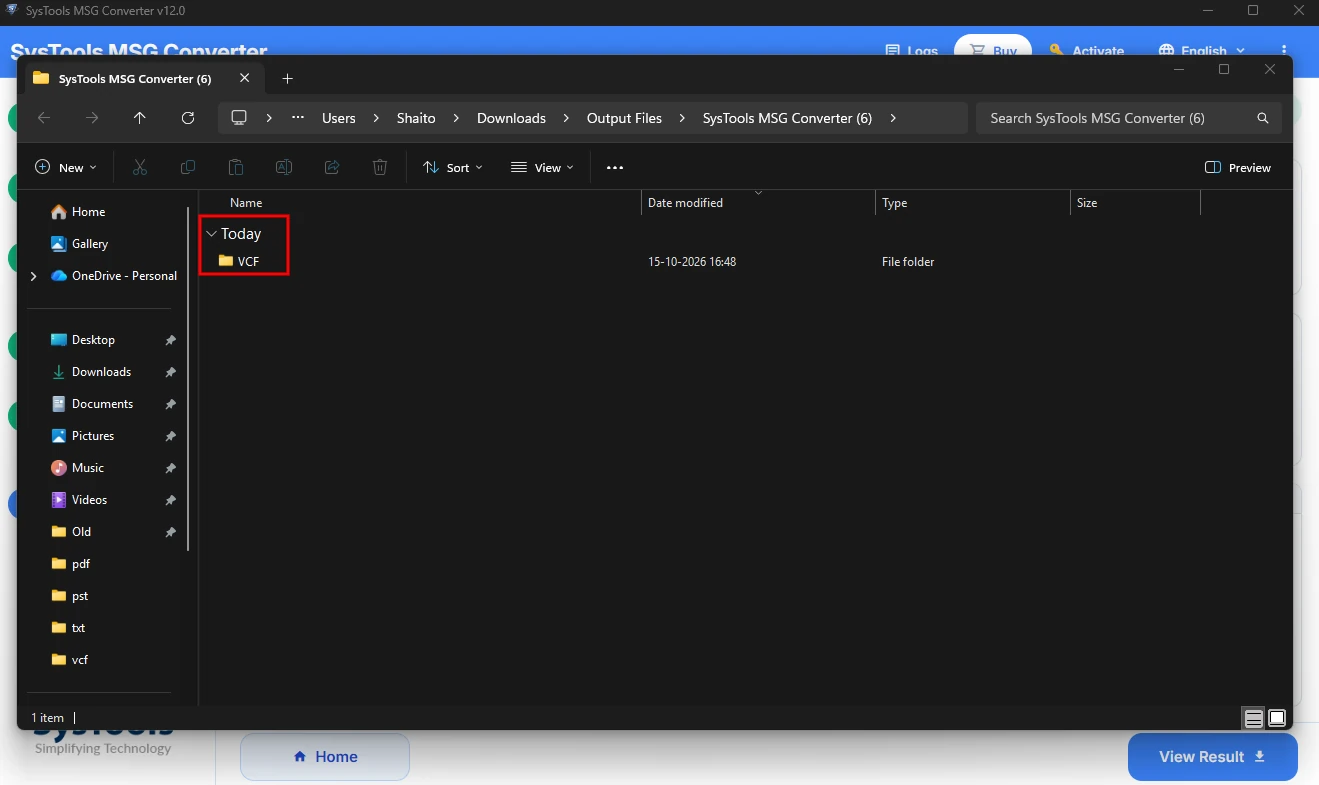
The VCF folder holds an MSG Files folder and ExportReport.csv.
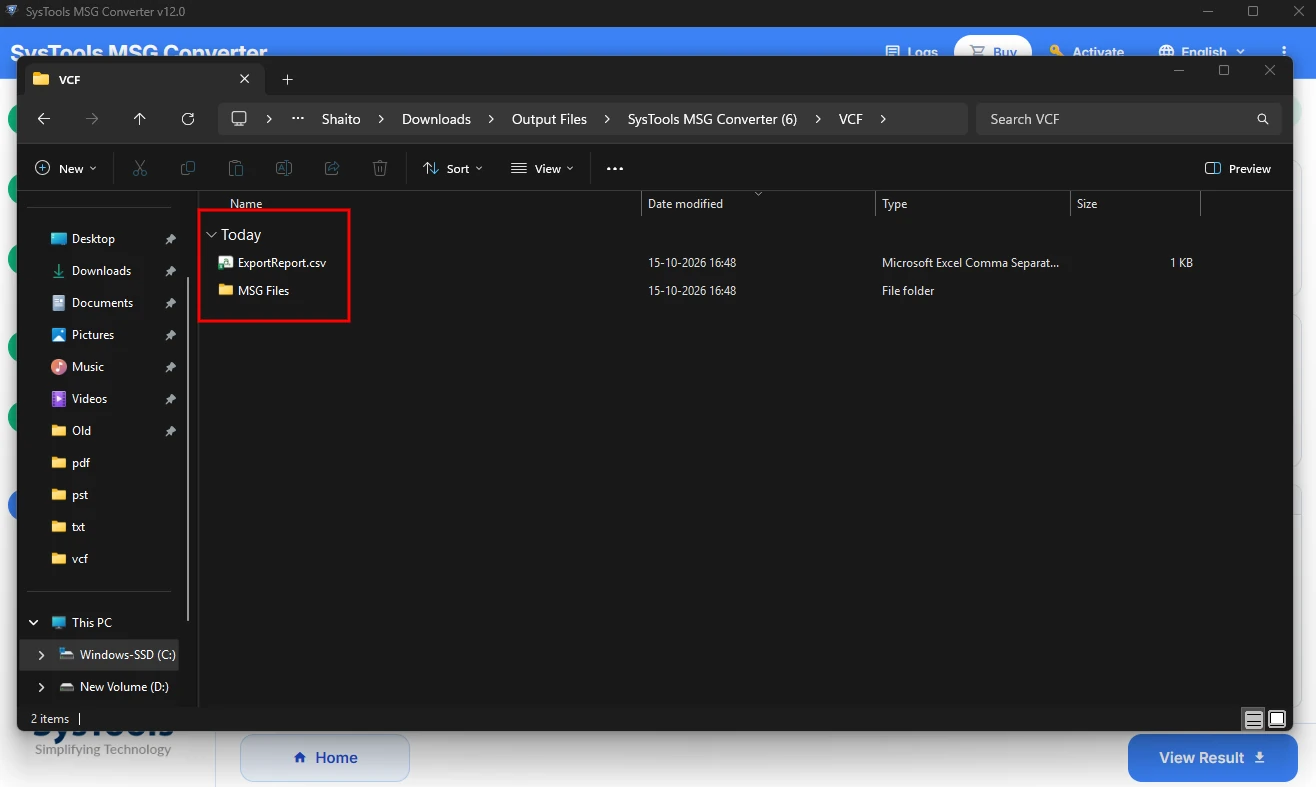
Open ExportReport.csv to see the SourcePath, Destination Path and the count for Email, Calendar, Contact, Task, Note and Journal, plus the Total count and failed count.
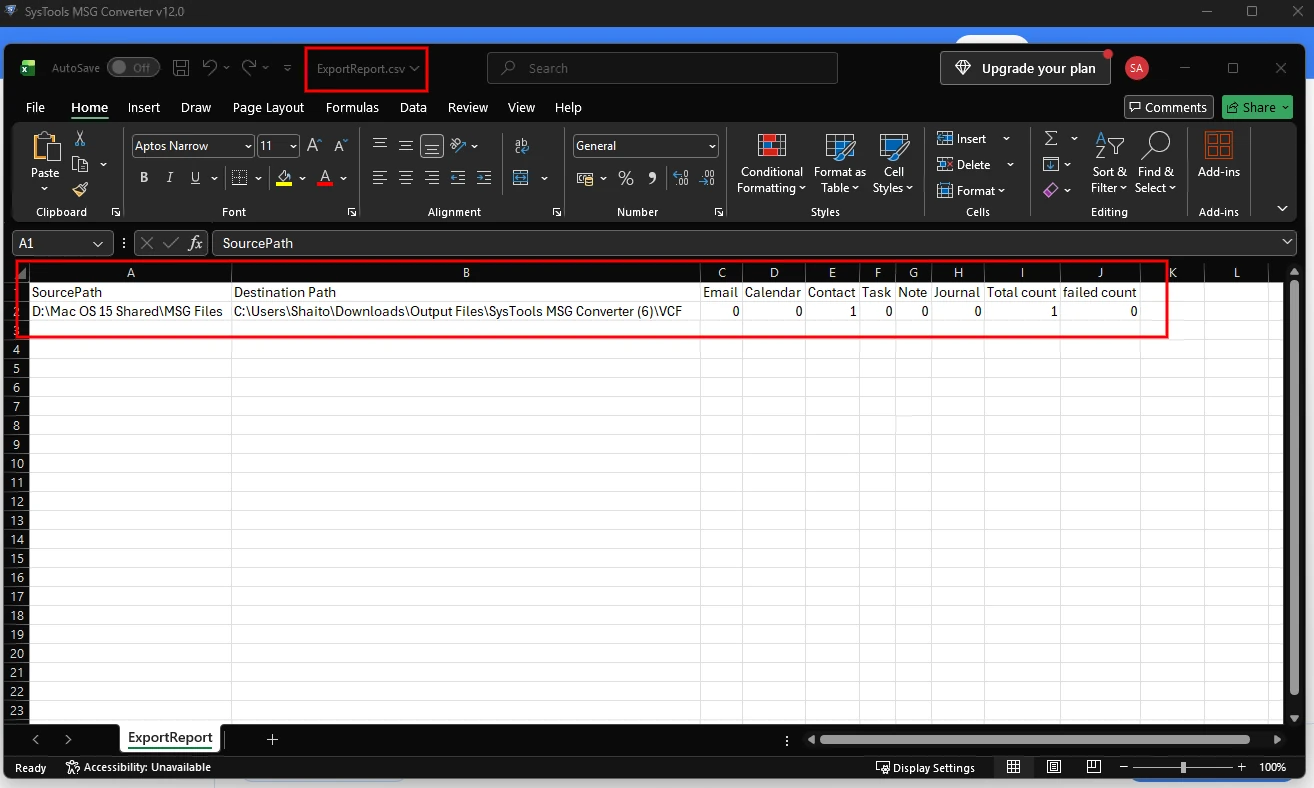
Check Logs and App Details
Click Logs in the top bar to open Application Logs. Click Save Logs to keep a copy.
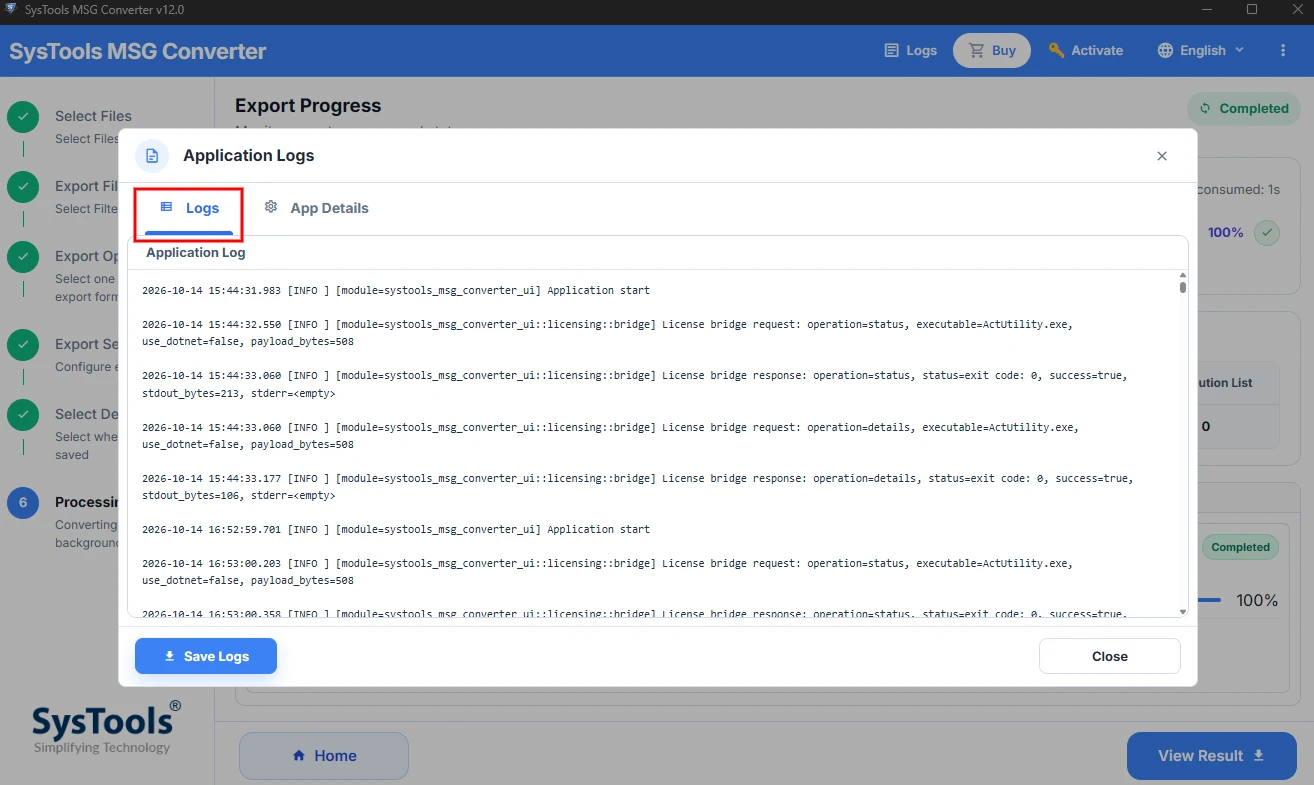
The App Details tab lists application and system details, including version, activation status and operating system.
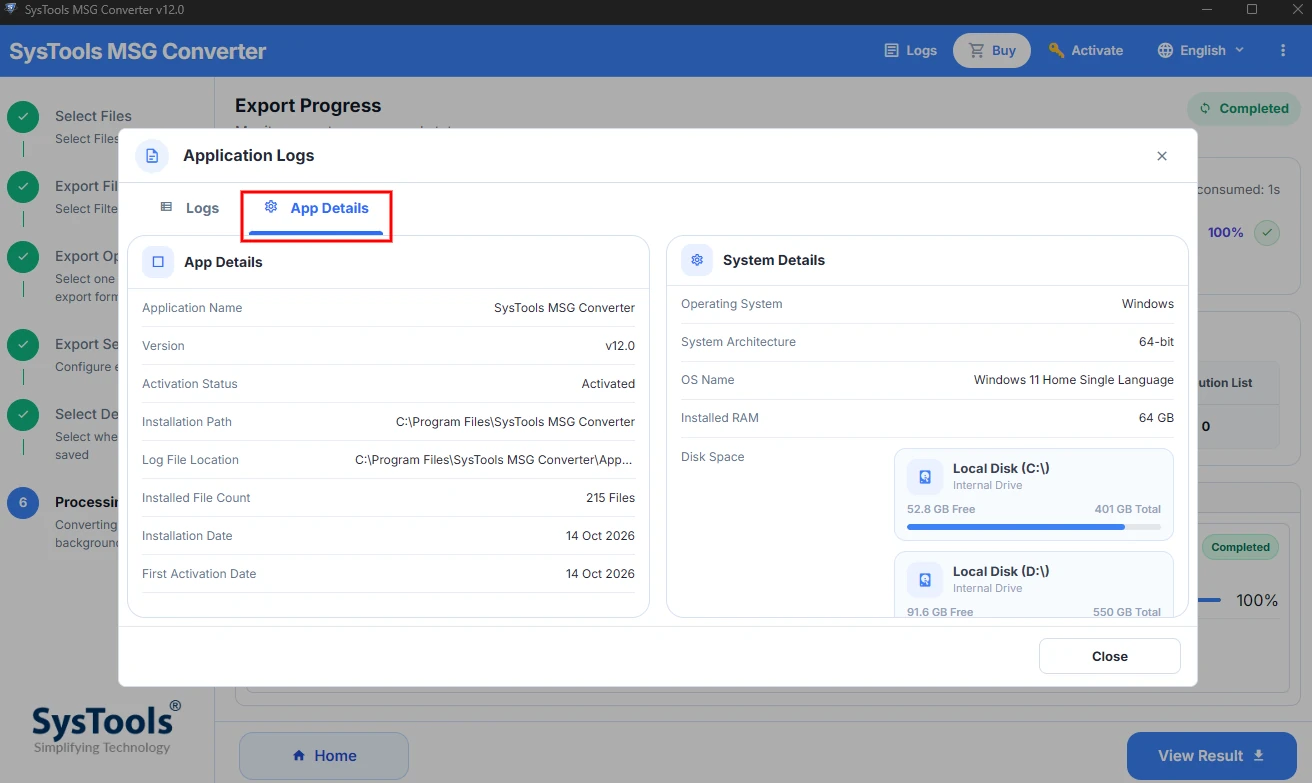
Select the three dot menu in the top bar to open About, Support and Help.
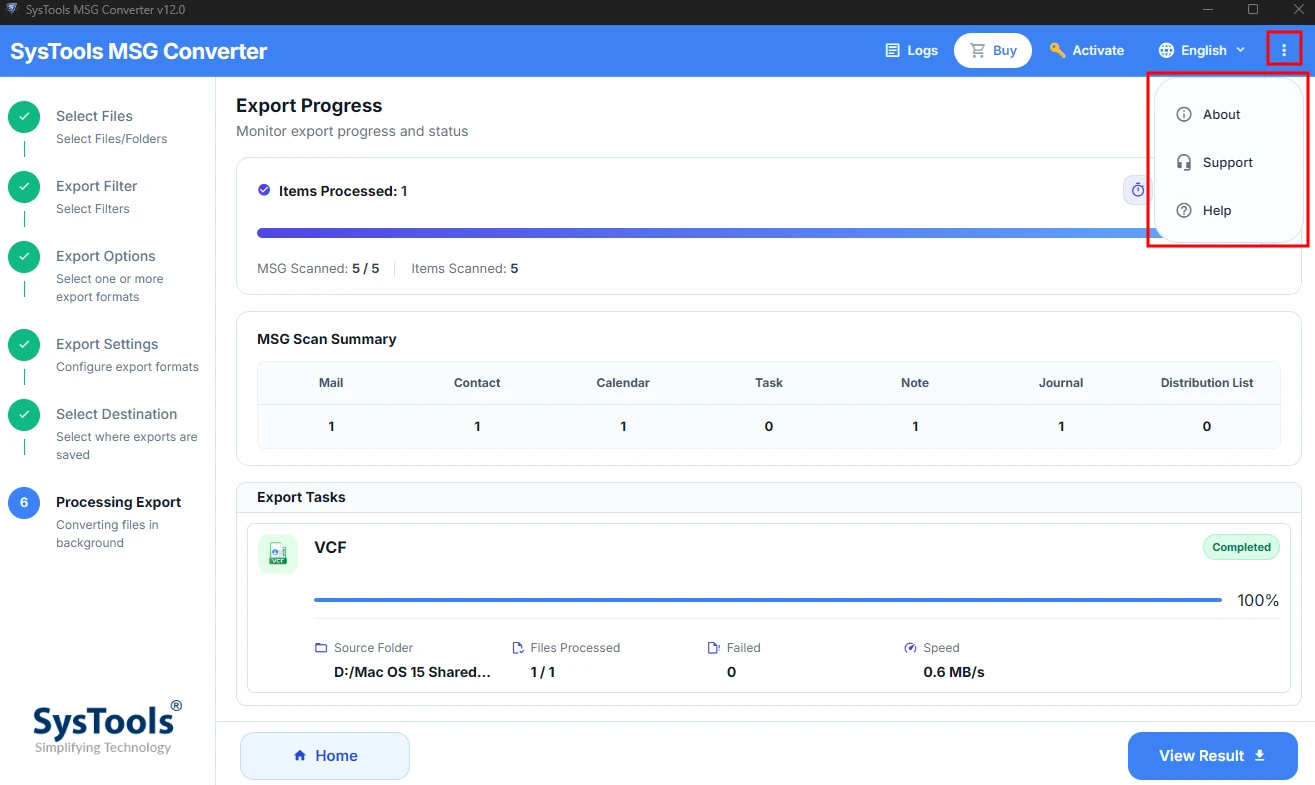
Convert MSG Files to ZIP
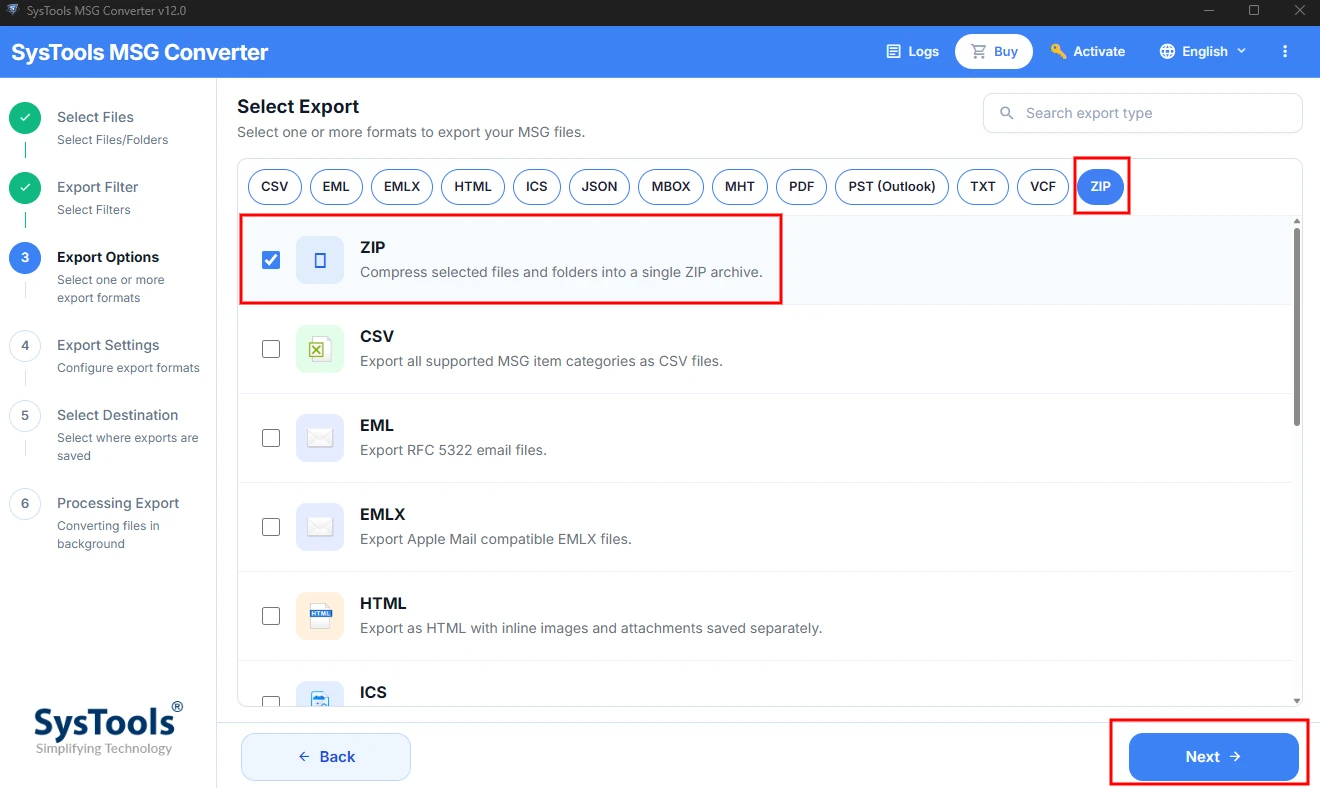
Select ZIP as the Export Format
Select ZIP in the Export Options list. It compresses selected files and folders into a single ZIP archive. Click Next.
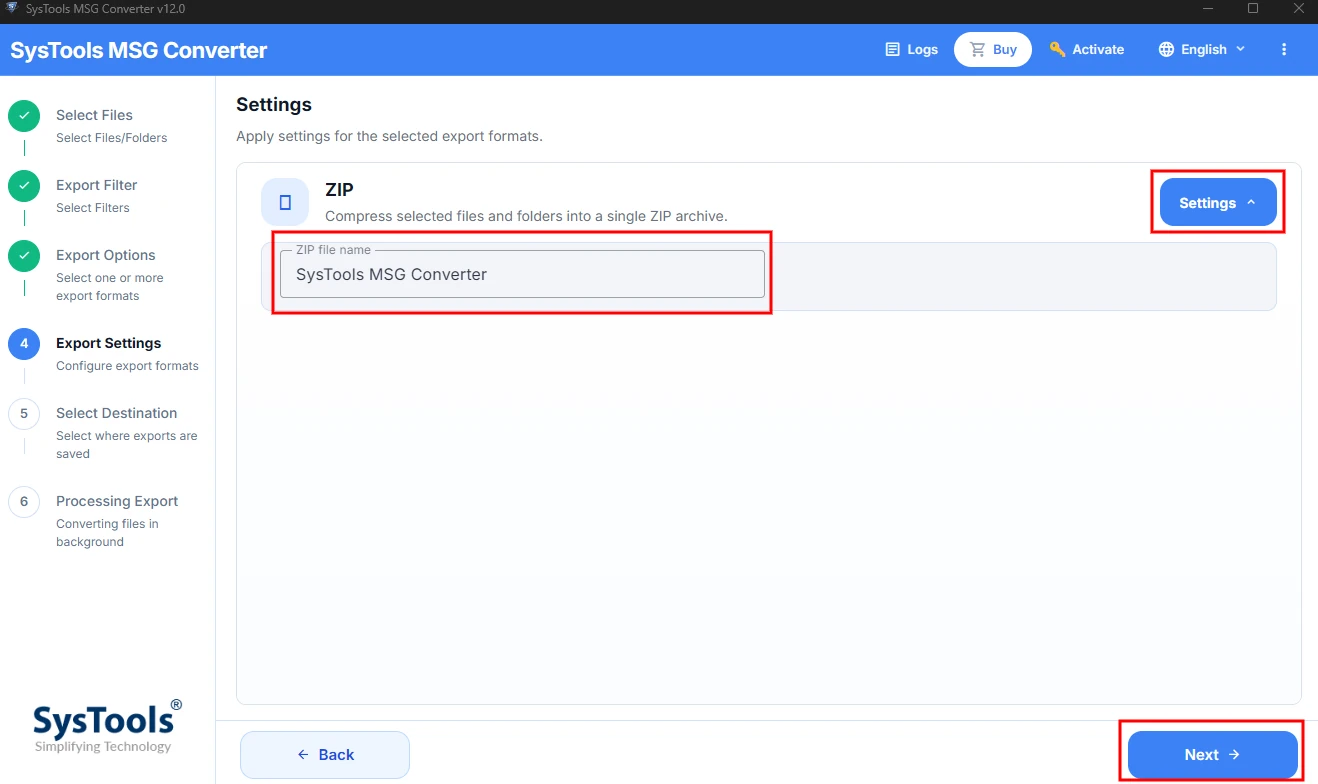
Configure ZIP Export Settings
Click Settings and enter a ZIP file name. The default is SysTools MSG Converter. Click Next.
Select the Destination
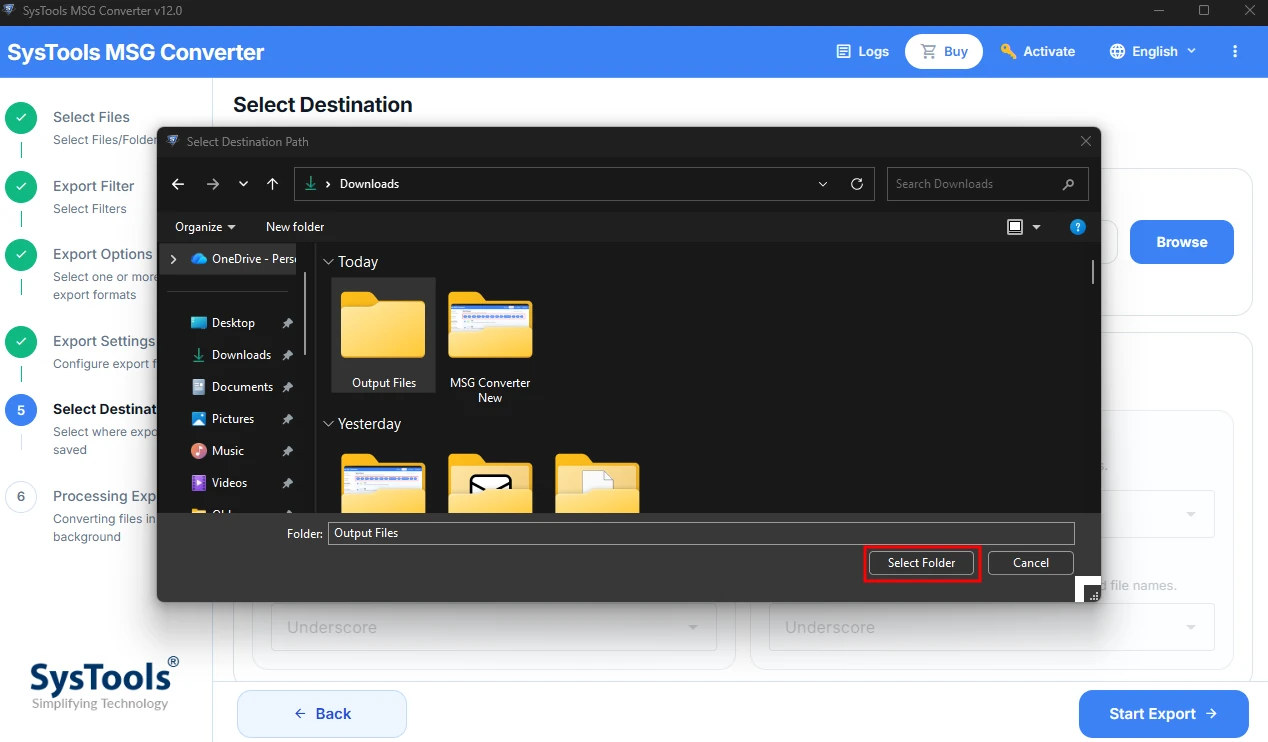
Click Browse next to Select Destination Path to choose where converted files are saved. Make sure the location has enough storage space.
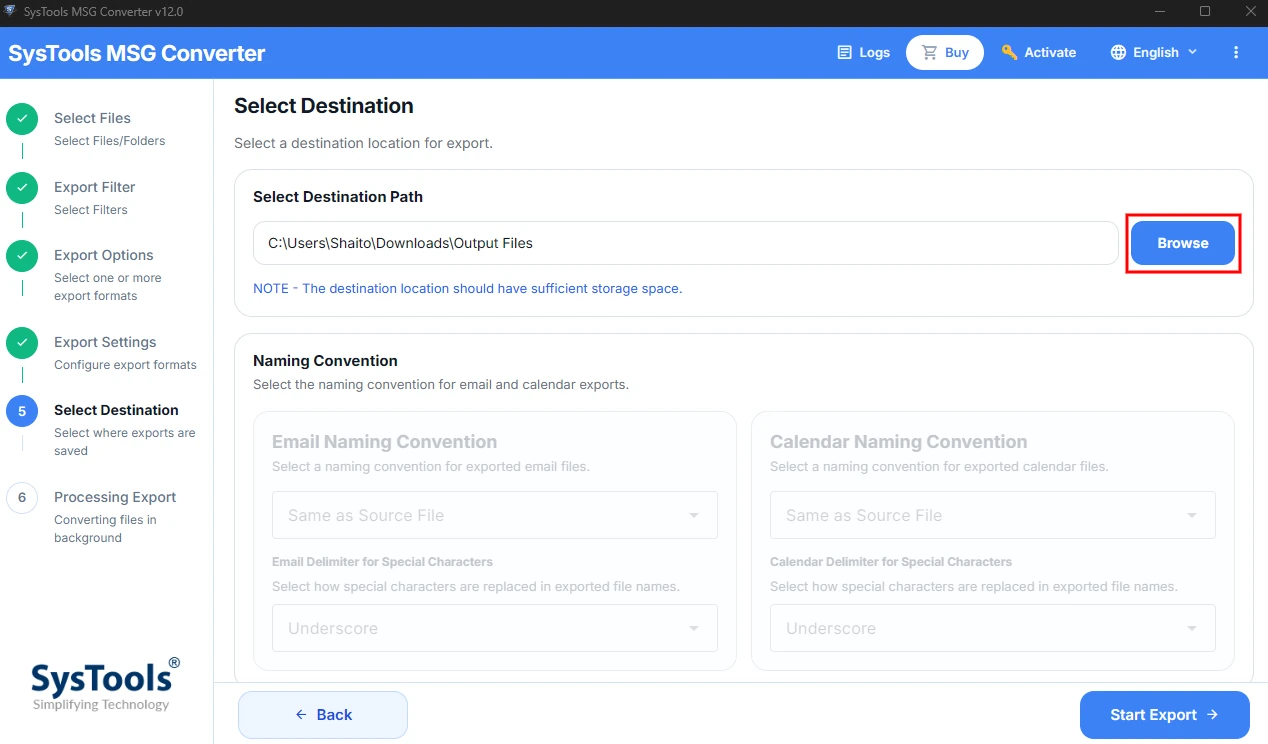
Select a folder in the dialog and click Select Folder. The naming options stay greyed out for ZIP.
Start the Export and Track Progress
Click Start Export once the destination path is set.
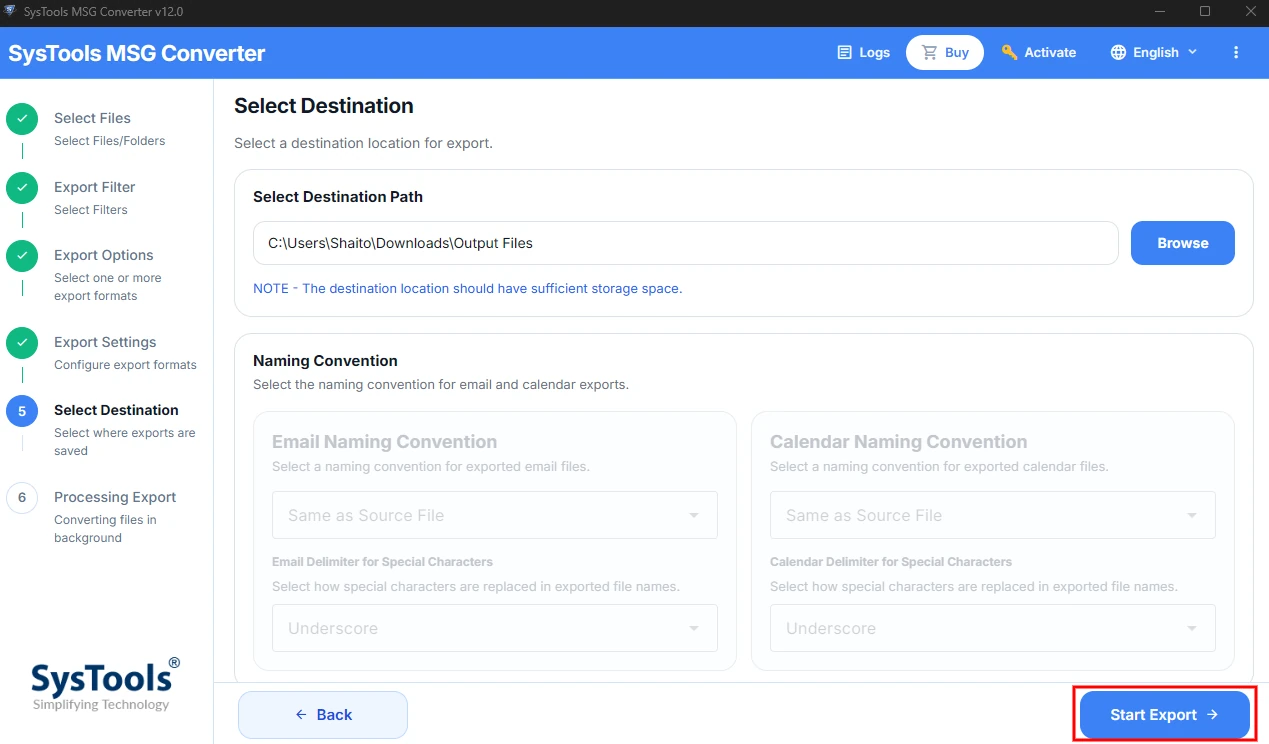
A message confirms Export process completed successfully. Click OK.
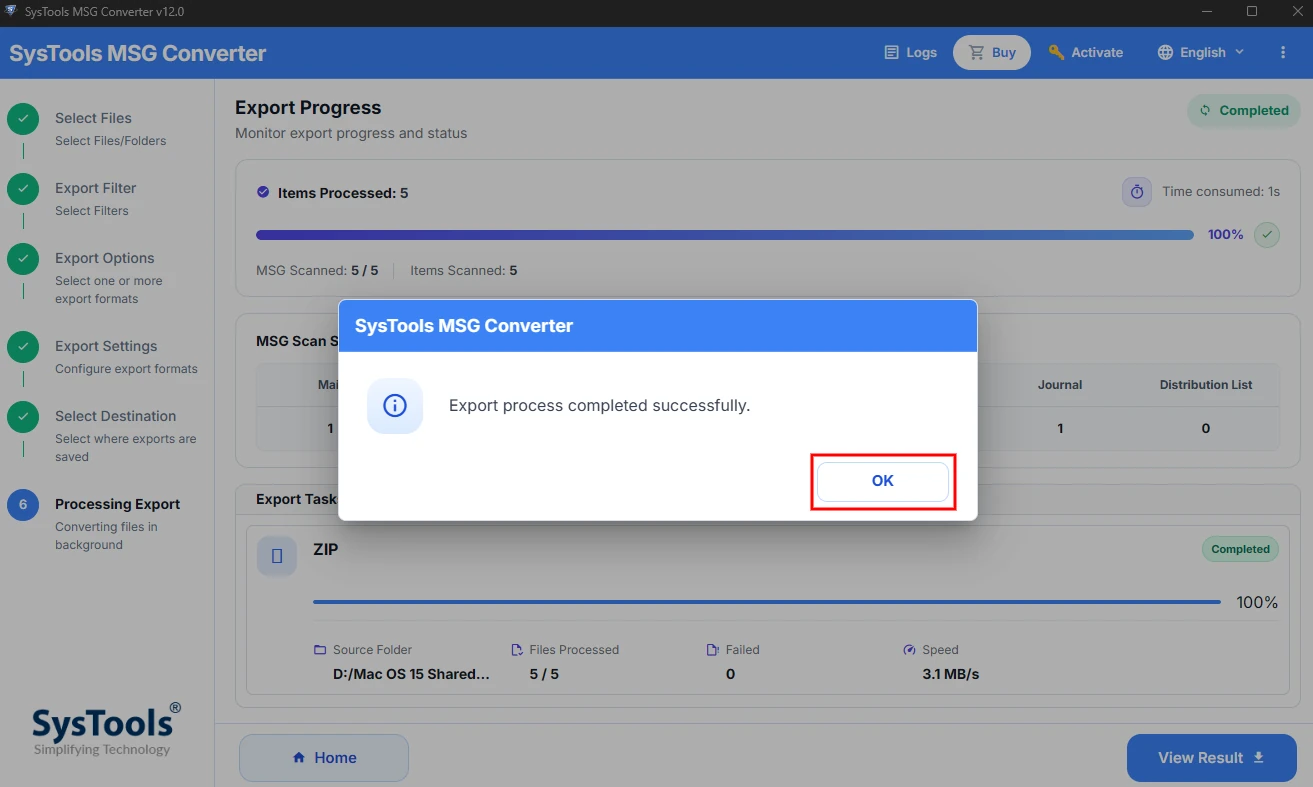
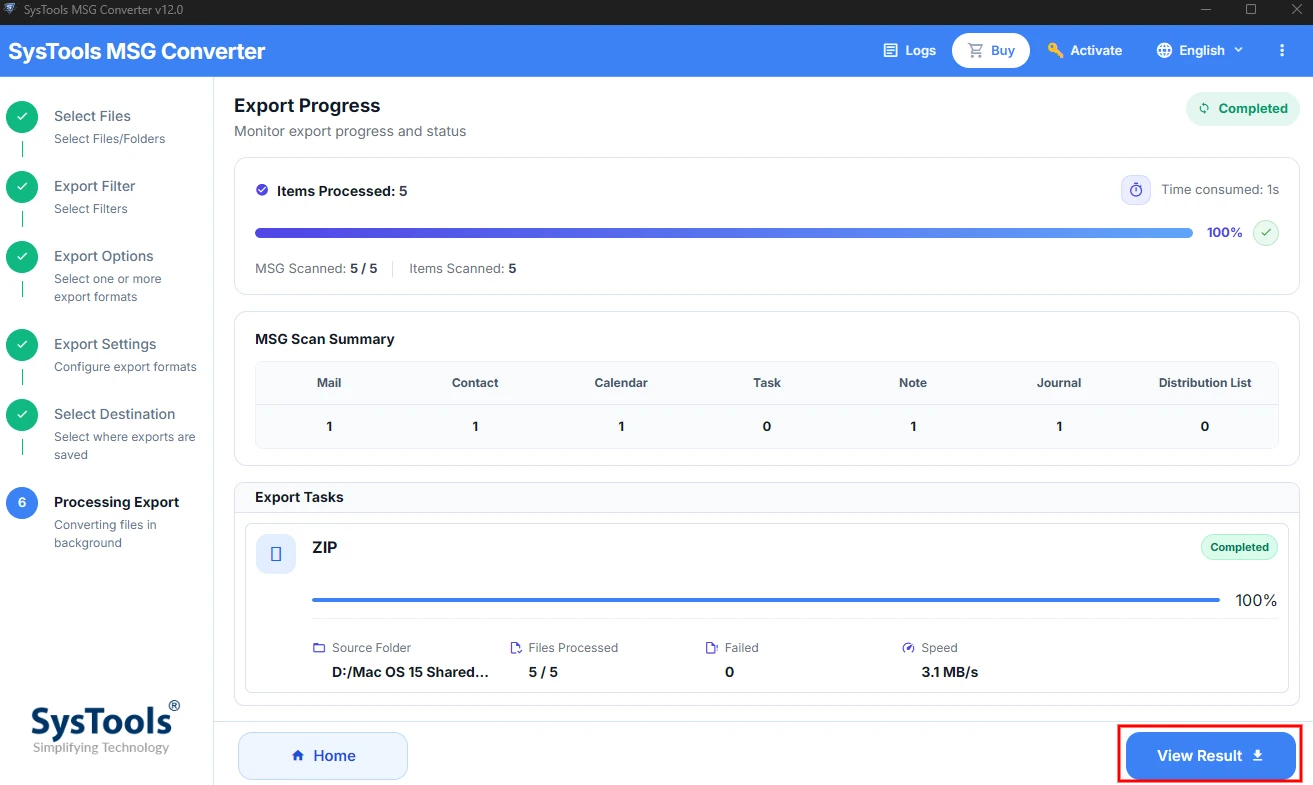
The Export Progress screen shows Items Processed and the MSG Scan Summary for Mail, Contact, Calendar, Task, Note, Journal and Distribution List. Under Export Tasks, check Files Processed, Failed and Speed for the ZIP task. It shows Completed at 100%.
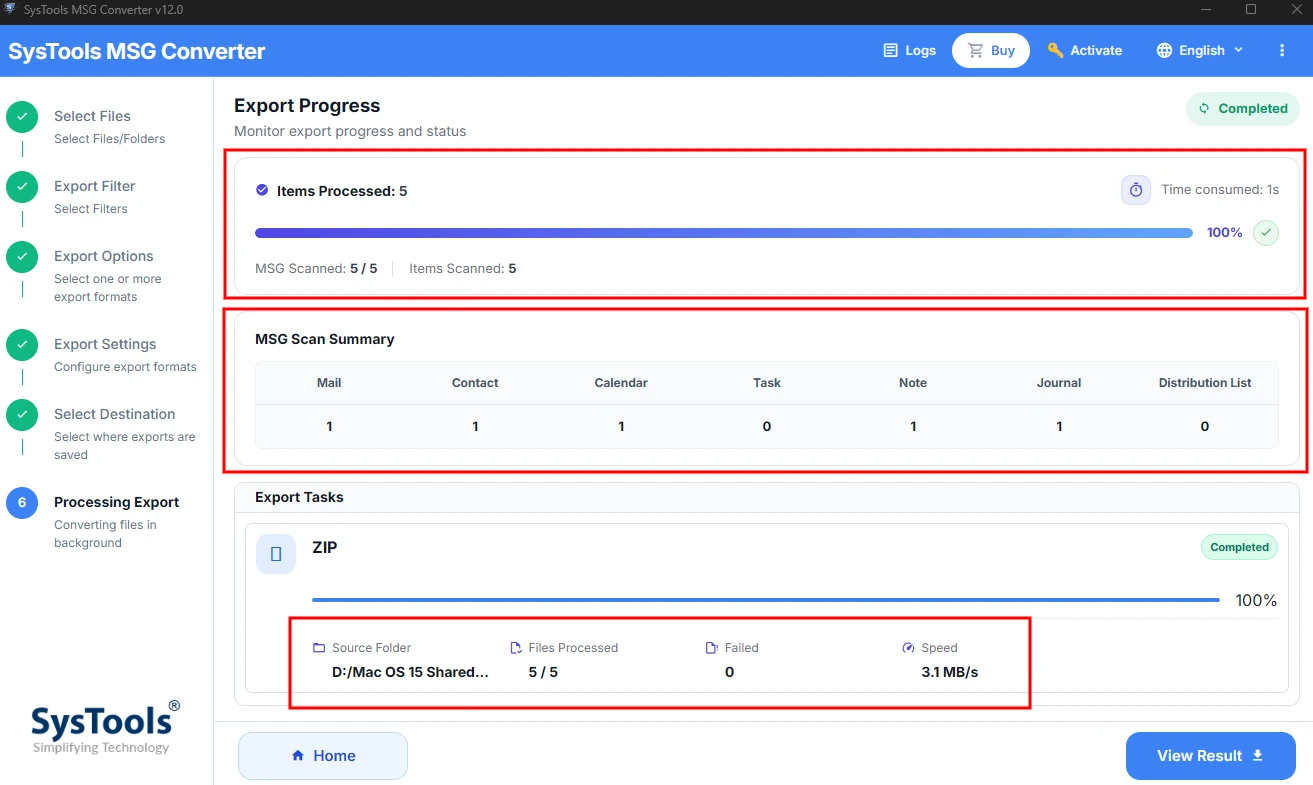
Click View Result to open the output folder.
View the Converted Files
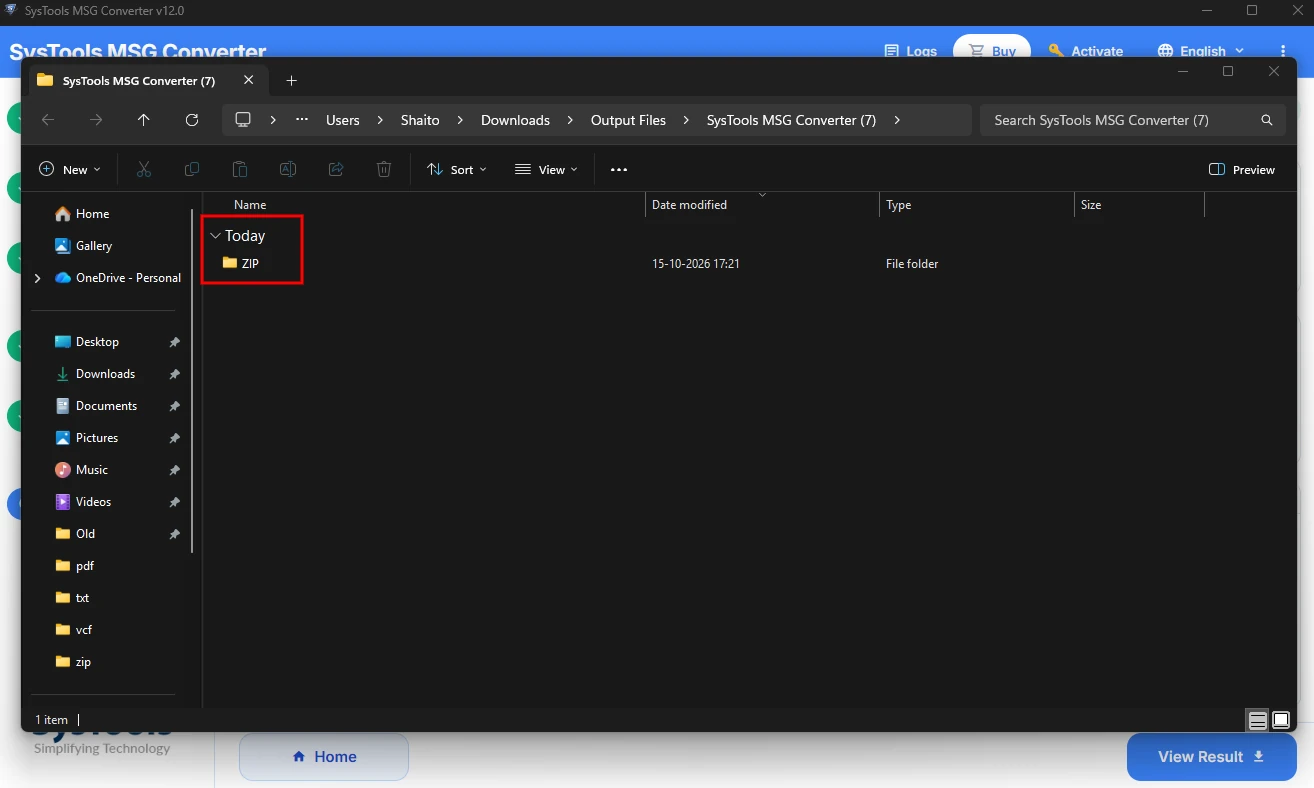
Windows Explorer opens the output folder named SysTools MSG Converter. Open the ZIP folder inside it.
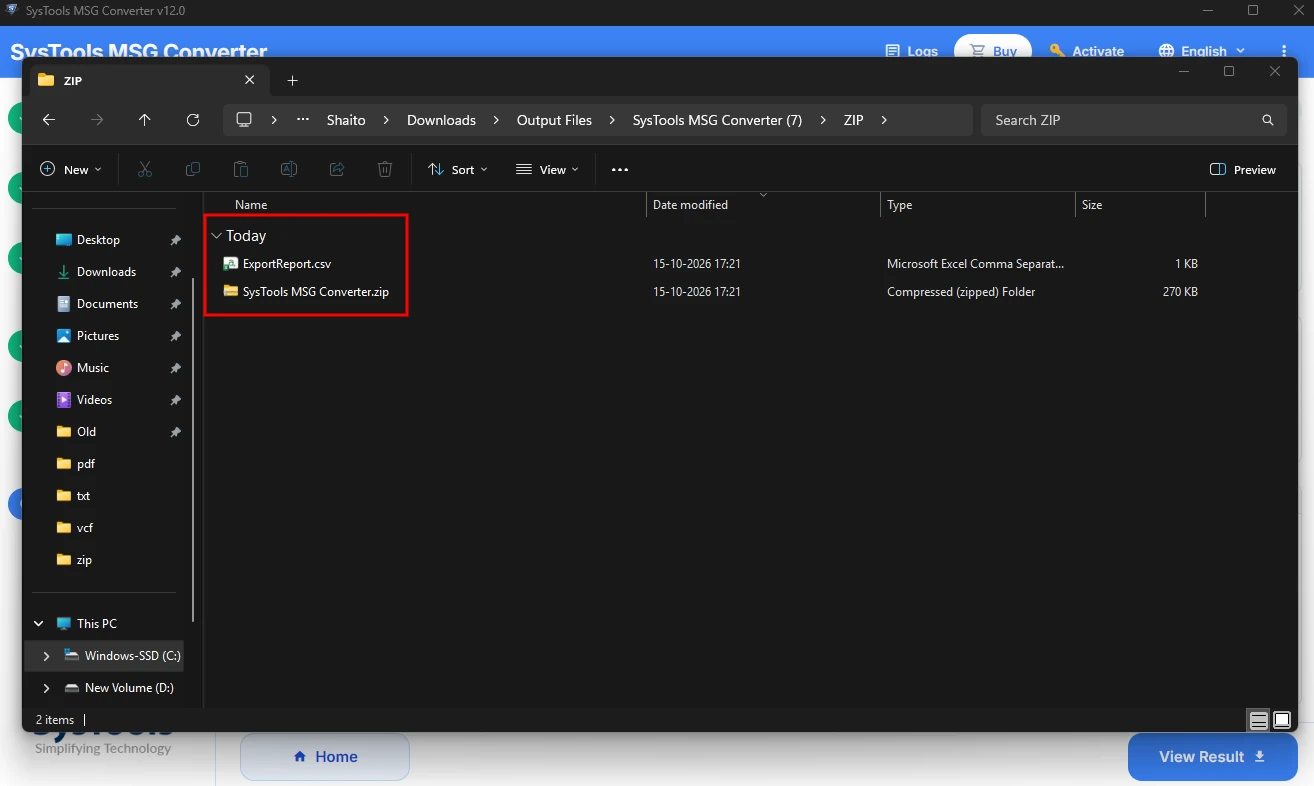
The ZIP folder holds your ZIP archive and ExportReport.csv.
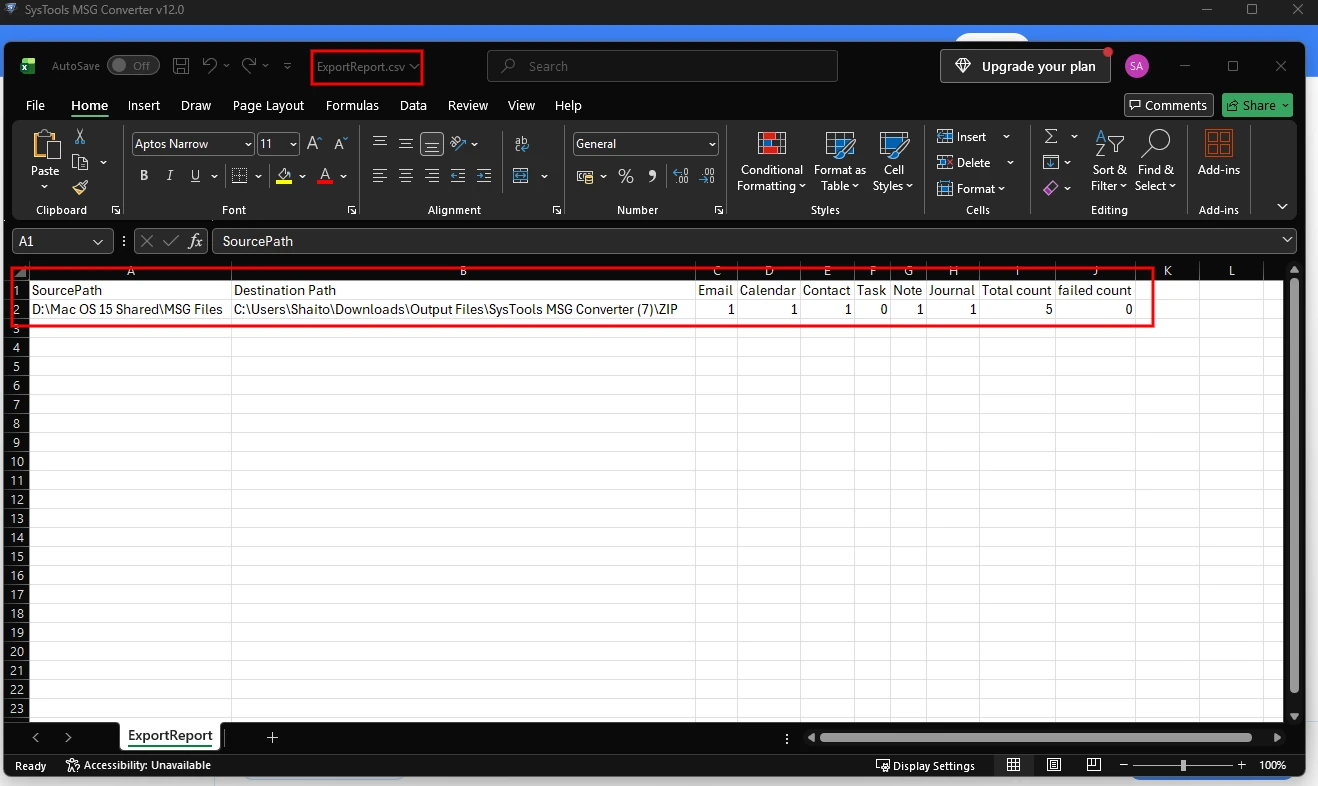
Open ExportReport.csv to see the SourcePath, Destination Path and the count for Email, Calendar, Contact, Task, Note and Journal, plus the Total count and failed count.
Check Logs and App Details
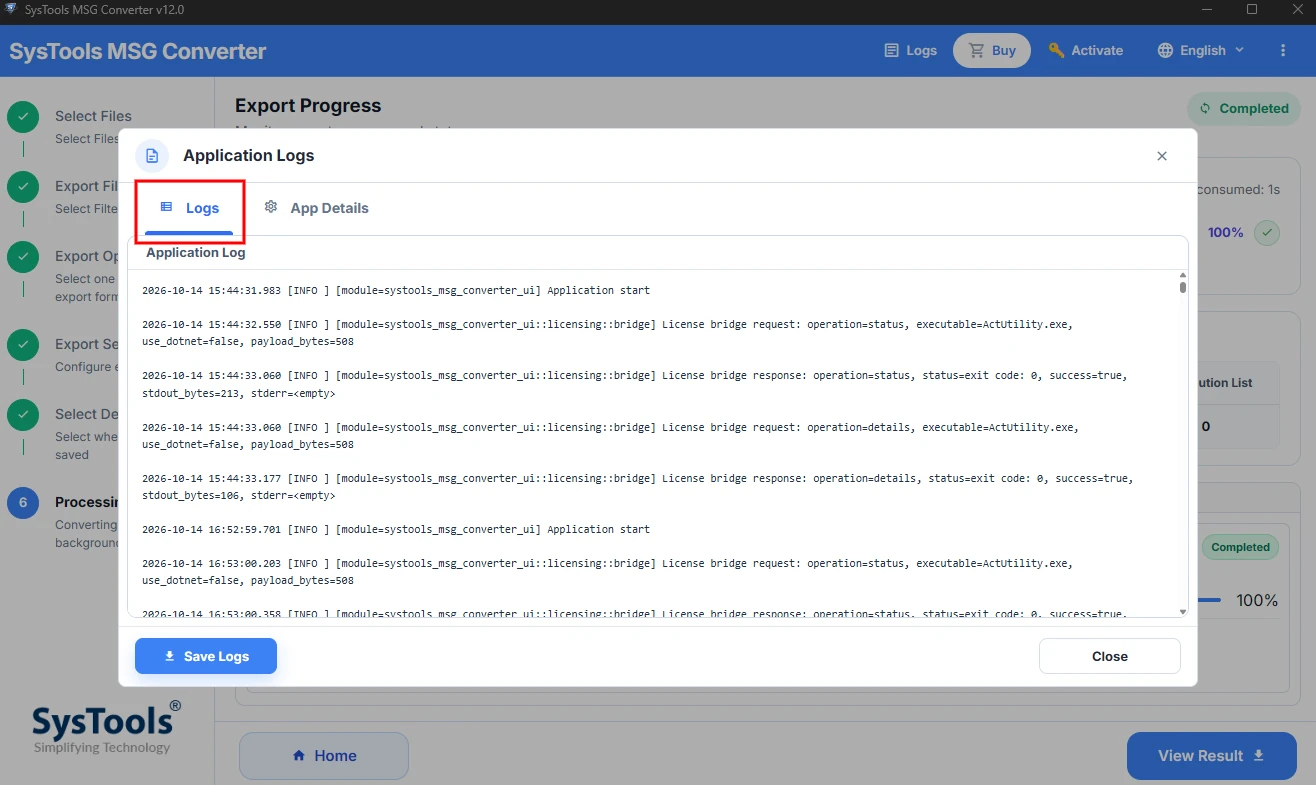
Click Logs in the top bar to open Application Logs. Click Save Logs to keep a copy.
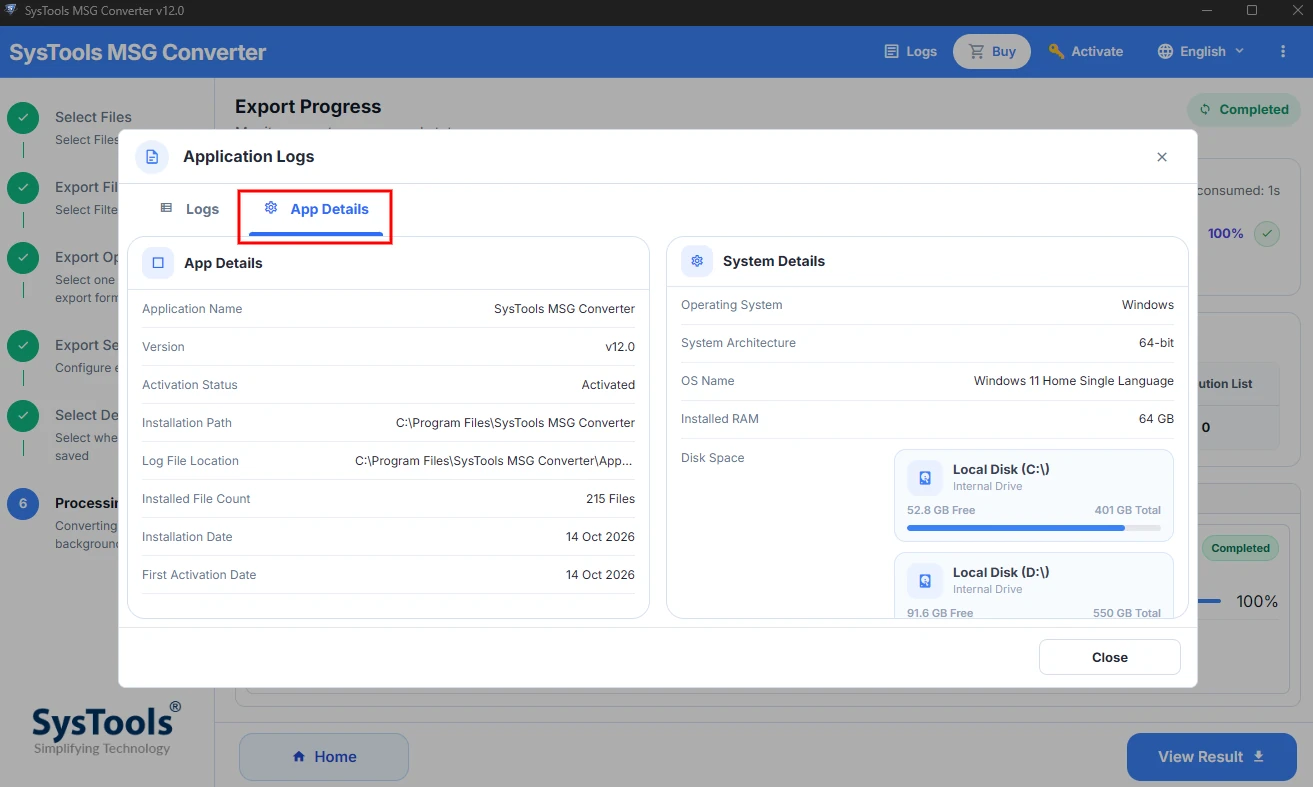
The App Details tab lists application and system details, including version, activation status and operating system.
Select the three dot menu in the top bar to open About, Support and Help.