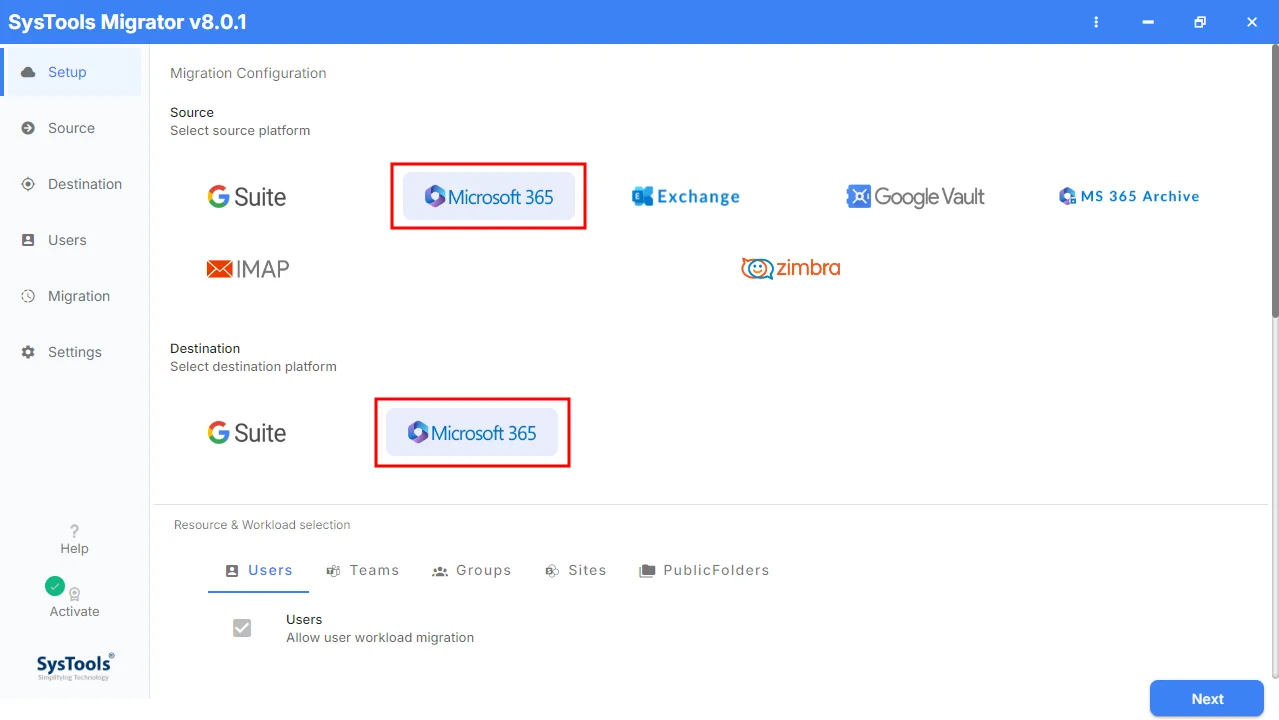
Now, Select Office 365 as source & Office 365 as destination.
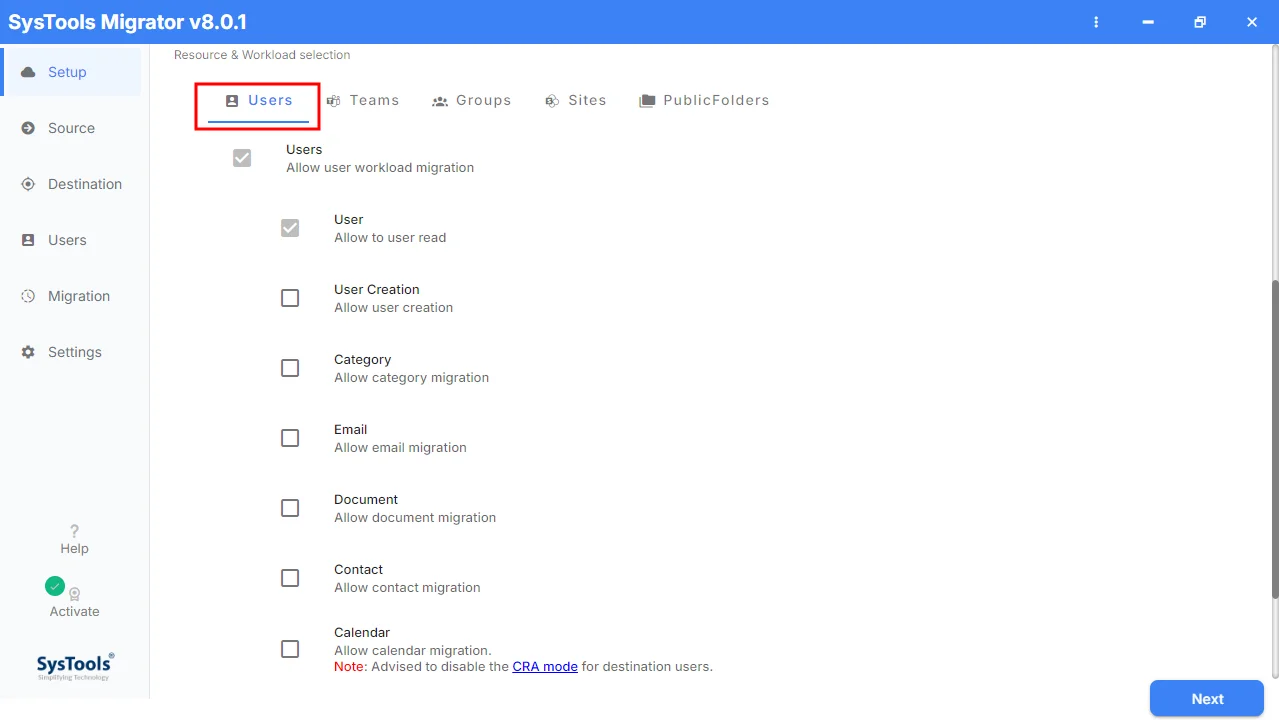
Now, navigate to the Users tab under the Resource & Workload Selection section. Here, you can select the workloads that you want to migrate for the users.
- Users: Enable user workload migration.
- User: Allow the software to read user data.
- User Creation: Create users at the destination.
- Category: Migrate user categories.
- Email: Migrate user emails.
- Document: Migrate user documents.
- Contact: Migrate user contacts.
- Calendar: Migrate user calendars.
Once you have selected the required workloads, click on Next to continue.
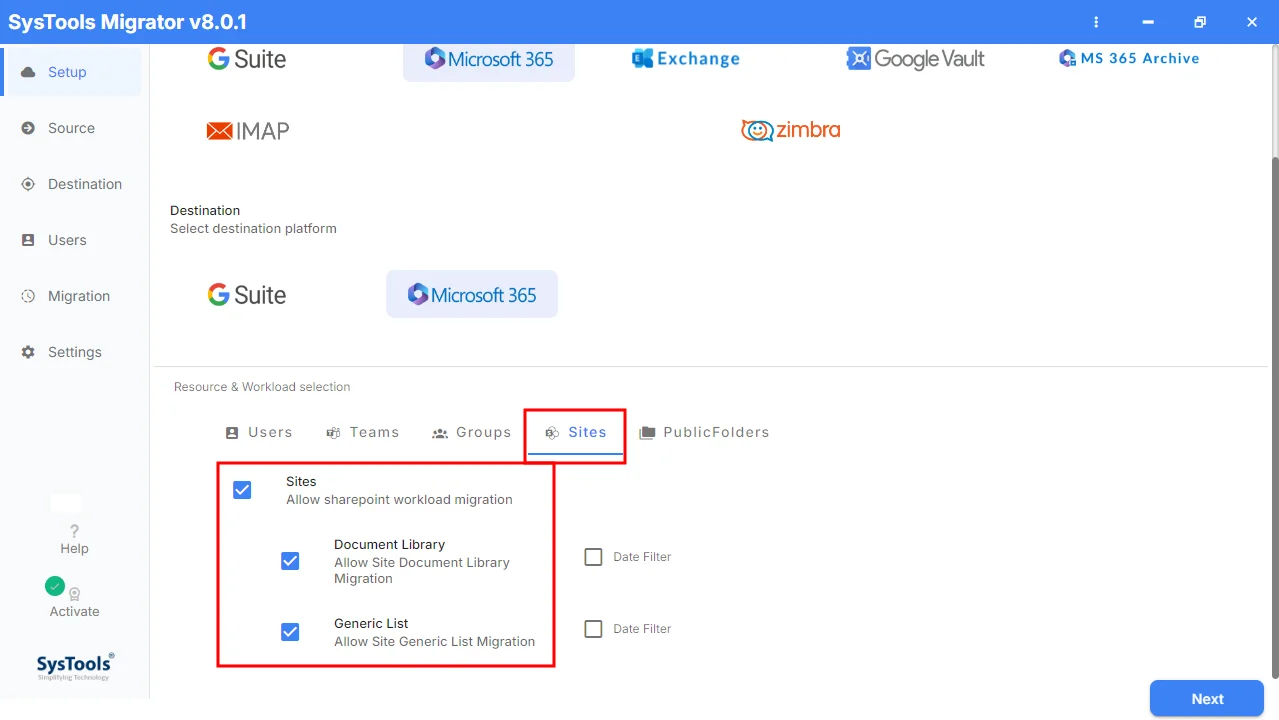
Next, navigate to the Sites tab under the Resource & Workload Selection section. Here, you can select the SharePoint workloads that you want to migrate.
- Sites: Enable SharePoint workload migration.
- Document Library: Allow document library migration for SharePoint sites.
- Generic List: Allow migration of generic lists from SharePoint sites.
Select the required workloads and click on Next to proceed.
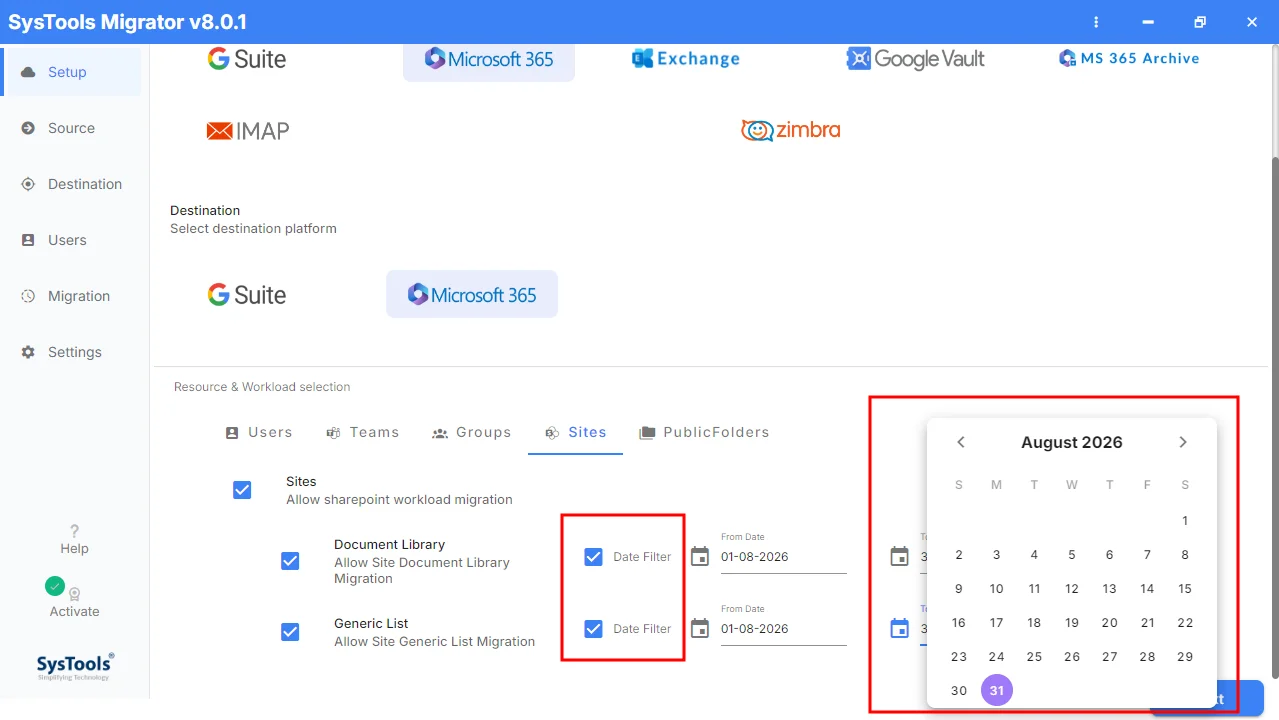
If you wish to migrate data from a specific date range, enable the Date Filter option for the required workloads. You can apply the date filter separately to the Document Library and Generic List.
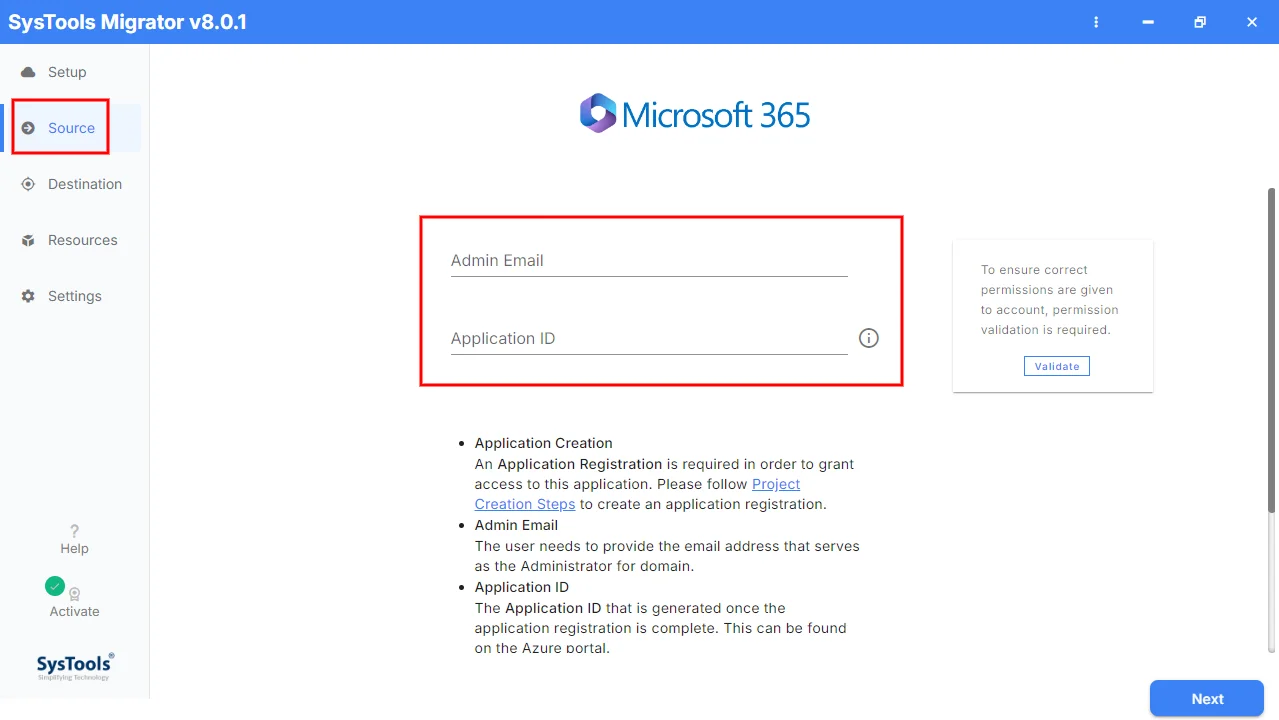
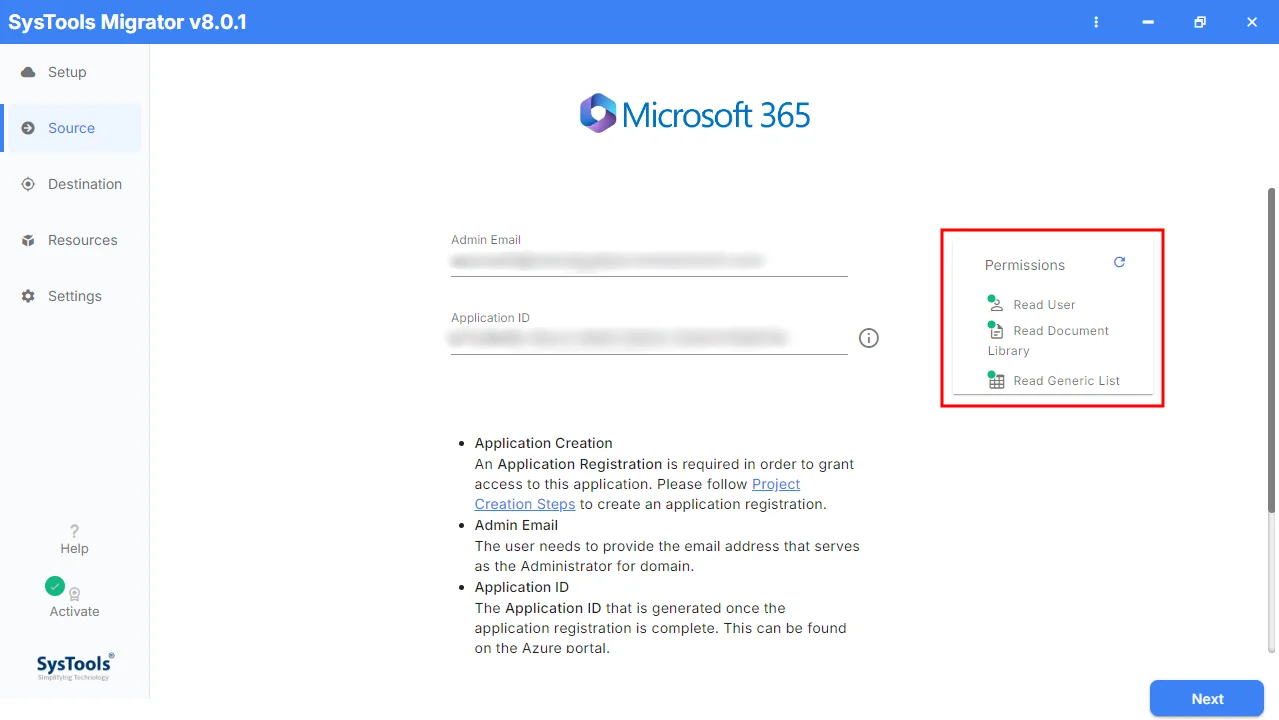
Now, Enter Admin email ID & Application ID of Source tenant. Read More : Project Creation Steps
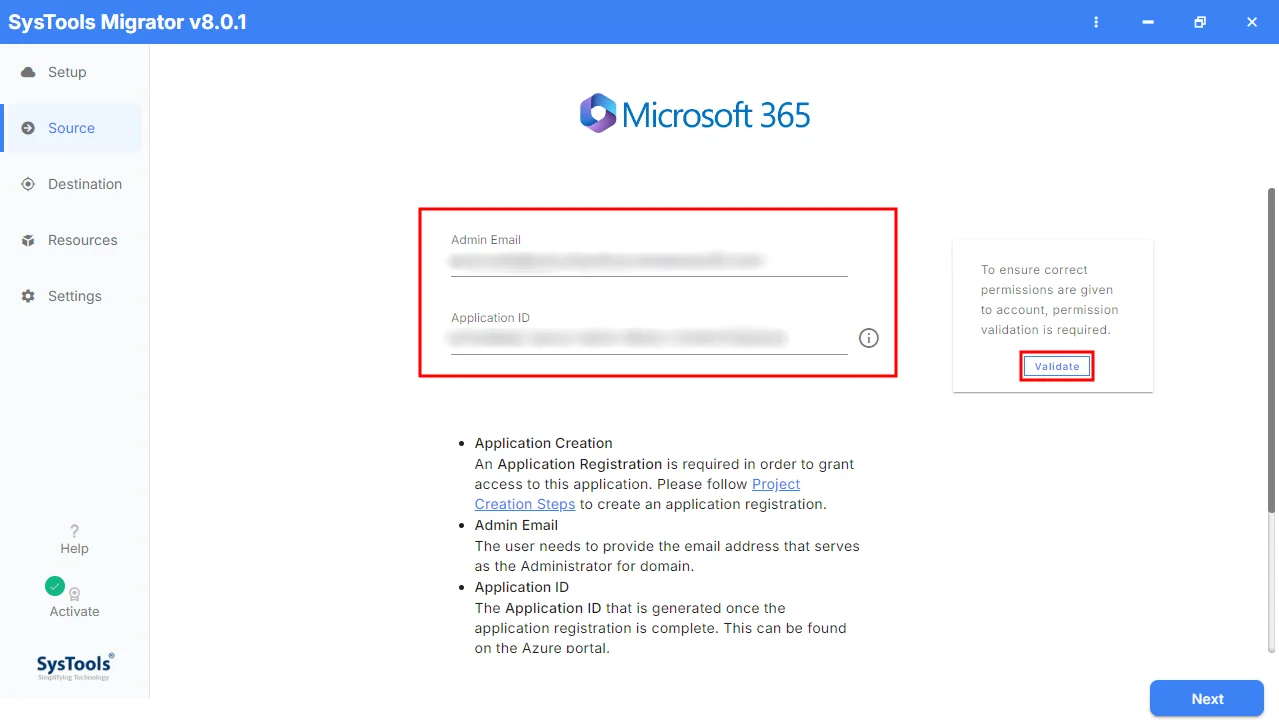
After entering the details, click Validate to verify the required permissions.
Once validated, the Permissions panel displays the access granted to the application, such as Read User, Read Document Library, and Read Generic List.
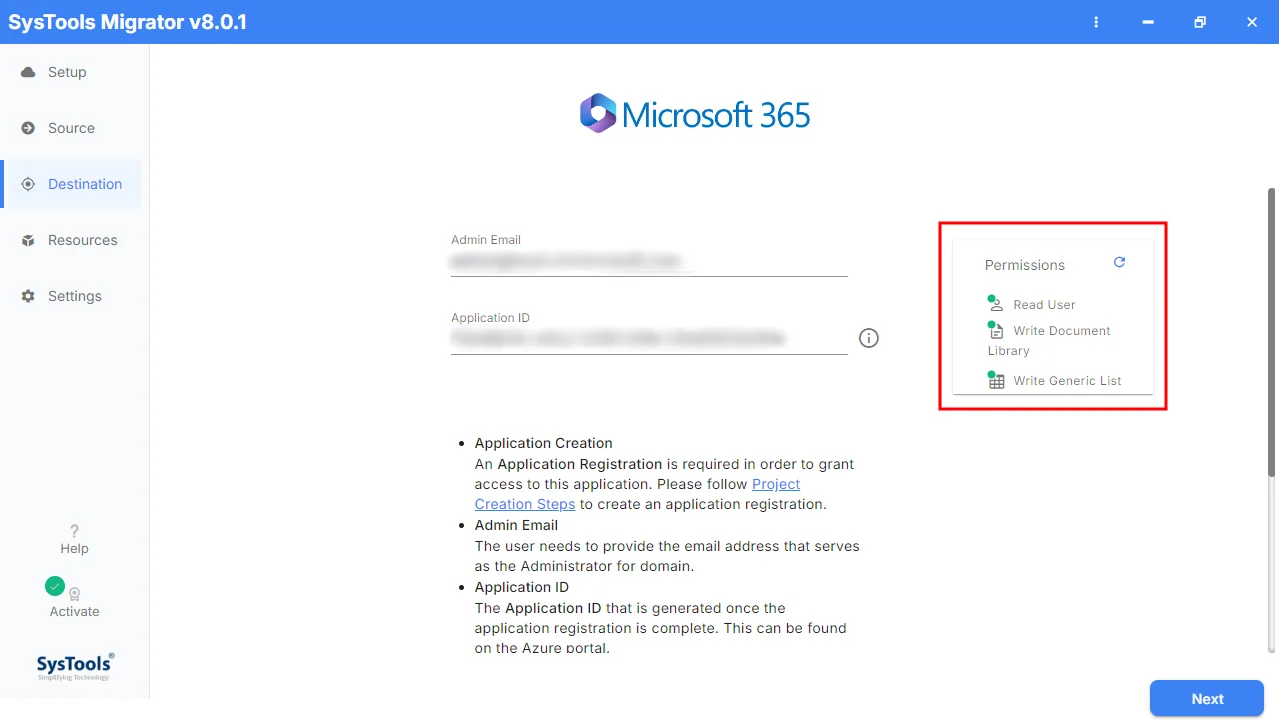
Next, select Destination and enter the destination account's Admin Email and Application ID. Click Validate to verify the required permissions.
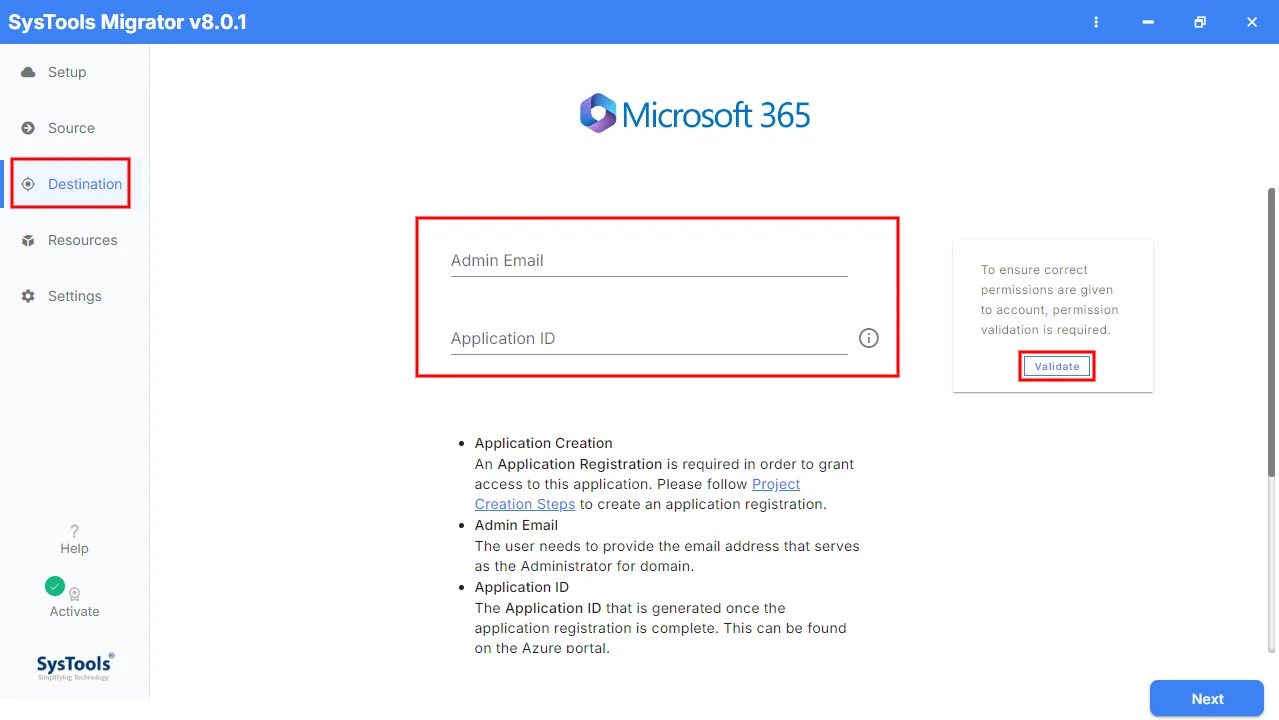
After entering the credentials, click Validate to verify the required permissions.
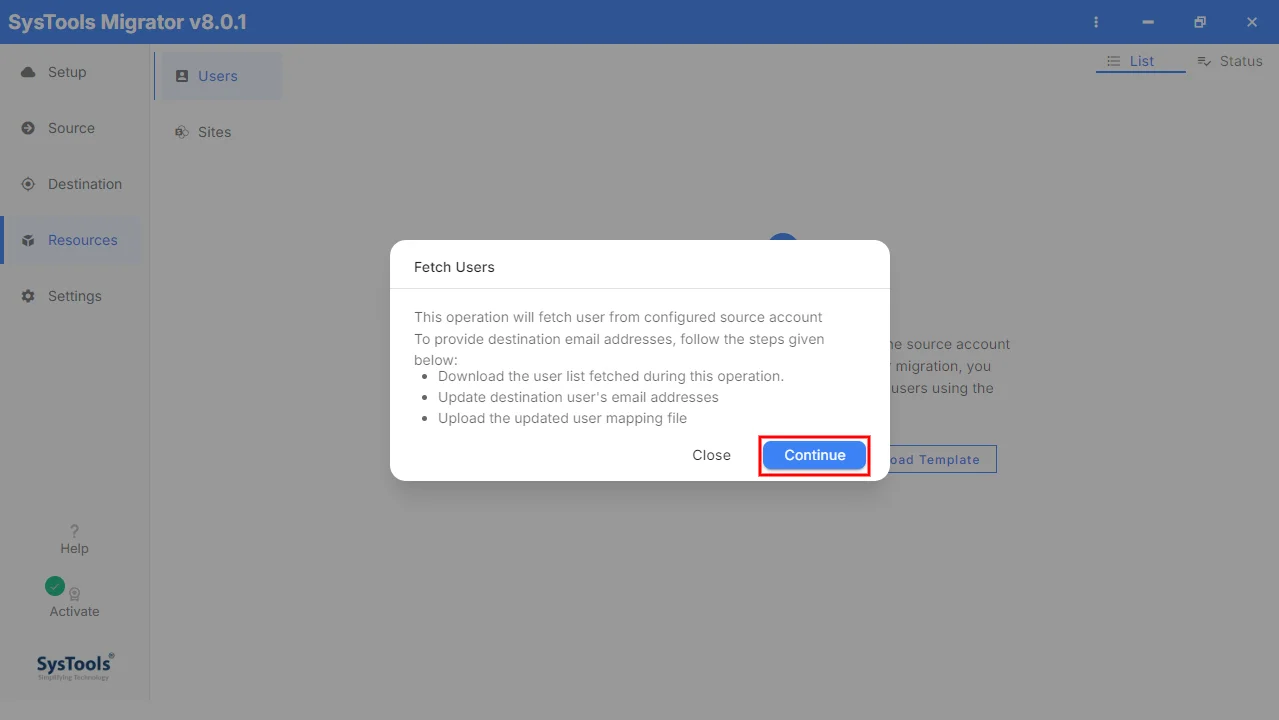
To specify users for migration, choose one of the available options: Fetch Users, Import Users, or Download Template.
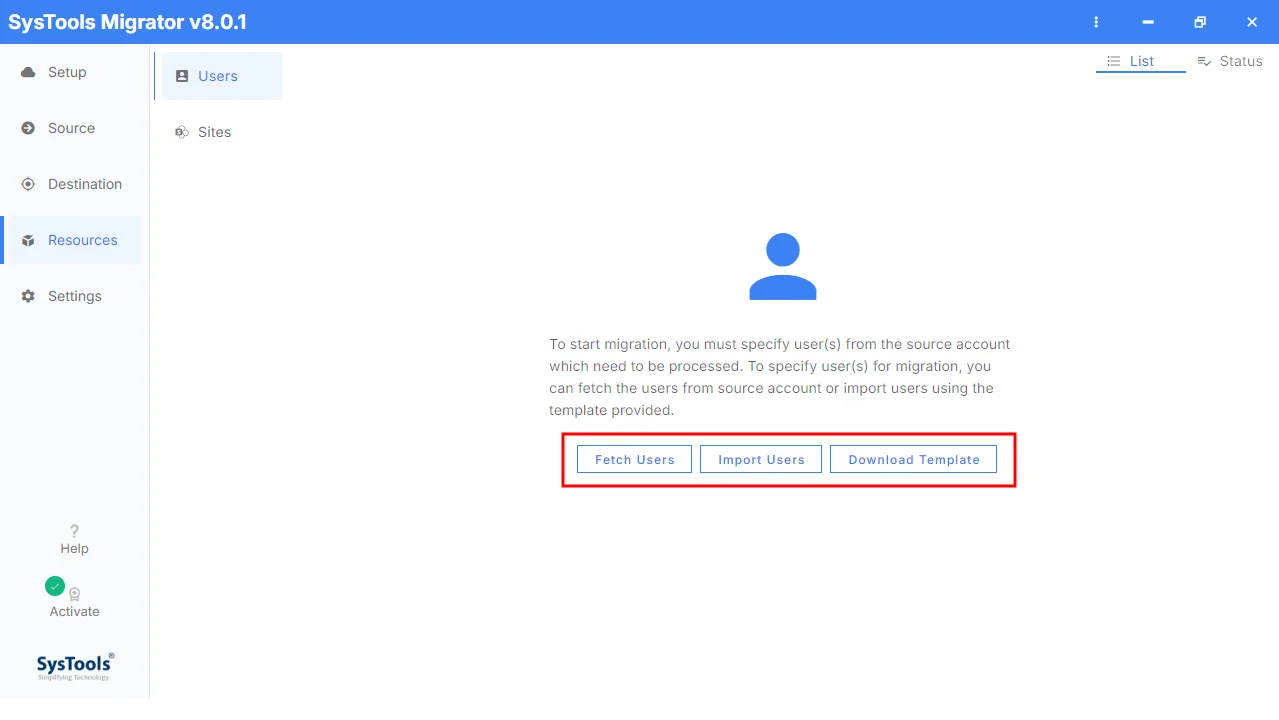
If you choose Fetch Users, the software retrieves users from the configured source account. Click Continue to download the user list and update the destination email addresses.
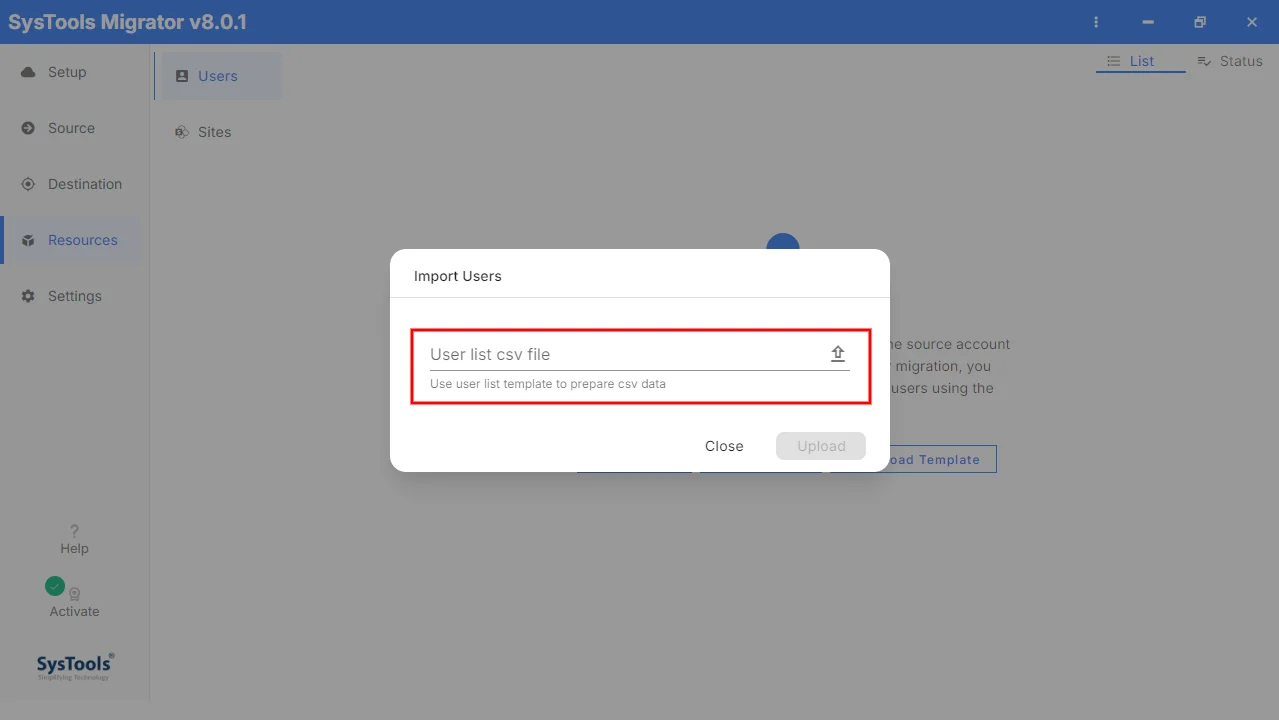
If you wish to import users manually, upload the User List CSV File prepared using the provided user list template.
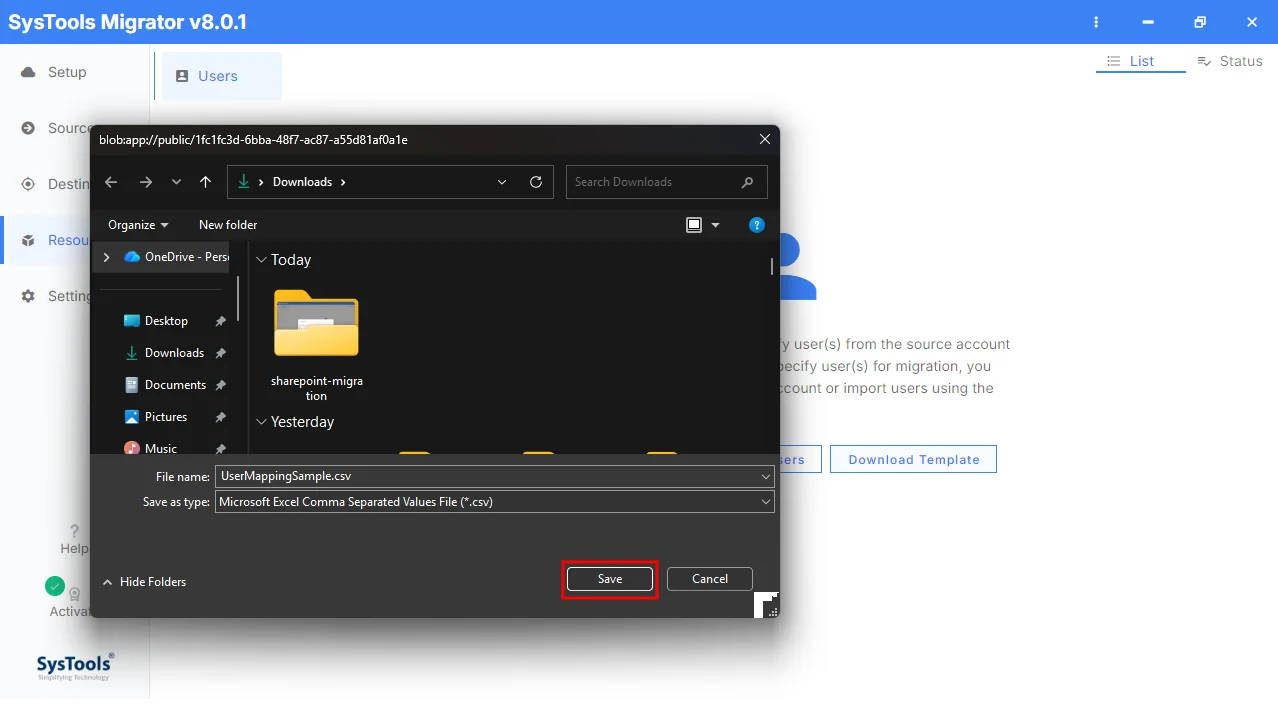
If you need a template for user mapping, click Download Template and save the UserMappingSample.csv file to your system.
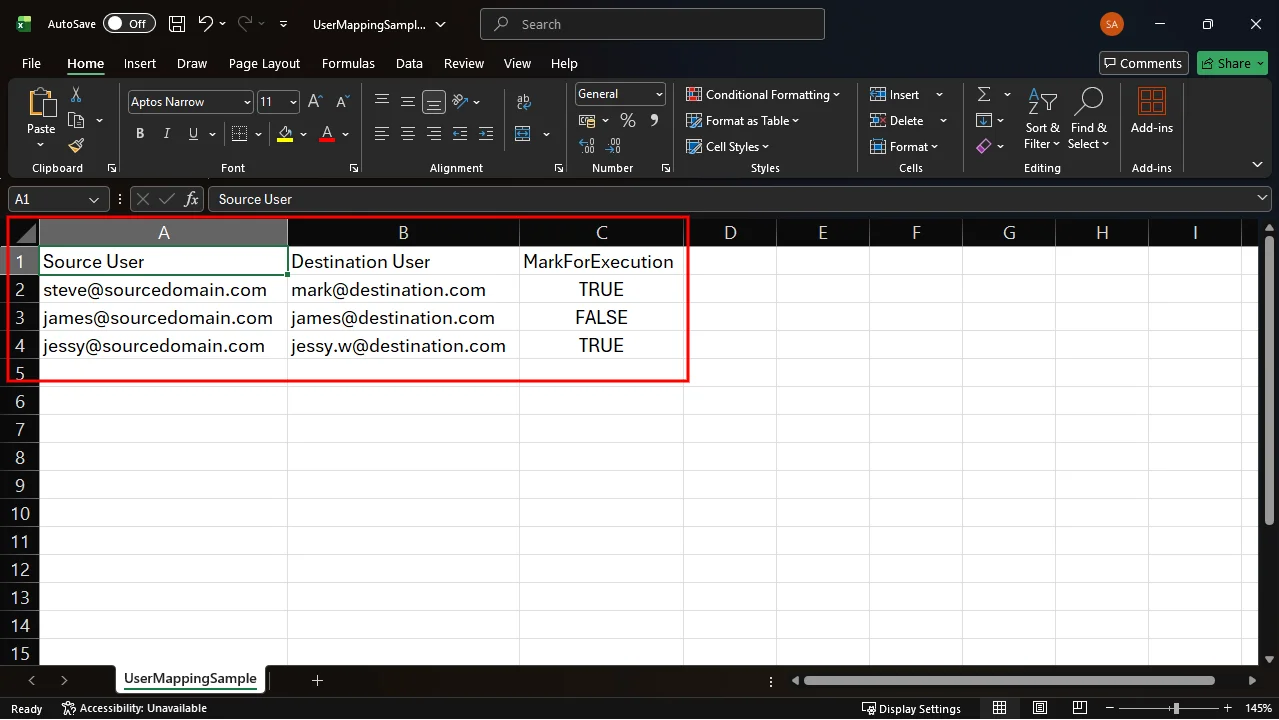
Open the downloaded UserMappingSample.csv file and enter the Source User, Destination User, and MarkForExecution details for the users you want to migrate.
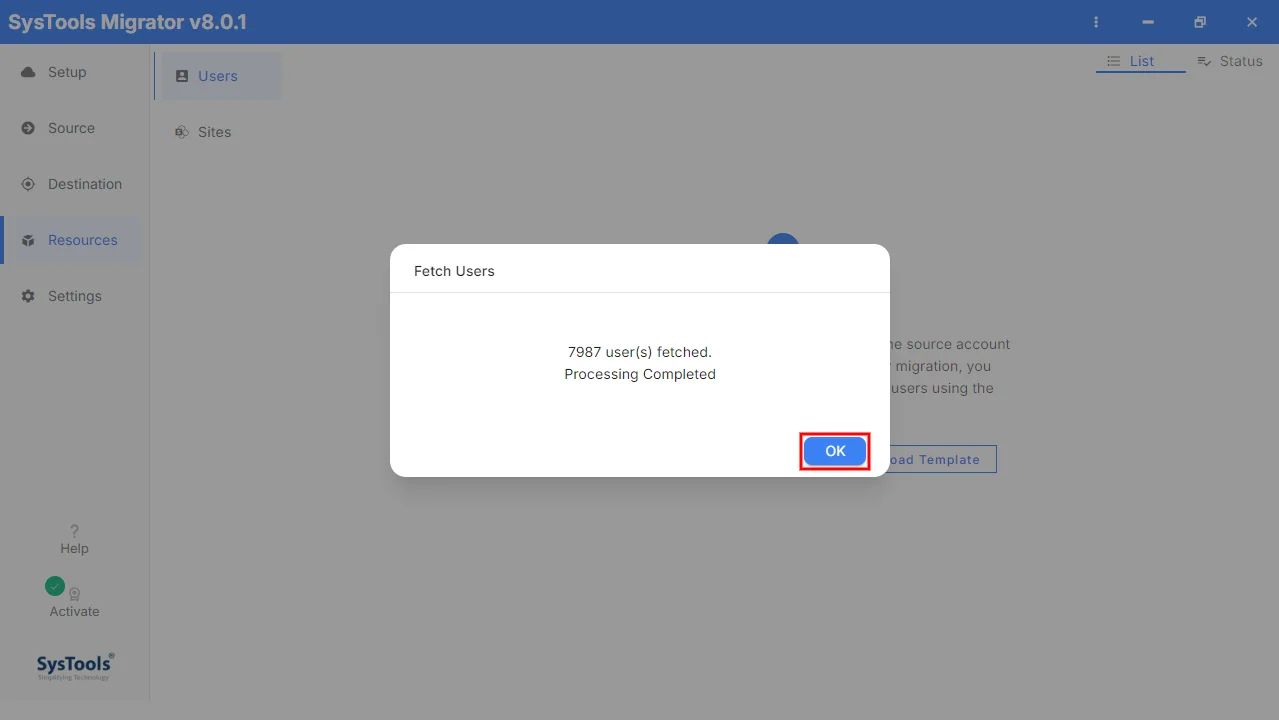
Once all the users are fetched, you will be prompted with a message displaying the Number of User(s) fetched. Click on OK to continue.
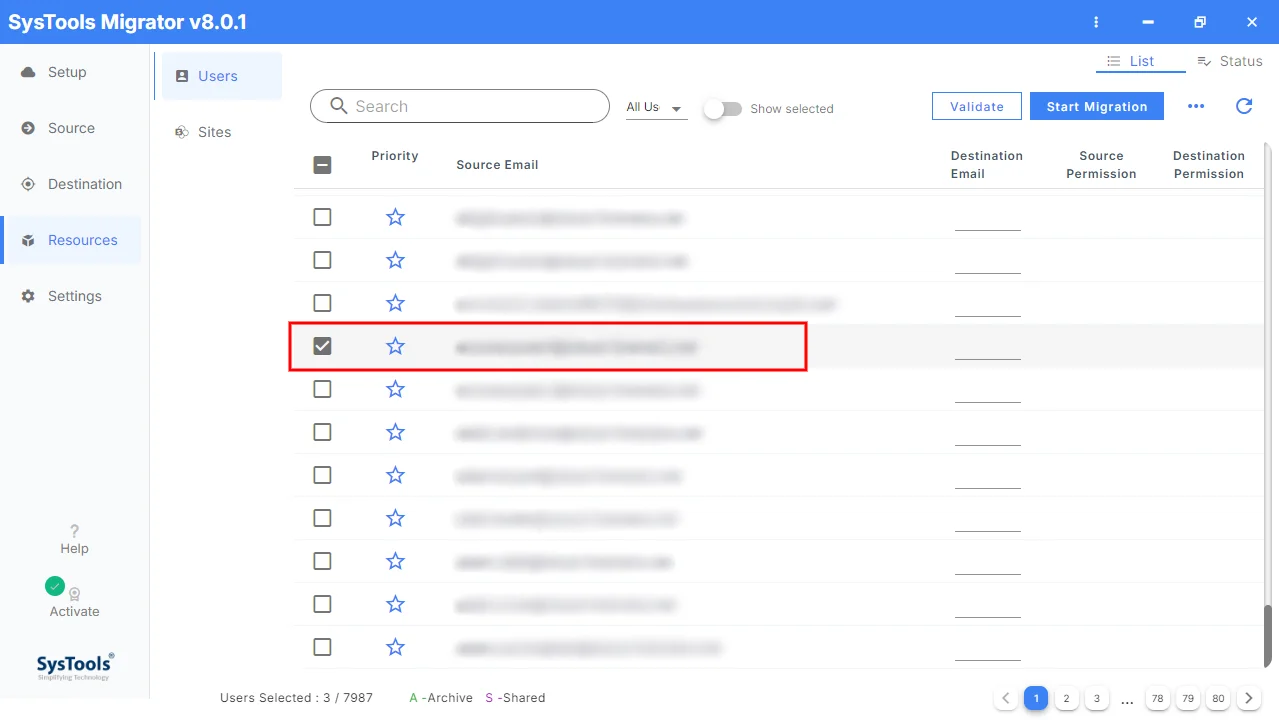
Select the required users from the displayed list through the checkboxes.
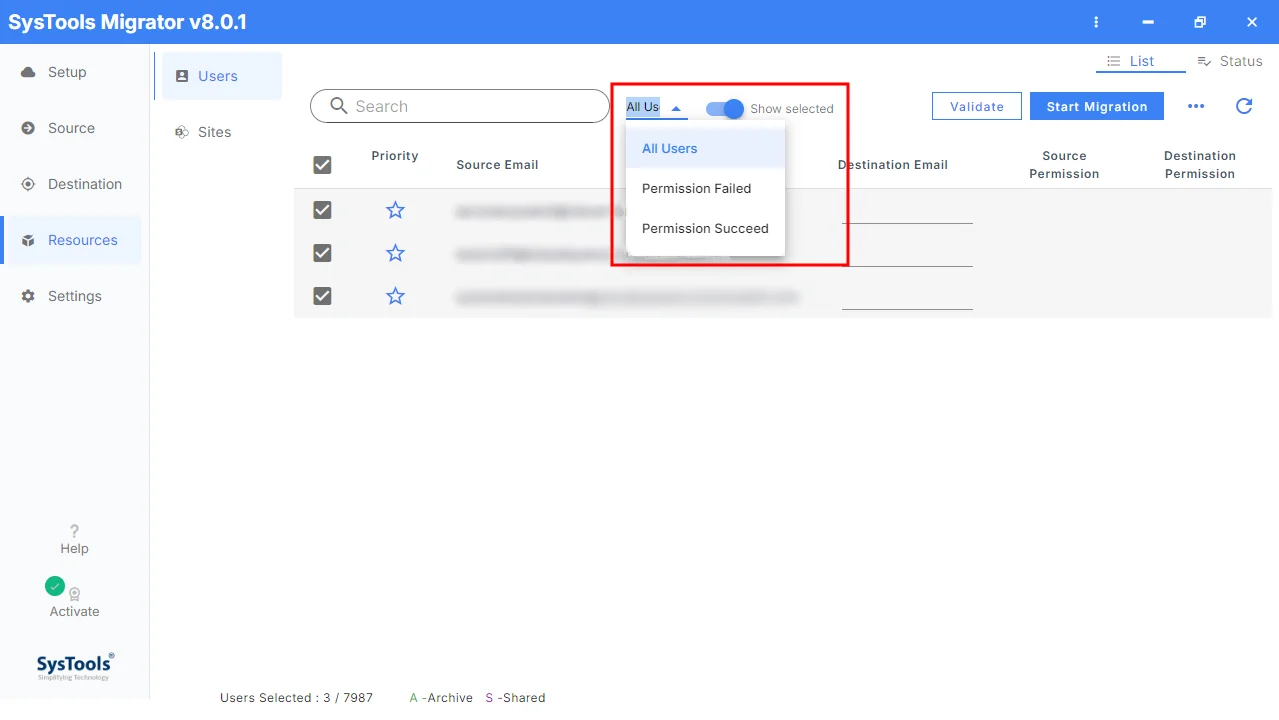
Use the filter to view All Users, Permission Failed, or Permission Succeed users. Enable Show Selected to display only the users selected for migration.
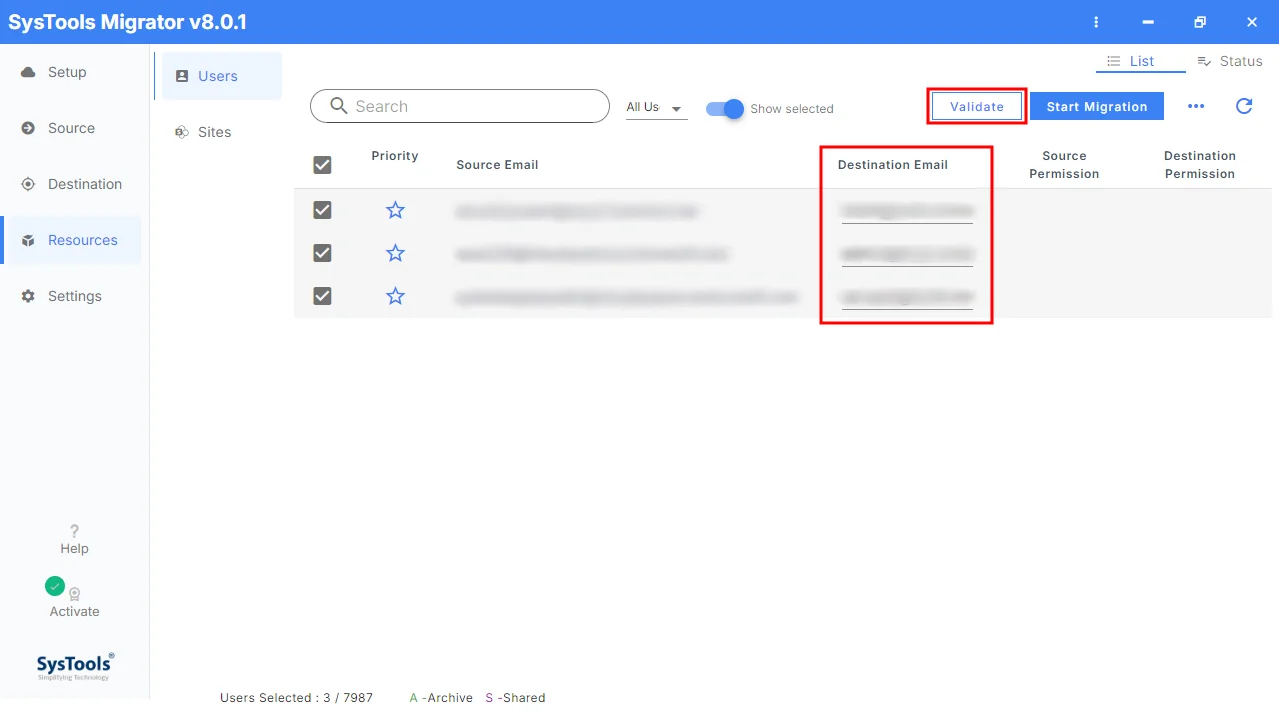
Provide the Destination Email addresses for the selected users, then click Validate to verify the user permissions.
After succcessful validation, the Source Permission and Destination Permission columns display the permission status for the selected users.
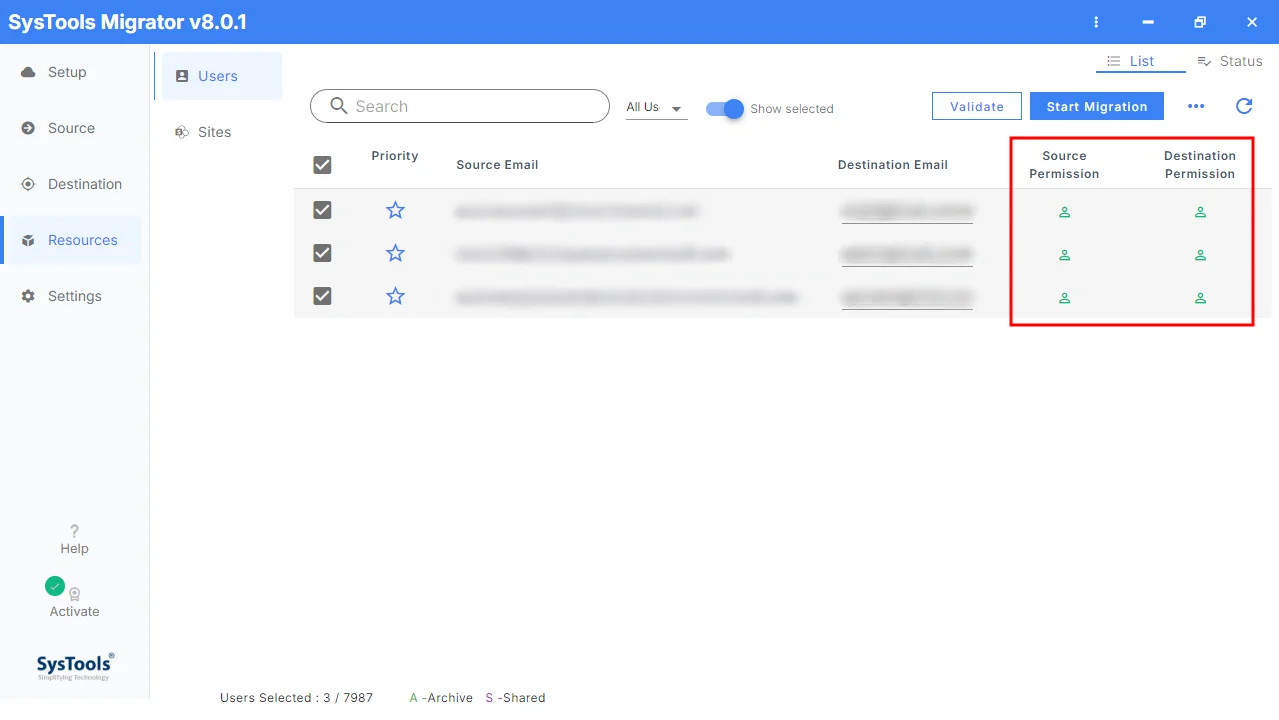
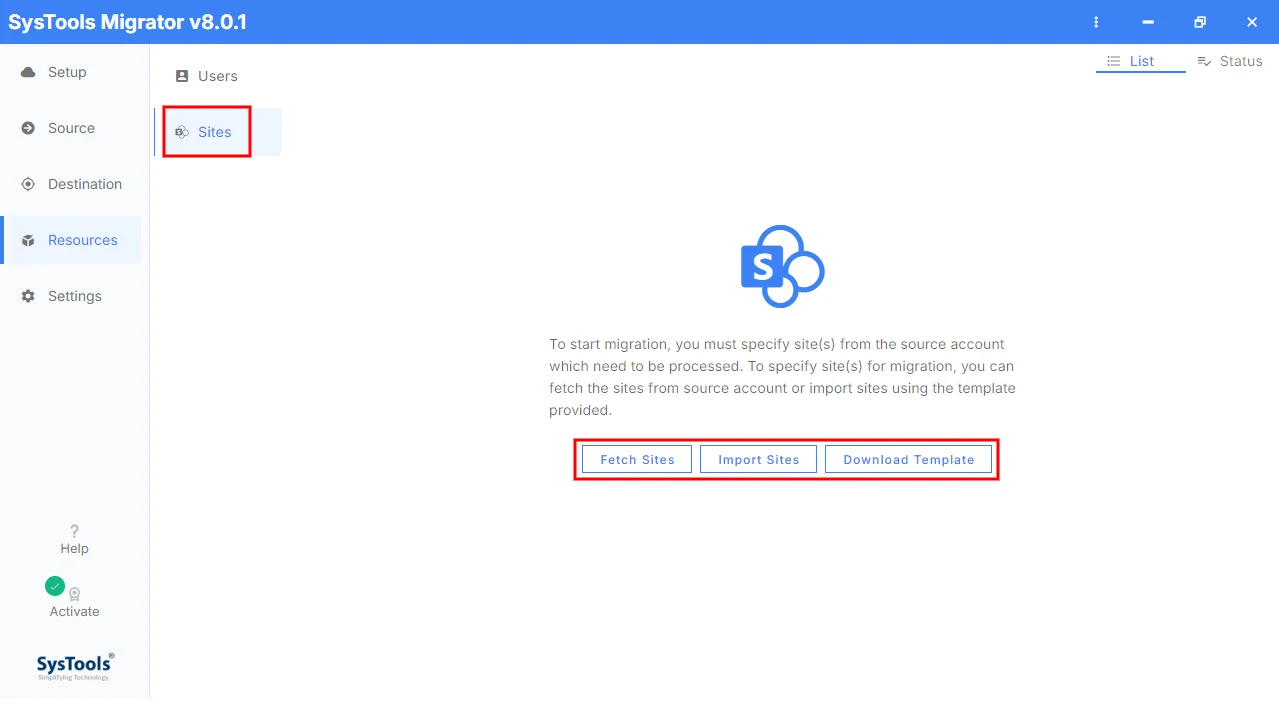
To specify sites for migration, select Sites and choose Fetch Sites, Import Sites, or Download Template to add the required sites.
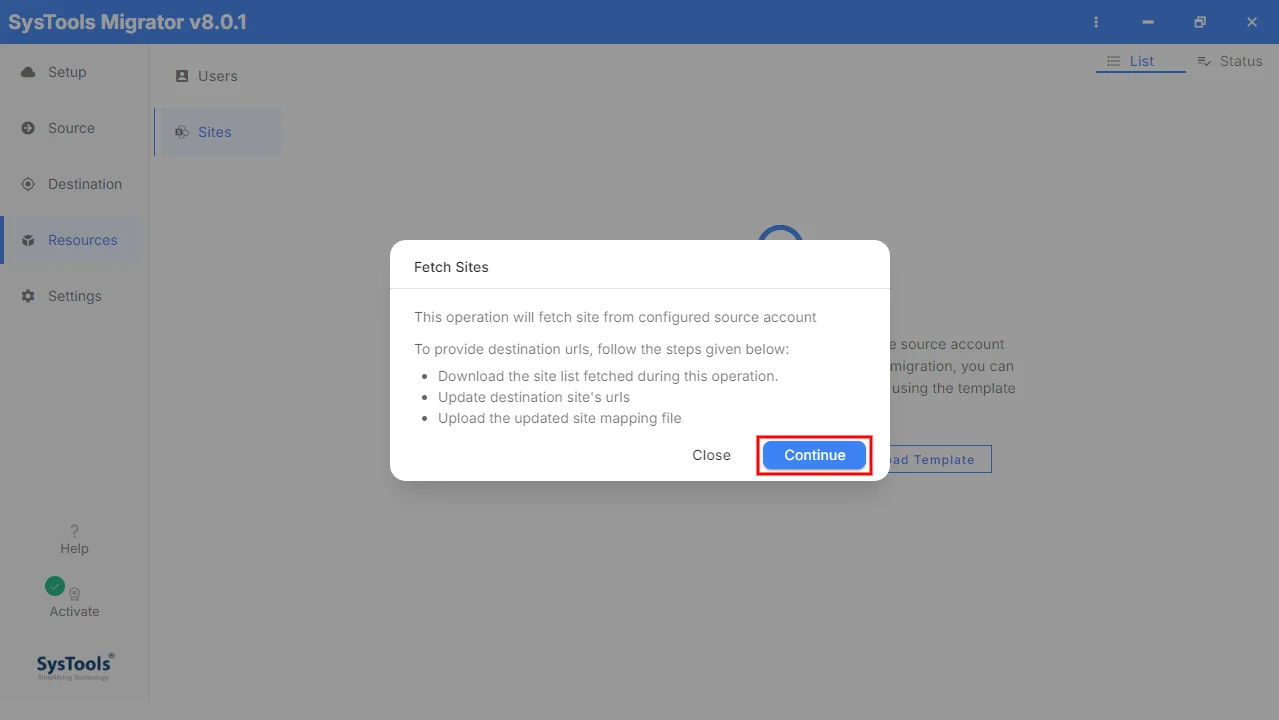
Click on Fetch Sites and then click on Continue to get sites from the configured source account.
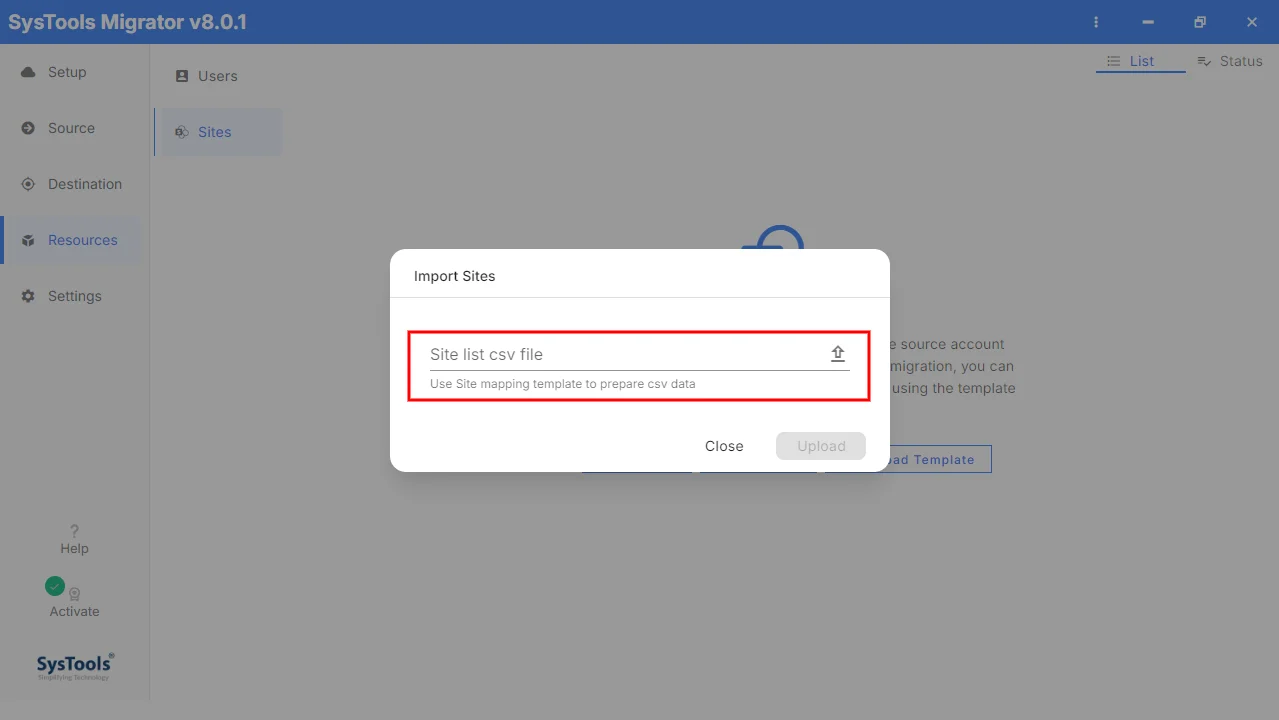
If you wish to import sites manually, upload the Site List CSV File.
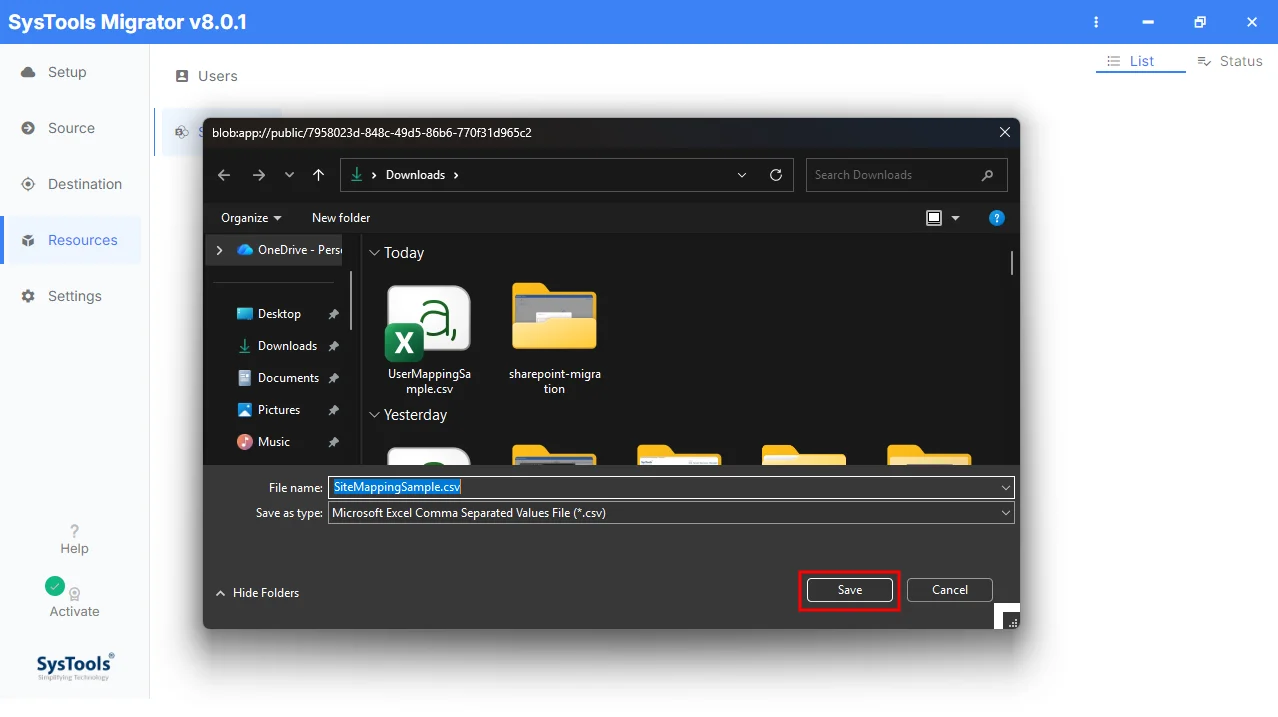
Download the SiteMappingSample.csv template and save it to your system for preparing the site mapping data.
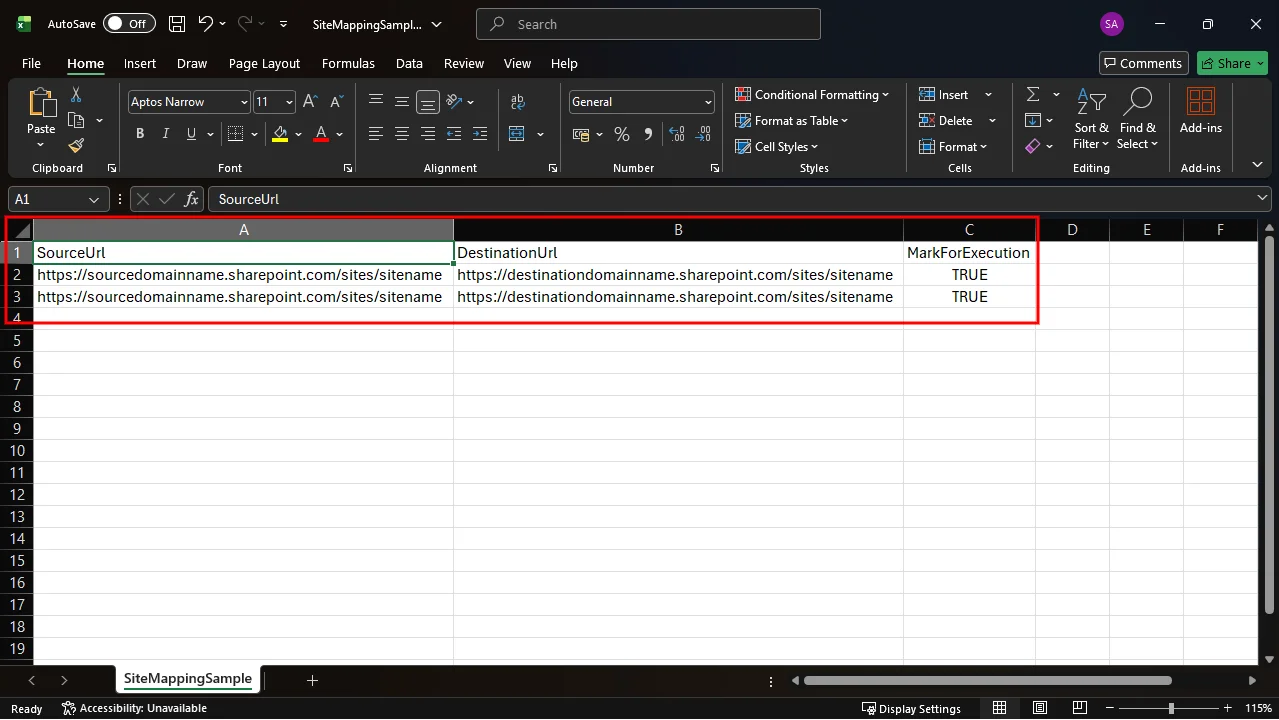
Open the SiteMappingSample.csv file and enter the SourceUrl, DestinationUrl, and MarkForExecution details for the sites to be migrated.
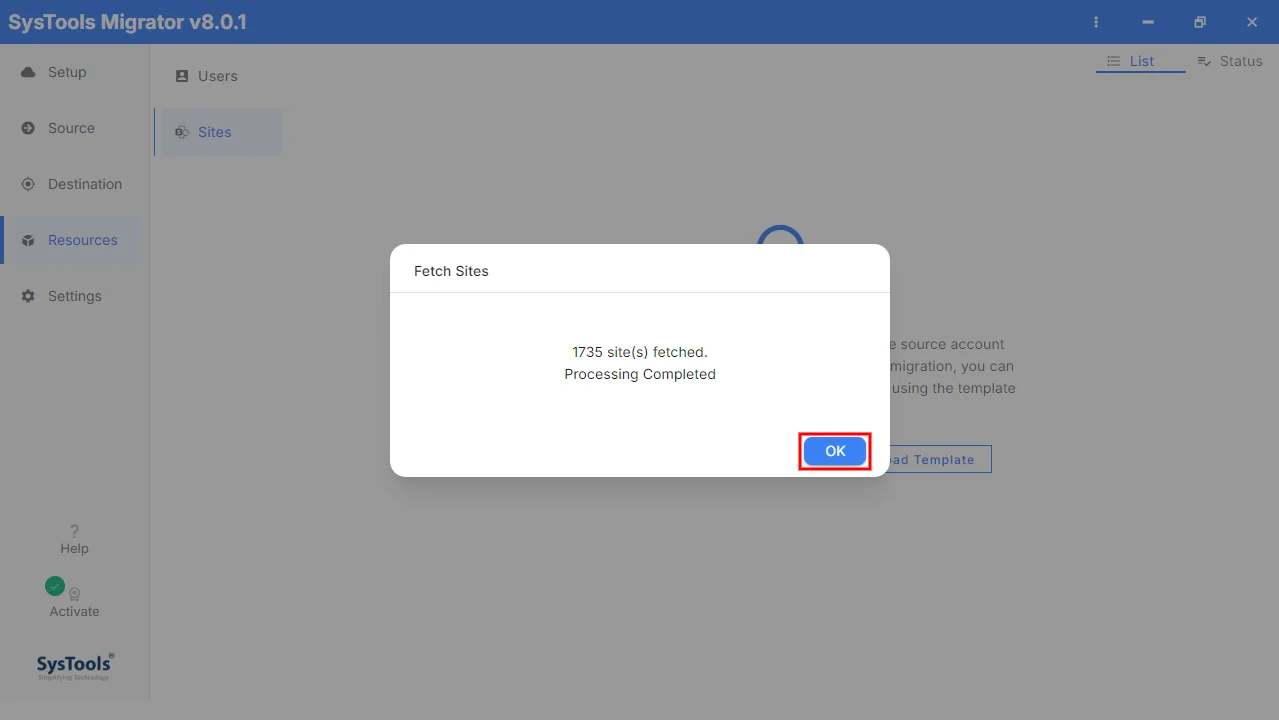
Once the sites are fetched successfully, the software displays the total number of sites retrieved. Click OK to continue.
The list of all the fetched users is displayed. Select the required one(s).
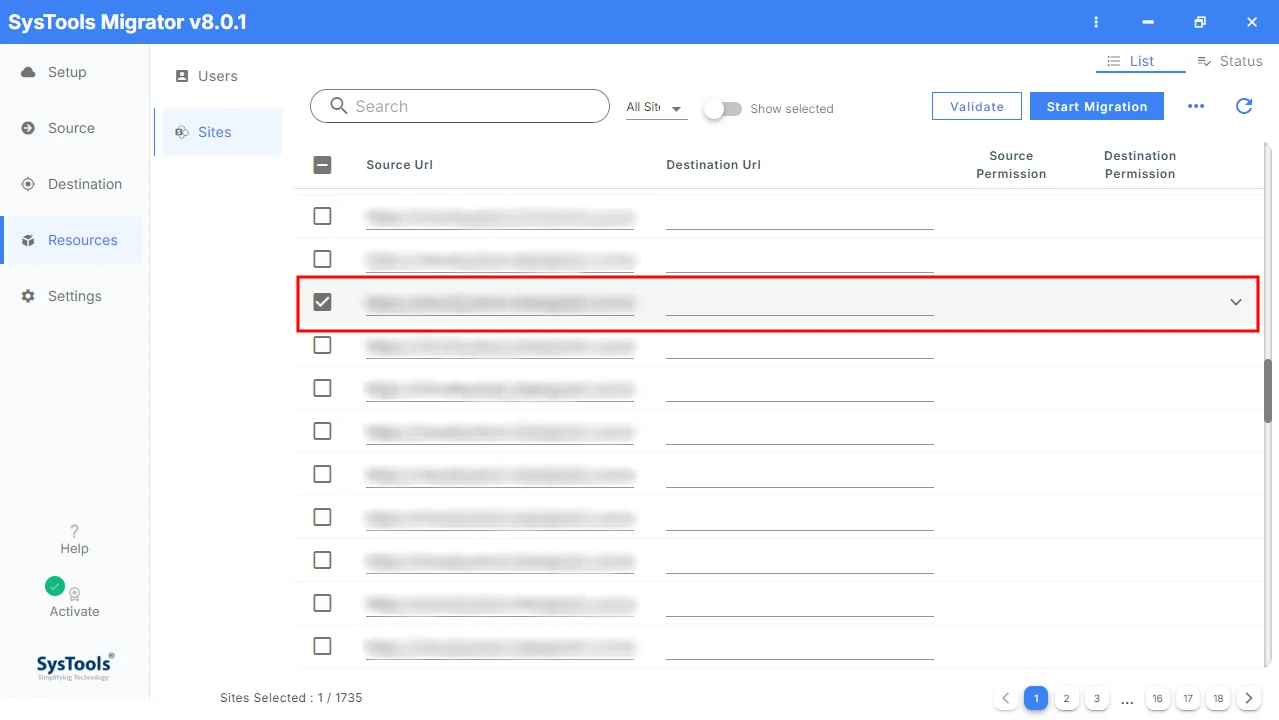
You can use the filter to view All Sites, Permission Failed, or Permission Succeed sites.
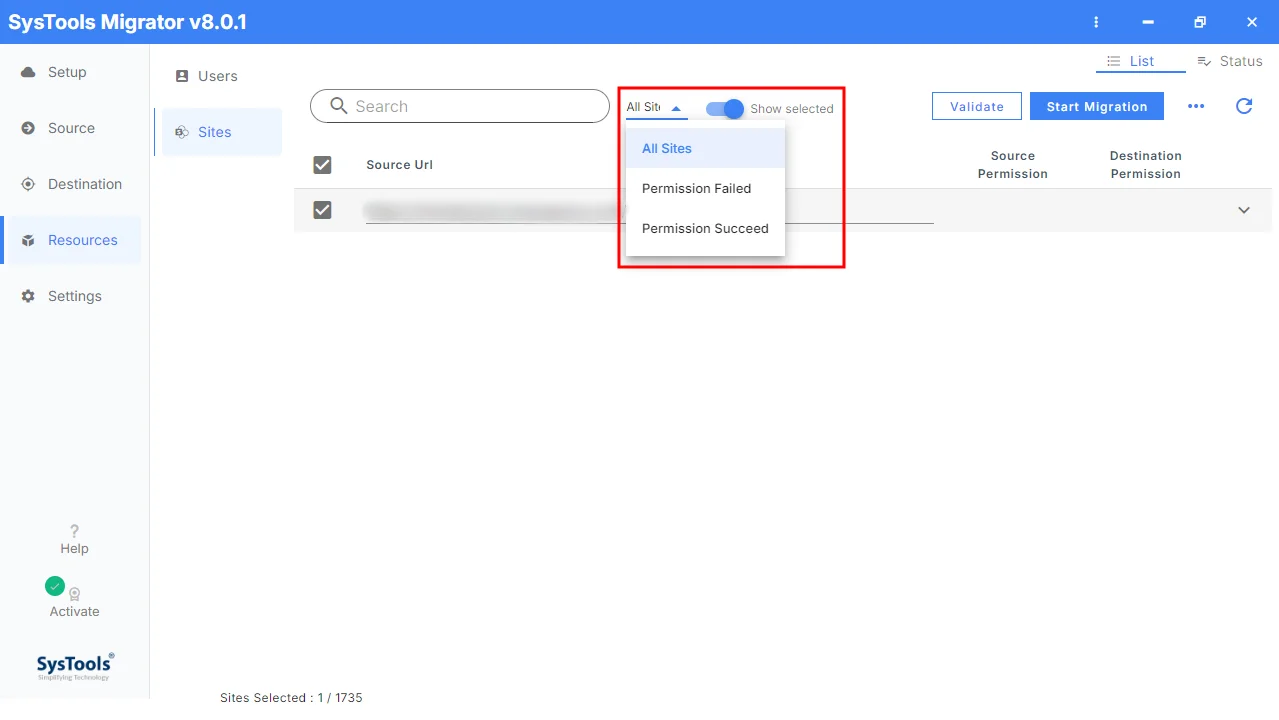
Enter the Destination URL for the selected site and click Validate to verify the permissions.
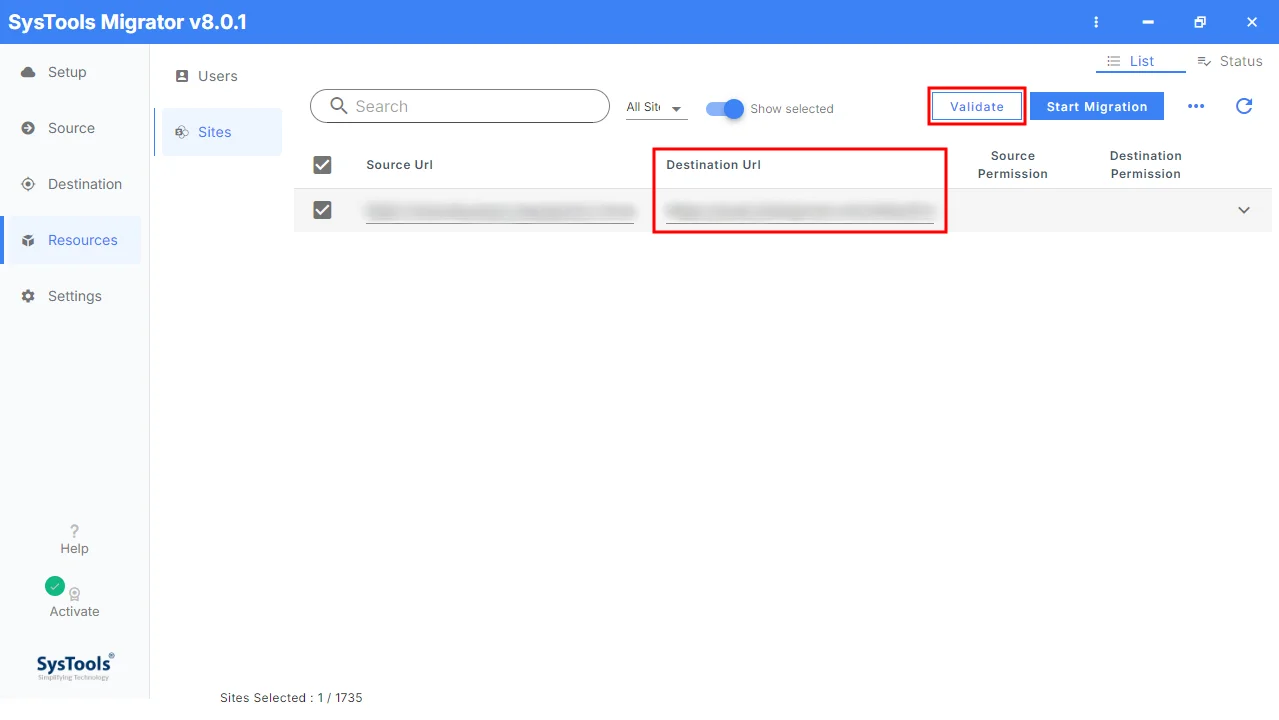
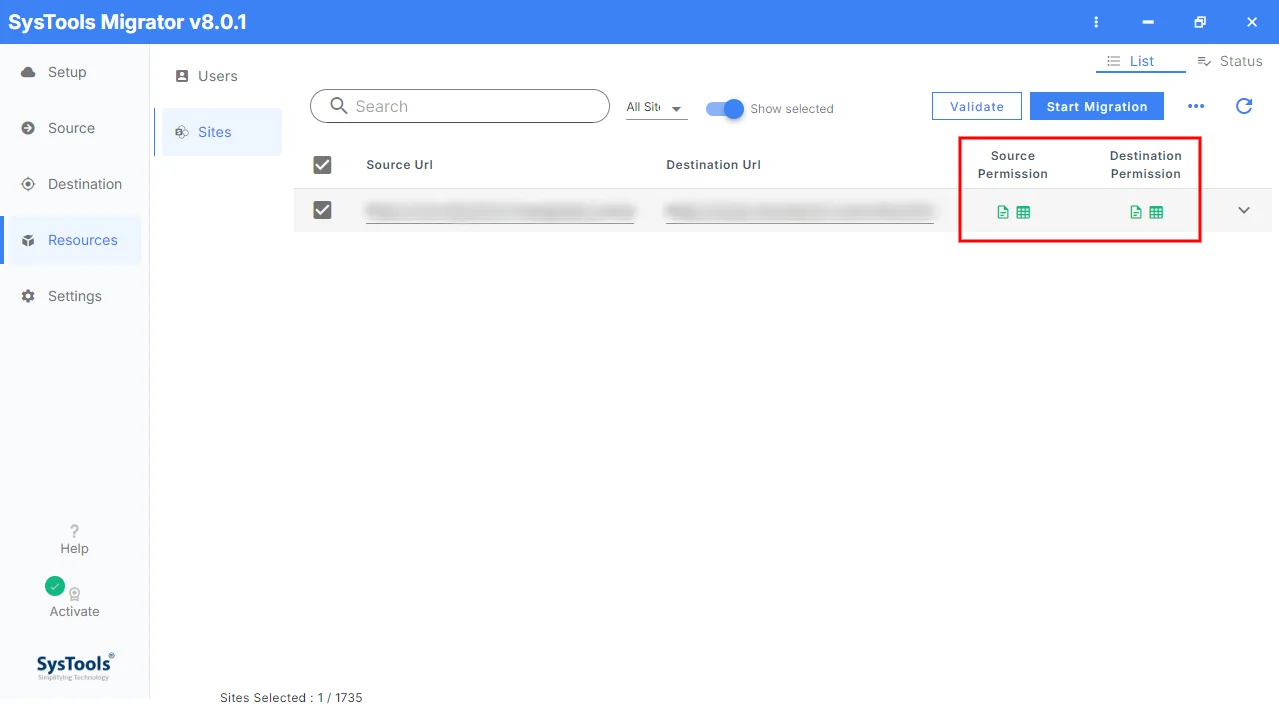
After validation, the Source Permission and Destination Permission columns display the available permissions for the selected site.
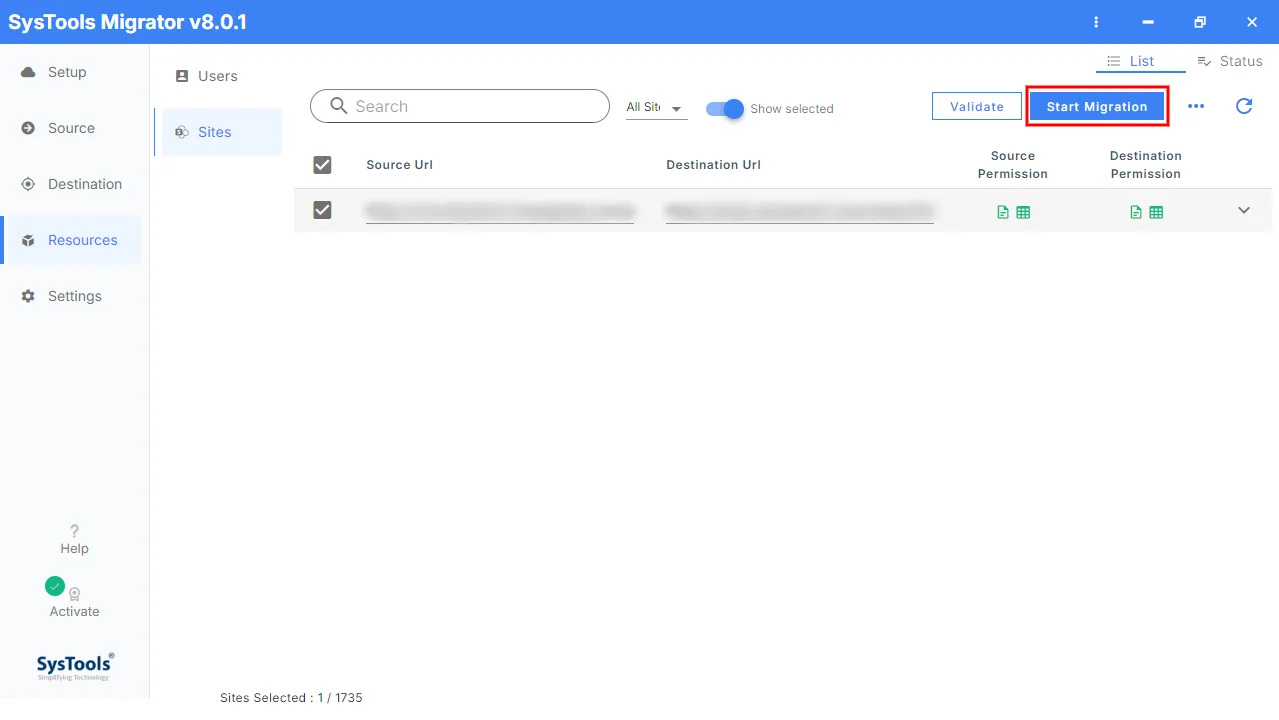
Once all the permissions are validated, click on Start Migration.
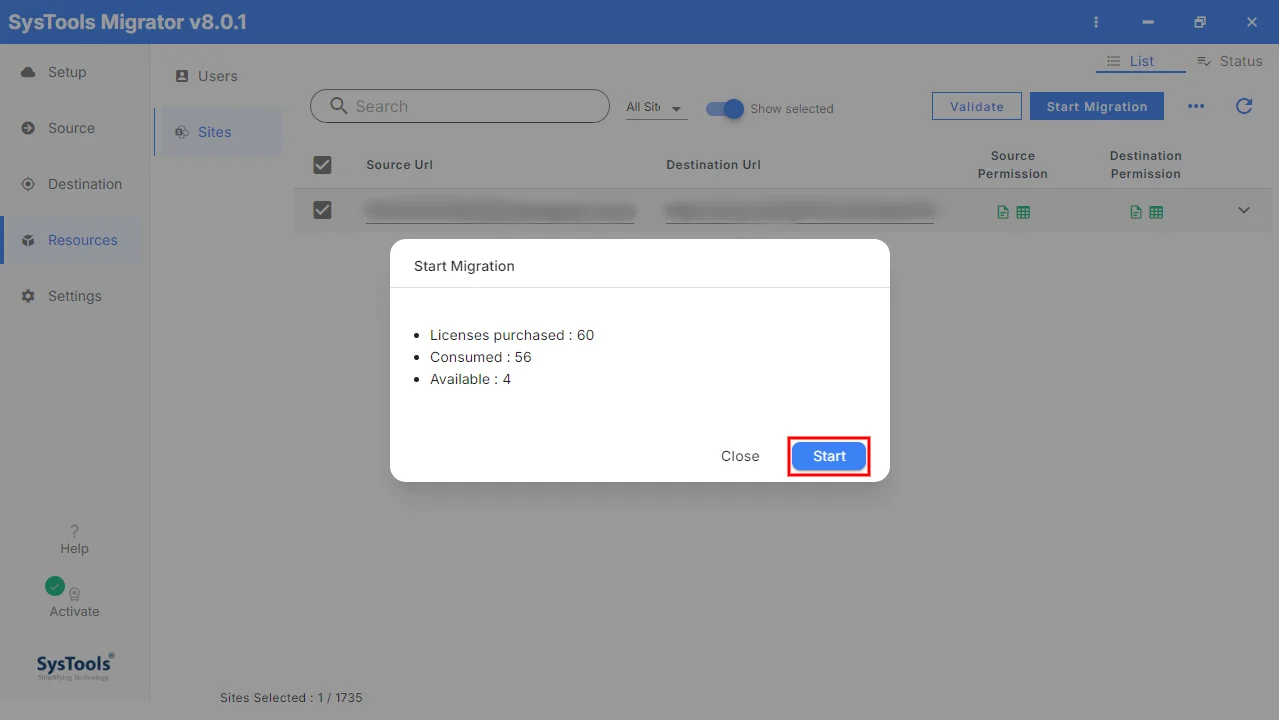
Review the license details and click Start to begin the migration.
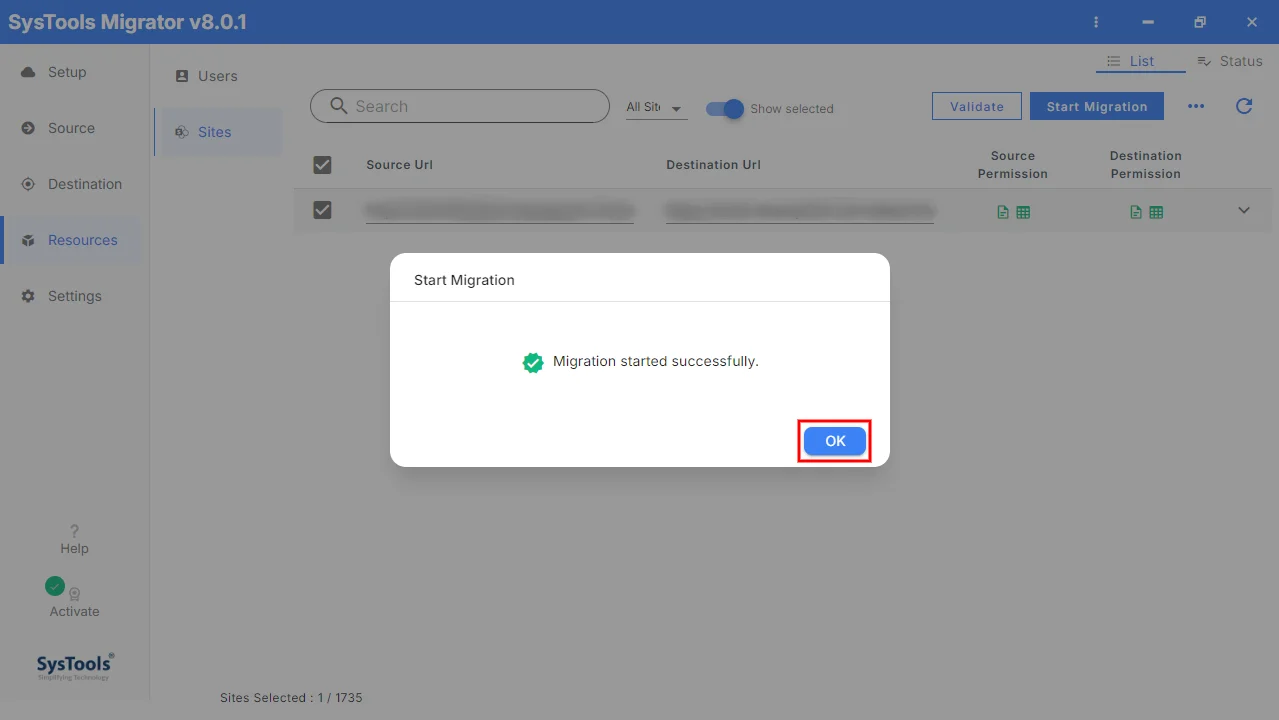
Once the migration starts successfully, click OK to continue.
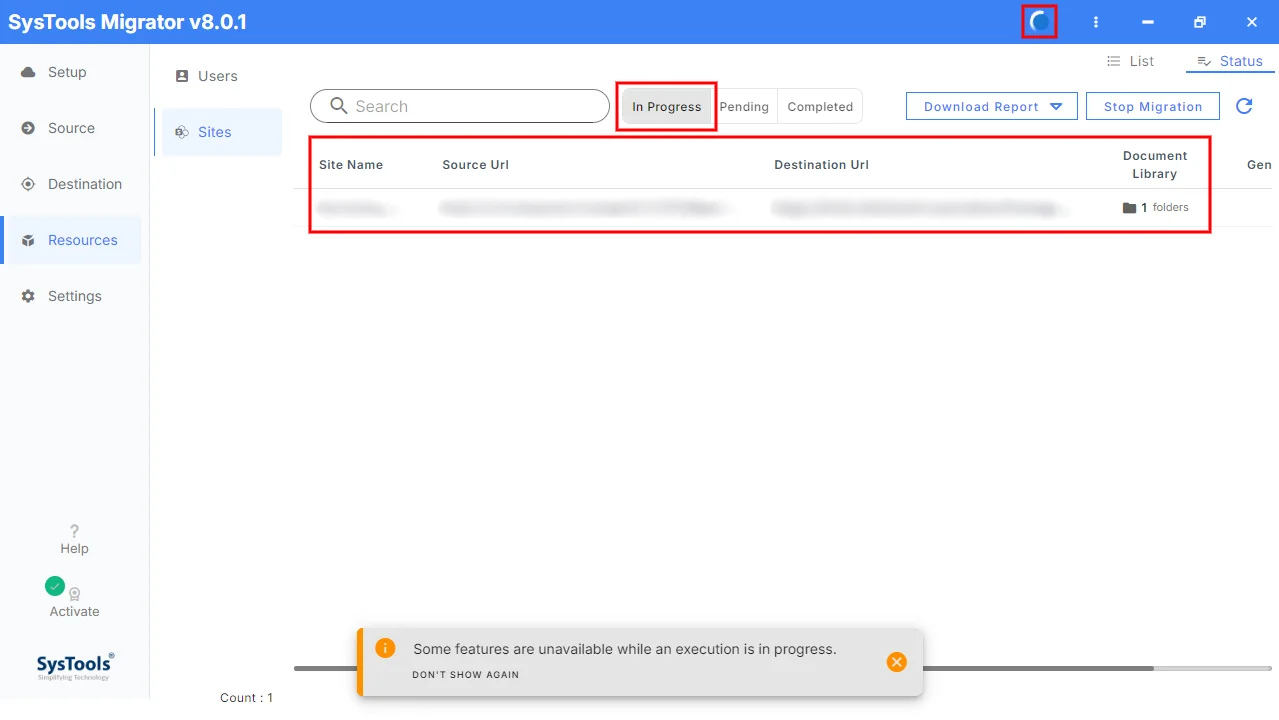
After starting the migration, the Status tab displays the migration progress under "In Progress". You can monitor the source and destination URLs and document library status.
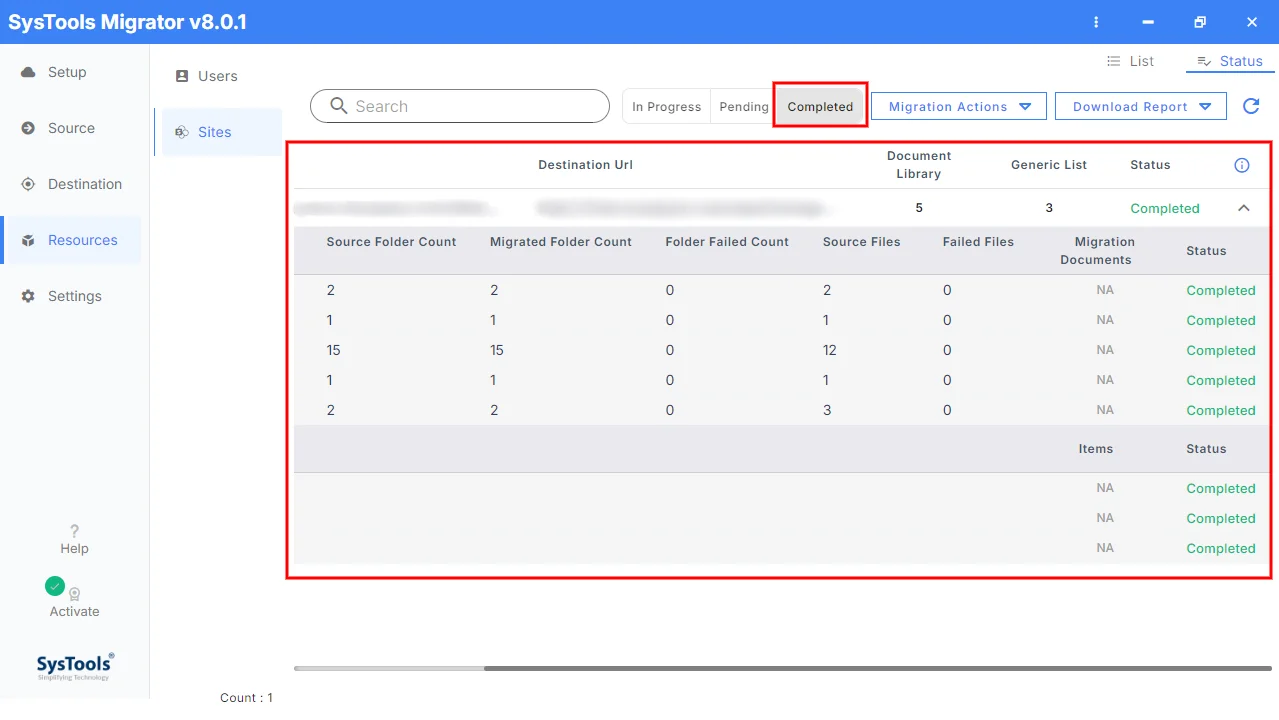
After completion, review the migrated folders, files, and status under the Completed tab to confirm that the data was transferred successfully.
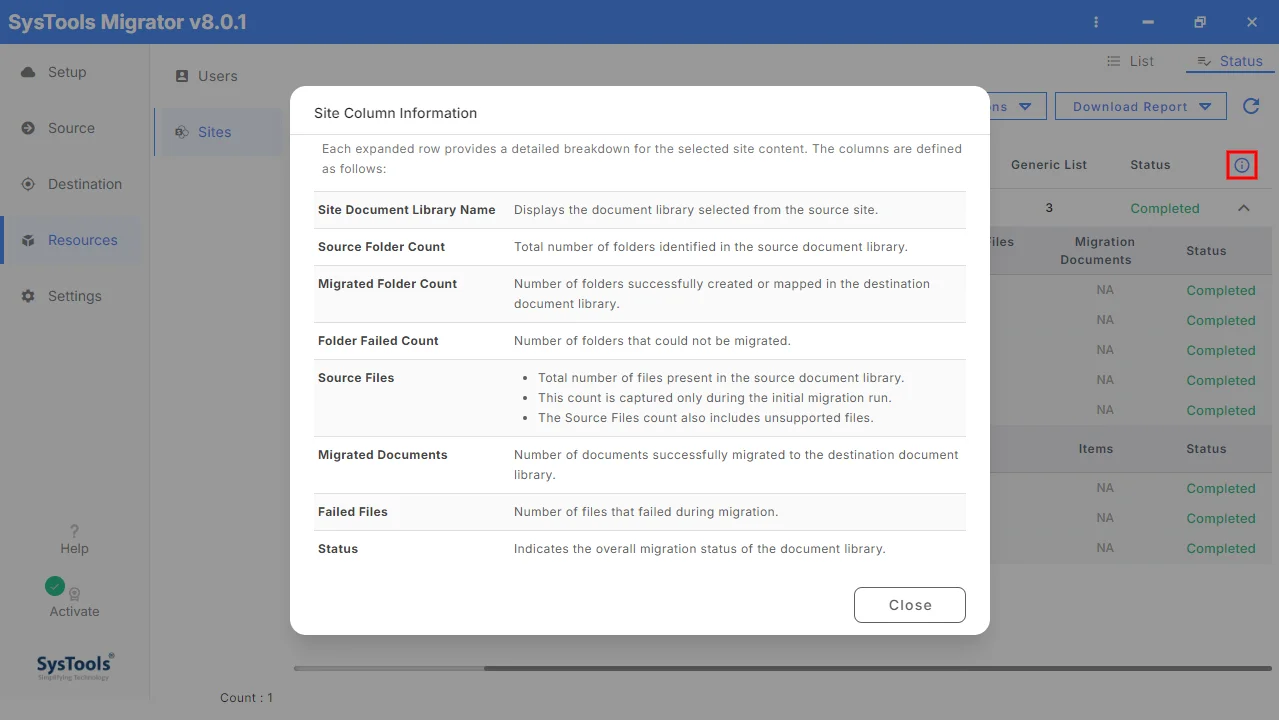
If you need more details about the columns, click on the Info icon. The Site Column Information panel explains the migration details, including source folders, migrated folders, failed folders, source files, migrated documents, failed files, and overall migration status.
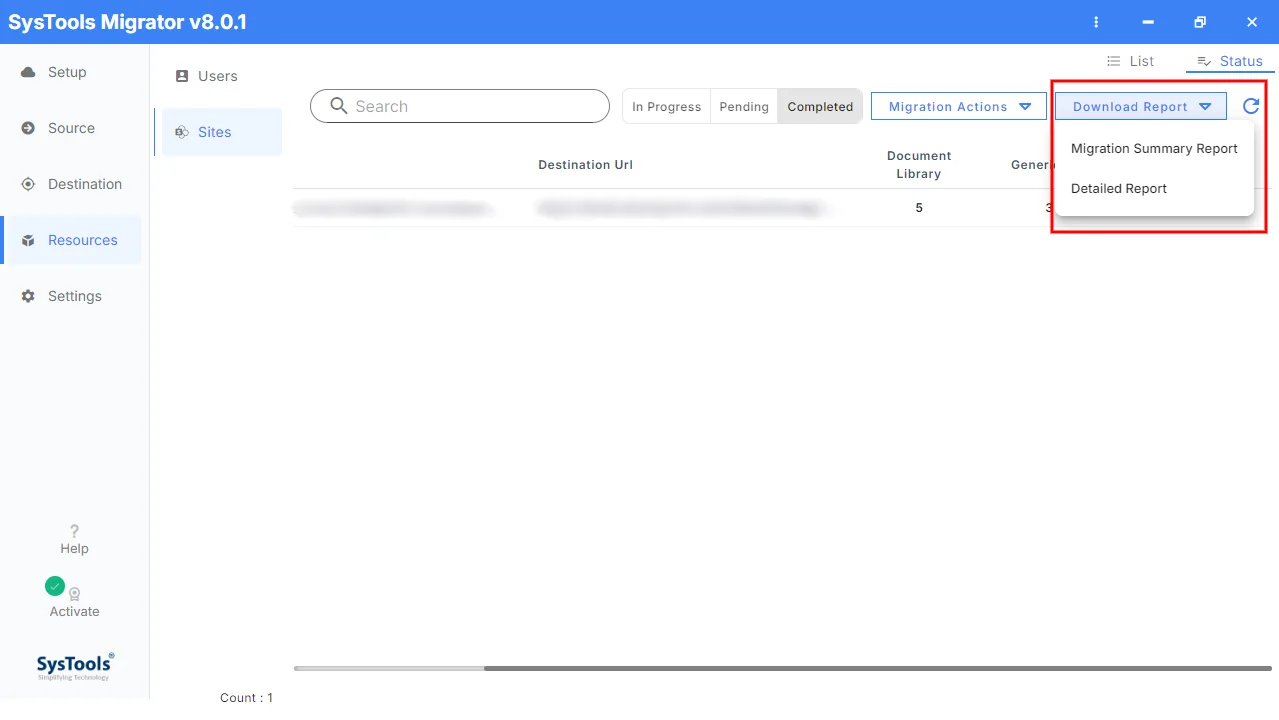
After migration, click Download Report to generate a Migration Summary Report or Detailed Report and review the migration results.
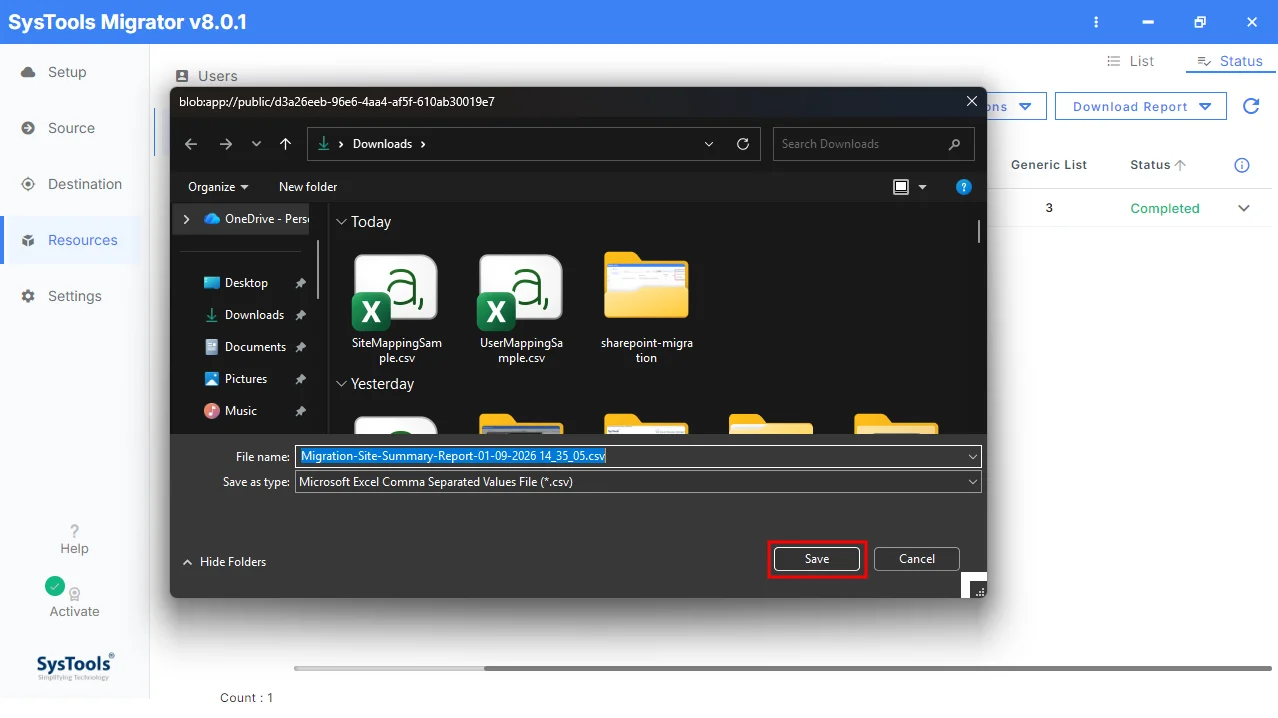
The Migration Summary Report is saved as a CSV file for reviewing the overall migration results.
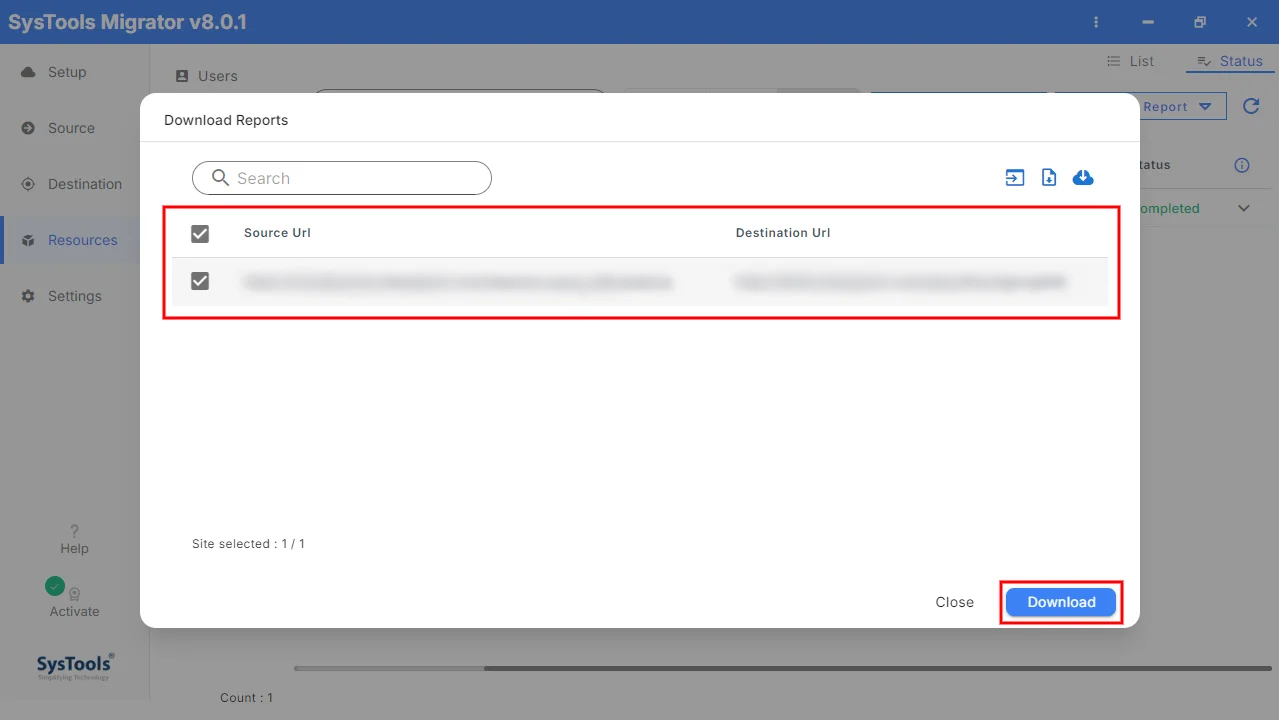
If u click on Detailed Report option, you have to select the required site from the Download Reports window and click Download to proceed towards generating the migration report.
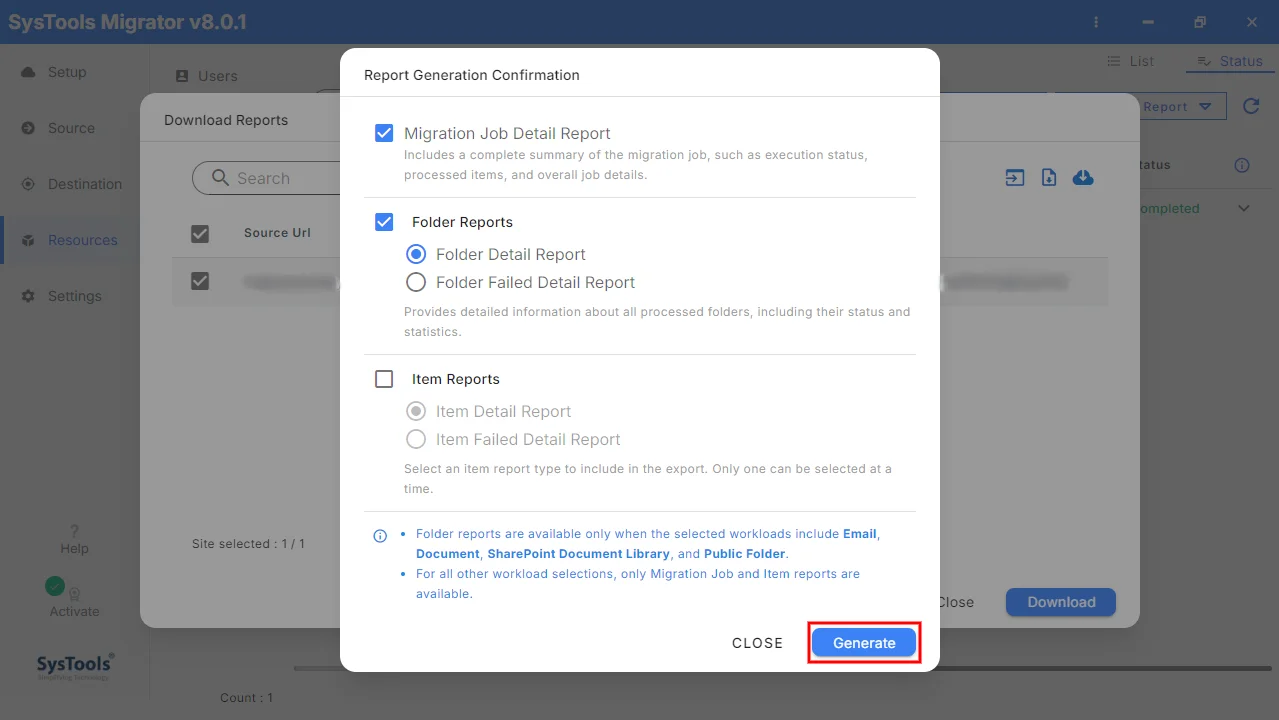
Choose the required report options and click Generate to start generating the detailed migration report.
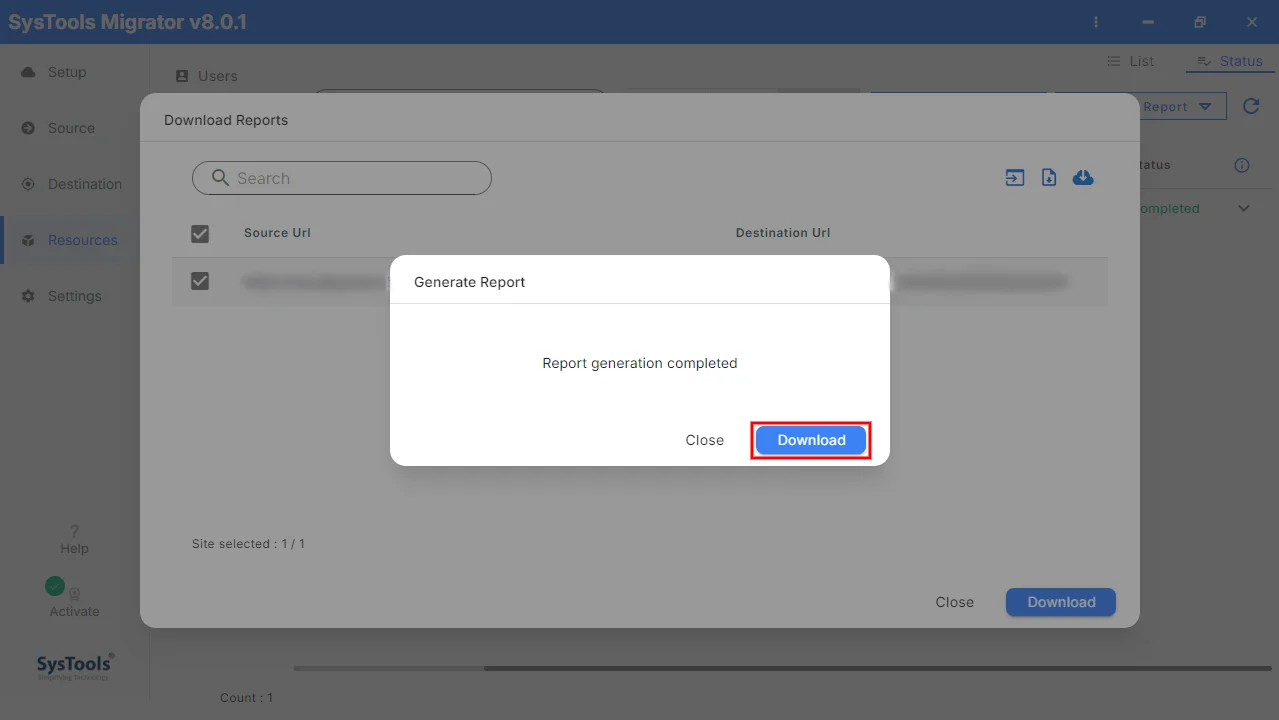
Once the report is generated, click Download to save it for review.
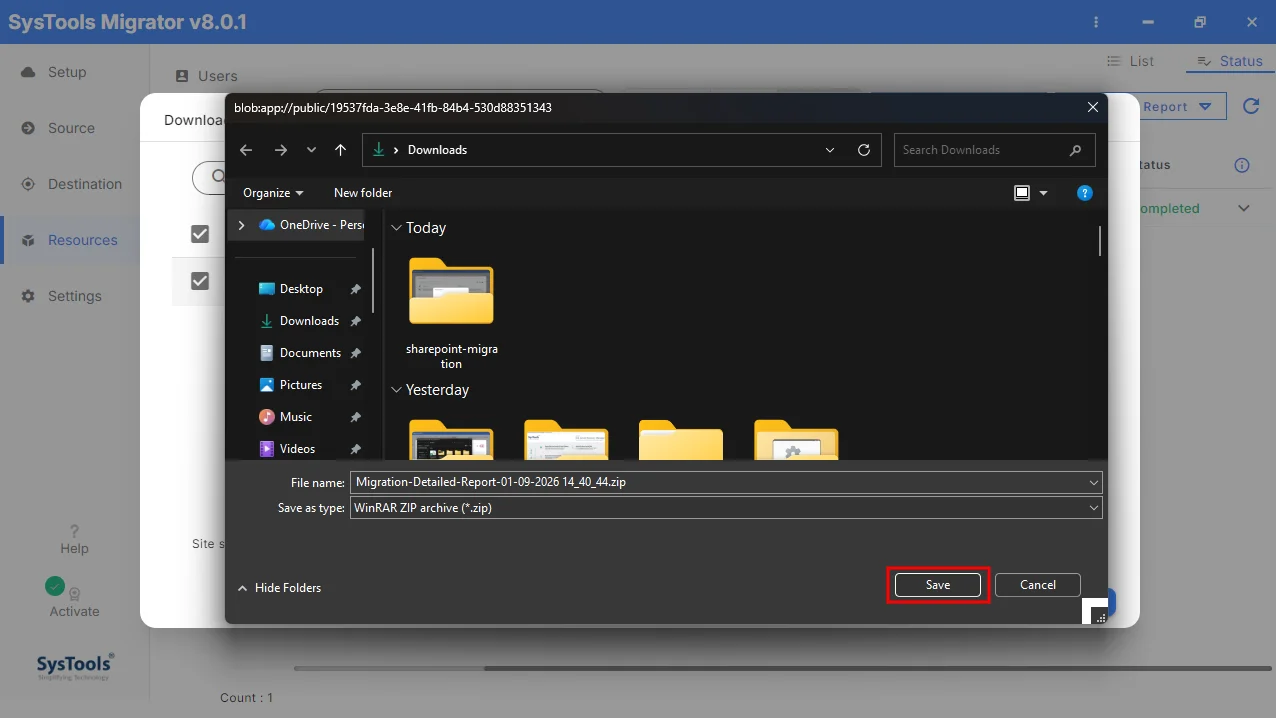
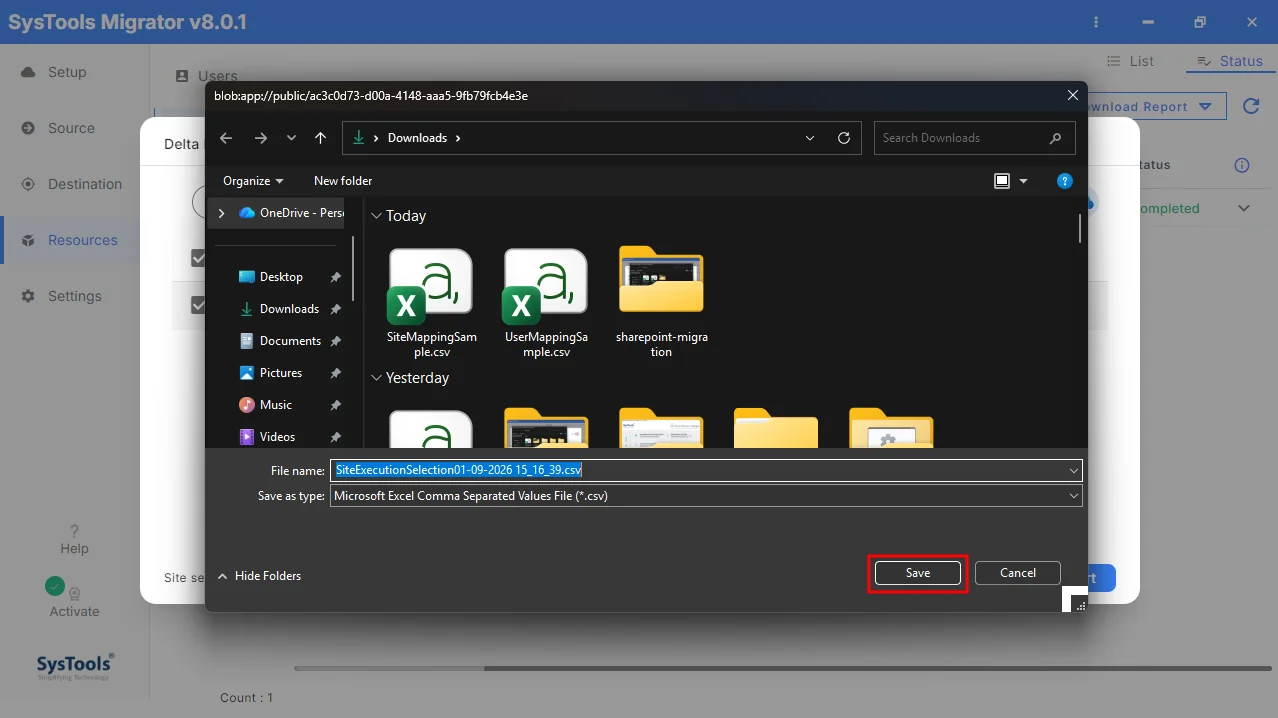
Browse for a destination path for saving the report and click on Save button.
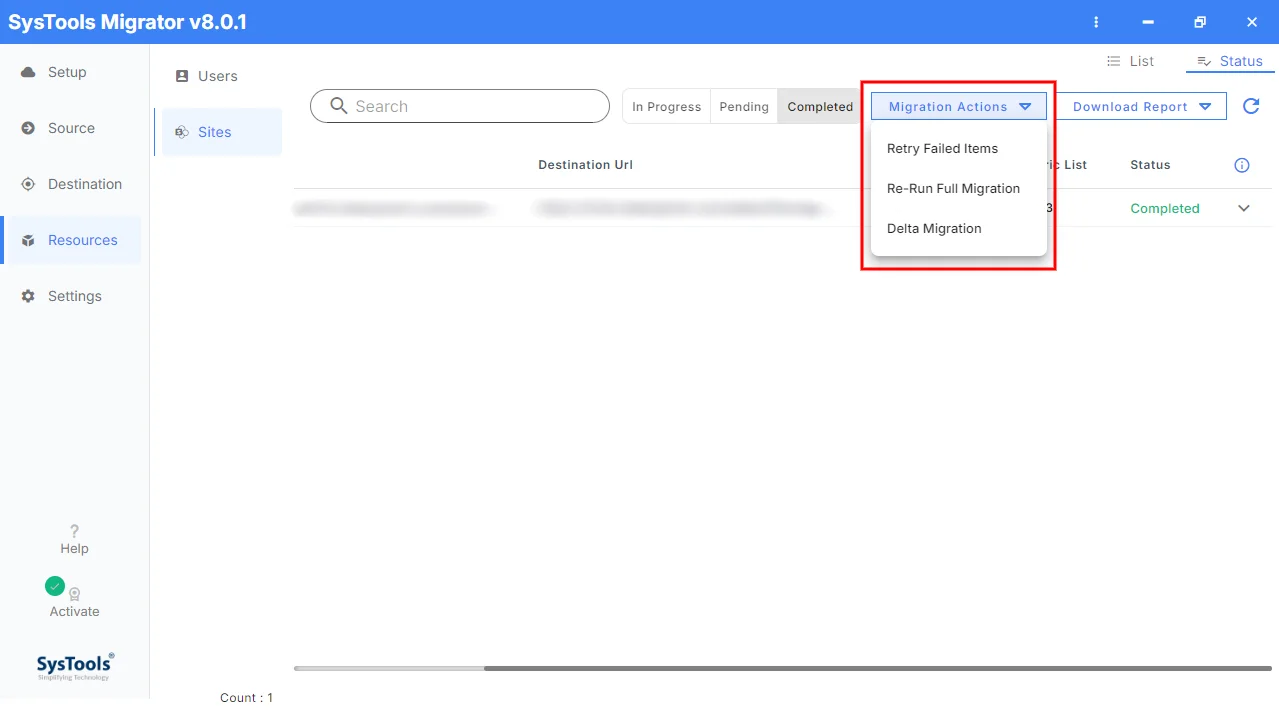
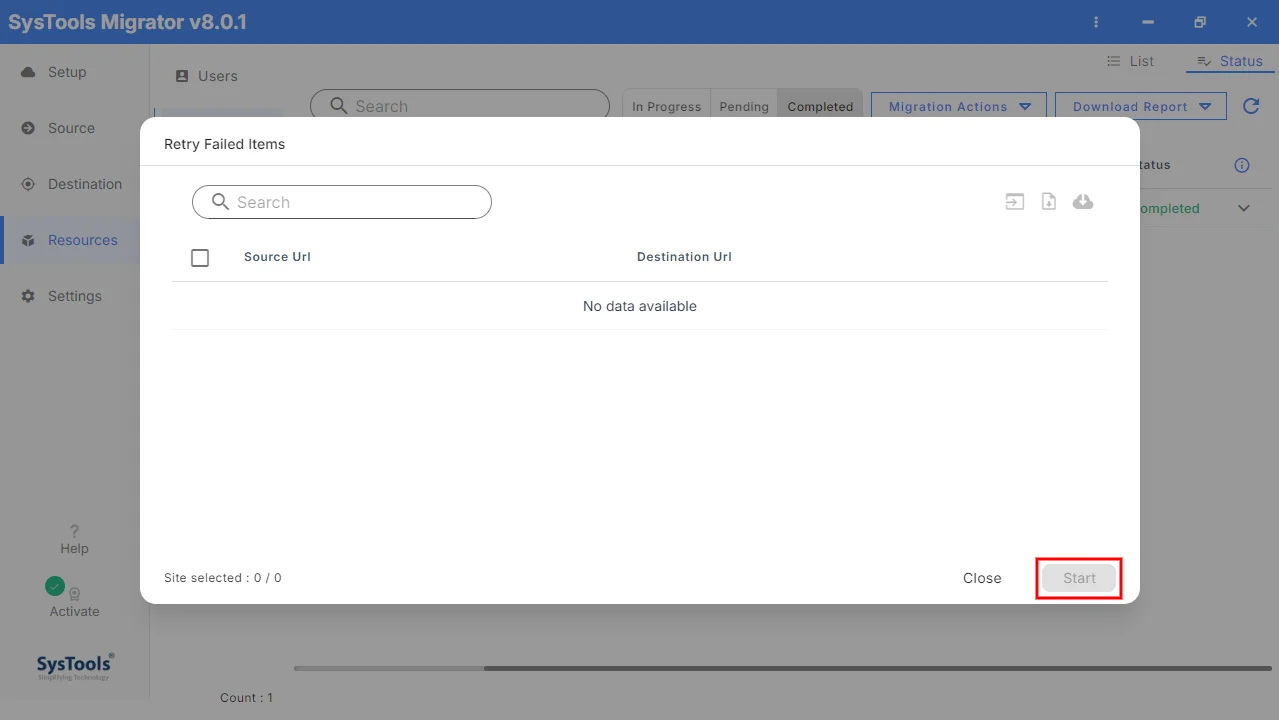
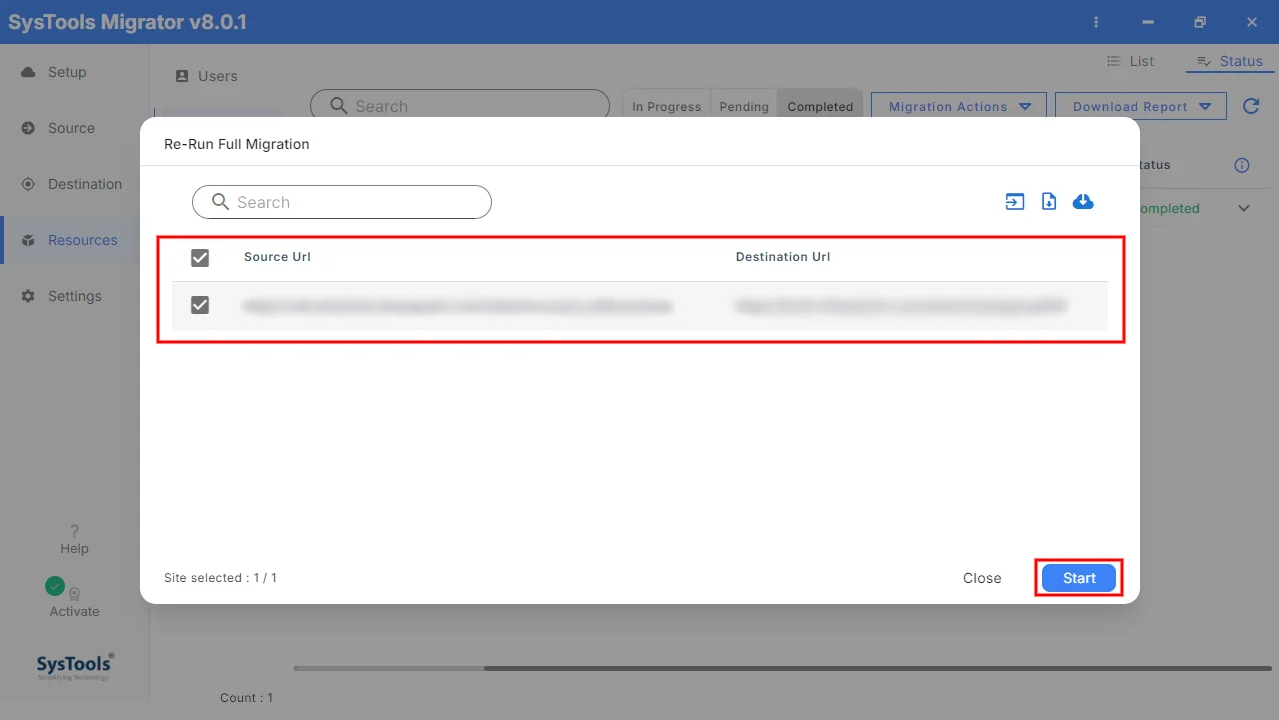
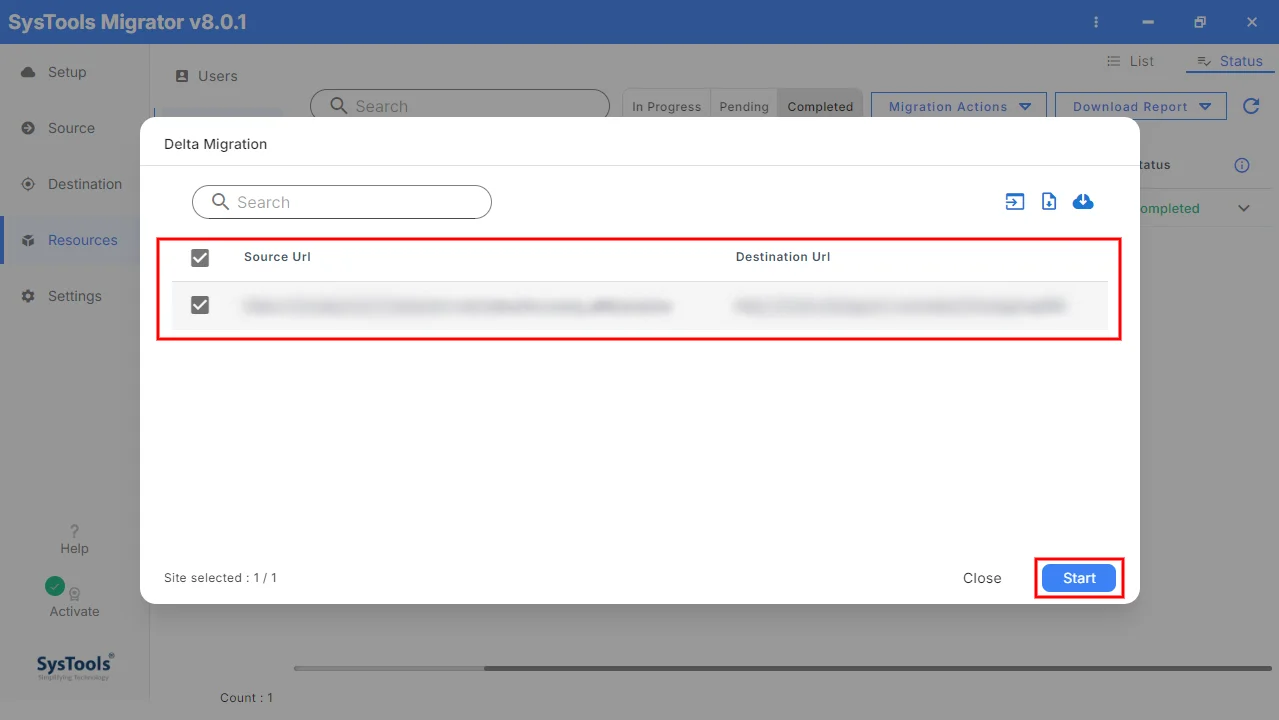
You can use the Migration Actions menu to retry failed items, re-run the full migration, or perform a delta migration.
To retry failed items, select the required source and destination URL mapping. If no items have failed, the list displays “No data available” and the Start button remains disabled.
To re-run a complete migration, select the required source and destination URL mapping and click Start.
To perform a delta migration, select the required source and destination URL mapping and click Start.
If you wish to import sites, upload the prepared Site list CSV file. Selected sites remain selected after import, even if they are not included in the CSV file.
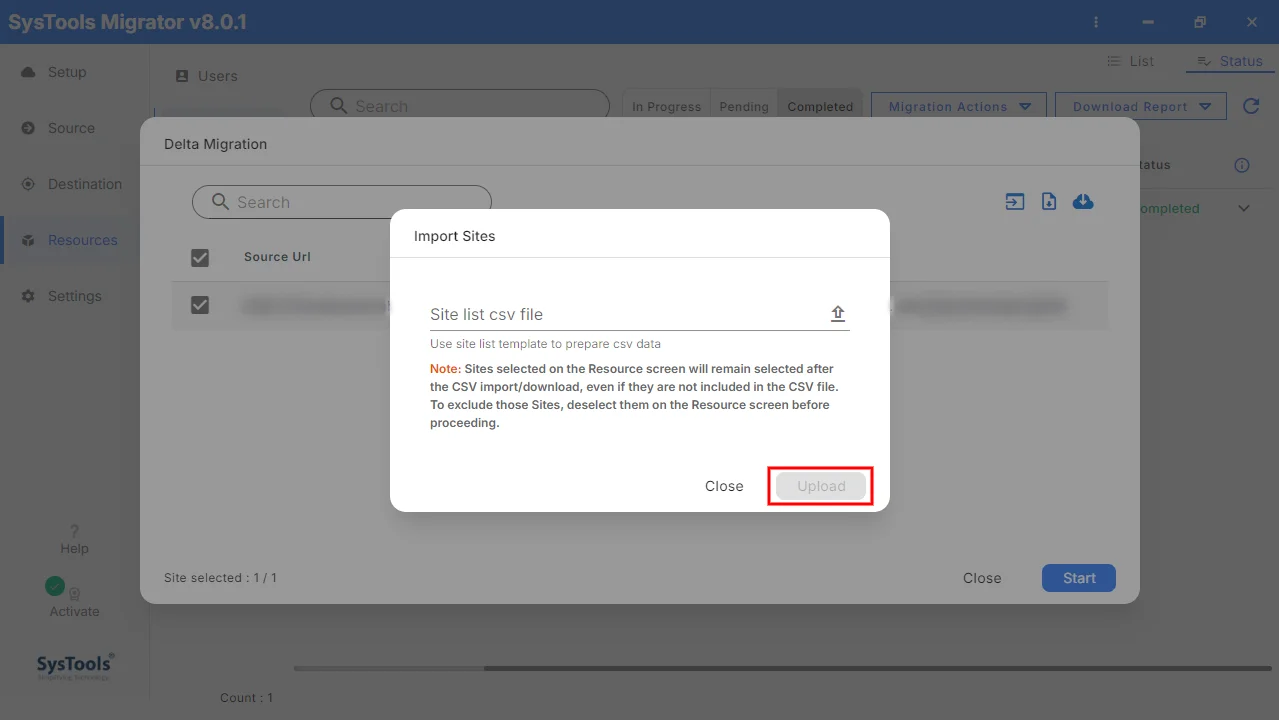
If you need a template, Click Download Template to save the SiteExecutionSelection.csv for preparing the site selection data.
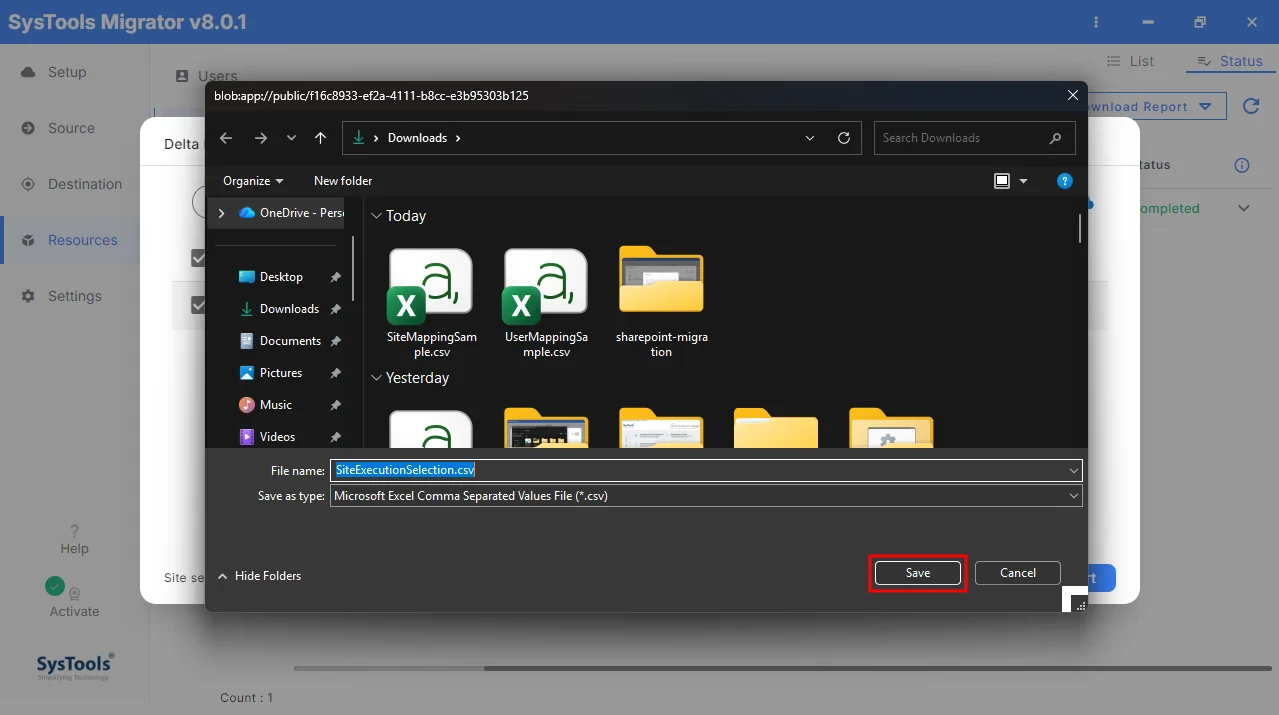
Click Download User Resource List to save the user resource details as a CSV file.
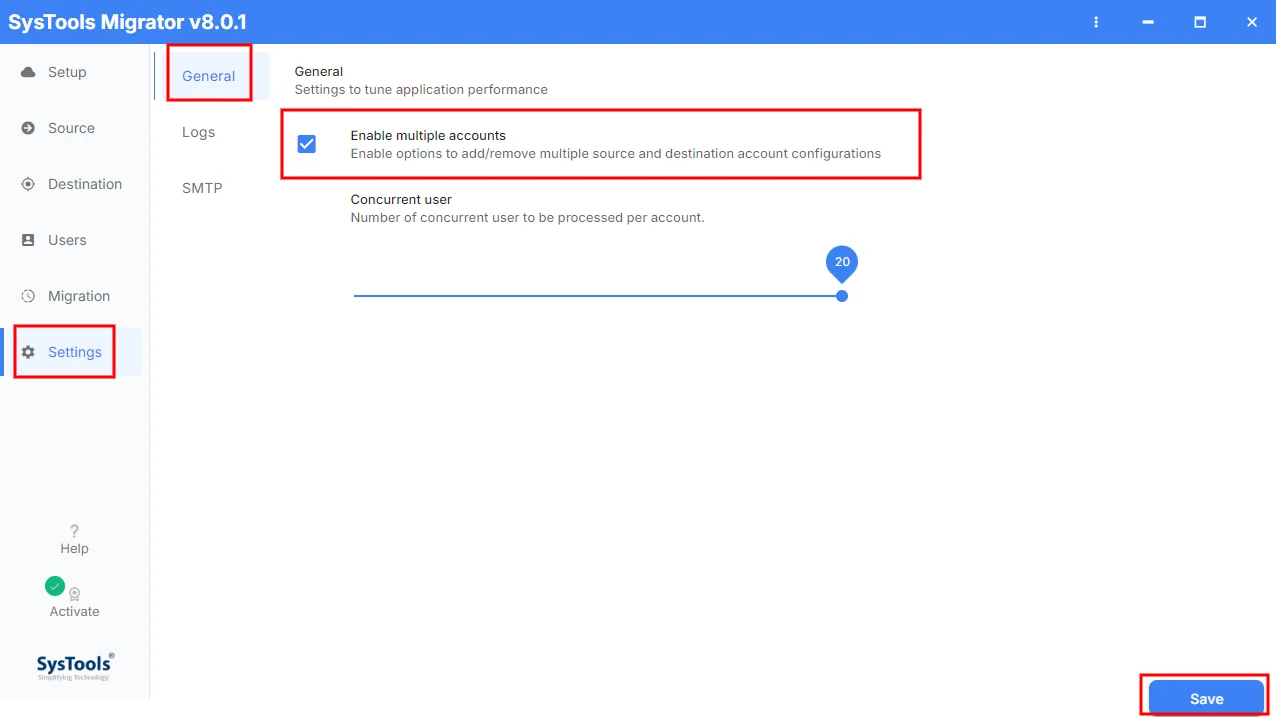
Go to Settings > General. Enable the Enable multiple accounts option, set the required number of concurrent users using the slider, and click Save to apply the settings.
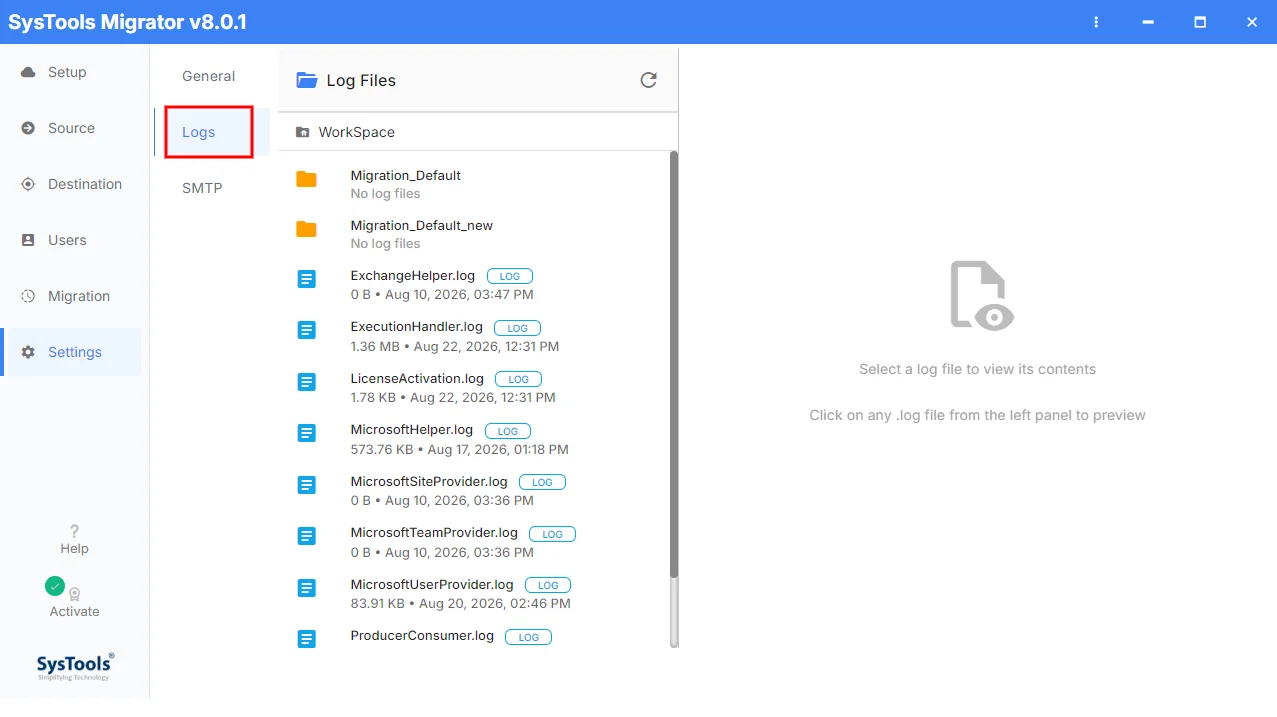
Go to Settings > Logs to view the available log files. Select any .log file from the list to preview its contents.
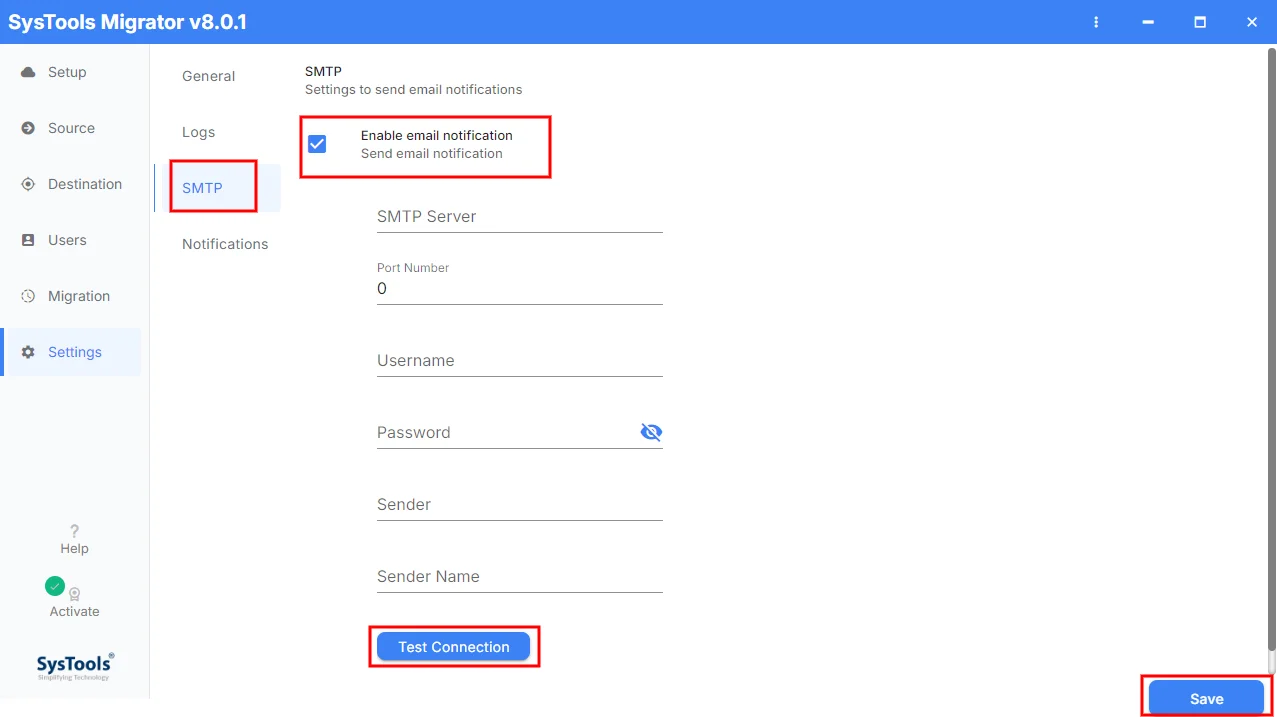
Go to Settings > SMTP and enable Enable email notification. Enter the SMTP server details, including the SMTP Server, Port Number, Username, Password, Sender, and Sender Name. Click Test Connection to verify the SMTP configuration, then click Save to apply the settings.
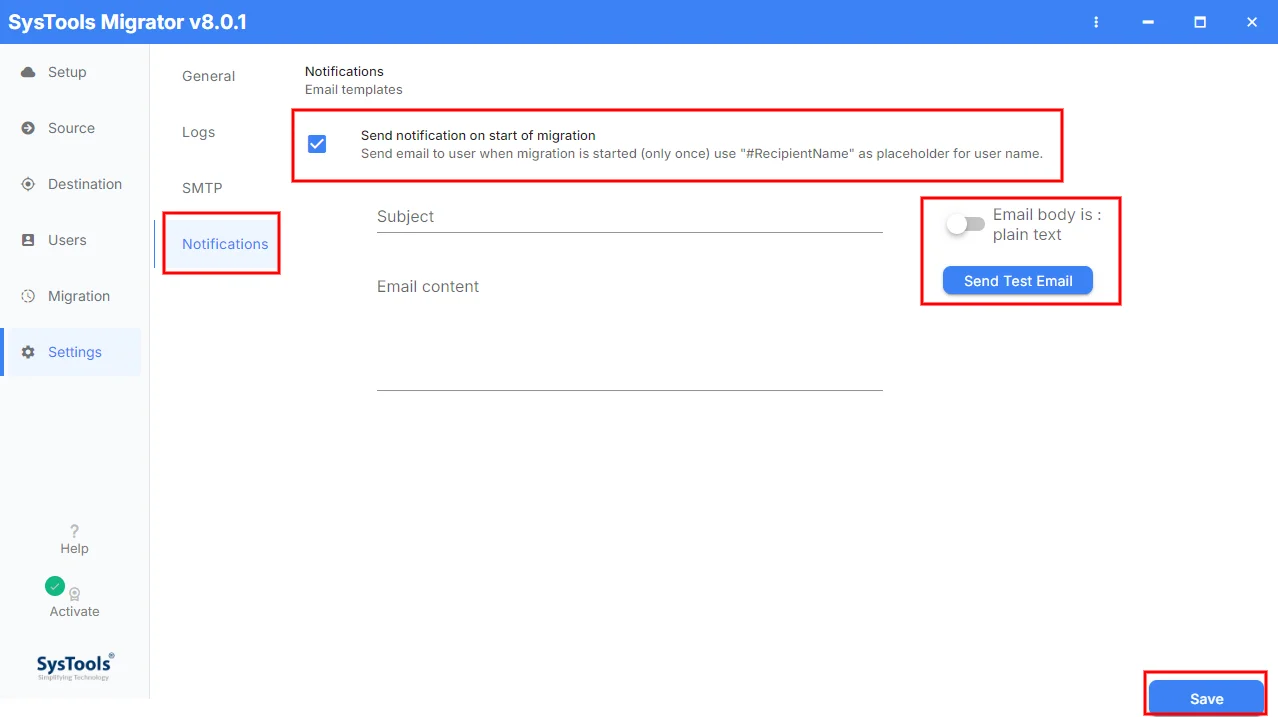
Go to Settings > Notifications and enable Send notification on start of migration. Enter the Subject and Email content, choose the required email body format, and click Send Test Email to verify the notification settings. Finally, click Save to apply the configuration.